Fencing options and costs in Surrey Centre
Surrey Centre is a busy neighbourhood hub in the City of Surrey, and it’s one of the reasons fencing demand stays steady year-round. With a total population of 11,370 residents (Statistics Canada, 2021 Census), there’s a constant mix of homeowners upgrading existing boundaries, adding backyard privacy, and replacing aging materials after wet-season wear. Every detached property is a potential fencing customer, and the Lower Mainland–Southwest’s housing stock tends to drive practical perimeter improvements—especially for dogs, gardens, and seasonal entertaining.
Pricing in Surrey Centre is influenced by the local climate: you’ll see mild but not trivial frost and frequent wind off the Fraser Valley corridors. That means fence contractors still need to set posts below the local frost depth to limit heaving, and in wetter soils, crews commonly dig deeper holes, pour more concrete for stability at corners and gates, and spend longer on layout and re-lining. Availability and labour efficiency also matter here because many jobs are done in the shoulder seasons when crews can manage wet ground without damaging lawns and shrubs.
In practice, we see especially high call volume for fence replacement and privacy upgrades around Surrey Centre / Guildford-adjacent residential streets where yards tend to have mature trees, uneven grading, and established boundaries that must be matched carefully. The result is that two quotes for the “same” fence height can differ—mostly due to soil conditions, access, and how much hardware is added for wind stability—so it helps to compare options side-by-side before you request a bid.
| Material |
Lifespan |
Maintenance |
Privacy Rating |
Price per Linear Foot |
| Pressure-treated pine (standard wood) |
10–15 years |
Stain/seal every 2–3 years to slow greying and cracking |
Good–Very High (with solid panels) |
$55 – $95 |
| Cedar (natural rot resistance) |
15–25 years |
Seal/stain every 2–4 years (varies by sun and exposure) |
Good–Very High (solid boards) |
$65 – $105 |
| Vinyl / PVC (no-maintenance) |
20–30 years |
Minimal (wash as needed; inspect for impacts) |
Very High (privacy styles) |
$75 – $130 |
| Chain-link (galvanized steel) |
20–35 years |
Occasional rinse; tighten hardware if needed |
Low–Moderate (not privacy) |
$30 – $55 |
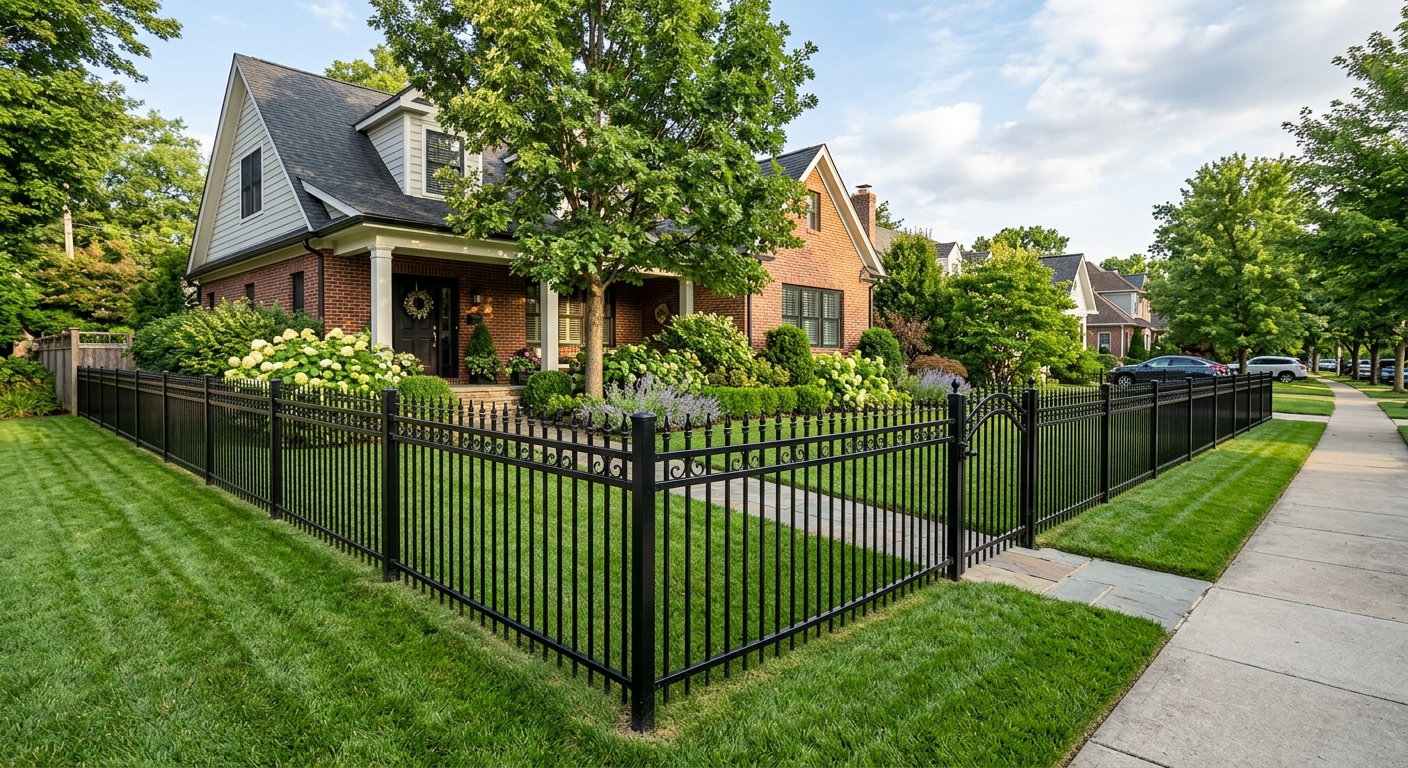
| Aluminum ornamental |
25–40 years |
Minimal (wash; check fasteners) |
Low (open pickets), Moderate with screening |
$90 – $170 |
| Composite / recycled material |
20–30 years |
Low (wash; rare surface-touch-ups) |
Good–Very High (solid styles) |
$85 – $150 |
Prices are estimates only and vary by project scope, site access and material selection.
What affects the price of fencing in Surrey Centre
In Surrey Centre and across the Lower Mainland–Southwest, it’s common to see the same fence height land 30–50% apart depending on site realities and how each contractor builds the “details.” Two crews can both say “6 ft privacy,” but one job may include deeper post embedment, more concrete at corners, better gate framing, and proper racking on sloped runs—while another may cut corners on hardware. That’s why British Columbia fence pricing often separates into “budget install” versus “wind-and-wet resistant build.”
The frost and soil piece is a big driver. Even though BC coastal conditions are milder than Ontario and Alberta, you still get periodic freezing, and posts must be set below the design frost depth to limit heaving. Published Canadian guidance often lands around minimum embedment of about 3 feet in much of Canada, and in BC coastal installations many contractors still go deeper than the bare minimum—especially in wetter Fraser Valley soils—meaning deeper holes, longer treated posts, and more concrete setting for privacy panels, corner posts, and gate posts. Where Ontario and Alberta crews may regularly design for 1.5–2.0 m embedment, Surrey jobs typically don’t go that deep on average, but we still see heavier labour and concrete costs compared with a dry-site install.
Wind exposure also changes build specifications. Coastal BC and open yard layouts can push crews toward tighter spacing and sturdier framing, especially for solid wood and vinyl privacy fences. A wet-season install on clay or poorly drained soil can add time—sometimes turning a mid-range wood job into a higher-cost build closer to the upper end of the wood band, or moving a vinyl job toward the higher $75–$130 range when extra reinforcement is required.
| Price Factor |
Why It Matters |
Cost Impact |
| Fence length in linear feet |
Most materials and labour scale directly with total run length |
Highest driver; longer yards can double total cost |
| Post depth required |
Frost limits heaving; deeper holes require more excavation and longer posts |
Can add $5–$20+ per foot depending on soil and concrete use |
| Post setting method |
Concrete vs gravel pack vs driven posts changes materials and labour time |
Concrete-set corner/gate posts typically increase quote noticeably |
| Material choice |
Vinyl and PVC cost more per component and require correct structural mounting |
Often shifts you between bands (e.g., wood $55–$95 vs vinyl $75–$130) |
| Gate count and type |
Drive-through gates and double gates need heavier frames and hardware |
May add $400–$1,500+ total depending on size and finish |
| Grade and terrain |
Sloped yards require raked sections, extra labour, and sometimes added framing |
Commonly adds 10–25% to labour on uneven lots |
| Old fence removal and disposal |
Demolition, haul-away, and disposal fees affect time and overhead |
Can add $200–$1,000+ depending on debris volume |
| Permit fees and survey / property line locate |
Some builds require permit steps; unclear lines cause rework risk |
Small-to-moderate adders, but prevent costly corrections |
Permits & regulations in British Columbia
In British Columbia, fences above a height threshold often trigger a building permit requirement—commonly around 2.0 m (6.5 ft) at the rear and 1.0–1.2 m (3–4 ft) at the front or corner, depending on the municipal rules that apply to your location. Regardless of permit needs, you must respect property lines and municipal setback requirements. Before you dig any post holes, you should also arrange utility locates through the appropriate provincial call system (for BC, this is commonly handled via BC 1 Call). Failing to locate utilities can lead to costly delays and safety hazards.
For best results in Surrey Centre, confirm your boundary first. Use a survey or request a property pin locate so you don’t accidentally build over a line or encroach on an easement. Shared fence ownership is handled under provincial line-fences principles, so if a fence is truly shared, decisions about repairs or replacement typically involve the other property owner.
What does require a permit: installing or replacing a fence that exceeds the height threshold (and certain boundary-side placements that fall under the rules). What typically does not: like-for-like repairs that keep the same height and location, or lower-height replacements that remain within the thresholds—though you should still verify with your municipal bylaw. Finally, before signing, you can protect yourself by verifying the contractor’s coverage: ask for their certificate of insurance (liability), confirm they have appropriate workers’ compensation coverage (WSBC/WCB), and check their licence/registration using public contractor listings available online. If the company can’t provide current proof, that’s a strong warning sign.
Choosing the right fence material for Surrey Centre
Choosing the right fence material in Surrey Centre is about matching your priorities—privacy, maintenance level, budget, and lifespan—to a climate that’s mild but wet, with enough freeze-thaw to punish poorly set posts. Pressure-treated pine is the budget-friendly default, but it typically needs staining or sealing about every 2–3 years to reduce grey weathering and surface cracking. Cedar looks better from day one and resists rot more naturally, yet it still benefits from periodic sealing, especially on shaded fence runs. Vinyl/PVC is the low-maintenance option and suits privacy styles well, but in extreme cold snaps it can crack if the structure isn’t assembled correctly; proper bracing and correct post spacing matter. Chain-link is the lowest cost and tends to last a long time, but it offers little privacy unless you add screening. Aluminum ornamental is rust-resistant and mid-to-high cost; it’s ideal if you want an attractive barrier without the weight of solid panels.
Post depth is still important in Lower Mainland–Southwest conditions. Even with BC’s generally shallower frost than the Prairies, contractors commonly set posts deeper than the bare minimum and use concrete for corner posts and gate posts for stability in wetter ground. Wind and snow load considerations also affect framing: solid wood and vinyl privacy fences need sturdier rails and tighter alignment so they don’t rack during gusts.
As a concrete example, if you’re comparing wood at about $55–$95 versus vinyl at $75–$130, the extra upfront vinyl cost can be justified when you want to avoid recurring staining and you’re building a long privacy run. If you’re cost-sensitive and willing to maintain, pressure-treated pine can be a better fit for many Surrey backyards—especially where access allows efficient installation and the soil is manageable.
| Material |
Cold Tolerance |
Lifespan |
Annual Maintenance |
Best For |
Price Band |
| Pressure-treated pine |
Good (with proper framing and sealed edges) |
10–15 years |
Low daily effort; plan stain/seal every 2–3 years |
Budget privacy with manageable upkeep |
$55 – $95 |
| Cedar |
Good |
15–25 years |
Low daily effort; seal/stain every 2–4 years |
More natural look and better rot resistance |
$65 – $105 |
| Vinyl / PVC |
Good (when installed with correct structure) |
20–30 years |
Minimal; wash as needed and inspect impacts |
Low-maintenance privacy |
$75 – $130 |
| Chain-link |
Very good |
20–35 years |
Very low; occasional hardware check |
Security with lowest upfront cost |
$30 – $55 |
| Aluminum ornamental |
Very good |
25–40 years |
Minimal; wash and tighten fasteners if needed |
Attractive curb barrier with no rust |
$90 – $170 |
| Composite / recycled |
Good (varies by brand) |
20–30 years |
Low; wash and occasional surface touch-ups |
Long-life privacy with low maintenance |
$85 – $150 |
How to choose a fencing contractor in Surrey Centre
Choosing a fencing contractor in Surrey Centre starts with proving they can do the work legally and safely. In British Columbia, request their contractor licence/registration information (the exact category can vary), and verify their liability insurance certificate before the first visit. Also confirm their workers’ compensation coverage (WSBC/WCB). Ask for the certificate numbers and expiry dates, not just promises—legitimate fencing companies will provide paperwork quickly. If a contractor can’t produce current documents or won’t explain coverage limits, treat it as a serious red flag.
Next, get 2–3 itemised written quotes. The best quotes split labour and materials (posts, rails, panel material, hardware, concrete for setting, gate frames), and they show assumptions like linear foot measurement, number of posts, and whether the fence is stepped or raked for slope. Avoid “lump sum only” quotes if the scope isn’t crisp. Make sure the proposal states what’s excluded: permit pull (if required), any survey/locate costs, old fence removal, and disposal/haul-away.
Warranty matters too. Ask for the workmanship warranty term (how long for alignment, leaning, post failure due to installation errors) and the manufacturer warranty for panels and fittings. Also ask whether warranties transfer to a new owner.
For payment, never pay more than 10–15% upfront. Use a holdback until you confirm key milestones are complete—especially post-setting, rail alignment, and gate operation. Finally, insist on a timeline in writing: a start date target and an estimated completion window, along with weather-related scheduling notes given the frequent wet conditions in the Lower Mainland–Southwest.
- Provide current proof of liability insurance and confirm it matches the job value and scope.
- Show workers’ compensation coverage (WSBC/WCB) before scheduling begins.
- Verify licensing/registration details via public listings and match the business name on the quote.
- Get itemised quotes that break out labour and materials per line item (not only total price).
- Confirm whether post holes are concrete-set or gravel-packed, especially at corners and gates.
- Ask how they handle sloped yards (raked vs stepped) and confirm it in writing.
- Confirm gate hardware type and whether they include self-closing, latches, and hinges.
- Request the proposed post spacing (and any adjustments for wind exposure).
- Ask whether permits are pulled by the contractor or by the homeowner, and confirm who pays.
- Make sure old fence removal and disposal are clearly included or clearly excluded.
- Get a workmanship warranty length and manufacturer warranty documents for the products used.
- Agree on a payment schedule with a holdback until the fence is fully completed and inspected.
In Surrey Centre, specific red flags include: quotes that don’t specify post depth or setting method, vague scope language like “supply and install” without measurements, refusal to provide insurance/coverage documents, promises to start without utility locates, and pressure to pay a large deposit before any site work begins.
Frequently asked questions — fencing in Surrey Centre
Should I repair or replace my old fence in Surrey Centre?
If your fence posts are still solid (no meaningful lean, rot at ground line is minimal, and rails are not sagging), repairing is often cheaper than full replacement in Surrey Centre. However, in the Lower Mainland–Southwest’s wet-and-freeze conditions, rot commonly starts near the soil line; if multiple posts are soft, it’s usually more cost-effective to replace because repairs don’t restore post strength. As a rule of thumb, if repairs would require replacing most posts, upgrading corner/gate hardware, and redoing sections that match uneven grading, replacement tends to win on value. For budgeting, a chain-link replacement often fits the lower band (around $30 – $55), while privacy wood upgrades typically land mid-range (about $55 – $95). For any vinyl option, replacement is generally preferred if structural framing is compromised, since cracked sections can reappear if installation wasn’t built correctly.
How do I handle a fence dispute with a neighbour in British Columbia?
In British Columbia, fence disputes typically come down to property line placement and shared boundary responsibilities. Start by verifying your boundary first: request a property pin locate or obtain a survey, and document where the fence actually sits relative to the line. Next, gather evidence—photos of fence condition, any written agreements, and your contractor’s estimate that explains what needs fixing or replacing. If the fence is shared, line-fences principles can influence how costs are split, but you should still aim for a written agreement with your neighbour. Keep communication calm and factual; avoid moving boundaries until you understand the property line. If a dispute escalates, consider mediation and obtain professional guidance (for example, a surveyor or legal advice) before doing any major work. Practically, a well-scoped quote and clear plan for setbacks and heights makes negotiations easier, especially where permit height thresholds apply near the front or corners.
What fence style offers the best wind resistance in Surrey Centre?
Wind resistance in Surrey Centre is strongly tied to how “open” the fence is and how rigid the framing becomes. Solid privacy fences (wood or vinyl) can behave like sails if not engineered with proper bracing and tighter spacing, so the best-performing builds usually use strong rails, correct post embedment, and properly reinforced gate frames. For higher wind exposure yards, many homeowners get better real-world stability with styles that allow wind to pass through somewhat—like certain aluminum picket designs—or with privacy panels that aren’t overly thin or poorly anchored. On wet ground, correct post setting is essential; posts that aren’t properly seated and concreted at stress points can shift over time. If you’re comparing costs, a chain-link fence won’t provide privacy, but its open mesh is usually very wind-tolerant, often sitting in the $30 – $55 band. For privacy with good wind behaviour, a vinyl privacy build (often $75 – $130) can work well when installed with reinforcement and correct spacing rather than minimum-only construction.
How much does a fence cost in Surrey Centre?
Fence cost in Surrey Centre varies mainly by total linear feet, material, gate count, post setting method, and site conditions like slope and soil moisture. Typical installed pricing in the Lower Mainland–Southwest usually falls into broad ranges: chain-link is commonly the lowest-cost option (about $30 – $55 per linear foot), pressure-treated wood is mid-range (around $55 – $95), and vinyl/PVC is generally higher due to material and structure requirements (roughly $75 – $130). Aluminum ornamental often comes in the highest range (about $90 – $170) because of fabrication and hardware complexity. Wet soils and wetter-season installs can raise labour time—sometimes pushing quotes toward the upper end of a band if deeper concrete-set posts or additional reinforcement is required. The most reliable way to price your job is a site measurement with a detailed, itemised proposal rather than a single “per foot” number.
How deep should fence posts be for Surrey Centre's frost?
Even in British Columbia’s milder coastal climate, you still need to set fence posts deep enough to limit frost heaving and long-term movement. Common guidance in Canada places minimum post embedment around about 3 feet in many regions, and in Surrey Centre contractors often set posts deeper than that bare minimum to account for freeze-thaw plus wetter Fraser Valley soils. Practically, you’ll often hear designs referencing roughly 4–6 inches below the design frost depth as a concept, which translates into deeper holes in areas with greater frost penetration. The key point: posts should be placed below the local effective frost zone and properly set—especially for corners and gates. Concrete setting is commonly used for those stress points, because shifting at a corner can rack the entire fence over time. Always ask your contractor to specify the intended embedment depth in the quote, including whether they use concrete for each post type.
Wood vs vinyl vs aluminum fence — which is best?
“Best” depends on your priorities in Surrey Centre. Wood (pressure-treated pine or cedar) is the classic privacy choice with a mid-range cost structure (pressure-treated often about $55 – $95) but it needs scheduled maintenance—stain/seal every few years—to reduce weathering and prolong appearance in the wet coastal air. Vinyl/PVC privacy is typically higher upfront (often $75 – $130) but offers low-maintenance ownership and strong privacy when installed with correct post spacing and reinforcement to handle wind and temperature swings. Aluminum ornamental is rust-resistant, long-lived, and visually tidy, but it’s usually less private because pickets are open; it often sits in the higher range (about $90 – $170). If you need privacy and minimal upkeep, vinyl privacy is frequently the top fit. If you want security with good wind tolerance and curb appeal, aluminum can be ideal. If you want to manage maintenance and stay flexible on budget, wood remains a strong choice—especially when post setting and alignment are done carefully for Surrey Centre’s soil and moisture.