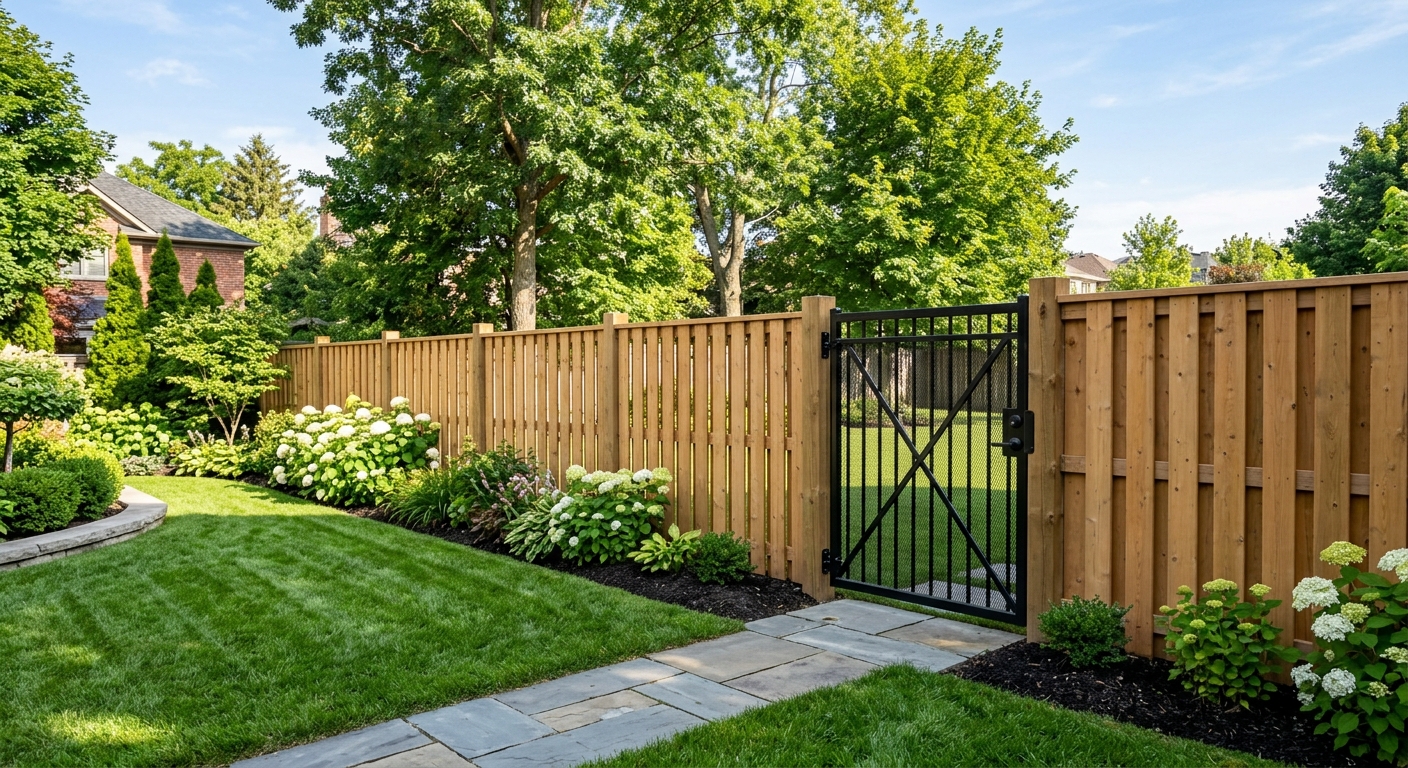
Fencing options and costs in Rural Saanich
Rural Saanich, British Columbia is a small community (population 5,025 in 2021, Statistics Canada, 2021 Census) where fencing demand tends to track household ownership and infill growth—when homeowners invest in exterior upgrades, boundary fences get replaced or upgraded at the same time. Detached homes are especially common demand drivers because yards tend to have multiple fence runs (front, side, and rear), plus gates for drive access, pets, and garden protection.
On Vancouver Island and the Coast, pricing is shaped by moderate coastal frost and frequent wind exposure. Even with a shallow frost line (about 45–60 cm), posts still must be set below frost depth to prevent heaving and long-term leaning. That usually means buried post depths around 75–90 cm with concrete footings where soils are wet, clay-rich, or disturbed—adding labour, disposal, and sometimes extra form-and-align time. Contractors are also busy around core residential areas like Prospect Lake and parts of Central Saanich Road corridor, where properties often sit on sloped or rocky edges that slow excavation and alignment.
Below are typical cost ranges for common fence types you’ll see quoted around Rural Saanich, then you can compare expected lifespan, upkeep, and how “private” each option feels in coastal winds.
| Material |
Lifespan |
Maintenance |
Privacy Rating |
Price per Linear Foot |
| Pressure-treated pine (standard wood) |
10–15 years |
Stain/paint every 2–3 years; inspect posts after heavy rain |
8/10 (solid panels) |
$55–$85 |
| Cedar (natural rot resistance) |
15–25 years |
Annual visual checks; stain/seal about every 2–4 years |
9/10 (solid panels) |
$75–$105 |
| Vinyl / PVC (no-maintenance) |
20–30 years |
Minimal cleaning; check fasteners after wind events |
7/10 (solid or semi-privacy styles) |
$70–$110 |
| Chain-link (galvanized steel) |
25–35 years |
Occasional rinse; replace tension parts as needed |
2/10 (low privacy) |
$35–$60 |
| Aluminum ornamental |
25–40 years |
Wash annually; inspect caps/fasteners |
3/10 (open) |
$80–$140 |
| Composite / recycled material |
20–30 years |
Low cleaning; occasional replacement of individual boards |
8/10 (solid privacy boards) |
$90–$130 |
Prices are estimates only and vary by project scope, site access and material selection.
What affects the price of fencing in Rural Saanich
In Rural Saanich and across the Vancouver Island and Coast region, two “similar” fence projects can land 30–50% apart depending on site conditions and design choices. The big difference is that coastal BC pricing is not just material—it’s how much labour it takes to dig, set, align, and secure posts in frequent wind and wet-season ground. Availability also matters: when multiple crews are working simultaneously around Victoria/Saanich and Gulf Islands routes, appointment windows tighten and pricing reflects that schedule pressure.
Frost depth sets how deep posts must be set to prevent heaving. On Vancouver Island, frost is typically about 45–60 cm, but posts still need to go roughly 4–6 inches below the design frost depth, and in practice that often becomes 75–90 cm burial with longer posts. If the job requires concrete setting (common with disturbed soils, clay-rich areas, or where you want long-term stability), expect higher labour and material costs. On the Prairies, companies often install deeper and tighter post spacing; here the frost is milder than Ontario/Alberta, but coastal winds are frequent, which can push contractors toward heavier posts or closer post spacing on solid privacy runs.
Concrete examples from Rural Saanich: (1) a 40 linear foot backyard privacy fence on sloped ground often needs stepped rails and extra alignment time—cost can move you from the wood band toward cedar pricing. (2) if you’re replacing an old fence that’s sitting in saturated soil, post holes may require more concrete and trucking away spoil, which can lift a project from chain-link levels toward the vinyl or composite band. Many homeowners see that swing in the $55–$85 per linear foot wood range versus the $70–$110 vinyl range when wind-rated posts and concrete footings are added to improve performance.
| Price Factor |
Why It Matters |
Cost Impact |
| Fence length in linear feet — the primary cost driver |
Most materials and labour scale directly with length (rails, posts, hardware) |
Major; small length changes noticeably affect totals |
| Post depth required — frost line determines post length and hole depth |
Deeper post burial increases excavation, post material, and alignment challenges |
Moderate to major; can add concrete and longer posts |
| Post setting method — concrete vs. gravel pack vs. driven posts |
Concrete is more labour/material intensive but improves long-term stability in wet/clay soils |
Moderate; often the biggest controllable cost lever |
| Material choice — vinyl vs. cedar vs. chain-link |
Material unit cost and hardware needs differ, plus wind tolerance varies by style |
Moderate to major; drives which price band you’re in |
| Gate count and type — walk-through vs. drive-through (double) |
Gates require heavier frames, hinges/locks, and stronger posts |
Moderate; often increases both labour and hardware costs |
| Grade and terrain — sloped yards require stepped or raked panels |
Slopes add cutting, layout time, and sometimes different rail geometry |
Moderate; can add hours even if length stays the same |
| Old fence removal and disposal |
Hauling, dump fees, and extra labour are required for removal and cleanup |
Moderate; variable depending on accessibility |
| Permit fees and survey / property line locate |
Verification avoids encroachment disputes and ensures compliance with height/location rules |
Low to moderate; can be major for complex boundary cases |
Permits & regulations in British Columbia
In British Columbia, fencing often falls under local building rules, and permits can apply when fences are above height thresholds (commonly around 2.0 m at the rear and about 1.0–1.2 m at the front or corner). Even when a permit is not required, fences must respect property lines and local setback requirements, and you should confirm where your fence will sit before any digging.
Before installing any posts, call for utility locates (in BC you can use BC 1 Call) so you don’t hit buried services. If your property boundaries are not clear or you have an older survey, obtain a survey or locate the property pins to reduce the risk of encroaching on a neighbour’s lot. Shared fence responsibilities generally follow the line-fences concept under provincial legislation—so the “who maintains what” depends on the agreement and how the fence is treated as a shared boundary feature.
Concrete permit guidance: as a homeowner, ask the municipality/authorities whether your specific fence height and location triggers a permit. Typically, new fence builds above the height threshold are the work that more often requires a permit, while minor repairs and like-for-like panel replacements usually do not—provided you’re not changing height/location. For licensing and coverage checks: verify the contractor’s BC authorization/registry presence online; request a certificate of insurance showing liability coverage with your address listed (or at least referencing the job site); and confirm coverage for workplace safety obligations (commonly WCB coverage in BC). Ask for the certificate number and current clearance letter where applicable, and keep copies in your project file.
Choosing the right fence material for Rural Saanich
Choosing a fence material in Rural Saanich is really about matching your goals to our coastal conditions: wet winters, moderate coastal frost, and frequent wind off the Strait of Georgia and surrounding waters. If privacy is your priority, solid panel wood or vinyl designs are popular, but wind can stress boards and fasteners—so post spacing and wind-rated hardware matter as much as the material label. If you want low maintenance, vinyl/PVC is usually the easiest everyday option; if you want classic curb appeal and better natural appearance, cedar often looks great longer.
Pressure-treated pine is the budget-friendly workhorse, but it typically needs staining or painting every 2–3 years to prevent grey weathering and surface cracking. Cedar costs more upfront, yet it naturally resists rot and often holds up better in our persistent moisture, though it still benefits from periodic sealing. Vinyl/PVC offers “set it and forget it” for many homeowners, but in extreme cold snap events it can become more brittle—so proper fastening and temperature-aware installation details matter. Chain-link is the longest-life budget option, but it won’t give meaningful privacy unless you add screening. Aluminum ornamental is rust-resistant and mid-range in cost, though it’s open by design.
For post depth, even with shallow coastal frost, Vancouver Island and Coast jobs generally bury posts around 75–90 cm to sit below frost depth, and concrete-set posts are commonly recommended for stability in wet/clay soils and for heavier fences or gates. Where you have slopes, expect stepped rails to manage grade changes without stressing panels. A practical example: if a wood privacy fence comes in near $55–$85 per linear foot but your site needs concrete-set posts, closer spacing, and cedar boards for better long-run durability, the jump toward the cedar or vinyl bands can be justified when you’re replacing sooner—especially on wind-exposed lines.
| Material |
Cold Tolerance |
Lifespan |
Annual Maintenance |
Best For |
Price Band |
| Pressure-treated pine |
Good with proper sealing |
10–15 years |
Inspect; light wash/spot touch-ups; plan stain every 2–3 years |
Lower upfront cost and classic look |
$55–$85 |
| Cedar |
Good; natural moisture handling helps |
15–25 years |
Inspect; seal/stain every 2–4 years |
Privacy with better aesthetics in wet climates |
$75–$105 |
| Vinyl / PVC |
Good; avoid improper fastening in cold |
20–30 years |
Minimal—wash and check hardware after windstorms |
Low maintenance and coastal corrosion resistance |
$70–$110 |
| Chain-link |
Very good (metal structure holds) |
25–35 years |
Occasional rinse; check tension/posts periodically |
Security on a budget |
$35–$60 |
| Aluminum ornamental |
Very good; powder-coated durability |
25–40 years |
Wash and spot-check fasteners |
Curb appeal with rust-resistant performance |
$80–$140 |
| Composite / recycled material |
Good; stable boards with proper installation |
20–30 years |
Low—clean and replace damaged boards if needed |
Privacy with reduced upkeep |
$90–$130 |
How to choose a fencing contractor in Rural Saanich
When you’re hiring a fencing contractor in Rural Saanich, the safest approach is to verify three things: authorization/registration, liability insurance, and required workplace coverage. Start by asking for their contractor details (business name and registration) and then confirm their standing through BC’s online registry or relevant contractor authorization listing. Next, request a current certificate of insurance showing general liability coverage with adequate limits for the job scale and access conditions (yards, excavations, gates, and removal). Finally, confirm workplace safety coverage (in BC this is typically WCB coverage) and ask for the clearance letter or account verification if they operate through covered workers. If they can’t provide documentation promptly, treat it as a red flag.
Quotes should be itemised: labour and materials breakdowns should include post installation method, concrete/footings allowance, fence panels/rails, hardware, gate materials, and haul/disposal for removed fencing. Avoid a lump sum that doesn’t explain exclusions like rock excavation, slope work, or replacing rotted base rails. Clarify whether the quote includes permit pulling (if applicable), property line verification/survey locate costs, and post-depth allowances for coastal frost. Make sure workmanship warranty is written down (how long, what it covers) and whether product warranties from manufacturers transfer to you on resale. Ask about payment schedule too: never pay more than 10–15% upfront; hold back a portion until final alignment, gate operation, staining/sealing (if applicable), and cleanup are complete. Get a start date and an estimated completion timeline in writing.
- Ask for itemised quote lines for posts, rails, panels, hardware, and concrete/footings.
- Confirm post depth spec for coastal frost (typically 75–90 cm in practice) and how it’s measured.
- Verify whether the quote includes utility locates responsibility and marking before digging.
- Require a written scope for slope handling (stepped vs. raked panels) and gate placement.
- Clarify disposal: old fence removal, haul away, and dump fees.
- Check whether permit costs are included or excluded (if required by height/location).
- Get warranty details in writing for workmanship (not just a verbal promise).
- Confirm manufacturer warranty terms and whether they transfer to the homeowner.
- Request proof of liability insurance with your project location referenced or described.
- Confirm workplace safety coverage and provide clearance documentation if applicable.
- Require a start date, work hours, and completion estimate in the contract.
- Set payment milestones tied to inspection/approval of key stages (posts, gates, final finish).
Red flags to watch in Rural Saanich: contractors who won’t show insurance or WCB/WCB-equivalent documentation; quotes that omit post-setting method (especially concrete footings) without explaining assumptions; a fence layout that ignores slopes/grade and doesn’t describe stepped panel solutions; “same price regardless of site” estimates that don’t address rock pockets, wet soil, or access constraints; and payment requests above 15% upfront with no schedule tied to inspections.
Frequently asked questions — fencing in Rural Saanich
How much does a fence cost in Rural Saanich?
In Rural Saanich, most homeowners pay within the regional price bands depending on material and how much site work is needed. For wood installation, many projects land around $55–$85 per linear foot, while vinyl/PVC typically comes in around $70–$110 per linear foot when proper post depth and wind hardware are included. Chain-link is commonly less expensive, usually around $35–$60 per linear foot, and aluminum can be higher in the $80–$140 range. Coastal conditions matter: in wet or clay-rich spots, concrete footings and longer posts increase labour, so the final number can move quickly even if the fence length is unchanged. (Statistics Canada, 2021 Census)
How deep should fence posts be for Rural Saanich's frost?
For Rural Saanich and the broader Vancouver Island and Coast area, frost is moderate but still requires solid installation. While the frost line is often cited around 45–60 cm, posts should be set below the design frost depth—commonly translated into about 75–90 cm of burial in residential practice. Contractors usually account for soil conditions: if soil is saturated, clay-rich, or disturbed from past landscaping, concrete-set posts are often recommended to reduce the risk of heaving and leaning over time. The best quotes specify the post-depth plan in writing and show how they’ll measure depth during installation. If you’re on a slope or near rock pockets, post depth can vary slightly, so insist on a clear layout and “how we’ll handle grade” explanation.
Wood vs vinyl vs aluminum fence — which is best?
“Best” depends on your priorities in British Columbia. Wood (often pressure-treated pine or cedar) gives excellent privacy and a classic look, and wood pricing commonly sits around $55–$85 per linear foot for typical installations. However, wood needs periodic maintenance—staining or sealing every few years—to handle our wet winters. Vinyl/PVC is usually the lowest-maintenance option and often falls around $70–$110 per linear foot; it’s well suited to coastal moisture and corrosion concerns, but proper installation details matter for cold snaps. Aluminum ornamental is rust-resistant and durable, but it’s generally more “open” for privacy and costs often land around $80–$140 per linear foot. For wind-exposed lines, ask how each material’s post spacing and hardware will be adjusted for stability.
Do I need a permit to build a fence in British Columbia?
Often, fences in British Columbia need a permit when they exceed common height thresholds—frequently around 2.0 m for rear locations and about 1.0–1.2 m for front or corner areas. Whether you need a permit depends on the fence location and height, plus local bylaws. Even when a permit isn’t required, you still must respect property lines and setbacks. Before digging any post hole in Rural Saanich, call for utility locates through BC 1 Call and confirm the boundary with a survey or property pin locate to avoid disputes. For contractor selection, ask whether the permit process is included in the quote (if it’s required) and request proof they understand the local process for fencing on your lot.
How long does a wood fence last in Rural Saanich?
In Rural Saanich, a wood fence lifespan typically depends on the wood type and how it’s protected from moisture and wind stress. Pressure-treated pine commonly lasts about 10–15 years when properly installed with correct post depth and periodic staining/sealing; cedar often lasts about 15–25 years due to its natural rot resistance. Coastal exposure can accelerate wear if the fence is installed with inadequate post anchoring or without maintenance, especially in consistently wet seasons. The biggest longevity factor is the foundation: posts set too shallow (or with insufficient concrete where soils are saturated/clay-rich) are more prone to heaving and leaning after frost cycles. If you’re budgeting, plan for maintenance timing so the fence doesn’t get forced into a full replacement early.
Who owns and maintains a shared fence?
Shared fence situations in British Columbia are handled through provincial line-fences principles and any existing agreements between neighbours. Generally, if the fence is truly on the boundary and treated as a shared structure, both parties may have responsibilities depending on how ownership and maintenance were established. The practical step is to review your property’s records, any past agreements, and the physical placement of the fence relative to property lines (pins/survey help a lot). In Rural Saanich, where older fences sometimes pre-date accurate boundary definitions, disputes can happen when neighbours assume “shared” but the fence is actually on one side. Before replacing, clarify in writing: who pays for materials and labour, how repairs are handled, and who contacts a contractor for removal/disposal.