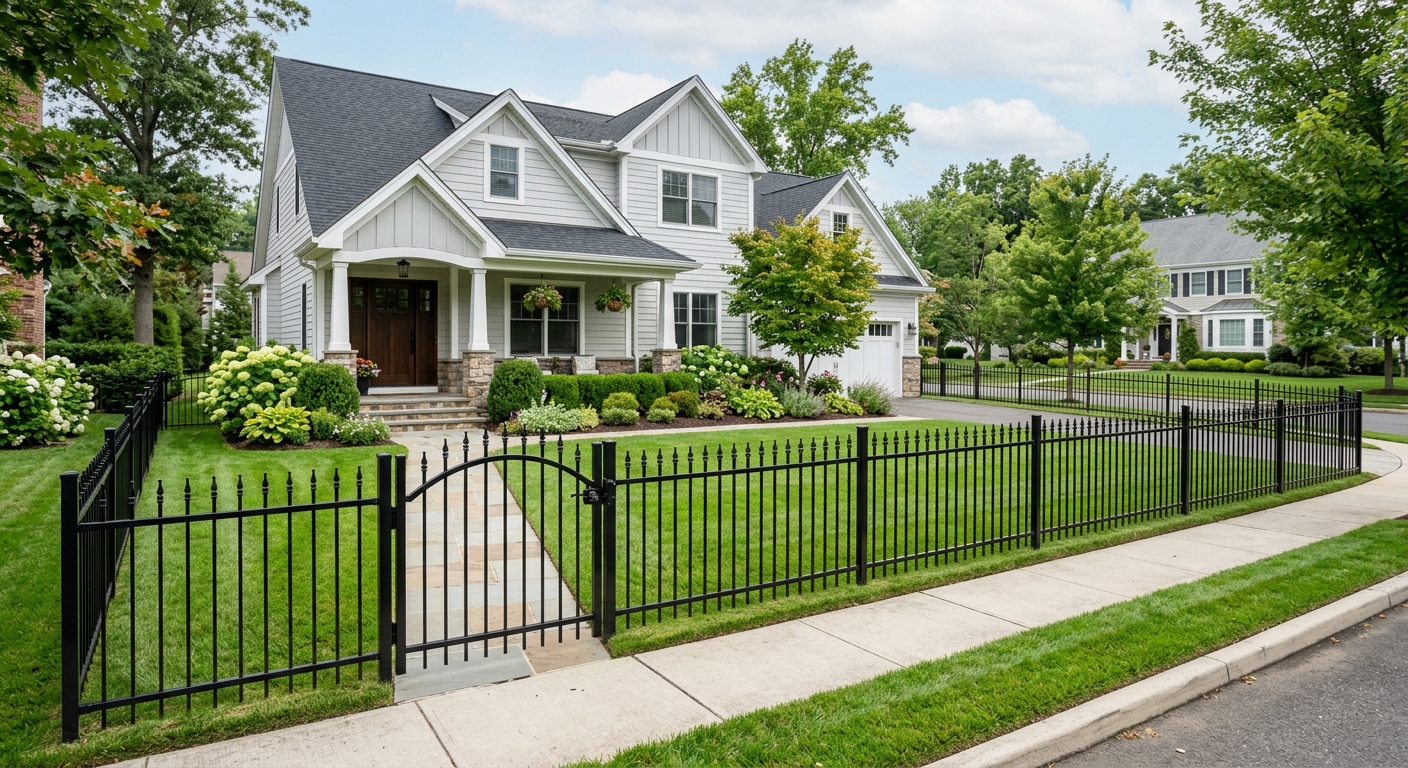
Fencing options and costs in Cedar Valley
In Cedar Valley, fencing choices usually come down to budget, privacy needs, and how much maintenance you want to take on. With a 2021 population of 8,080 in the area (Statistics Canada, 2021 Census), there’s consistent demand from homeowners and growing families who are protecting pets, gardens, and driveways. In practical terms, each detached property is a potential fencing customer, and that steady owner-occupier base helps explain why you’ll see multiple crews working in busy months around neighbourhoods like West Cedar where lots often have backyard privacy and side-access lanes.
Lower Mainland–Southwest pricing is shaped by “mild but not trivial” winter conditions: frost is present enough that posts shouldn’t be treated like they can sit shallow, yet the ground is often wet. That wetter soil (especially where drainage isn’t ideal) can mean deeper holes, more concrete setting on key posts, and more labour to get straight, plumb lines. Wind exposure also matters—open corners and end lots can need stronger framing and tighter spacing so panels don’t rack during gusts.
Because fence work is labour-heavy in this region, the same overall height and length can land at very different totals depending on slope, access for a post-hole digger, and finish grade. The comparison table below gives you a realistic starting point for commonly requested materials and how they typically perform in Cedar Valley homes, then you can use it to sanity-check any estimate you receive.
| Material |
Lifespan |
Maintenance |
Privacy Rating |
Price per Linear Foot |
| Pressure-treated pine (standard wood) |
8–15 years |
Stain/seal every 2–3 years |
High (solid pickets/panels) |
$55 – $95 |
| Cedar (natural rot resistance) |
15–25 years |
Reseal every 3–5 years (or stain) |
High (solid boards) |
$65 – $110 |
| Vinyl / PVC (no-maintenance) |
20–30 years |
Occasional wash only |
High (privacy styles) |
$75 – $130 |
| Chain-link (galvanized steel) |
20–35 years |
Rinse/repair sections as needed |
Low–Medium (with slats optional) |
$30 – $55 |
| Aluminum ornamental |
25–40 years |
Wash and check hardware annually |
Low (open pickets) |
$90 – $170 |
| Composite / recycled |
20–30 years |
Low; periodic cleaning |
Medium–High (board styles) |
$85 – $145 |
Prices are estimates only and vary by project scope, site access and material selection.
What affects the price of fencing in Cedar Valley
In Cedar Valley and across the Lower Mainland–Southwest, two bids for what looks like the same fence can differ by 30–50% once you account for the job details. Fence pricing here is less about “average board cost” and more about how much field labour it takes to do the foundation correctly in wet soils, set posts to resist winter heaving, and align panels across slopes. You’ll also see material-driven variance: for example, a basic chain-link run may come in around the $30–$55 per-foot band, while vinyl privacy often lands closer to the $75–$130 band because of material and structural framing needs.
Lower Mainland–Southwest frost and wind requirements drive costs differently than the Prairies or the Prairies’ approach. While BC’s coastal conditions are typically shallower than Ontario or Alberta, contractors still commonly set posts below the design frost zone—practically, crews target embedment that’s about 4–6 inches deeper than the “minimum” rule-of-thumb and, in wetter ground, dig a deeper, straighter hole so posts don’t tilt as the concrete cures. In cold regions, guidance often leads to 1.5–2.0 m embedment and more concrete; the BC approach is often a bit less depth, but the labour of extra excavation and concrete setting can still be substantial in Fraser Valley–style soils.
Concrete examples for Cedar Valley include: (1) a backyard line on damp clay will usually require more excavation time and more concrete per post to prevent movement; (2) a front yard on compacted fill may need additional base work to keep rails level; and (3) windy corner lots can increase labour through tighter post spacing and extra bracing so wood or vinyl privacy panels don’t rack.
Finally, the housing stock affects what’s “normal”: older properties with existing fences often mean removal and haul-away, which can add meaningful labour even before new materials are installed.
| Price Factor |
Why It Matters |
Cost Impact |
| Fence length in linear feet |
More fence = more posts, rails, and labour hours |
Typically the biggest driver of total cost |
| Post depth required |
Frost heaving risk depends on embedment depth |
Deeper holes increase both materials and labour |
| Post setting method |
Concrete vs gravel pack affects stability in wet soil |
Concrete setting usually increases cost per post |
| Material choice |
Vinyl/cedar vs chain-link changes hardware and framing needs |
Material premium can shift the job 20–60% |
| Gate count and type |
Drive-through gates require heavier frames and hinges |
Each gate can add a noticeable labour and hardware cost |
| Grade and terrain |
Slope requires step/rake layout and more cutting |
More time in layout and installation |
| Old fence removal and disposal |
Haul-away and sorting add time |
Removal can add hundreds to over a thousand dollars |
| Permit fees and survey / property line locate |
Some fences need permits and/or verified boundaries |
Can add direct fees plus scheduling time |
Permits & regulations in British Columbia
In British Columbia, many homeowners run into permitting questions when planning a tall fence. In practice, fences above a height threshold—commonly around 2.0 m (6.5 ft) for rear yards and 1.0–1.2 m (3–4 ft) for front or corner areas—often trigger a building permit requirement, and rules can vary by municipal bylaw. All fences must also respect property lines and any local setback requirements, which matters because installing a fence even a few inches off-line can create disputes and removal costs.
Before you dig post holes, call for utility locates (use the province’s service such as BC 1 Call) so you don’t strike buried services. Next, get a survey or property line locate using your property pins. This step is especially important with older lots where boundaries and fences don’t always match.
Step-by-step for Cedar Valley homeowners: (1) confirm proposed fence height and placement relative to front/corner/back yard; (2) arrange a property line locate; (3) request utility locates; (4) ask your contractor whether they will pull any required permits before scheduling excavation; and (5) keep a copy of permit confirmations and site plans.
Shared fence ownership is governed by provincial line-fences principles, so it’s worth clarifying who maintains which side and how costs are handled where applicable.
As for what typically does not require a permit: smaller, compliant-height fences that stay within setbacks and meet local thresholds often proceed without a building permit, but you should confirm the threshold with the municipality before work starts.
To verify a contractor, check (a) their business credentials and licence information via online registries, (b) certificate of insurance showing sufficient liability coverage with your address listed, and (c) work coverage such as WCB clearance (or equivalent proof of coverage) for the contractors’ workers. Ask for current documents before the first post hole is dug and keep copies with your contract.
Choosing the right fence material for Cedar Valley
Choosing the right fence material in Cedar Valley is about matching your priorities—privacy, low maintenance, budget, and lifespan—to the realities of Lower Mainland–Southwest weather: mild winters with regular moisture, wind exposure, and frost that still affects post stability. Pressure-treated pine is the budget-friendly option, but it needs staining or sealing about every 2–3 years to limit grey weathering and keep the boards performing. Cedar typically resists rot better and looks great, but it still benefits from periodic resealing/staining in wet coastal conditions. If you want the lowest homeowner effort, vinyl/PVC privacy is often the choice—no-sanding, no staining, and quick rinse-down—though it costs more upfront and needs correct post and rail support to handle temperature swings and wind loads. Chain-link costs the least and lasts well, but it won’t give privacy unless you add slats, screening, or a separate planting strategy. Aluminum ornamental fencing offers long-term appearance without rust, but it’s generally open and not a true privacy solution.
On posts: crews here commonly set posts below the local frost influence to reduce heaving, and in wetter soils many installs benefit from concrete-set corner posts, gate posts, and privacy panel end posts. Concrete isn’t always required for every single post, but it’s often used where the fence experiences extra leverage. For a quick reality check, if you’re deciding between pressure-treated wood around the $55–$95 band and vinyl around the $75–$130 band, the $10–$35 per-foot difference can be justified when you value privacy year-round and don’t want periodic staining—especially on long lines where maintenance is hard to keep consistent.
| Material |
Cold Tolerance |
Lifespan |
Annual Maintenance |
Best For |
Price Band |
| Pressure-treated pine |
Good with proper installation and staining |
8–15 years |
Light wash; stain every 2–3 years |
Budget privacy and traditional look |
$55 – $95 |
| Cedar |
Good; performs well in moist climates |
15–25 years |
Reseal/stain as needed (often every 3–5 years) |
Premium appearance and better rot resistance |
$65 – $110 |
| Vinyl / PVC |
Moderate to good; needs solid framing in wind |
20–30 years |
Rinse occasionally |
Low-maintenance privacy |
$75 – $130 |
| Chain-link |
Excellent |
20–35 years |
Rinse; tighten hardware as needed |
Security, pet containment |
$30 – $55 |
| Aluminum ornamental |
Excellent |
25–40 years |
Wash; check posts/hardware annually |
Attractive boundary with airflow |
$90 – $170 |
| Composite / recycled |
Good; responds well to stable post support |
20–30 years |
Low; clean as needed |
Modern look with reduced upkeep |
$85 – $145 |
How to choose a fencing contractor in Cedar Valley
Choosing a Cedar Valley contractor comes down to verification, scope clarity, and how they handle the details that matter most in Lower Mainland–Southwest conditions—post depth, straight alignment, and correct bracing for wind. First, verify British Columbia credentials: ask for their licence/business registration details (and confirm the listing online), request a current certificate of insurance with liability coverage, and ask for proof of work coverage (WCB clearance or equivalent documentation for the work being done). When you receive the documents, check dates, ensure coverage is active for the project period, and keep copies in your records.
Next, get 2–3 itemised written quotes so you can compare labour and materials separately. Look for line items such as: post excavation and depth specification, concrete or gravel pack method, rail and panel build, gate hardware, and cleanup/disposal. A proper quote should also state whether a permit is required and—if so—whether the contractor pulls it or you do.
Warranty matters too. Confirm the workmanship warranty length (often different from product warranties), whether it covers posts and alignment issues, and whether the manufacturer warranty is transferable if you sell the home. For payment scheduling, never pay more than about 10–15% upfront—hold back a portion until the fence is complete, cleaned up, and any punch-list items are addressed. Finally, insist on a start date and completion estimate in writing; fencing is heavily weather-dependent, and you want a contractor who communicates delays early.
- Ask for the fence height and type to be written exactly (privacy vs semi-private vs picket style).
- Confirm post layout: spacing, embedment target, and whether concrete is used for corners/gates.
- Request the quote’s material grade/spec (board thickness, fence panel system, hardware type).
- Check whether removal and disposal of the old fence is included.
- Verify permit responsibilities and who pays any required fees.
- Confirm site protection measures for lawns, gardens, and driveways.
- Ensure the contractor includes utility locate confirmation before digging.
- Ask about wind bracing method for solid privacy styles.
- Get a clear warranty statement in writing (workmanship + product).
- Confirm payment schedule and retainage/holdback terms.
- Ask for project timeline with weather contingencies.
- Confirm cleanup includes hauling away debris and restoring the work area.
Common red flags I see in Cedar Valley include: quotes that only give a lump sum with no post-depth or setting method, refusing to show insurance/WCB documentation, vague “permit included” wording without confirming height/placement, asking for large upfront payments, and dismissing questions about property line verification. If any contractor can’t explain how they’ll keep the line straight through wet ground and frost cycles, that’s usually your cue to keep looking.
Frequently asked questions — fencing in Cedar Valley
How do I find my property line before fencing?
In Cedar Valley (British Columbia), the safest approach is to verify boundaries with a professional property line locate or survey before you set any posts. Start by locating your property pins from your closing documents or any previous survey you may have on hand, then confirm with a locate service so you don’t rely on the existing fence line (old fences often sit off the true boundary). Because fencing disputes are expensive, I strongly recommend you do this before you order materials or schedule excavation. Also, in wet Lower Mainland–Southwest soils, layout work takes time—so having boundary information ready helps avoid rework.
Once the line is confirmed, mark proposed fence locations on-site, and ask your contractor to show how they will keep the fence within property lines and setbacks. If you’re comparing quotes, ensure at least one line item addresses the locate/survey responsibility and any permit coordination that depends on exact placement. (Statistics Canada, 2021 Census: Cedar Valley area population 8,080.)
What's the most low-maintenance fence?
For most Cedar Valley homeowners, vinyl/PVC is the most low-maintenance option. It typically requires only occasional rinsing and doesn’t need staining like pressure-treated pine or routine resealing like cedar. That “hands-off” ownership is the main reason vinyl is popular where damp winters and frequent moisture can accelerate wood wear. Chain-link is also low-maintenance from a materials perspective, but it won’t provide privacy unless you add slats or another screen approach.
On price, vinyl privacy usually sits around the $75–$130 per linear foot range installed, while pressure-treated pine tends to be lower (often $55–$95). The extra upfront cost can make sense if you want to avoid ongoing finishing work—especially on longer backyard lines where staining every 2–3 years becomes a recurring chore.
How tall can my fence be in Cedar Valley?
In Cedar Valley, fence height limits depend on where the fence sits (rear yard vs front/corner) and the municipal bylaw. As a general British Columbia rule of thumb, fences above about 2.0 m (6.5 ft) at the rear and about 1.0–1.2 m (3–4 ft) at the front or corner often require a building permit. The exact threshold and any setback requirements can vary, so you should verify your specific proposal rather than assume the “typical” numbers apply to your exact lot.
When you request a quote, give the contractor your intended height, and ask whether they confirm permit requirements before scheduling post holes. A well-run quote will reference your height and yard location and list permit responsibility clearly. This is also why property line accuracy is important—height limits can apply differently near corners and setbacks.
Should fence posts be set in concrete here?
Often, yes for key posts in Cedar Valley—especially where the fence experiences leverage and movement. In Lower Mainland–Southwest conditions, posts still need stable embedment to reduce heaving and wobble from wet, freeze-thaw cycles, even if BC’s coastal frost depth is typically shallower than colder prairie or inland regions. That’s why many contractors choose concrete setting for corner posts, end posts, and gate posts, and sometimes for privacy panel posts on longer runs.
Whether every post gets concrete depends on soil conditions, panel style, and the contractor’s engineering approach. A good quote should state the setting method and embedment target for posts. If one estimate uses gravel-pack or driven posts throughout while another uses concrete at critical points, the difference is usually justified by stability needs—particularly for solid wood and vinyl privacy fences exposed to wind.
What's the best fence for privacy?
For privacy in Cedar Valley, the best options are solid wood (pressure-treated or cedar) or vinyl/PVC privacy styles. Chain-link generally isn’t private unless you add slats, screening, or planters, and aluminum ornamental is usually open. Because Lower Mainland–Southwest yards can face wind at corners and along property edges, you’ll want a privacy fence with correct bracing and post spacing so panels don’t rack and create gaps over time.
In terms of typical budget bands, pressure-treated wood privacy commonly comes in around $55–$95 per linear foot installed, while vinyl privacy is often $75–$130. Cedar tends to sit above standard wood pricing because of material cost but can last longer with proper finishing. If privacy is your priority and you don’t want to stain, vinyl is often the simplest “set it and forget it” route.
How do I compare fencing quotes?
To compare fencing quotes in Cedar Valley, ask for itemised estimates rather than lump sums. You want a breakdown that shows labour and materials separately, including: post excavation depth target, post spacing, the post setting method (concrete vs gravel pack), panel/rail build, gate hardware, and disposal/cleanup. Quotes can vary widely across British Columbia because wet soil, frost-influenced embedment, and wind bracing requirements change the labour time even when the fence length and height are the same. That’s why you’ll sometimes see 30–50% differences between “similar” bids.
Also compare warranty terms (workmanship vs product) and whether the contractor will pull any permits if required. Finally, watch payment terms: don’t accept an upfront payment higher than about 10–15%, and hold back until the fence is complete. If one quote sits at the low end of the range—like chain-link at roughly $30–$55—confirm it’s the same design level and materials before you assume it’s the best value.