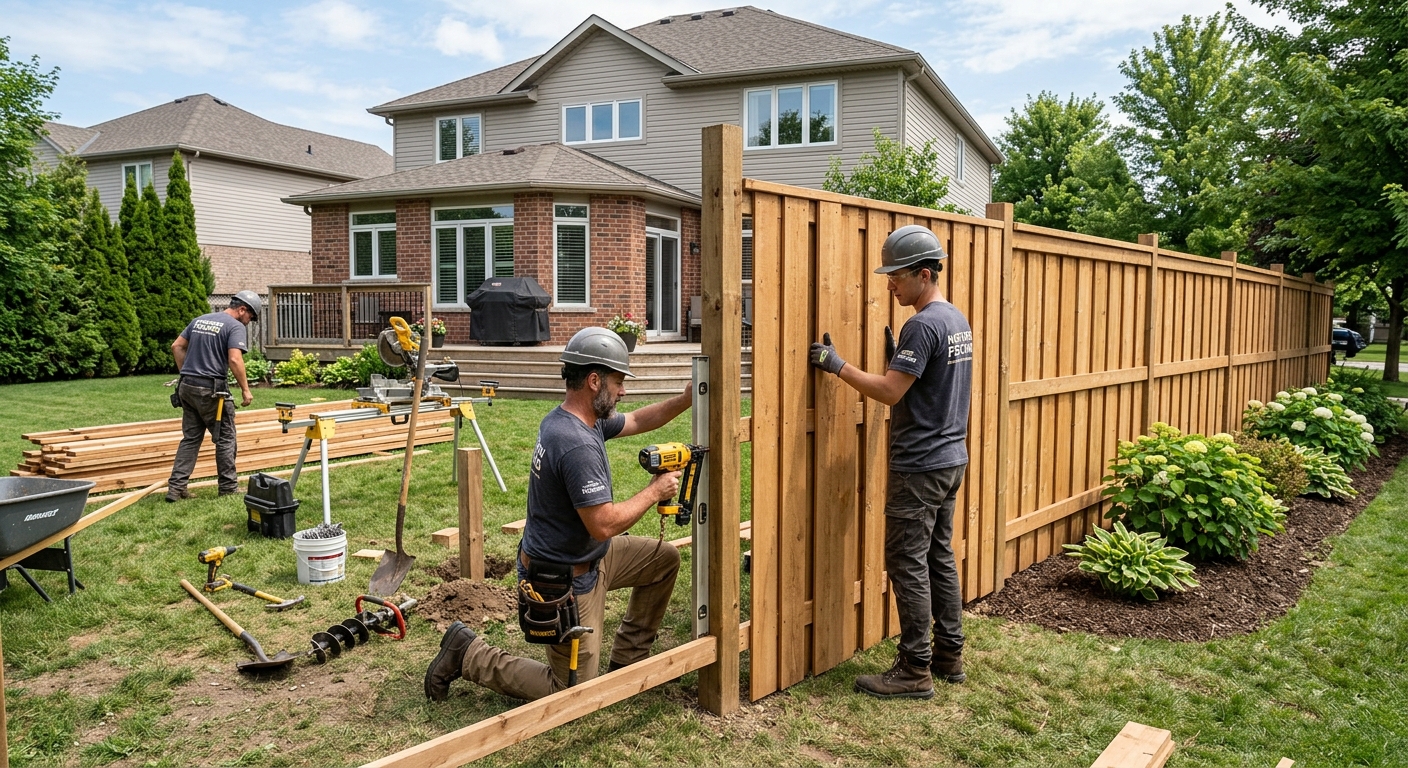
Fencing options and costs in Willoughby
In Willoughby, choosing a fence starts with matching your goals to what the Lower Mainland–Southwest market is seeing right now: steady demand from detached-home properties and active replacement work. With a population of 31,305 (Statistics Canada, 2021 Census), neighbourhoods like central Willoughby are full of family lots where owners routinely upgrade aging boundary fences, add dog runs, and improve yard privacy. That demand is especially strong along fast-growing residential pockets where new builds meet older fencing styles, meaning more mid-year installs for contractors and more crews scheduling around access constraints.
Costs are shaped by the region’s “mild but not trivial” frost and wind. Even though BC is milder than much of Canada, Fraser Valley soil is often wetter, so contractors frequently dig deeper holes than a shallow “minimum,” then set posts with concrete for long-term stability—particularly for corner posts, gate posts, and sections carrying extra load. Wind exposure also matters: solid panels catch more wind than open styles, so stronger framing and tighter spacing can raise labour time. In practice, this is why the same fence can land at noticeably different totals across the Lower Mainland–Southwest—site conditions drive labour hours as much as the material does.
Below is a practical comparison of common materials, typical lifespan ranges, and what homeowners usually pay in Willoughby—then you can use the price factors section to predict how your specific lot will move the numbers.
| Material |
Lifespan |
Maintenance |
Privacy Rating |
Price per Linear Foot |
| Pressure-treated pine (standard wood) |
10–15 years |
Stain or seal every 2–3 years; inspect for warping |
High (solid boards/picket spacing dependent) |
$55 – $95 |
| Cedar (natural rot resistance) |
15–25 years |
Light sealing/staining about every 2–4 years |
High (board spacing dependent) |
$65 – $110 |
| Vinyl / PVC (no-maintenance) |
20–30 years |
Rinse as needed; occasional panel/hinge checks |
High (solid or privacy lattice options) |
$75 – $130 |
| Chain-link (galvanized steel) |
20–35 years |
Occasional coating touch-ups; tighten hardware |
Low to Medium (privacy slats optional) |
$30 – $55 |
| Aluminum ornamental |
25–40 years |
Wash down periodically; check gate alignment |
Low (ornamental spacing) |
$90 – $170 |
| Composite / recycled material |
20–30 years |
Minimal; clean and inspect fastening points |
High (solid privacy styles) |
$95 – $155 |
Prices are estimates only and vary by project scope, site access and material selection.
What affects the price of fencing in Willoughby
Fence quotes in Willoughby can swing by 30–50% for what looks like the “same” job because Lower Mainland–Southwest work blends variable site conditions with weather-responsive scheduling. In BC, contractors also factor in deeper post-set requirements for wet soils, extra crew time for access, and stronger framing where wind loads are higher. Even within the broader region, a yard with compacted clay, a sloped back grade, or restricted side access will cost more than a straight, flat run in an easier-access neighbourhood.
Post embedment is a big part of the pricing story. Frost line depth still matters in BC: contractors often set posts with additional safety margin—commonly about 4–6 inches below the design frost depth—to limit heaving. While the local frost depth is less than colder provinces, wet Fraser Valley soils often mean deeper holes, more concrete, and longer posts to maintain straight lines. That labour + materials bump is one reason wood and vinyl privacy fences can land at the upper end of the typical bands (wood: $55–$95; vinyl/PVC: $75–$130).
Wind exposure also affects how we build. In open, windy lots, crews may use tighter spacing, larger posts, or more solid/reinforced framing to prevent visible flex and racking—especially for solid wood and PVC privacy panels. Coastal BC’s mild but wet climate accelerates wood rot risk if treatment and fastening aren’t done properly, which can push homeowners toward cedar or vinyl for long-term value.
Concrete examples from Willoughby: (1) A fence on a wet, low spot may require additional excavation and more concrete to stabilize posts; (2) a gate-heavy layout (two entrances plus a double drive gate) increases hardware, reinforcement, and alignment labour; (3) removing an old fence with buried footings can add hauling and disposal time, raising the total even when material choice stays the same.
| Price Factor |
Why It Matters |
Cost Impact |
| Fence length in linear feet — the primary cost driver |
More runs mean more posts, more rails, more labour hours |
Higher linear footage typically increases total cost proportionally |
| Post depth required — frost line determines post length and hole depth |
Deeper holes and longer posts improve stability and reduce heaving |
Adds excavation time and material; can shift totals meaningfully |
| Post setting method — concrete vs. gravel pack vs. driven posts |
Concrete improves anchoring for gates, corners, and wet soil |
Concrete setting often costs more but reduces long-term repairs |
| Material choice — vinyl vs. cedar vs. chain-link |
Different framing needs and material rigidity change labour |
Vinyl/PVC usually costs more than chain-link; cedar sits mid-range to higher |
| Gate count and type — walk-through vs. drive-through (double) |
Gates need heavier framing, hinges, and bracing |
More/large gates can add a large portion of the project total |
| Grade and terrain — sloped yards require stepped or raked panels |
Uneven grade increases layout time and panel cutting/stepping |
Stepped/raked installs add labour and sometimes additional hardware |
| Old fence removal and disposal |
Debris hauling and foundation removal take time and space |
Can raise costs even if the new fence is basic |
| Permit fees and survey / property line locate |
Some fences require permits; accurate layout prevents boundary disputes |
Added admin cost; survey delays can affect scheduling |
Permits & regulations in British Columbia
In British Columbia, fence height rules and when a building permit is required depend on location and the fence’s position. A common threshold homeowners run into is permits for fences above about 2.0 m (6.5 ft) at the rear and around 1.0–1.2 m (3–4 ft) at the front or corner. Even when a permit isn’t required, you still need to respect property lines and any municipal setback bylaws that apply to your street.
Before any post holes get dug, always arrange utility locates. In BC, the typical call service is BC 1 Call so crews can mark buried utilities. Also, if your property boundary isn’t clear, get a survey or have your pins located before installation. This protects you from encroachment disputes and rework caused by offset lines.
Shared fence ownership issues are handled through provincial line-fences legislation. That matters when a boundary fence is shared with a neighbour because you may need agreement on costs and responsibilities for repair or replacement.
To keep things practical: what usually does NOT require a permit is installing common low, standard-height residential fencing that stays under the height thresholds, done wholly within your property lines (still subject to local bylaw rules). What DOES require a permit is typically a fence that exceeds those height limits, plus any special structures or attachments that trigger permitting.
To verify your contractor in Willoughby: ask for proof of (1) their BC licence/registration information (and any trade authorization they rely on), and (2) current liability insurance—request the certificate of insurance and check the jobsite coverage matches your address. For workers’ coverage, confirm WCB clearance (as applicable) or proof of workers’ compensation coverage. If they can’t provide clear, current documents on request, treat that as a major warning sign.
Choosing the right fence material for Willoughby
Picking the right fence material in Willoughby is mostly about balancing privacy, maintenance, and budget against the Lower Mainland–Southwest climate: wet winters, freeze–thaw cycles, and wind that can stress solid panels. Pressure-treated pine is the budget-friendly option, but it needs staining or sealing every 2–3 years to prevent grey weathering and protect the wood face. Cedar offers better natural rot resistance and a cleaner look, yet it still benefits from maintenance to prevent premature greying and fastener issues. Vinyl/PVC is the no-fuss choice for many homeowners—no staining and less routine upkeep—but it can become brittle if installed or designed incorrectly in extreme cold, so proper brackets and hardware matter.
Chain-link is usually the lowest upfront cost and has a long service life, but it offers limited privacy unless you add privacy slats or screen fabric. Aluminum ornamental is durable and rust-resistant, though it’s typically chosen for curb appeal rather than privacy. In terms of post stability, contractors still plan for frost-related movement and wet soils; even in the Lower Mainland, posts often get set with concrete for corner posts, gate posts, and privacy runs where stability is critical. Whether you need concrete depends on soil and design load, but in wetter yards, concrete-set posts are commonly recommended.
Wind and snow can also stress fencing. If your fence catches prevailing winds, you may need stronger framing, which is one reason privacy fences often land higher in the bands. A realistic example: switching from chain-link (often around $30–$55 per linear foot installed) to vinyl privacy (often around $75–$130) may be worth it when you want year-round privacy and minimal upkeep, especially if you’re replacing an older, warping wood fence that would otherwise require frequent repairs.
| Material |
Cold Tolerance |
Lifespan |
Annual Maintenance |
Best For |
Price Band |
| Pressure-treated pine |
Good (with proper sealing and correct post embedment) |
10–15 years |
Inspect fasteners; light touch-ups; plan staining every 2–3 years |
Value-driven privacy or boundary fencing with regular homeowner upkeep |
$55 – $95 |
| Cedar |
Good (handles damp conditions better than standard pine) |
15–25 years |
Seal/stain as needed (often every 2–4 years) |
Premium natural look and better rot resistance |
$65 – $110 |
| Vinyl / PVC |
Moderate to good (design + hardware quality matters in cold snaps) |
20–30 years |
Rinse and quick hardware checks (typically minimal) |
Low-maintenance privacy and clean lines |
$75 – $130 |
| Chain-link |
Good (stable galvanized components) |
20–35 years |
Occasional tightening and coating touch-ups |
Security, pet containment, and budget-conscious fencing |
$30 – $55 |
| Aluminum ornamental |
Good (powder-coated components) |
25–40 years |
Wash down; inspect gates annually |
Durability and curb appeal without rust |
$90 – $170 |
| Composite / recycled |
Good (engineered boards resist rot) |
20–30 years |
Low; occasional cleaning and fastener checks |
Privacy fences with long-term reduced maintenance |
$95 – $155 |
How to choose a fencing contractor in Willoughby
When you hire a fencing contractor in Willoughby, verifying credentials is as important as comparing price. In British Columbia, start by confirming their ability to work legally and safely: ask for their insurance certificate (liability) and check it lists the correct business name and includes coverage for residential fencing work. Next, verify workers’ compensation status through WCB documentation or a clearance letter (as applicable). If they have employees, they should be able to show current coverage; if they don’t, that’s a risk to you.
Then request 2–3 itemised written quotes. You want a breakdown that separates labour and materials (including posts, rails, fasteners, concrete where used, gate hardware, and finishing). Avoid “lump sum only” quotes where key items are bundled—fencing costs are sensitive to site conditions, and itemisation helps you compare apples to apples.
Read the scope carefully: is permit pulling included (when required), is old fence removal included, and how is disposal handled? Confirm who is responsible for property line verification and any survey or locate work your project needs. Also ask about warranty terms: a workmanship warranty should specify duration and what it covers (for example, post movement, sagging gates, or panel alignment). Product warranties should be from the manufacturer, and ask whether the warranty is transferable to a future owner.
Finally, payment scheduling should be conservative—never pay more than 10–15% upfront. Hold back the remaining balance until the job is complete and the fence is inspected. Get the start date and completion estimate in writing so you’re not left guessing if weather delays affect your install.
- Ask for itemised quotes with labour and material line items (posts, rails, gates, concrete, hardware).
- Confirm liability insurance with the certificate of insurance and matching business name.
- Verify workers’ compensation coverage with a WCB clearance letter or equivalent proof.
- Request a clear scope: permit included or extra, disposal included or extra, survey/locate included or extra.
- Review the post depth and setting method: what’s the embedment plan for your soil?
- Make sure gates are specifically priced (hinges, latches, reinforcement, framing).
- Confirm how sloped lots are handled (stepped vs. raked panels) and who does the layout.
- Check warranty details: workmanship length, manufacturer coverage, and transferability.
- Ask how they manage wind exposure and panel racking (bracing plan in writing).
- Payment schedule: no more than 10–15% upfront; holdback until final walk-through.
- Get a written timeline: start date, number of crew days, and completion estimate.
- Ask for references from recent local jobs in the Lower Mainland–Southwest region.
Red flags I commonly see in fencing disputes around Willoughby: vague scope that doesn’t specify post embedment or concrete setting, quotes that omit gate hardware details, no proof of liability insurance or unclear workers’ compensation status, payment demands that exceed 10–15% upfront, and warranties that don’t separate workmanship from manufacturer coverage. If any contractor resists written documentation, take that seriously.
Frequently asked questions — fencing in Willoughby
How do I find my property line before fencing?
In Willoughby and across British Columbia, the safest way to confirm your boundary is to use a survey or have your property pins located before any post holes are dug. If you don’t have recent survey paperwork, ask a surveyor to re-establish the pins so you can mark the fence line accurately. This matters because even a small offset can create disputes with neighbours and may force costly fence rework. Also, check whether your municipality requires setbacks for fences in specific locations (front corner vs. rear). Before installation, have the contractor coordinate utility locates (BC 1 Call) to avoid hitting buried lines during excavation. Plan this early—survey work can add lead time but prevents much larger problems later.
What's the most low-maintenance fence?
For most homeowners in Willoughby, vinyl/PVC is the standout “set it and forget it” option. It typically sits in the $75–$130 range per linear foot installed and doesn’t require regular staining or sealing the way wood does. You’ll still want periodic rinsing and quick checks of gate hardware, especially after wind events and freeze–thaw periods. Chain-link is also low maintenance and long-lived, but it doesn’t provide privacy unless you add slats or screening. If you’re choosing between wood and vinyl mainly because of upkeep, vinyl often justifies the difference where you’d otherwise pay every few years for staining and minor board replacements.
How tall can my fence be in Willoughby?
In British Columbia, common permit triggers are tied to height thresholds—often about 2.0 m (6.5 ft) at the rear and roughly 1.0–1.2 m (3–4 ft) at the front or corner. That said, municipal bylaws can further shape what’s allowed on a specific lot, especially near corners or in front-yard setbacks. In Willoughby, treat your fence plan like a “layout plus compliance” step: confirm the intended height, then confirm whether a permit is required and whether setbacks apply. Your contractor should help with the documentation or at least state whether they include permit pulling when it applies. When a fence exceeds the typical thresholds, plan on a permit step before digging.
Should fence posts be set in concrete here?
Not every post needs concrete in all situations, but in the Lower Mainland–Southwest, concrete setting is commonly used for stability where it matters most—especially corner posts, gate posts, and privacy runs in wetter soil. Even with BC’s milder conditions, frost movement still exists, and posts often need to be set deeper to limit heaving. Concrete can improve anchoring where Fraser Valley soils stay damp, and it can reduce the likelihood of post rotation or sagging gates over time. A good contractor will tell you the embedment depth plan and the setting method based on soil, fence height, wind exposure, and whether you have steep grades. If you’re being quoted low-end wood pricing (like $55–$95), ask whether the quote includes concrete where it’s appropriate for your design.
What's the best fence for privacy?
For real privacy in Willoughby, you generally want a solid-panel style with minimal gaps: vinyl/PVC privacy fencing or wood (cedar or pressure-treated pine) with tight board spacing. Vinyl privacy fences usually fall within the $75–$130 installed band and offer the most consistent appearance with low annual upkeep. Cedar can deliver a warmer look and better rot resistance, typically in the mid-range, but still needs maintenance. Wood privacy fences can look excellent, yet they’re more sensitive to wet-weather treatment and fastening quality. If your goal is privacy plus minimal hassle, vinyl is usually the best balance. If budget is the priority, pressure-treated pine privacy can work well, but plan for staining/sealing and periodic inspections to keep it looking sharp.
How do I compare fencing quotes?
To compare fencing quotes in British Columbia, don’t rely on the total alone—compare the scope. Ask for itemised estimates separating labour and materials, including posts, rails, concrete (if used), gate hardware, fasteners, and disposal. Confirm what each quote includes for: property line verification/survey, permit pulling (if the planned fence exceeds common thresholds), and old fence removal. Check how they handle slopes (stepped vs. raked) and what post embedment depth and setting method they plan for frost stability. Also compare warranty terms: workmanship duration, manufacturer warranty, and whether warranties transfer. If one quote is much cheaper than typical ranges (for example, well below chain-link $30–$55 installed or wood $55–$95), ask what key elements are missing—often it’s embedment, gate reinforcement, or disposal.