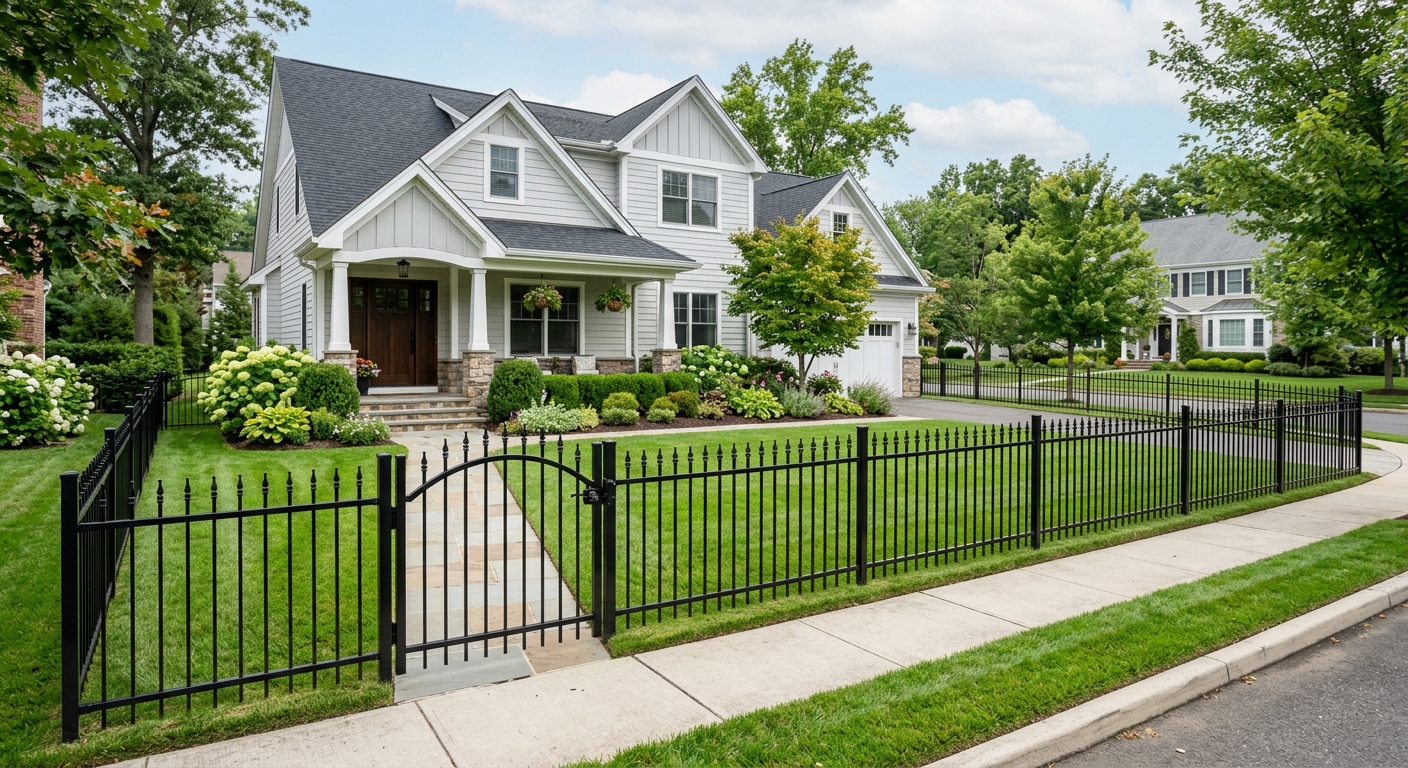
Fencing options and costs in English Bay
English Bay is where many homeowners in Vancouver and the wider Lower Mainland–Southwest want a fence that looks good and holds up through coastal wind and wet weather. With a population of 14,225 (Statistics Canada, 2021 Census), local demand is steady—especially in established residential pockets where homeowners refresh older boundaries rather than move. While the exact ownership pattern varies street to street, every detached home and many townhouse properties still need boundary protection, privacy screening, and pet or garden control, so fencing remains a regular “as-needed” project.
In the Lower Mainland–Southwest, mild but not trivial frost and frequent wind mean posts still need to be set below the design frost depth to limit heaving. In wetter soils common across the Fraser Valley side of the region, crews often dig deeper holes, use more concrete for privacy panels, corner posts, and gate posts, and spend more time on alignment and drainage. Coastal British Columbia also pushes wood weathering and rot risk higher if pressure-treated lumber is not properly sealed and maintained—so material selection and installation method directly affect long-term value. Contractor availability is generally good in the English Bay area, but premium finishes (cedar, vinyl/PVC privacy, and metal) can tighten scheduling when the weather window opens.
Trade demand is especially strong around English Bay proper and the West End–style neighbourhood fabric, where privacy screening and wind-stable landscaping often go hand-in-hand. Below is a quick comparison to help you match material to performance and typical installed budgeting, then we’ll break down what drives the final quote.
| Material |
Lifespan |
Maintenance |
Privacy Rating |
Price per Linear Foot |
| Pressure-treated pine (standard wood) |
10–20 years |
Stain/seal every 2–3 years; periodic fastener checks |
High (solid boards) |
$55–$95 |
| Cedar (natural rot resistance) |
15–25 years |
Light sealing or staining every 2–4 years (helps appearance) |
High (solid boards) |
$70–$120 |
| Vinyl / PVC (no-maintenance) |
25–35 years |
Wash-rinse seasonally; no painting/staining |
High to very high (solid or close-board styles) |
$75–$130 |
| Chain-link (galvanized steel) |
20–40 years |
Occasional tightening and rust inspection (rare with good coating) |
Low (privacy requires slats) |
$30–$55 |
| Aluminum ornamental |
30–50 years |
Minimal—rinse and check gate hardware |
Low to medium (ornamental pickets) |
$90–$170 |
| Composite / recycled material |
20–30 years |
Low—cleaning; inspect for warping in extremes |
High (solid privacy styles) |
$85–$140 |
Prices are estimates only and vary by project scope, site access and material selection.
What affects the price of fencing in English Bay
In English Bay and across the Lower Mainland–Southwest, two quotes for “the same” fence can differ by 30–50% because the quote isn’t just material—it’s labour intensity: excavation conditions, post spacing, gate hardware, disposal, and how the crew sets posts in wet ground. Even within British Columbia, crews respond to frost and wind differently depending on exposure and soil moisture, which changes how much concrete goes in and how long install days take.
The biggest technical driver is how deep posts must be set. In cold Ontario and Alberta, guidance often pushes posts roughly 1.5–2.0 m in the ground to resist frost heave; in the Lower Mainland–Southwest, frost is less severe than the Prairies, but mild winter freeze-thaw still matters. In practice, contractors typically set posts about 4–6 inches below the design frost depth, which still means deeper holes than “surface” installs, and longer posts (more material cost) plus more excavation time.
Wind exposure also changes the design load. Compared with calmer yards, coastal British Columbia sites need tighter spacing and more robust corner and line-post bracing—especially for solid wood and vinyl privacy panels. Composite and PVC systems may also require careful fastening and alignment so panels don’t flex at the fence line during gusts.
Two local examples from English Bay: (1) a sloped backyard behind a heritage-style property often requires stepped rails or raked panels, which increases labour and trim-off waste; (2) a fence across a damp, low-lying garden bed usually means more concrete and slower hole excavation. On the budget end, chain-link at roughly $30–$55 per linear foot can stay economical, while vinyl privacy at $75–$130 per linear foot may be justified when you’re replacing an old, wavy wood line and need sturdier framing around gates and corners.
| Price Factor |
Why It Matters |
Cost Impact |
| Fence length in linear feet |
Material and labour scale directly with total runs |
Largest driver (often determines the entire budget) |
| Post depth required |
Frost depth and local freeze-thaw influence heaving risk |
Deeper holes increase excavation time and post length |
| Post setting method |
Concrete setting vs gravel pack vs driven posts affects stability |
Concrete adds materials + labour but improves long-term performance |
| Material choice |
Different materials have different framing, fasteners, and structural needs |
Vinyl/PVC and cedar usually cost more than chain-link; aluminum is often highest |
| Gate count and type |
Gates require stronger posts, hardware, and tighter tolerances |
Double drive-through gates can add substantial fabrication + install time |
| Grade and terrain |
Slope requires raked or stepped panels and more trimming |
More labour and material waste than straight-flat yards |
| Old fence removal and disposal |
Demo includes haul-away, potential disassembly, and stump/line-post removal |
Can add hundreds to thousands depending on condition and access |
| Permit fees and survey / property line locate |
Some height/layout projects require extra documentation and verification |
Occasional add-on costs; prevents costly boundary disputes |
Permits & regulations in British Columbia
In British Columbia, fence permit requirements depend heavily on the fence height and where it sits relative to the street. In many municipalities, fences above a threshold—commonly around 2.0 m (6.5 ft) at the rear and about 1.0–1.2 m (3–4 ft) at the front or corner—often trigger a building permit. Even when a permit isn’t required, all fences must still respect property lines and local setback bylaws, so the “right place” is as important as the “right height.”
Before digging any post holes, call for utility locates. In BC, use BC 1 Call (and follow any required marking time frames). For English Bay homeowners, I also recommend obtaining a survey or confirming property line locations via your property pins before the first post is set—this avoids expensive rework if the line turns out different than the existing fence alignment.
Shared fence ownership and line-fence expectations are handled under provincial line-fences legislation. Practically, that means you should confirm who owns the fence line and what portion you’re responsible for before you order materials.
Licence + insurance checks (how to verify before you sign): Start by confirming the contractor is properly licensed (where applicable in BC) using the relevant online contractor registry your supplier uses for trades. Then request a certificate of liability insurance and verify it covers fencing/installation work and includes adequate limits. For coverage similar to WSIB/WCB in your province, ask for the provider clearance letter and confirm the certificate is current—don’t accept expired documents.
Choosing the right fence material for English Bay
Choosing the right fencing material in English Bay is about matching the fence to your priorities—privacy, low maintenance, budget, and lifespan—while accounting for coastal British Columbia’s wet cycles and wind. Pressure-treated pine is the budget-friendly route, but it typically needs staining or sealing every 2–3 years to prevent heavy greying and early surface checking. Cedar looks warmer and has better natural rot resistance, yet it still benefits from regular maintenance for appearance and to keep boards consistent. Vinyl/PVC offers true low maintenance and works well for privacy styles, but it can become brittle in extreme cold snaps if the system is not installed with correct fastening and temperature considerations. Chain-link is the lowest cost and usually the longest-life option, but it won’t provide privacy unless you add slats or plant screening. Aluminum ornamental is rust-resistant and clean-looking; it’s typically best when you want visibility and curb appeal rather than full privacy.
Local post-setting matters too. In the Lower Mainland–Southwest, frost isn’t as deep as Ontario or Alberta, but freeze-thaw still pushes installers to set posts below the design frost depth—often roughly 4–6 inches under it—so heaving is less likely in wet ground. Whether you use concrete-set posts depends on soil conditions and the fence type: privacy systems, corner posts, and gate posts are commonly concrete-set for stability. Wind exposure around the coast also rewards stronger rails and tighter spacing for solid styles.
As a dollar example: if you’re considering a quick privacy upgrade, moving from chain-link at $30–$55 per linear foot to vinyl privacy at $75–$130 per linear foot is often justified when you’re repeatedly repainting or replacing a failing wood fence—and you want fewer maintenance days for many years.
| Material |
Cold Tolerance |
Lifespan |
Annual Maintenance |
Best For |
Price Band |
| Pressure-treated pine |
Good (with proper sealing and correct fasteners) |
10–20 years |
1–2 times per year light inspection; stain as needed every 2–3 years |
Budget privacy with routine homeowner upkeep |
$55–$95 |
| Cedar |
Good (natural resistance improves performance in wet weather) |
15–25 years |
Wash and inspect; typically stain or seal every 2–4 years |
Attractive privacy with better natural rot resistance |
$70–$120 |
| Vinyl / PVC |
Very good (installed correctly to avoid brittleness) |
25–35 years |
Rinse/washer clean; inspect posts and hardware |
No-maintenance privacy |
$75–$130 |
| Chain-link |
Excellent (steel coating holds up) |
20–40 years |
Minimal; occasional tightening |
Security on a budget |
$30–$55 |
| Aluminum ornamental |
Excellent (no rust) |
30–50 years |
Minimal; rinse and check gate alignment |
Curbs appeal with visibility |
$90–$170 |
| Composite / recycled |
Good (performance varies by product; avoid improper fastening) |
20–30 years |
Low—seasonal cleaning and hardware checks |
Low-maintenance privacy with a wood-like look |
$85–$140 |
How to choose a fencing contractor in English Bay
To choose a contractor confidently in English Bay, start with verification: request proof of liability insurance and confirm coverage is valid for fencing/installation work. For the workforce coverage equivalent to WSIB/WCB in British Columbia, ask for a current clearance letter from the relevant provider and ensure the date is recent (not just “recently issued”). Also confirm they are properly authorized/licensed where applicable in BC for the type of work you’re buying.
Next, get 2–3 itemised written quotes instead of a lump-sum estimate. A fair quote should separate line items such as materials, post installation method (concrete vs gravel pack), gate hardware, rail count, fence picket/board spacing, grading work (raked/stepped sections), and disposal/removal. Check what’s excluded: common exclusions are permits, utility locating, stump removal, and hauling if the old fence isn’t accessible. If the permit is required, confirm whether the quote includes permit pulling and inspection coordination, or whether you’ll pay that separately.
Warranty matters. Ask for the length of the workmanship warranty (how long they stand behind the installation) and the product/manufacturer warranty for materials. Also confirm whether warranties are transferable if you sell the house. Finally, the payment schedule should be conservative: never pay more than 10–15% upfront, and use a holdback until the job is complete and any walk-through punch list is corrected. Get a start date and completion estimate in writing so you have a timeline you can hold them to.
- Ask for certificate of liability insurance and verify dates and jobsite coverage.
- Request current clearance letter for provincial workforce coverage (equivalent to WSIB/WCB).
- Confirm product warranties and workmanship warranty in writing.
- Require itemised labour + materials breakdown (posts, rails, fasteners, gates, trim).
- Clarify post setting method (concrete setting vs gravel pack) and included embedment depth.
- Ask whether utility locates are arranged and who pays if markings change the layout.
- Verify disposal/haul-away is included if you’re removing an old fence.
- Confirm gate hardware brand/grade and whether hinges are rated for wet/coastal conditions.
- Make sure slope handling is described (stepped sections vs raked rails and how they’ll match grades).
- Confirm survey/property line locate is included or excluded (and who orders it).
- Review fence height measurements: confirm “finished height” from grade, not from assumed points.
- Use a written schedule: start date, expected duration, and weather-delay communication plan.
Red flags I commonly see with fencing contractors in English Bay include: (1) quoting without specifying post embedment and setting method; (2) refusing to provide insurance/clearance documentation; (3) offering a large upfront deposit beyond 10–15%; (4) giving only a single lump-sum number without itemisation; and (5) vague warranty language like “standard warranty” with no length or coverage terms.
Frequently asked questions — fencing in English Bay
What fence style offers the best wind resistance in English Bay?
In English Bay (and the wider Lower Mainland–Southwest), wind load is the key design concern, even when temperatures stay relatively mild. Solid privacy panels usually perform best when they’re built with stronger posts, tighter spacing, and adequate bracing—typically with solid framing rather than lightweight infill. Semi-open styles like close-board wood or lattice with backing can reduce “sail” effect, but they still need corner post reinforcement and properly tensioned rails. Chain-link is naturally good for wind because it lets air pass through, which is why it can tolerate gusts better, but it won’t give privacy unless you add slats. If you’re considering vinyl/PVC privacy, choose systems designed for gust performance and confirm the installer uses correct fastening and alignment practices.
How much does a fence cost in English Bay?
Fence pricing in English Bay typically follows the same installed bands you see across the Lower Mainland–Southwest: chain-link is usually the lowest at around $30–$55 per linear foot, wood tends to land in the mid-range around $55–$95, and vinyl/PVC privacy often sits higher at $75–$130. Aluminum ornamental frequently costs the most, commonly around $90–$170 per linear foot depending on height and complexity. Final cost changes with length, gate count and type, slope (stepped/raked sections), post setting method (concrete adds stability in wet soil), and whether you need removal/disposal. If your yard is wet or includes heavy grading, labour time rises quickly, so it’s worth comparing itemised quotes rather than headline numbers.
How deep should fence posts be for English Bay's frost?
British Columbia doesn’t have the deep frost conditions you see across Ontario and Alberta, but frost heave risk still exists from freeze-thaw cycles—especially in wetter soils. Practical contractor practice in the Lower Mainland–Southwest is to set posts about 4–6 inches below the design frost depth, which generally results in deeper holes than the absolute minimum. For stability, many installs—especially privacy fences with solid panels, corner posts, and gate posts—use concrete setting and deeper embedment to keep posts straight year-round. Your quote should specify post depth (or embedment) and show how they’ll handle local soil moisture and drainage. If the contractor won’t discuss post depth and setting method, treat that as a serious scope gap.
Wood vs vinyl vs aluminum fence — which is best?
“Best” depends on what you value most. Wood (pressure-treated pine or cedar) is often the best balance for appearance and initial cost, but it requires maintenance—typically staining/sealing every 2–3 years for pressure-treated and periodic upkeep for cedar to keep it looking good. Vinyl/PVC is usually best for homeowners who want low maintenance; it offers strong privacy options and doesn’t require painting, but it can be more sensitive to how it’s installed in extreme cold snaps, so professional fastening and alignment matter. Aluminum is the best option when you want long life and rust resistance with an ornamental look; however, it generally provides less privacy than wood or vinyl unless you choose a style designed for screening. In coastal English Bay conditions, all three can work well—just match the product to your privacy expectations and your maintenance tolerance.
Do I need a permit to build a fence in British Columbia?
In British Columbia, permits often come into play based on fence height and location. Many municipalities commonly require a building permit when fences exceed about 2.0 m (6.5 ft) in the rear and around 1.0–1.2 m (3–4 ft) at the front or corner, but requirements can vary by city and bylaws. Regardless of permits, you must respect property lines and local setbacks, so you should confirm the exact fence location—survey pins help avoid encroachment disputes. Before digging post holes, call BC 1 Call for utility locates. When hiring a contractor in English Bay, ask whether they will pull the permit (if required), include it in the quote, and handle inspection scheduling. A good contractor will also document the height “finished grade” measurement they’re building to.
How long does a wood fence last in English Bay?
A wood fence in English Bay typically lasts about 10–20 years for pressure-treated pine and often 15–25 years for cedar when installed correctly and maintained. Coastal British Columbia’s wet weather and freeze-thaw cycles accelerate surface wear if boards aren’t sealed or stained on schedule, and wind can loosen fasteners over time—especially at corners and gate openings. Lifespan also depends on post-setting method: concrete-set posts and proper embedment reduce heaving and keep the fence straighter. If you’re planning a wood privacy fence, ask your contractor how often you should stain, whether they recommend specific fasteners for coastal environments, and how they’ll detail drainage at the base. Proper installation plus basic yearly inspections usually makes a big difference in long-term performance.