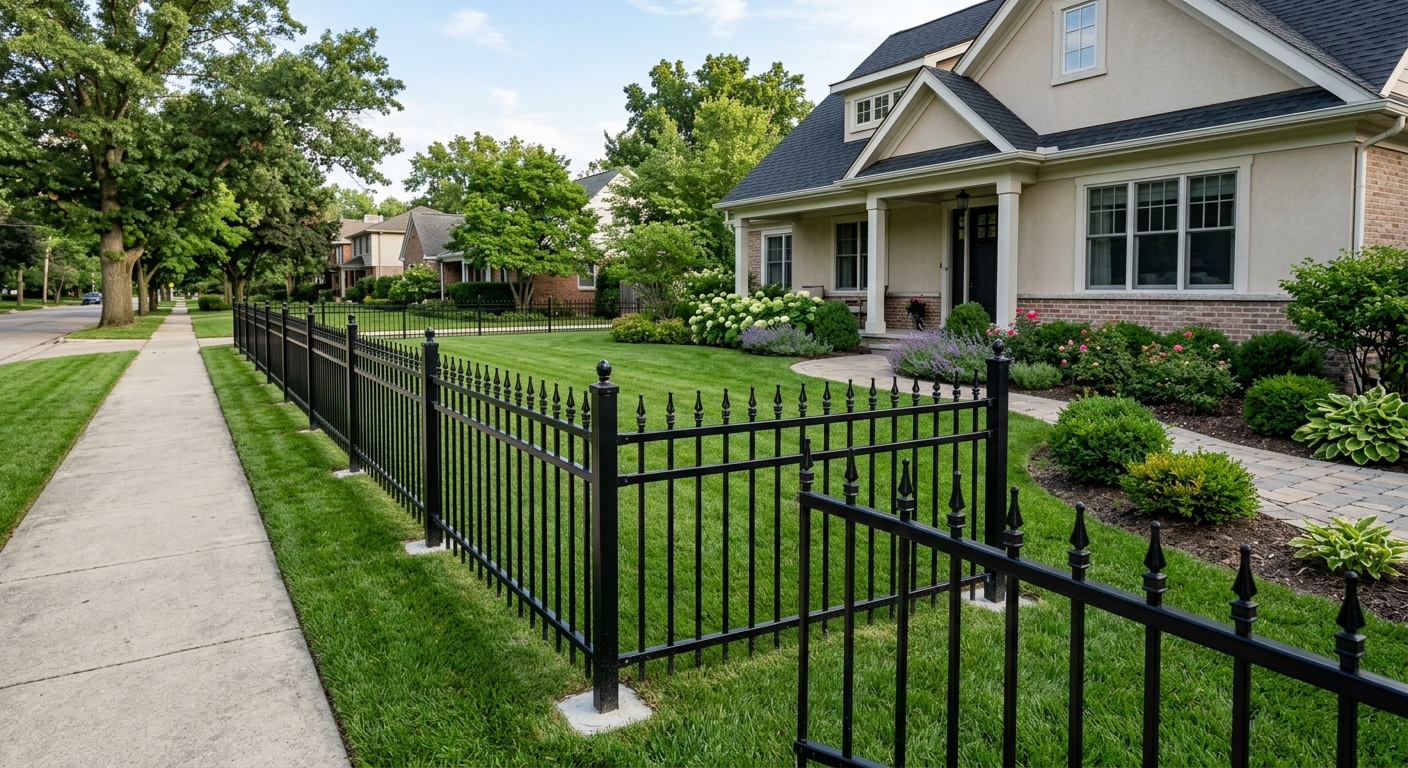
Fencing options and costs in Richmond
Richmond homeowners typically choose a fence based on privacy needs, low maintenance, and how the material performs in Lower Mainland–Southwest weather. With a population of 209,937 and about 57,800 homeowner households owning their homes (Statistics Canada, 2021 Census), there’s steady local demand—especially because roughly 30.1% of dwellings are single-detached homes that often include yards needing boundary fencing. Richmond’s mix of older housing stock (25.9% of homes built before 1981, Statistics Canada, 2021 Census) also means you’ll see a higher share of aging fences where posts have softened in wetter soils and gate hardware is failing.
Pricing in Richmond is shaped by mild but not trivial frost and wind conditions. Crews still set posts below the effective frost depth to reduce heaving, and Fraser Valley–type moisture in local soils often means deeper holes, more concrete at critical posts (corners, end posts, and gates), and more labour for clean installs. Access matters too: driveways, lane parking, and backyard gate width in areas like Steveston and Gilmore can add time for materials staging and panel handling. That’s why two “same height, same length” projects can land in different price bands.
To help you compare apples to apples, use the table below as a realistic starting point for materials commonly installed across Richmond. After that, we’ll look at the specific factors that move the total up or down.
| Material |
Lifespan |
Maintenance |
Privacy Rating |
Price per Linear Foot |
| Pressure-treated pine (standard wood) |
10–15 years |
2–3 years stain/seal; check for loose rails and posts |
8/10 (solid board privacy) |
$55–$95 |
| Cedar (natural rot resistance) |
15–25 years |
1–2 years light upkeep; sealing/staining as needed |
9/10 (solid privacy with good board fit) |
$70–$115 |
| Vinyl / PVC (no-maintenance) |
20–30 years |
Wash only; periodic inspection of caps and gate hardware |
9/10 (solid or semi-solid styles) |
$75–$130 |
| Chain-link (galvanized steel) |
25–40 years |
Occasional tightening; rinse build-up and replace bent sections |
3/10 (limited privacy unless privacy slats added) |
$30–$55 |
| Aluminum ornamental |
25–40 years |
Wash occasionally; check fasteners |
4/10 (visual barrier, not a full privacy fence) |
$95–$170 |
| Composite / recycled material |
20–30 years |
Low; wash and inspect at fasteners and corners |
8/10 (solid panel options) |
$85–$145 |
Prices are estimates only and vary by project scope, site access and material selection.
What affects the price of fencing in Richmond
In Richmond, the same fence can come back with quotes that differ by 30–50% because crews are pricing for site conditions, labour logistics, and how the materials are engineered for local weather. Across the Lower Mainland–Southwest, contractors typically see a “mild but wet” cycle: posts still need to be set below frost-heave risk (effectively deeper in saturated soils), and wind exposure affects how much bracing and reinforcement is required. That’s why wood, vinyl/PVC, and chain-link aren’t just different material costs—each has different labour and structural demands.
Frost and ground conditions are a big driver in Richmond. While BC coastal conditions can be shallower than interior regions, contractors still commonly plan post holes deeper than the bare minimum and set critical posts in concrete. A practical way to think about it: frost protection often means posts set roughly 4–6 inches below the local effective frost line, translating to deeper holes than a “quick set.” In colder Ontario and Alberta regions, that can require around 1.5–2.0 m embedment, more concrete, and longer posts—one reason you’ll often see higher material and labour costs there. In Richmond, the numbers may be a bit less than those extremes, but the “deeper holes + more concrete at corners and gates” approach is still common.
Then there’s wind and exposure. Coastal BC generally means wind-driven gusts still demand proper spacing and sturdier top rails for solid privacy styles, though Prairies sites more often push toward very tight spacing and heavier panel designs. In Richmond specifically, wetter Fraser Valley–type soils can raise the cost of excavation and cleanup, and older yards may need extra time to work around decayed baseboards and shifting grades. If your old fence is failing after years in damp conditions, removal and disposal can add noticeable labour—sometimes enough to move you from a vinyl/PVC range near $75–$130 up toward the higher end once gate rebuilds and reinforced posts are required. Conversely, a straightforward run on level ground may keep wood installations in the $55–$95 band without expensive rework.
| Price Factor |
Why It Matters |
Cost Impact |
| Fence length in linear feet |
Most labour and materials scale directly with footage |
Major: drives most of the total |
| Post depth required |
Frost protection and soil saturation affect hole depth |
Medium to major: deeper holes mean more labour and concrete |
| Post setting method |
Concrete setting costs more than gravel backfill, but improves stability |
Medium: corners, ends, and gates often require concrete |
| Material choice |
Vinyl/PVC and metal need different hardware, engineering, and handling |
Major: vinyl/PVC typically costs more than standard wood; chain-link is lowest |
| Gate count and type |
Double gates and drive-through widths require stronger frames and more hardware |
High: gates add reinforced posts and extra fabrication/installation time |
| Grade and terrain |
Slopes require stepped sections, raked panels, and tighter measuring |
Medium: more labour and material waste |
| Old fence removal and disposal |
Demolition, haul-away, and patching can be time-consuming |
Medium: can add significant labour days |
| Permit fees and survey / property line locate |
Locates and documents reduce boundary risk and rework |
Low to medium: usually project-specific |
Permits & regulations in British Columbia
In British Columbia, fence requirements can involve municipal permit rules, especially for taller fences. As a general guideline, fences above a height threshold—often around 2.0 m (6.5 ft) at the rear and roughly 1.0–1.2 m (3–4 ft) toward the front or corner—may require a building permit, depending on the municipality and exact location. Regardless of height, all fences must respect property lines and municipal setback bylaws.
Before any post holes are dug, you must call for utility locates (Ontario One Call is not applicable here; in BC use BC 1 Call). Also, obtain a survey or locate your property pins before installing. That reduces the risk of encroachment disputes, especially where older boundary markers have shifted or fences were built decades ago.
Shared fence ownership and neighbour responsibilities are handled under the province’s line-fences legislation framework. The practical takeaway: document agreements in writing when possible and keep photos or measurement notes during installation.
Licence and coverage checks are part of staying safe in Richmond. Ask your contractor for (1) their BC licence/registration details where applicable, and confirm it using the official online registry; (2) a certificate of insurance showing general liability and project limits; and (3) proof of coverage under workers’ compensation (WSBC/WCB) as applicable for their workers—request clearance documentation or confirmation of coverage. If they can’t provide documents promptly, that’s a warning sign before you sign a contract.
Choosing the right fence material for Richmond
Choosing the right fence material in Richmond comes down to matching your priorities—privacy, low maintenance, budget, and lifespan—to how Lower Mainland–Southwest weather affects materials. Pressure-treated pine is typically the budget-friendly choice, but it needs staining or sealing every 2–3 years to prevent grey weathering and keep water out of the wood fibres. Cedar looks great and has better natural rot resistance, but it still benefits from periodic sealing to maintain appearance and reduce long-term moisture damage. Vinyl/PVC is a strong low-maintenance option because it generally doesn’t require staining, but in extreme cold snaps it can become more brittle—good installation with proper expansion considerations matters. Chain-link is usually the lowest cost and longest life for durability, but it offers limited privacy unless you add privacy slats. Aluminum ornamental fences are rust-resistant and neat, but they are mid-range to higher cost and are more about boundary definition than full privacy.
Post-depth and setting matter across all options. In Richmond’s mild but wet conditions, crews commonly plan frost-protective embedment using deeper holes than a “quick set,” and concrete is frequently used for corners, ends, and gate posts to resist shifting. Whether concrete-set posts are necessary depends on your soil and drainage, but for many backyard and gate situations it’s the difference between a fence that holds line versus one that leans after freeze-thaw cycles. Wind also plays a role: solid board privacy designs need sturdy top rails and good bracing so panels don’t rack during gusts.
For a real-world decision: if you’re considering wood in the $55–$95 band versus vinyl/PVC in the $75–$130 band, the difference can be justified when you want to avoid recurring staining labour and keep maintenance predictable—especially in a rainy year when wood maintenance gets delayed.
| Material |
Cold Tolerance |
Lifespan |
Annual Maintenance |
Best For |
Price Band |
| Pressure-treated pine |
Good (with proper seal/stain) |
10–15 years |
Low–medium (stain/seal and inspections) |
Budget privacy with plan for periodic upkeep |
$55–$95 |
| Cedar |
Good (naturally rot-resistant) |
15–25 years |
Low–medium (seal/stain as needed) |
Appearance + rot resistance in Richmond’s damp cycles |
$70–$115 |
| Vinyl / PVC |
Very good (avoid impact at cold extremes) |
20–30 years |
Very low (wash/inspect hardware) |
Low-maintenance privacy and long-term consistency |
$75–$130 |
| Chain-link |
Excellent (galvanized steel) |
25–40 years |
Very low (tighten/replace damaged sections) |
Security with minimal cost and long service life |
$30–$55 |
| Aluminum ornamental |
Excellent (non-rusting) |
25–40 years |
Low (occasional wash/fastener check) |
Attractive boundary definition without heavy maintenance |
$95–$170 |
| Composite / recycled material |
Good (stable in wet climates) |
20–30 years |
Low (wash and periodic hardware checks) |
Solid privacy without wood staining |
$85–$145 |
How to choose a fencing contractor in Richmond
When you hire a fencing contractor in Richmond, start with verification—licensing, liability insurance, and workers’ compensation coverage. In BC, you can confirm credentials using the official online registry for the contractor category you’re hiring for, then ask for a certificate of insurance that names you (or your property) as applicable and shows adequate general liability coverage for the project. For workers’ compensation, require proof of WSBC/WCB coverage (or clearance confirmation where appropriate) before work begins. If a company won’t provide documents quickly, it’s usually a sign their risk management isn’t in order.
Next, request 2–3 itemised written quotes, not just one lump sum. Ideally, the quote breaks out labour and materials: post components, rails, privacy panels or slats, gate frames and hinges, fasteners, concrete setting where required, haul-away/disposal, and any hardware upgrades. Read the exclusions: Does the quote include permit pulls if needed, does it include utility locate coordination, and is old fence removal/disposal included? A cheap “headline price” often excludes demolition, concrete, or stepped-grade adjustments on sloped lots.
Warranty matters in fencing. Ask for a workmanship warranty (how long they stand behind installation) and a manufacturer product warranty (the material’s defect coverage). Confirm whether warranties are transferable if you sell your home. For payment schedule, never pay more than about 10–15% upfront; a holdback until the final walkthrough and punch list is completed is common and protects you if materials or quality aren’t meeting the scope.
Finally, insist on a start date and a completion estimate in writing. Richmond schedules can shift around rain and crew availability, but you should still get a realistic timeline tied to your installation scope.
- Provide proof of BC registration/licence details (where applicable) and confirm via the official registry.
- Show a current certificate of general liability insurance with appropriate limits.
- Provide WSBC/WCB coverage proof or clearance confirmation.
- Use itemised quotes: materials, labour, and hardware (gates, hinges, latch) listed separately.
- Confirm post setting method in writing (concrete at corners/gates vs gravel pack) and soil assumptions.
- Ask whether disposal/haul-away of old fencing is included.
- Clarify whether utility locate is included or if you must arrange it (and who calls).
- Verify warranty length for workmanship and product separately.
- Get clarification on height measurement method (to grade/finished grade) and any stepped sections on slopes.
- Request a site measurement plan and who is responsible for property line verification.
- Confirm the payment schedule: keep upfront at 10–15% and hold back until completion.
- Ask for start date and completion estimate in the contract, not just in emails.
Red flags in Richmond include: contractors refusing to provide insurance/licence documentation; quotes that don’t specify post setting (especially for gates and corners); “lump sum” pricing with no breakdown of gates or disposal; delays with no written timeline; and sudden change orders that lack written approvals or clear reasons tied to the scope.
Frequently asked questions — fencing in Richmond
What is the cost per linear foot for fencing in Richmond?
In Richmond, typical installed pricing is best discussed as a per-linear-foot range that depends on material and site conditions. For example, chain-link commonly lands around $30–$55 per linear foot installed, while standard wood installations typically fall near $55–$95. Vinyl/PVC is often higher at about $75–$130 per linear foot because of material and structural hardware requirements. Your final number can move based on post embedment depth for frost protection, soil moisture (which can increase hole excavation and concrete use), and whether you have gates or slope adjustments. If you share your approximate footage, fence height, and gate count, a contractor can narrow the estimate quickly.
Should I repair or replace my old fence in Richmond?
In Richmond, it’s often repairable when the posts are still solid, the fence line is mostly straight, and damage is limited to rails or a few boards. If the fence is leaning, posts are soft at ground level, or you’re seeing repeated failures at corners and gates, replacement usually saves money long-term. Frost and wet soil cycles in the Lower Mainland–Southwest can work on wood from the bottom up, so “looks okay from the yard” can still hide weakened posts. If removal and disposal is manageable and the boundary line is clear, replacement can be the better investment—especially for privacy fences. Consider replacement if repairs would cost close to half the cost of a new install, or if multiple sections need repeated fixes.
How do I handle a fence dispute with a neighbour in British Columbia?
Fence disputes in British Columbia typically come down to property lines, permitted heights/locations, and responsibility for shared boundary fencing. Start by verifying the boundary using your survey or property pins, and take measurements/photos of the existing fence location. In BC, shared fence ownership and neighbour responsibilities are guided by provincial line-fences legislation, but the municipality may still set rules on setbacks and height thresholds. Keep communication respectful and put agreements in writing. If you and your neighbour can’t agree, consult a professional for a boundary confirmation and consider legal advice before removing or rebuilding anything. Richmond’s older housing stock sometimes means old fences aren’t aligned with modern pin locations, so confirming boundaries first is usually the fastest path to resolution.
What fence style offers the best wind resistance in Richmond?
For wind resistance in Richmond, the best choice is usually a fence built with proper bracing, solid top rails, and correctly spaced posts set deep enough for frost and stability. True “solid wall” privacy fences can catch gusts and create more pressure if they’re undersupported, while properly designed semi-private styles and well-reinforced solid panels usually perform better. Chain-link can handle wind well because it’s permeable, but it won’t provide privacy unless you add slats that reduce airflow. Vinyl/PVC and wood privacy fences do well when they include reinforced framing around corners and gates. The key is engineering the structure to your yard’s exposure and grading—especially on yards with open views or higher wind exposure near arterials.
How much does a fence cost in Richmond?
Total fence cost in Richmond depends heavily on length, material, gate count, and site conditions like slope and soil moisture. As a simple baseline, a chain-link fence (often the lowest-cost) may land around $30–$55 per linear foot installed, while wood privacy fencing is commonly around $55–$95 per linear foot. If you want a low-maintenance privacy look, vinyl/PVC often ranges about $75–$130 per linear foot. For larger yards, gate-heavy layouts, or projects with removal/disposal and reinforced posts, the total can move toward the higher end of these bands. If you tell us your fence height, total linear feet, and whether you need one or two gates, it’s possible to estimate with much better accuracy.
How deep should fence posts be for Richmond's frost?
In Richmond and the Lower Mainland–Southwest, frost protection still matters, even though coastal conditions are milder than interior Canada. While exact depth depends on local soil and fence type, a common practical approach is setting posts below the effective frost line—often by planning holes roughly 4–6 inches below design frost considerations. In wetter soils, crews frequently dig a bit deeper and use concrete setting for corners, ends, and gates to limit movement over freeze-thaw cycles. This is also where longer posts may be needed so the fence line stays level at finished grade. Your contractor should confirm embedment depth based on your site conditions and frost risk assumptions, and specify the setting method in the written quote.