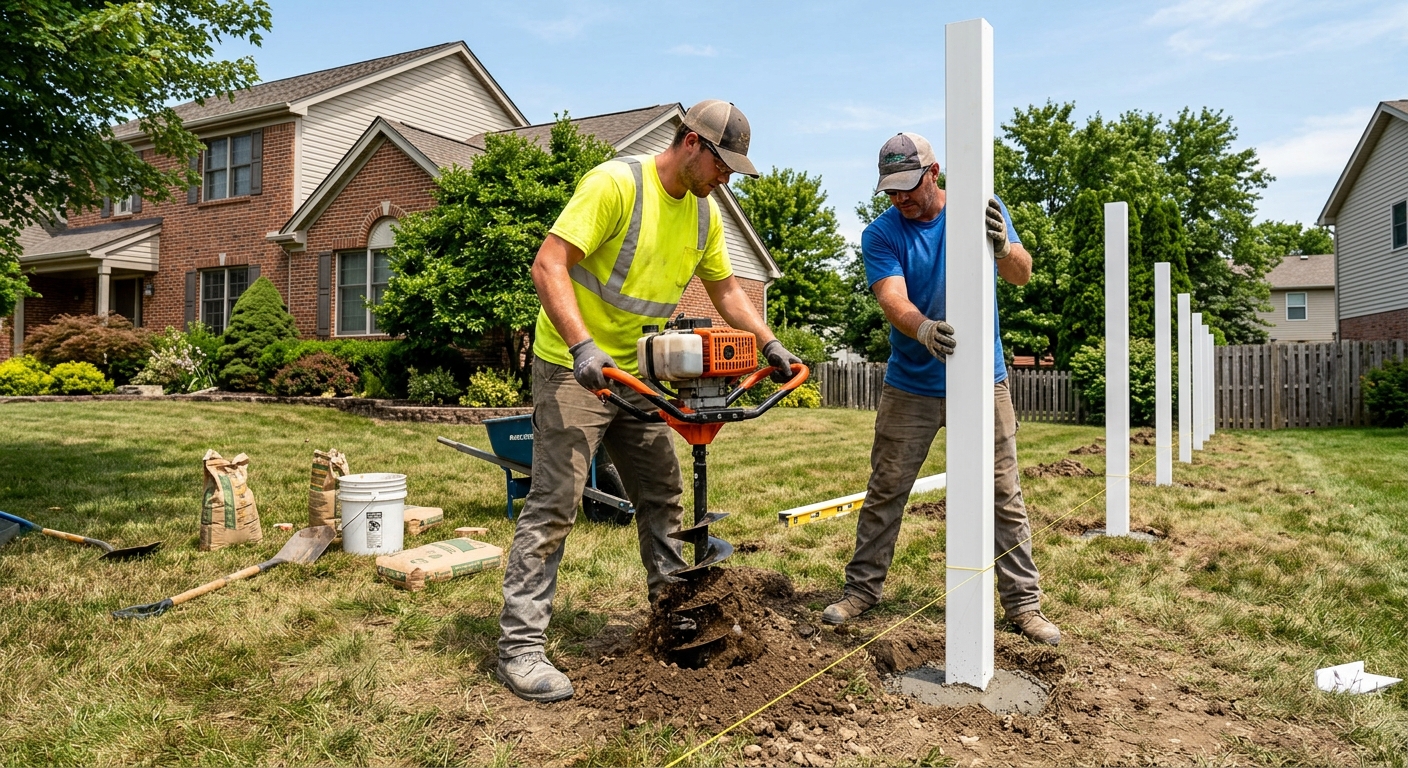
Fencing options and costs in Fort St. James
Fort St. James is a small community where fencing decisions get shaped by real, year-round exposure—especially in the Nechako region’s freeze-and-thaw conditions. With 66.9% of households owning their homes and single-detached dwellings making up 73.5% of the housing stock (Statistics Canada, 2021 Census), fencing demand is consistently driven by long-term homeowners protecting yards, gardens, and pets. Another local signal is that 60.2% of homes were built before 1981 (Statistics Canada, 2021 Census); many properties have older property lines, mature landscaping, and upgraded yard layouts, so fencing upgrades are common around established areas.
In Fort St. James, the biggest cost difference between fence types usually comes from post depth and bracing. The local freeze conditions mean contractor-installed fences need deeper, more stable foundations to reduce frost heave, and that pushes labour and equipment time upward compared with milder southern markets. Wind exposure also matters: privacy panels can act like sails, so exposed lots typically require tighter post spacing and stronger framework, especially for solid wood or vinyl. If you’re near town areas like Downtown Fort St. James and adjacent residential pockets, contractors often see higher demand because lots are closer together, access is tighter, and homeowners want clean lines that match existing yard upgrades.
Below is a practical comparison of materials you’ll see most often in Fort St. James, with typical lifespan, upkeep expectations, and budget ranges to help you line up quotes before scheduling site measurements.
| Material |
Lifespan |
Maintenance |
Privacy Rating |
Price per Linear Foot |
| Pressure-treated pine (standard wood) |
10–15 years |
Stain/seal every 2–3 years; inspect boards after winters |
High (solid pickets) |
$55–$85 |
| Cedar (natural rot resistance) |
15–20 years |
Light stain or oil/clear coat every 2–3 years (varies by finish) |
High (solid boards) |
$70–$100 |
| Vinyl / PVC (no-maintenance) |
20–30 years |
Rinse only; occasional panel/hinge checks |
High (solid or semi-solid styles) |
$75–$110 |
| Chain-link (galvanized steel) |
25–35 years |
Minimal; rinse and check tension |
Low to medium (see-through) |
$35–$60 |
| Aluminum ornamental |
25–35 years |
Minimal; occasional wash and hardware checks |
Low to medium (open design) |
$80–$140 |
| Composite / recycled material |
20–30 years |
Minimal; clean with mild soap, occasional inspections |
High (board-style systems) |
$80–$120 |
Prices are estimates only and vary by project scope, site access and material selection.
What affects the price of fencing in Fort St. James
In Fort St. James and across the Nechako region, it’s common to see fencing quotes for the “same” fence run 30–50% apart once you look past the materials label. The reason is that Nechako pricing is driven by foundation depth, wind exposure, and how much extra work your yard requires—especially where soil is mixed clay/rock and where frost can move ground. On the same property, changing from a budget chain-link run to a solid privacy panel can also change brace requirements, post spacing, and even concrete quantities.
Frost depth sets how deep posts must be set. In practice, contractors aim to place wood or metal posts below the design frost zone to reduce heaving; this often means additional depth and longer posts compared with milder regions. In cold Ontario and Alberta, that translates to digging deeper and using more concrete setting (and longer materials), which can raise both material and labour costs. Even in British Columbia’s northern interior, the freeze timing and soil grip can still push crews toward concrete-set posts. Wind exposure adds another layer: open, valley-edge sites can require tighter post spacing and heavier rails, which increases labour time. Meanwhile, coastal BC areas may see faster wood rot due to moisture, but Fort St. James tends to prioritize freeze stability and mechanical strength, not just rot prevention.
Concrete examples you’ll feel in real Fort St. James pricing: (1) A 60 ft run with 6x6 posts concreted typically costs more than a run on a gravel pack if the ground is workable, because augering and concrete handling are labour-heavy. (2) A solid privacy panel in an exposed yard usually needs stronger bracing than chain-link, so the upgrade can be worth it when you’re trying to block wind-driven snow and reduce visibility. With local market bands, wood installation commonly sits around $55–$85 per linear foot and vinyl around $75–$110, but the foundation scope can be the deciding factor—not just the chosen cladding.
Finally, housing age affects site conditions: many older properties have uneven ground, mature root systems, and legacy fencing, which can add removal time and disposal fees. When you’re working on a yard where 60.2% of homes were built before 1981 (Statistics Canada, 2021 Census), plan for extra prep if posts or foundations are already compromised.
| Price Factor |
Why It Matters |
Cost Impact |
| Fence length in linear feet |
More lineal footage increases posts, rails, and installation time |
High (often the largest portion of total cost) |
| Post depth required |
Frost heave risk increases if posts aren’t set below the cold zone |
High (deeper digging = more labour and longer posts) |
| Post setting method |
Concrete vs. gravel pack vs. driven posts changes labour and materials |
Medium to High (concrete typically increases cost) |
| Material choice |
Vinyl, cedar, and chain-link behave differently in wind and cold |
Medium (bounds the base material budget) |
| Gate count and type |
Drive-through and double gates require heavier frames and hardware |
Medium to High (gates cost more than lineal sections) |
| Grade and terrain |
Sloped yards may need stepped or raked panels and extra layout work |
Medium (layout time and material waste) |
| Old fence removal and disposal |
Hauling and dump fees add time and sometimes extra labour |
Medium (can significantly increase quote variability) |
| Permit fees and survey / property line locate |
Locates reduce risk of disputes and adjust layout |
Low to Medium (varies by municipality and site) |
Permits & regulations in British Columbia
In British Columbia, fences above a height threshold—commonly around 2.0 m (6.5 ft) for the rear and 1.0–1.2 m (3–4 ft) for the front or corner—often require a building permit, depending on local bylaw interpretation. All fences must respect property lines and municipal setback requirements. Before digging any post hole, homeowners should arrange utility locates (BC 1 Call). If you don’t already have accurate boundaries, get a survey or a property pin locate before you install, because guessing property lines is a frequent cause of neighbour disputes and rework.
Shared fence ownership is guided by provincial line-fences rules, so if your fence is near a property boundary, confirm who is responsible for costs and what height/maintenance expectations apply before you order materials. Work that typically does not require a permit is a like-for-like replacement under local thresholds (for example, swapping an existing fence with similar height and location). Work that does more often triggers permitting includes building a fence that exceeds height thresholds, adding new fencing that moves closer to road or side lines, or making structural changes that alter setbacks.
To verify a contractor in Fort St. James, BC: (1) request their licence details and check the trade/contractor registry information online where applicable; (2) ask for a current certificate of insurance showing liability coverage; (3) confirm required workplace coverage—typically WCB/WSIB equivalent for their workforce—and request documentation. A clearance letter or coverage proof should match the person/company name on the quote and the date range on the certificate.
Choosing the right fence material for Fort St. James
Choosing the right fence material in Fort St. James is mostly about aligning your priorities—privacy, low maintenance, and budget—with what Nechako’s winter conditions demand. Pressure-treated pine is the most budget-friendly starting point, but it typically needs staining or sealing every 2–3 years to slow down grey weathering and keep boards from drying out. Cedar looks better longer and resists rot naturally, yet it still benefits from regular maintenance finishes, especially if your yard gets heavy snow loading and melt cycles. Vinyl/PVC is popular for “no-maintenance” convenience, but extreme cold can make some parts more brittle than wood if quality and installation details aren’t right.
Chain-link is the lowest-cost option and lasts a long time because there’s less to rot or splinter, but it offers little privacy. Aluminum ornamental won’t rust and handles freeze well, but it’s usually an aesthetic boundary rather than a privacy screen. Composite/recycled materials can provide privacy with solid boards and reduced maintenance, but the upfront price is often closer to vinyl than to wood.
Post depth matters for all materials. Given the frost conditions across the Nechako area, posts generally need to be set below the cold zone, and contractors often use concrete-set footings for stability in mixed soils. On exposed yards, solid panels also require stronger bracing and tighter post spacing to handle wind and snow load, which can narrow the price gap between “cheaper materials” and “more expensive structures” because the support system changes.
As a simple dollar example: if a cedar privacy fence is coming in around the $70–$100 band per linear foot while pressure-treated pine lands closer to $55–$85, the difference can be justified when you want fewer visual “patch” repairs after winters and a longer-looking finish between maintenance cycles.
| Material |
Cold Tolerance |
Lifespan |
Annual Maintenance |
Best For |
Price Band |
| Pressure-treated pine |
Good with proper installation and treatment |
10–15 years |
1–2 visits per year check; stain/seal every 2–3 years |
Budget-friendly privacy |
$55–$85 |
| Cedar |
Very good; manages freeze without splitting as readily |
15–20 years |
1 check; stain/oil typically every 2–3 years |
Better appearance with rot resistance |
$70–$100 |
| Vinyl / PVC |
Good, but needs quality components for cold snaps |
20–30 years |
Minimal; occasional rinse and hardware checks |
Low-maintenance privacy |
$75–$110 |
| Chain-link |
Excellent; steel holds up through freeze cycles |
25–35 years |
Minimal; tension and weld point checks |
Security, pets, and long-term durability |
$35–$60 |
| Aluminum ornamental |
Excellent; powder-coat resists cold cracking when installed correctly |
25–35 years |
Minimal; wash and tighten fasteners |
Attractive boundary with visibility |
$80–$140 |
| Composite / recycled |
Good; solid boards handle freeze-thaw well |
20–30 years |
Minimal; clean as needed |
Privacy with reduced upkeep |
$80–$120 |
How to choose a fencing contractor in Fort St. James
For fencing in Fort St. James, the contractor you choose affects the foundation quality, the straightness of the line, and how the fence performs through winter. Start by verifying British Columbia credentials and coverage. Ask for their liability insurance certificate (it should list the business name, coverage limits, and active expiry dates). Confirm they have the correct workplace coverage for workers (WCB/WSIB-equivalent proof depending on their status) and obtain documentation that matches the date range on the policy. For licensing, request the contractor’s business registration/trade information and check any online registry entries where applicable, so you know you’re dealing with the right company—not just a vehicle number and a phone call.
Next, get 2–3 itemised written quotes. You want a breakdown that separates labour, post-and-rail assembly, gates, hardware, and disposal—plus the post setting approach (concrete vs gravel pack, and typical depth). A lump-sum quote is harder to compare and often hides differences like whether the contractor includes utility locate steps, property line locate/survey coordination, or permit handling. Also ask for warranty terms: workmanship warranty length, product/manufacturer warranty coverage, and whether warranties transfer if you sell the home.
For payment, never accept more than 10–15% upfront. Hold back the remainder until the fence is complete, aligned, and hardware is tightened. Finally, ask for a written schedule: start date, number of working days, and an estimated completion timeline that accounts for winter access and post-hole conditions.
- Ask whether posts are set to local frost-stable depth and how they determine footing depth.
- Request a materials list: board size, rail size, post size, and gate hardware details.
- Get the post setting method in writing (concrete, gravel pack, or driven options).
- Confirm how they handle rock, roots, and uneven grades (raked vs stepped sections).
- Ask if they include utility locate coordination before digging.
- Verify property line approach: locate pins/survey confirmation before layout.
- Ensure old fence removal and disposal is either included or explicitly excluded.
- Confirm whether permits are included when height thresholds or setbacks require them.
- Read the warranty section for workmanship duration and product warranty exclusions.
- Review the quote for gate type: walk-through vs double drive-through and latch style.
- Set a payment schedule in the contract with a small deposit and a holdback.
- Confirm cleanup and final grading/restoration after post-hole work.
In Fort St. James, red flags I’ve seen include: (1) quotes that don’t specify post setting depth or foundation method; (2) “lowest price” proposals that omit gate frame reinforcement; (3) refusal to provide insurance proof or coverage documents; (4) no written scope (especially around disposal, locating, and grading); and (5) demanding large deposits before any material ordering or layout is confirmed.
Frequently asked questions — fencing in Fort St. James
Should fence posts be set in concrete here?
In Fort St. James, frost stability is the deciding factor. Because the ground can heave with repeated freeze-thaw cycles, contractors typically set posts deeper than the surface freeze zone and may use concrete footings to reduce movement, especially for privacy fences with solid panels that catch wind. Concrete also helps with stability in mixed soils where gravel packs can shift over time. For comparisons, a chain-link run may use a simpler foundation approach, often aligning with the $35–$60 band, while a solid wood or vinyl privacy system (often $55–$110 depending on material) usually needs stronger posts and more reliable setting. The best approach depends on your soil, post type, and exposure.
What's the best fence for privacy?
For privacy in Fort St. James, the top choices are solid board systems: cedar, pressure-treated pine (with a solid picket layout), vinyl/PVC privacy styles, or composite board fences. These materials block sight lines, and in exposed lots you can also upgrade bracing and reduce post spacing so the fence behaves better in wind. Chain-link is usually not the best privacy option because it’s naturally see-through. If you want low maintenance and long service, vinyl or composite can be compelling, but the upfront cost is higher—often near the $75–$110 range. If budget is tighter, pressure-treated pine privacy typically sits around $55–$85, with the trade-off being regular staining/sealing after winters.
How do I compare fencing quotes?
Compare quotes like-for-like by looking for an itemised scope, not just the final total. Ask each contractor to list post sizes, rail sizes, board styles, gate type (walk-through vs double), and the post setting method. The quote should state the planned footing approach (concrete vs gravel pack), typical post spacing, and how they handle slopes (raked panels vs stepped). Also confirm what’s excluded: property line locate coordination, utility locates, permit pulls if required, and disposal of an old fence. In Fort St. James, those line items can swing the price by 30–50%, even if materials sound similar. Use local price bands as a sanity check—wood often trends around $55–$85, vinyl around $75–$110, and chain-link around $35–$60.
How long does fence installation take in Fort St. James?
Typical timelines in Fort St. James depend on length, gate count, ground conditions, and whether there’s removal. A straightforward installation (no old fence removal, minimal slope, standard gate) can take a few days for a typical residential run. More complex jobs—rocky soil requiring deeper augering, sloped yards needing stepped sections, or projects with multiple gates—can stretch longer. Winter access can also slow progress, since crews must plan around freeze conditions and safe digging. If you’re comparing contractors, ask for a written start date, a completion estimate, and confirmation of how they’ll phase materials and schedule crews. A proper foundation plan is part of what makes a fence last through northern BC weather, even if it adds one extra day on site.
Can I install a fence on a slope in Fort St. James?
Yes, you can install fencing on a slope in Fort St. James, and it’s fairly common here due to natural grade changes. The key is choosing the right method: stepped panels keep a consistent top line by adding “steps” at each height change, while raked panels follow the slope with a continuous top line. Stepped designs often look cleaner when the slope is more pronounced, but the amount of material waste can differ. Your contractor should include slope handling in the quote because layout time and extra rails/pickets can raise cost. For privacy fences, proper bracing and post depth are even more important on slopes to prevent twisting during wind exposure and winter freeze-thaw.
What is the most weather-resistant fence for Fort St. James's climate?
“Most weather-resistant” usually depends on what you mean by weather: freeze stability, rot resistance, or wind performance. For freeze durability, galvanized chain-link and aluminum are excellent because they don’t rot and maintain shape through cold cycles, often making them low-maintenance long-term options in the $35–$60 (chain-link) and $80–$140 (aluminum) bands. For rot resistance and privacy, cedar and properly installed pressure-treated pine can perform well, provided you maintain finishes and use frost-stable post setting. Vinyl and composite also fare well with low maintenance, but quality installation matters in extreme cold. In Fort St. James, I’d usually recommend selecting a material that matches your privacy needs, then ensuring the foundation depth and bracing are designed for frost and wind exposure.