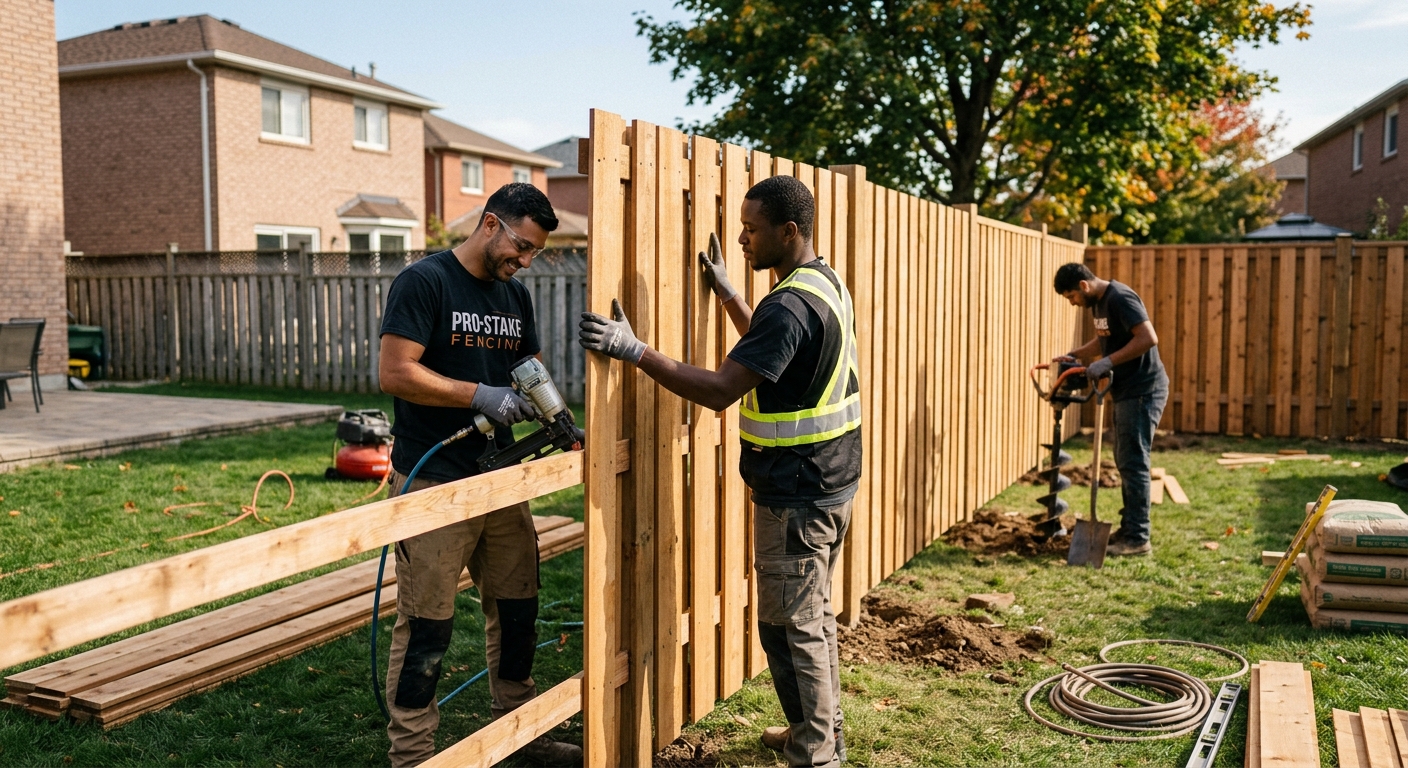
Fencing options and costs in Williams Lake
Williams Lake homeowners often start by comparing “privacy vs. budget,” then quickly realize the Cariboo climate decides how a fence is built—and what it costs. With 60.0% of households owning their homes (Statistics Canada, 2021 Census), there’s steady demand for new boundary fencing and replacement runs alongside single-detached properties, which make up 45.8% of local dwelling types (Statistics Canada, 2021 Census). Fencing labour and material availability are also influenced by how much of the year crews are installing: winter staging and spring thaw can slow excavation schedules, so quotes can be booked out during peak weather windows.
In Williams Lake, frost and freeze–thaw are the big cost drivers. Contractors in the Cariboo commonly set posts at least 3 feet (about 0.9 m) below grade to stay below the frost line and reduce heaving, and many residential fences use concrete-set footings. That means longer posts, more excavation time, and additional materials. Wind exposure around town corridors and open lots can push designs toward heavier posts and tighter panel spacing—especially for vinyl and solid-wood privacy fences. You’ll see especially strong interest for privacy fencing in areas with growing infill and yard upgrades, such as the neighbourhoods near Lakes District and broader city edge properties.
Use the ranges below as a practical baseline for common materials in Williams Lake, then we’ll break down why two “same-length” projects can still differ by a lot on your quote.
| Material |
Lifespan |
Maintenance |
Privacy Rating |
Price per Linear Foot |
| Pressure-treated pine (standard wood) |
10–15 years |
Stain/finish every 2–3 years; check posts after freeze–thaw |
High (solid panels) |
$45 – $80 |
| Cedar (natural rot resistance) |
15–25 years |
Light staining or sealant every 2–4 years |
High (solid boards) |
$60 – $95 |
| Vinyl / PVC (no-maintenance) |
20–30 years |
Rinse annually; inspect for impact cracks after cold snaps |
Medium–High (solid options) |
$65 – $110 |
| Chain-link (galvanized steel) |
25–40 years |
Occasional rinse; tighten hardware as needed |
Low (security only) |
$35 – $65 |
| Aluminum ornamental |
25–35 years |
Rinse; check gate alignment |
Low–Medium (open pickets) |
$70 – $130 |
| Composite / recycled material |
20–30 years |
Minimal; wash as needed |
High (privacy styles) |
$75 – $125 |
Prices are estimates only and vary by project scope, site access and material selection.
What affects the price of fencing in Williams Lake
In the Cariboo and across British Columbia, two contractors can quote the “same” fence and still land 30–50% apart because the build conditions change: how deep posts must go, how much concrete is required, how accessible your yard is, and what kind of hardware and bracing the wind demands. Labour rates and the way crews schedule excavation also affect costs—when frost is still coming out of the ground or when equipment has to travel farther for short seasons, production slows and your per-foot labour climbs. That’s why you can see a pressure-treated wood privacy fence land nearer the lower band (around $45–$80/linear foot) on straightforward lots, while a vinyl or PVC privacy fence with heavier posts and more concrete may move closer to the $65–$110/linear foot range.
Frost depth sets how deep posts must be set. In colder regions of Canada you’d often see posts go 1.5–2.0 m into the ground with concrete setting; in the Cariboo, we commonly use at least 0.9 m (about 3 feet) below grade, and many jobs go additional depth for stability. This increases both material (longer posts) and labour (deeper holes, more rebar-like bracing or heavier anchor systems). Wind exposure on open lots also pushes toward tighter spacing and sturdier panel styles; that can raise the amount of framing and the number of posts you install. By contrast, sheltered town lots can allow standard spacing and lighter panel layouts, keeping quotes closer to the lower end of regional ranges.
Local examples that move pricing in Williams Lake: (1) Clay or poorly drained soil often means extra concrete or a more engineered footing, which adds time and cost; (2) lots with mature trees and tight access near the lane can require hand digging and longer equipment set-up; (3) older fence replacements on homes built before 1981 (62.8% of local homes) often include hidden rot at post bases, so the “easy removal” becomes more excavation and disposal work.
| Price Factor |
Why It Matters |
Cost Impact |
| Fence length in linear feet — the primary cost driver |
Most costs scale directly with linear footage: posts, rails, panels and fasteners |
Higher length = predictable increase; large projects often qualify for steadier crew pricing |
| Post depth required — frost line determines post length and hole depth |
Deeper holes and longer posts reduce heaving risk during freeze–thaw cycles |
Commonly shifts pricing noticeably; deeper installs add excavation time and materials |
| Post setting method — concrete vs. gravel pack vs. driven posts |
Concrete-set footings improve stability in Cariboo soils but add labour and material |
Concrete-set typically adds cost versus gravel packing or lighter methods |
| Material choice — vinyl vs. cedar vs. chain-link |
Different rail/post systems and accessory hardware affect install speed and durability |
Vinyl and cedar usually price higher than chain-link; aluminum varies with design |
| Gate count and type — walk-through vs. drive-through (double) |
Gates require heavier frames, hinges, latch hardware and often bracing |
Additional gates can add a disproportionate amount per opening |
| Grade and terrain — sloped yards require stepped or raked panels |
Slopes can increase cutting, panel sequencing and waste |
Often raises labour; may increase materials due to offcuts |
| Old fence removal and disposal |
Hauling and disposal, plus removing old post bases, adds time |
Can add a meaningful line item, especially with concrete footings |
| Permit fees and survey / property line locate |
Ensuring compliance avoids rework and encroachment disputes |
Varies by project; survey and locate can add upfront cost but prevents costly changes |
Permits & regulations in British Columbia
In British Columbia, fences may require a building permit when they exceed common height thresholds—typically around 2.0 m (6.5 ft) for rear yards and about 1.0–1.2 m (3–4 ft) for front yards or corner lots. Even when a permit isn’t triggered, your fence still must respect property lines and municipal setback bylaws. Before any post holes are dug in Williams Lake, call for utility locates. In BC this is done through BC 1 Call, and you should also confirm any site-specific rules with the City’s process for local work. Plan to install after your locate request has been completed and marked on site.
To avoid boundary disputes, get a survey or property line locate so you can confirm where your pins are before installation. Shared fence ownership is handled under provincial line-fence legislation, so it’s wise to document agreements with neighbours for any shared boundary or cost-sharing.
Licence and insurance checks are part of staying protected. A homeowner in Williams Lake should verify a contractor’s British Columbia licence status (where applicable for fencing-related contracting), confirm liability insurance (ask for a current certificate of insurance), and ensure the correct worker coverage documentation is in place (WSIB/WCB). Where to look: the contractor’s own paperwork for the COI, and their business registration/licensing details via appropriate provincial online registries; for safety, request a clearance letter if they provide them. Always match the name on the quote to the insured entity on the COI.
Choosing the right fence material for Williams Lake
Picking the right fence material in Williams Lake is mostly about matching your priorities—privacy, low maintenance, budget, and lifespan—to our Cariboo freeze–thaw patterns and wind exposure. Pressure-treated pine is the budget-friendly choice, but it still needs a protective finish; most homeowners see best results with staining or sealing every 2–3 years to prevent grey weathering and to slow surface checking. Cedar looks better and naturally resists rot, yet it isn’t maintenance-free—plan on light sealing on a similar cycle, especially if boards are exposed to wind-driven rain. Vinyl/PVC is designed for low maintenance, but in extreme cold it can become more brittle, so quality rails, proper post depth and careful installation matter to prevent cracking. Chain-link has the longest “set and forget” reputation and is usually the lowest initial spend, but it doesn’t provide privacy without adding slats or planting. Aluminum ornamental offers a clean look and won’t rust, though it’s typically a mid-range price for a fence with limited privacy.
Cariboo frost requirements generally mean concrete-set posts or at least a stable footing system is common, because shallow installs are more likely to heave during freeze–thaw cycles. For privacy fences, wind and snow load considerations mean sturdier framing: tighter spacing, heavier posts in exposed yards, and proper hardware on gates. On sheltered lots you can sometimes reduce complexity; on open areas, you’ll pay a bit more for bracing and post mass.
Example: if you’re deciding between pressure-treated pine and vinyl privacy, a wood run may land closer to the $45–$80 per linear foot band, while vinyl typically sits around $65–$110 per linear foot. If you want to minimize yearly upkeep (and you’re likely to stay in the home), the higher upfront cost can justify itself within a few seasons of avoided staining and rework.
| Material |
Cold Tolerance |
Lifespan |
Annual Maintenance |
Best For |
Price Band |
| Pressure-treated pine |
Good (when posts are set below frost and hardware is corrosion-rated) |
10–15 years |
Low to moderate: quick inspection; stain/seal every 2–3 years |
Budget privacy and traditional look |
$45 – $80 |
| Cedar |
Good (rot resistance helps through wet shoulder seasons) |
15–25 years |
Low to moderate: seal/stain every 2–4 years |
Appearance with better natural rot resistance |
$60 – $95 |
| Vinyl / PVC |
Very good with correct installation; can be impact-sensitive in very cold snaps |
20–30 years |
Very low: rinse and inspect annually |
Low maintenance and consistent colour |
$65 – $110 |
| Chain-link |
Excellent (galvanized steel handles cold well) |
25–40 years |
Very low: tighten hardware; rinse |
Security and boundary definition |
$35 – $65 |
| Aluminum ornamental |
Excellent (won’t rust in damp conditions) |
25–35 years |
Low: periodic rinse and gate checks |
Attractive curb appeal with open visibility |
$70 – $130 |
| Composite / recycled |
Good in cold; needs quality mounting to avoid flex |
20–30 years |
Low: wash as needed; inspect for fastener movement |
Privacy with durable, low-fuss panels |
$75 – $125 |
How to choose a fencing contractor in Williams Lake
Choosing the right fencing contractor in Williams Lake starts with verifying credentials that protect you if something goes wrong. Ask for proof of liability insurance (a current certificate of insurance showing the insured name and coverage dates). For worker protection, confirm the contractor’s WSIB/WCB coverage documentation—then ask them directly what their coverage includes and request the appropriate clearance letter or documentation they can provide. Where to check: review the insurance certificate they give you, and verify their business identity against the licensing/registry information available through provincial online sources (and confirm the quote is issued by the same legal entity).
Next, get 2–3 itemised written quotes (not lump sums). A proper quote should break down labour hours, materials, hardware, excavation method, post setting (concrete-set vs. alternative), waste disposal, and any gate framing upgrades. Read the scope carefully: is permit pulling included (when required), are utility locates included, and is old fence removal/disposal part of the price? Check warranty too—ask how long the workmanship warranty lasts, whether the manufacturer product warranty applies to installed components, and whether it transfers if you sell your home.
For payment, never pay more than 10–15% upfront; hold back the remainder until the job is complete and cleanup is done. Timing matters in the Cariboo: ask for a start date and a completion estimate in writing, and confirm how delays due to spring thaw or material lead times are handled.
- Match quote to your exact fence line length (linear feet) and measured corners.
- Confirm post depth and setting method in writing (Cariboo frost protection).
- Ask if they’ll do concrete-set footings and what mix/anchors they use.
- Ensure gate hardware is specified (hinge type, latch quality, bracing).
- Verify included disposal for old fence and concrete remnants.
- Confirm whether utility locates are coordinated or your responsibility.
- Check material grades: pressure-treated vs. cedar grade, vinyl thickness, galvanized spec.
- Ask how they handle slopes (stepped vs. raked sections) and panel alignment.
- Review warranty terms for workmanship and the product manufacturer.
- Request a schedule: start date, number of workdays, and completion target.
- Confirm payment schedule and retainage/holdback policy.
- Get a contract that includes scope, exclusions, and change-order process.
Red flags I see in Williams Lake: vague “we’ll figure it out later” post-depth language; quotes that don’t itemise gates, concrete, or disposal; refusing to provide a certificate of insurance or coverage details; promising permit handling without explaining who pulls it; and asking for a large upfront payment before excavation starts.
Frequently asked questions — fencing in Williams Lake
How long does fence installation take in Williams Lake?
Most residential fences in Williams Lake are completed in about 1–3 working days, depending on length, the number of gates, and whether old fence removal is included. A straight chain-link or simple post-and-rail run can be faster, while a privacy fence with concrete-set footings, multiple corners, and drive-through gate hardware takes longer. Timing also depends on frost and soil conditions: if ground is still firm from winter, excavation can be slower; if you’re installing in a shoulder season with thawing, post-setting and re-leveling can add time. For planning, ask your contractor for a written start date and completion estimate, and make sure the scope clarifies whether disposal is included. If your project is closer to a mid-range price band (for example vinyl/ PVC often starting around $65–$110 per linear foot depending on build requirements), it’s usually because the schedule includes heavier bracing and proper post setting.
Can I install a fence on a slope in Williams Lake?
Yes, you can install a fence on a slope in Williams Lake, but the method matters for both appearance and structural stability. Typically, privacy fences are stepped (panel-by-panel height changes) or raked (a continuous slope with custom cutting), while chain-link is often tensioned with more consistent grade adjustment. On steeper yards, you may need additional rails or stronger posts so the fence doesn’t rack during wind gusts. Because Cariboo freeze–thaw can shift soil slightly, each post still needs to be set below frost and aligned correctly before concrete cures. In older neighbourhoods and homes built before 1981, it’s common to find uneven ground and buried debris, which can extend excavation time. Expect the labour portion to increase on sloped sites, and confirm in writing whether the quote includes raking/stepping, waste handling, and any extra hardware.
What is the most weather-resistant fence for Williams Lake's climate?
“Most weather-resistant” usually means best performance through freeze–thaw, wet seasons, and cold snaps. In Williams Lake and the Cariboo, galvanized chain-link is extremely durable because it handles cold well and doesn’t rot, and composite materials or vinyl can perform well when installed with proper post depth and stable footings. For maximum longevity with low upkeep, chain-link often leads; for privacy and a clean look with less yearly work, vinyl/PVC or composite are strong choices. That said, the build method is as important as the material: posts must be set below grade to reduce heaving, and exposed yards may require heavier posts and tighter spacing for wind resistance. If you’re comparing price bands, chain-link often sits around $35–$65 per linear foot, while vinyl commonly falls around $65–$110 per linear foot—paying more typically buys you higher resistance to rot and less staining work.
How do I prevent wood fence rot in Williams Lake?
Preventing wood rot in Williams Lake is mostly about stopping water contact and protecting the parts that fail first: the bottom of the boards and the post bases. Use proper post setting—concrete-set footings or a stable footing system helps keep posts from sitting in trapped moisture. Ensure the wood is correctly treated (pressure-treated pine) or naturally rot-resistant (cedar), and don’t skip finishing: pressure-treated wood typically needs a stain/seal every 2–3 years to reduce grey weathering and slow surface breakdown. Also keep vegetation trimmed so airflow reaches the fence line; persistent shade and damp leaves can accelerate rot. In winter freeze–thaw conditions, rot can start at damaged points from impact or loose hardware, so do a quick visual check in spring for wobbly rails, cracked boards, or missing fasteners. If your existing fence is ageing and you see post base softness, repairing often becomes less cost-effective than replacement because the hidden rot is already in the ground contact zones.
What is the cost per linear foot for fencing in Williams Lake?
In Williams Lake, the cost per linear foot varies by material and how much excavation and post setting your specific site requires. As a practical baseline, pressure-treated pine wood installation is commonly in the $45–$80 per linear foot range, cedar often lands a bit higher, and vinyl/PVC typically ranges from $65–$110 per linear foot depending on privacy style, post mass, and gate hardware. Chain-link is usually the lowest at roughly $35–$65 per linear foot, while aluminum ornamental can be around $70–$130 depending on picket style and gate complexity. Your quote may shift upward if you need deeper concrete-set footings for soil conditions, extra bracing for open wind exposure, or removal/disposal of an older fence. Always compare quotes using the same scope—especially post depth, concrete setting, gate count, and whether disposal is included.
Should I repair or replace my old fence in Williams Lake?
Repairing can make sense when damage is isolated—like a few loose boards, one bent panel, or a gate latch issue. Replacement is usually the smarter move when you have rot at multiple post bases, widespread staining failure, leaning sections that indicate footing movement, or repeated cracking after freeze–thaw. In Williams Lake, older fences often fail at the ground-contact areas, and in neighbourhoods with a high share of older housing stock (62.8% of homes built before 1981, Statistics Canada, 2021 Census), it’s not unusual to find embedded post remnants and hidden moisture damage when you open up the line. If the posts are unstable, repairs tend to reappear quickly and can cost nearly as much as replacement once labour and materials are added. Get a professional assessment and ask for a clear plan: which posts are salvageable, what’s being replaced, and how the new work will be set below grade for frost protection.