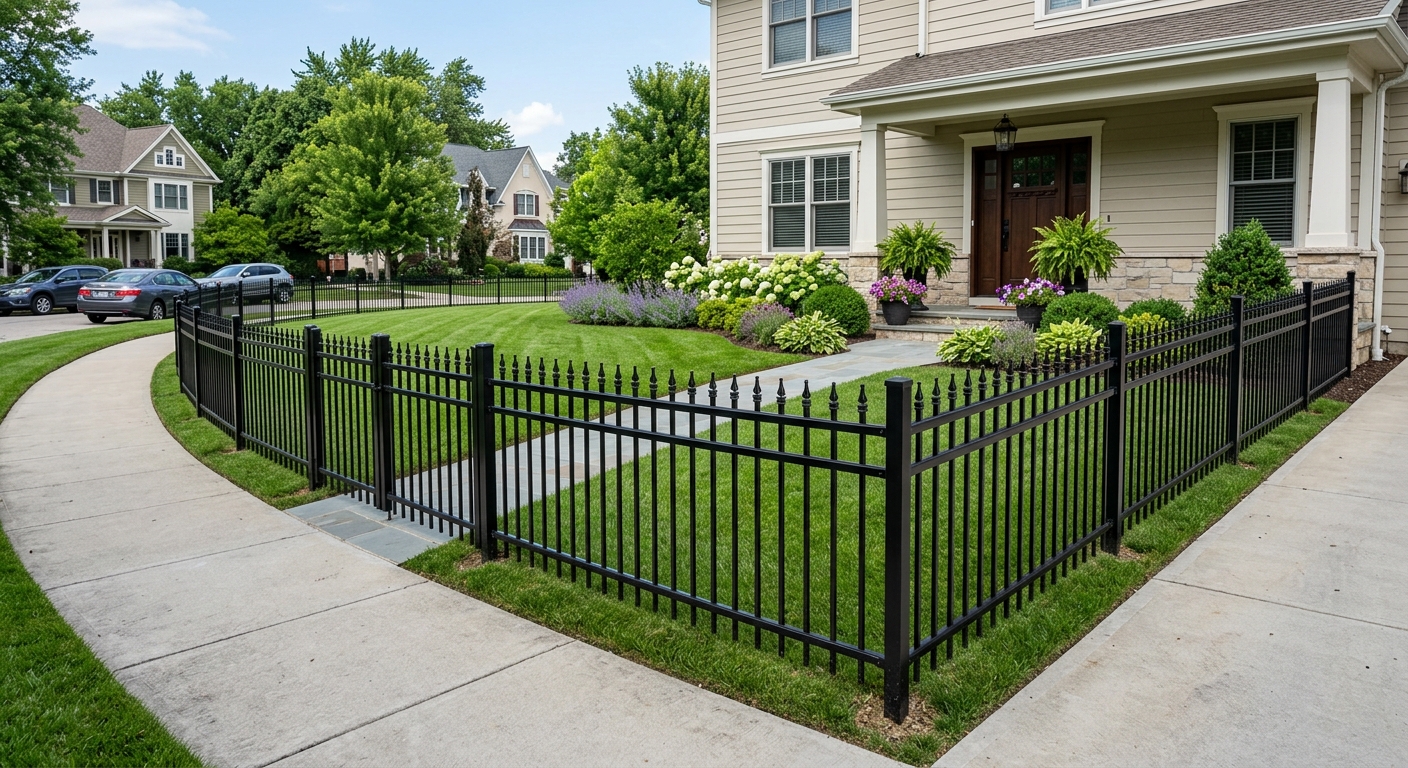
Fencing options and costs in Saanich Core
Saanich Core, British Columbia is a compact neighbourhood market where fenced yards are common—especially for homeowners who need secure boundaries around detached properties. With a population of 5,470 (Statistics Canada, 2021 Census), the customer base is smaller than Victoria proper, but the demand is steady because many properties turn over landscaping and perimeter upgrades across the year. On top of that, Vancouver Island and the Coast has frequent wind exposure and moderate coastal frost, which directly affects how contractors design and price fence systems. Even though frost penetration here is relatively shallow (about 45–60 cm), good practice is to set posts below design frost depth to reduce heaving and long-term leaning.
That translates into labour and materials costs: typical residential posts are often buried around 75–90 cm, and when soils are clay-rich, wet, or disturbed, concrete footings are commonly recommended. Wind also influences panel engineering. Solid privacy fences catch more wind than open styles, so they often need closer post spacing or heavier rails—while chain-link and ornamental aluminum tolerate the exposure with standard spacing. Salt air near the Strait of Georgia further pushes us toward quality galvanized/ powder-coated hardware and well-made materials.
In Saanich Core, I see especially strong demand in and around the Matthews Avenue/Bridgehill area where many yards sit exposed to prevailing winds and homeowners upgrade to match recent landscaping. Below is a practical cost comparison you can use to sanity-check quotes before you talk scope with your contractor.
| Material |
Lifespan |
Maintenance |
Privacy Rating |
Price per Linear Foot |
| Pressure-treated pine (standard wood) |
10–15 years |
Stain/seal every 2–3 years; re-tighten hardware |
High (solid panels) |
$55 – $85 |
| Cedar (natural rot resistance) |
15–20 years |
Light staining or clear-coating every 2–4 years |
High (solid boards) |
$70 – $100 |
| Vinyl / PVC (no-maintenance) |
20–30 years |
Occasional wash; check posts/fasteners after storms |
Medium to High (solid styles) |
$70 – $110 |
| Chain-link (galvanized steel) |
25–40 years |
Rinse/inspect; tighten posts after impacts |
Low (see-through) |
$35 – $60 |
| Aluminum ornamental |
25–35 years |
Occasional cleaning; inspect for loose pickets |
Low to Medium (ornamental pickets) |
$80 – $140 |
| Composite / recycled material |
20–30 years |
Wash and occasional inspection; less staining than wood |
Medium to High (solid boards) |
$90 – $135 |
Prices are estimates only and vary by project scope, site access and material selection.
What affects the price of fencing in Saanich Core
In Saanich Core and across Vancouver Island and the Coast, it’s common to see the same “type” of fence quote swing by roughly 30–50% between contractors. The spread usually isn’t about the material alone—it’s about how the installer handles local ground conditions, post setting, wind-loading design, and the time it takes to line up fence runs on real lots. In British Columbia, mild but wet winters can leave soil saturated for long stretches, so digging, hauling away spoil, and resetting lines after weather delays can add labour even when frost itself isn’t extreme. There’s also a practical market factor: crews rotate through a limited number of local projects, so scheduling constraints can affect labour rate and productivity.
A core pricing driver is frost line depth and how deep posts must be set. Even with a shallow coastal frost line (about 45–60 cm), good practice is to set posts about 4–6 inches below design frost depth; for most residential installs this means burying posts around 75–90 cm. On saturated or clay pockets, we often move to concrete-set posts, which increases cost but improves long-term alignment. Another major variable is wind exposure: while Prairies regions often need tighter spacing because of higher wind patterns, coastal BC still demands robust bracing and rail sizing for privacy fences. Wood without proper treatment also costs more over time if grey weathering and rot set in early—so cedar or vinyl may look higher at the front end but protect the budget.
Concrete examples from Saanich Core: (1) A 10–15 m back-yard run on a slope frequently turns a straight run into stepped panels, adding labour and alignment time. (2) Removing an old fence that’s partially buried in wet soil can add disposal and extra digging costs—especially if the previous posts are set in concrete. (3) Choosing a solid privacy layout versus chain-link can change the internal brace design and post spacing, which is why chain-link may land around the $35 – $60 range while vinyl/pvc often sits around $70 – $110 for similar run lengths.
| Price Factor |
Why It Matters |
Cost Impact |
| Fence length in linear feet |
More posts, rails, and labour time scale directly with length. |
High—often the single biggest driver. |
| Post depth required |
Frost line determines hole depth and how long posts must be. |
Medium to high—deeper digging and more material. |
| Post setting method |
Concrete vs. gravel pack vs. driven posts affects stability and labour. |
Medium—concrete and cleanup increase cost. |
| Material choice |
Vinyl/cedar versus chain-link changes material and installation effort. |
High—different price bands and hardware needs. |
| Gate count and type |
Walk-through gates are simpler; drive-through double gates need more framing. |
High—gates add labour, hinges, and alignment time. |
| Grade and terrain |
Sloped yards require stepped or raked panels and careful leveling. |
Medium to high—more time for fitting and braces. |
| Old fence removal and disposal |
Hauling off boards, rails, and concrete footings takes equipment and time. |
Medium—can add a large variable component. |
| Permit fees and survey / property line locate |
Locates reduce risk of encroachment and rework. |
Low to medium—varies by scope and site conditions. |
Permits & regulations in British Columbia
In British Columbia (including Saanich Core), fences above a height threshold often require a building permit. A common rule of thumb used by municipalities is: about 2.0 m (6.5 ft) for rear yards and about 1.0–1.2 m (3–4 ft) for front yards or corner lots. The exact application can depend on local bylaws and the fence’s location, but as a homeowner you should assume that taller fences—especially privacy fences in front or on corner sides—are more likely to trigger permitting.
All fences must respect property lines and municipal setback requirements. Before any post holes are dug, ensure utility locates are completed through the appropriate one-call system. Also consider a survey or property pin locate so the fence line matches your lot boundaries—encroachment disputes are expensive and often lead to rework.
Step-by-step: (1) Ask your contractor whether a permit is required for your specific height and location, and who will submit it. (2) Verify contractor licensing and business standing before signing. (3) Request proof of liability insurance and the required workers’ coverage documentation—commonly supported through WSIB/WCB coverage for workers (see their certificate details). (4) Confirm these documents match the legal business name on the quote and invoice.
For shared fences, line-fences rules are governed by provincial legislation, so responsibilities for maintenance and cost sharing can vary based on who built the fence and which side it sits on. If you’re unsure, clarify ownership and maintenance responsibilities in writing before work starts.
Choosing the right fence material for Saanich Core
Choosing the right fence material in Saanich Core comes down to matching what you value most—privacy, low maintenance, lifespan, and upfront budget—to the realities of Vancouver Island and the Coast: frequent wind, wet winters, and moderate coastal frost. For pressure-treated pine, you get a lower entry price, but you should plan on staining or sealing every 2–3 years to prevent rapid grey weathering and to slow surface degradation. Cedar looks better and resists rot naturally, yet it still benefits from periodic maintenance to keep the boards looking uniform. Vinyl/PVC is the low-maintenance choice—wash it occasionally and you’re mostly done—but extreme cold snaps can make some cheaper vinyl brittle, so quality matters. Chain-link is typically the lowest cost and longest service life, but it offers little privacy unless you add slats or lattice. Aluminum ornamental offers a rust-resistant, maintenance-light option with good curb appeal, though privacy depends on the picket design.
Post depth is where local climate shows up regardless of material. Even with a shallow coastal frost line (about 45–60 cm), posts are commonly buried around 75–90 cm and set below design frost to reduce heaving and leaning. On wet or clay-rich pockets common around Saanich, concrete-set posts are frequently recommended for stability, especially for heavier privacy panels and gate hardware. Wind exposure also changes how a “solid” fence performs: solid privacy walls can act like a sail, so closer post spacing and stronger rails often improve longevity during gusts and storms.
Here’s a realistic money example: if you’re comparing chain-link at roughly $35 – $60 per linear foot to vinyl/privacy options around $70 – $110, the extra cost often makes sense when you want real privacy and a lower-maintenance ownership experience through wet winters and windy seasons. If your goal is boundary definition and long life with minimal upkeep, chain-link is still hard to beat.
| Material |
Cold Tolerance |
Lifespan |
Annual Maintenance |
Best For |
Price Band |
| Pressure-treated pine |
Good (with correct post depth and proper top/side sealing) |
10–15 years |
Inspect twice; stain/extend protection every 2–3 years |
Budget-conscious privacy where you’re willing to maintain |
$55 – $85 |
| Cedar |
Good (handles coastal damp better than untreated wood) |
15–20 years |
Inspect and clean; stain/coat every 2–4 years |
Natural look with improved rot resistance |
$70 – $100 |
| Vinyl / PVC |
Good to very good (quality improves brittleness risk) |
20–30 years |
Wash and check fasteners after heavy wind events |
Low maintenance privacy |
$70 – $110 |
| Chain-link |
Very good (galvanized resists corrosion) |
25–40 years |
Rinse; tighten posts/hardware as needed |
Security and boundary definition (minimal upkeep) |
$35 – $60 |
| Aluminum ornamental |
Very good (powder-coated or quality finishes) |
25–35 years |
Clean as needed; inspect pickets |
Appearance-focused fencing with long service life |
$80 – $140 |
| Composite / recycled |
Good (varies by manufacturer; avoid low-quality blends) |
20–30 years |
Wash and inspect for warping or fastener wear |
Higher durability with reduced wood-style upkeep |
$90 – $135 |
How to choose a fencing contractor in Saanich Core
When you hire a fence contractor in Saanich Core, start with verification: you want a licensed, insured business with workers’ coverage in place so you’re protected if there’s an injury on site. In British Columbia, ask for evidence of liability insurance and confirm it covers the work being performed. If their crew are employees, they should be able to provide workers’ coverage documentation (often supported through WSIB/WCB coverage for workers). Don’t just accept a photo—ask for a current certificate of insurance and the names on it. Then verify their business details against provincial online records (for example, business registration and any applicable trades qualifications if they claim specific fencing credentials).
Next, get 2–3 itemised written quotes. Ideally, the estimate breaks labour and materials separately: post material type and diameter, rail/bracing configuration, concrete volume (if used), gate framing, hardware grade (galvanized vs. stainless), and disposal/removal. Scope clarity matters: ask what’s excluded (old fence removal, rock excavation, permit submission, utility locates, survey/locate costs, landscaping reinstatement). For permits, confirm whether the contractor pulls it and whether that’s included in the quote.
Warranty should be explicit: ask for a workmanship warranty length and whether it covers fence posts and panels after storms and settling. Also ask about the manufacturer/product warranty and whether it’s transferable to you as the homeowner. For payment, never pay more than about 10–15% upfront; hold back a portion until the job is complete and the line is verified. Finally, get a start date and a completion estimate in writing, with weather contingencies noted for wet/ windy days common on the Island.
- Provide current liability insurance certificate matching the quote’s legal business name.
- Confirm workers’ coverage documentation for any crew working on your property.
- Quote is itemised: materials (posts/rails/hardware) separated from labour.
- Includes post setting method details (concrete-set vs. gravel pack) and how posts are set for frost stability.
- States whether permit pull is included when required for height/location.
- Lists gate hardware (hinges, latches, striker plates) and finish quality (galvanized/powder-coated).
- Describes how slopes are handled (stepped vs. raked) and how it affects pricing.
- Clarifies disposal: old fence removal included? concrete footings included?
- Gives a schedule with realistic weather allowances for coastal wind and rain.
- Includes a workmanship warranty term and what events it covers.
- Shows how the property line will be located (pins/survey/locate method).
- Payment schedule is staged, with a holdback until final alignment and cleanup.
Red flags I watch for in Saanich Core: (1) quotes that don’t specify post depth or setting method, (2) only “lump sum” pricing with no hardware or disposal details, (3) willingness to start without utility locates, (4) missing or expired insurance/workers’ coverage documentation, and (5) no clear warranty terms or payment schedule beyond a large upfront deposit.
Frequently asked questions — fencing in Saanich Core
How much does a fence cost in Saanich Core?
In Saanich Core, fencing costs commonly land inside the regional price bands for Vancouver Island and the Coast, but your final quote depends on length, gates, post setting, and how difficult the digging is. As a quick reference, chain-link is often the lowest-cost option at about $35 – $60 per linear foot, while vinyl/PVC privacy fences typically sit closer to $70 – $110. Solid privacy wood and cedar usually fall between those ranges too, depending on board type and how much bracing the wind needs. Because coastal soils can stay wet and because posts should be set below frost depth (often around 75–90 cm), the “same” fence can vary 30–50% if excavation and concrete setting differ. (Statistics Canada, 2021 Census)
How deep should fence posts be for Saanich Core's frost?
For Saanich Core, you don’t usually just guess based on the frost line—good installs set posts below design frost depth to reduce heaving and long-term leaning. Coastal BC has a shallow frost depth (about 45–60 cm), but best practice is to set posts about 4–6 inches below the design frost depth. In practical residential terms on Vancouver Island, that often means burying posts around 75–90 cm. Where soils are saturated, clay-rich, or disturbed by excavation, we frequently recommend concrete-set posts to keep alignment through freeze/thaw cycles and wet winters. If your quote doesn’t mention post depth or post setting method, ask for it in writing before signing.
Wood vs vinyl vs aluminum fence — which is best?
“Best” depends on what you’re optimizing for in British Columbia. Wood (pressure-treated pine or cedar) can look great and can be less expensive upfront, but it typically needs periodic maintenance—staining or sealing every 2–3 years for pressure-treated pine. Vinyl/PVC is the low-maintenance choice and can be a strong fit for windy, wet Saanich yards because it doesn’t rot; it’s usually priced higher at roughly $70 – $110 per linear foot. Aluminum ornamental is durable and rust-resistant (often powder-coated), but it’s generally best for curb appeal rather than full privacy, and it usually starts higher, around $80 – $140. Also, regardless of material, make sure the installer uses frost-appropriate post depth and correct bracing for wind-exposed runs.
Do I need a permit to build a fence in British Columbia?
Often, yes—if your fence is above local height thresholds. In British Columbia, fences above a typical height threshold—commonly around 2.0 m (6.5 ft) for rear yards and about 1.0–1.2 m (3–4 ft) for front yards or corner lots—may require a building permit. The exact requirement can vary by location and local bylaws, so don’t rely on a generic rule. In Saanich Core, always confirm the fence height and where it sits on the lot. Also, make sure the fence respects property lines and setbacks. Before digging post holes, utility locates are essential, and having a survey or pin locate done can prevent costly boundary disputes.
How long does a wood fence last in Saanich Core?
A wood fence in Saanich Core typically lasts about 10–20 years depending on the wood species, installation quality, and maintenance. Pressure-treated pine often lands in the 10–15 year range if it’s stained/sealed regularly, while cedar can reach roughly 15–20 years because of its better rot resistance. Lifespan is heavily influenced by coastal conditions: frequent moisture and wind can accelerate surface weathering and loosen hardware, especially where posts aren’t set deep enough or where concrete isn’t used on unstable soils. The biggest prevention steps are correct post depth below frost depth (often ~75–90 cm), good drainage at posts, quality galvanized fasteners, and a realistic maintenance schedule. If you want “set it and forget it,” vinyl or aluminum may be better.
Who owns and maintains a shared fence?
Shared fence ownership and maintenance in British Columbia are governed by provincial line-fences legislation, and the details can vary based on how and when the fence was built and which boundary it serves. In practice, you should clarify: who owns the fence structure, which party is responsible for repairs, and how costs are shared if damage occurs. Before work begins in Saanich Core, ask the contractor to confirm the fence line and placement relative to property pins or a survey locate. If you’re updating a fence that may be shared, discuss your agreement in writing—especially if you’re changing material type or height. This reduces the chance of later disputes about what was “agreed to” and who should pay for replacements or upgrades.