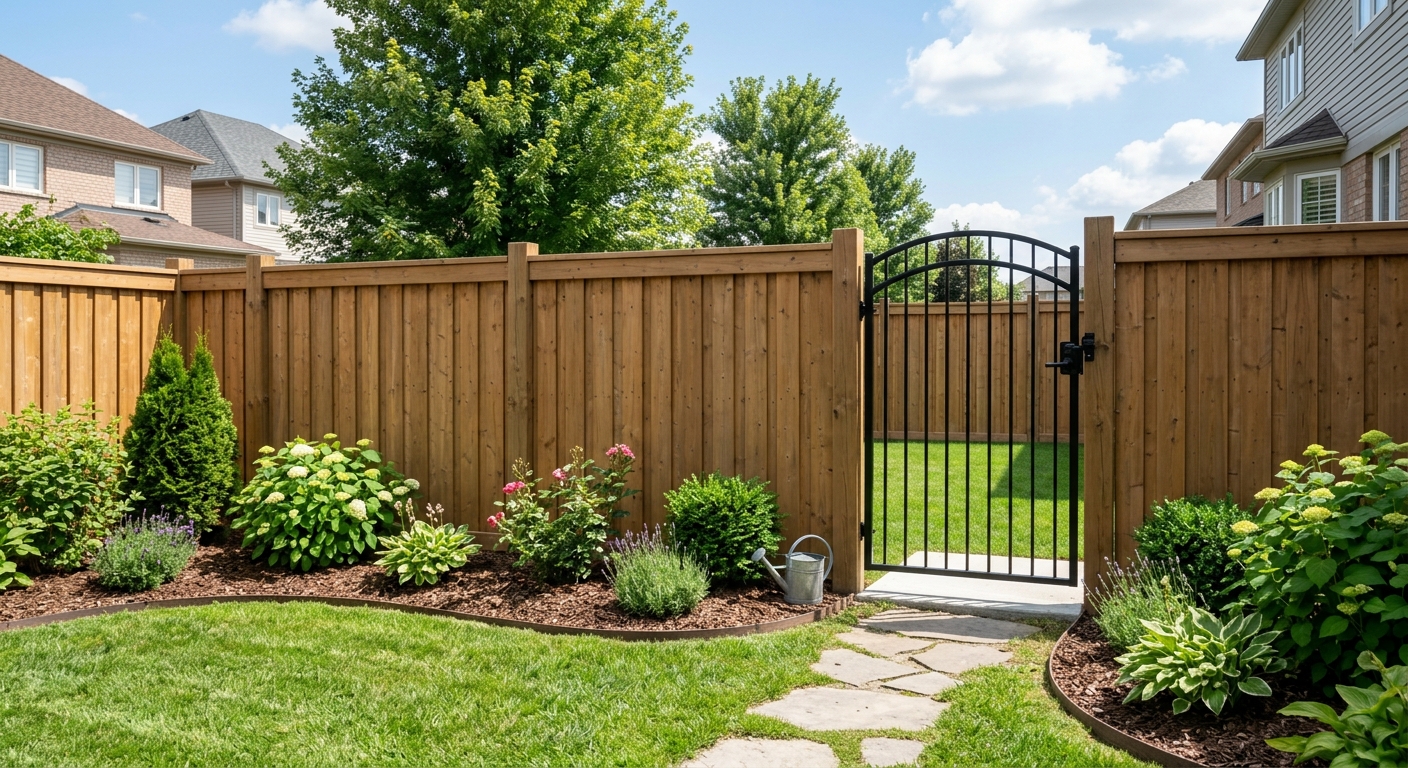
Fencing options and costs in Seaview
In Seaview, British Columbia, the right fence usually comes down to balancing privacy, maintenance, and how your yard handles Lower Mainland–Southwest conditions. With a population of 3,236 (Statistics Canada, 2021 Census), demand is driven less by volume and more by the mix of established residential properties where homeowners regularly upgrade aging boundaries. In the Lower Mainland–Southwest, lots of homes sit behind landscaped lots, and fences are often part of ongoing exterior improvements—especially in neighbourhoods like the Seaview shoreline-adjacent properties where wind and salt air can be a concern. That combination means contractors stay busy with both privacy panels and durable perimeter upgrades.
Pricing here reflects mild but not trivial frost and wind: posts still need to be set below the design frost depth to limit heaving, and wetter Fraser Valley–type soils often mean deeper holes and more concrete setting for corner posts, gate posts, and privacy sections. Chain-link stays the lowest-cost install, while wood is typically mid-range and vinyl/PVC costs more because of material and structural requirements in boundary runs. In practice, availability and crew scheduling also affect turnaround times, particularly when multiple homeowners start projects during the same dry-weather window.
Below is a comparison of common fence types you’ll see around Seaview, with realistic lifespan expectations and typical installed price ranges for this region. Use it as a baseline before you request itemised quotes.
| Material |
Lifespan |
Maintenance |
Privacy Rating |
Price per Linear Foot |
| Pressure-treated pine (standard wood) |
10–15 years |
Stain/finish every 2–3 years; inspect rails annually |
Good–Very good (solid panels) |
$55–$95 |
| Cedar (natural rot resistance) |
15–25 years |
Light staining or sealing every 2–4 years |
Very good (solid boards) |
$70–$115 |
| Vinyl / PVC (no-maintenance) |
20–30 years |
Occasional wash; inspect hinges/rails |
Very good (solid or privacy slats) |
$75–$130 |
| Chain-link (galvanized steel) |
25–40 years |
Occasional coating touch-ups; remove vines |
Low (security only) |
$30–$55 |
| Aluminum ornamental |
25–40 years |
Wash as needed; inspect for impact damage |
Low–Medium (open pickets) |
$90–$170 |
| Composite / recycled material |
20–30 years |
Low; rinse and check posts/fasteners |
Very good (solid board designs) |
$95–$160 |
Prices are estimates only and vary by project scope, site access and material selection.
What affects the price of fencing in Seaview
Fence quotes in Seaview can land 30–50% apart for what looks like the “same fence” because contractors price different realities: post setting depth, soil conditions, wind exposure, slope, gate hardware, and how much labour is required for access and disposal. In the Lower Mainland–Southwest, crew costs and material lead times are steady, but installation difficulty still changes fast from one property to the next—especially where soils stay wet or where the fence line crosses uneven landscaping. Even though coastal BC can be milder than interior provinces, we still design for freeze–thaw movement in the frost season.
Frost line depth is the big structural driver. In Canadian practice, crews commonly set posts about 4–6 inches below the design frost depth, and the result is deeper holes than homeowners expect. While the Lower Mainland–Southwest coastal frost is shallower than Ontario or Alberta in many areas, contractors still often go deeper and use concrete for privacy panels, corner posts, and gates to reduce heaving. Wind exposure also matters: this is why open styles aren’t always cheaper than solid systems—tight spacing, stronger posts, and better hardware can add labour and materials.
Concrete examples from jobs I see around Seaview: (1) a privacy fence on wet, heavier soil usually needs deeper post holes and more concrete than the same fence on a drier, sandy patch; (2) a sloped driveway approach may require stepped base rails, longer boards, and extra measuring time; and (3) installing through mature landscaping often adds excavation difficulty and disposal costs. If your target is a budget mid-range wood run (often in the $55–$95 band), these site factors can push costs upward quickly; switching to vinyl/PVC (commonly $75–$130 installed) may feel expensive, but the materials can justify the price when maintenance access is limited.
| Price Factor |
Why It Matters |
Cost Impact |
| Fence length in linear feet — the primary cost driver |
Every extra foot adds posts, rails, panels, and fastening |
Major (often the biggest percentage of total cost) |
| Post depth required — frost line determines post length and hole depth |
Deeper holes mean more excavation and longer posts |
Medium–Major in wet/variable soils |
| Post setting method — concrete vs. gravel pack vs. driven posts |
Concrete adds material and labour but improves stability |
Medium (especially for corner/gate posts) |
| Material choice — vinyl vs. cedar vs. chain-link |
Different structures, hardware, and component costs |
Major (changes your band: chain-link vs. wood vs. vinyl) |
| Gate count and type — walk-through vs. drive-through (double) |
Gates require heavier framing and precise alignment |
Major per gate; double gates can add a lot of labour |
| Grade and terrain — sloped yards require stepped or raked panels |
Stepping increases cutting, layout time, and rail complexity |
Medium |
| Old fence removal and disposal |
Demolition, hauling, and recycling/salvage handling |
Medium (can become major if buried posts are common) |
| Permit fees and survey / property line locate |
Some builds need formal review; locating protects you from rework |
Low–Medium (but avoids costly disputes) |
Permits & regulations in British Columbia
In British Columbia, fences above a height threshold typically trigger permitting requirements, with common rules set around 2.0 m (6.5 ft) for rear areas and about 1.0–1.2 m (3–4 ft) for front or corner locations. Municipal setback bylaws and property-line rules still apply, so the same fence height can be treated differently depending on where it sits on your lot. Before any digging begins, you should arrange utility locates through the appropriate provincial call system (for BC, use BC 1 Call). That matters because fence post holes are a frequent source of utility strikes.
For property lines, don’t guess. Get a survey (or at minimum a professional locate that references your pins) so you don’t build on a neighbour’s space. In Seaview neighbourhoods with older lot layouts, boundaries can be unclear when previous fences were installed “as needed.” Shared fence ownership and maintenance are handled under British Columbia line-fences legislation principles—so it’s smart to confirm in writing who maintains what, especially for corner and boundary segments.
Step-by-step contractor verification for Seaview homeowners: (1) ask for the contractor’s British Columbia business licence and confirm it through the appropriate online listings; (2) request a current certificate of insurance showing liability coverage for the work; (3) verify worker coverage—WCB/WCB-type coverage confirmation is commonly required for firms employing workers; look for a clearance letter or proof on their documentation package; and (4) keep copies with your quote so you can reference them if there’s a dispute or change order.
Choosing the right fence material for Seaview
Choosing a fence material for Seaview is easiest when you match the product to your priorities: privacy, low maintenance, budget, and expected lifespan. Lower Mainland–Southwest conditions are “mild but not trivial,” which means wood can still move with freeze–thaw cycles and wet soils can accelerate rot if treatment and airflow details aren’t correct. Pressure-treated pine is usually the budget option in this market, but it still needs staining or finishing every 2–3 years to avoid grey weathering and surface breakdown. Cedar looks better longer and naturally resists rot, but it isn’t maintenance-free—plan for periodic staining or sealing to keep colour and slow surface cracking.
Vinyl/PVC delivers the simplest routine: wash when needed and inspect hardware, but it can crack if boards are stressed by poor post spacing or extreme cold handling, which is why the installation quality matters as much as the material. Chain-link is the lowest-cost way to secure a yard and often lasts decades, but it won’t provide privacy unless you add slats or screening. Aluminum ornamental is attractive and won’t rust, but it’s more of a “decorative boundary” than a privacy solution.
Post depth is part of every choice. Even with coastal BC frost being shallower than inland regions, crews typically set posts below frost depth—often around 4–6 inches deeper than the design frost line—to reduce heaving. Concrete-set posts are especially common for privacy fence corner posts and gate posts where stability affects gate operation. For a practical price example, if you can get a pressure-treated wood run in the $55–$95 band, moving to vinyl/PVC at about $75–$130 may be justified when you want to reduce annual maintenance time and keep a clean look with fewer touch-ups.
| Material |
Cold Tolerance |
Lifespan |
Annual Maintenance |
Best For |
Price Band |
| Pressure-treated pine |
Good if installed with proper post depth and ventilation |
10–15 years |
2–3 year staining/finishing; quick checks annually |
Budget privacy with willingness to maintain |
$55–$95 |
| Cedar |
Good; tolerates moisture better than many softwoods |
15–25 years |
Stain/seal every 2–4 years; inspect fasteners |
Attractive privacy in damp coastal conditions |
$70–$115 |
| Vinyl / PVC |
Good when posts are properly spaced and anchored |
20–30 years |
Wash as needed; occasional hardware checks |
Lowest hassle boundary and privacy panels |
$75–$130 |
| Chain-link |
Very good (galvanized steel performs well) |
25–40 years |
Minimal; remove debris/vines |
Security and boundary definition without privacy |
$30–$55 |
| Aluminum ornamental |
Very good (powder-coated metal) |
25–40 years |
Low; wash and spot-check after storms |
Decorative curb appeal with partial visibility |
$90–$170 |
| Composite / recycled |
Good; resists rot but needs correct fastening |
20–30 years |
Low; rinse and check fasteners |
Solid-looking privacy with reduced maintenance |
$95–$160 |
How to choose a fencing contractor in Seaview
When you choose a fencing contractor in Seaview, verify credentials first—then confirm the details of the build. In British Columbia, you should request documentation before scheduling: proof of the contractor’s business registration/licensing, a certificate of liability insurance that covers the job site, and worker coverage proof (WCB/WCB-style clearance documentation where applicable). How to check: (1) ask for the certificate of insurance and read the coverage dates and named insured; (2) verify the business registration/licensing through the appropriate online listings; (3) request WCB clearance or coverage confirmation if workers are involved; and (4) ensure the quote is issued by the insured company name.
Next, get 2–3 itemised written quotes. A quality fence quote breaks labour and materials separately (posts, rails, panels, gates, concrete, hardware, removal/disposal) rather than a single lump sum with vague wording. Read the scope line-by-line: does the price include permit pulling (if required), utility locates, property line locate/survey allowances, and disposal of old fence materials? Confirm where concrete is used—corner posts, gate posts, and privacy sections in wet soil—so you’re comparing apples to apples.
Warranty matters too. Ask for workmanship warranty length and whether it’s tied to the original installation. Product/manufacturer warranty should be in writing, and ask if it’s transferable if you sell the home. Payment should follow a safe schedule: never pay more than 10–15% upfront; hold back the remainder until you have substantial completion and a final walkthrough. Finally, get the start date and estimated completion time in writing.
- Insist on itemised quotes (labour + materials + hardware).
- Verify BC business/labour coverage and liability insurance before signing.
- Confirm whether utility locates are included in the scope.
- Ask how they determine post depth and whether they account for frost movement.
- Check whether corner and gate posts are concrete-set and how.
- Confirm panel spacing, rail counts, and reinforcement for wind.
- Review how they handle sloped yards (stepped vs. raked layout).
- Ask who is responsible for property line locate/survey costs.
- Confirm gate hardware type (hinge style, latch quality, clearance adjustments).
- Know what removal/disposal includes (haul-off of posts and rails).
- Get warranty terms in writing: workmanship + product warranty + transferability.
- Use a payment schedule with 10–15% maximum upfront and a final holdback.
Red flags to watch for in Seaview: (1) quotes that skip post embedment details or assume “surface-set” posts; (2) refusal to provide insurance and coverage documentation; (3) vague scope language like “materials as needed” or “permit if required” without specifics; (4) demanding large upfront payments beyond 10–15%; and (5) no written start/completion dates or no clear change-order process.
Frequently asked questions — fencing in Seaview
How long does a wood fence last in Seaview?
In Seaview, most wood fences last about 10–15 years for standard pressure-treated pine when they’re installed with proper post depth and good fastening, and when the finish is maintained. Cedar typically stretches longer—often 15–25 years—because it resists rot better in the damp coastal conditions common across the Lower Mainland–Southwest. The biggest real-world difference isn’t just the species; it’s whether posts are set below frost movement to limit heaving, and whether concrete is used where the fence needs extra stability (corner posts and gate posts). If you choose a wood budget build in the $55–$95 band, plan for periodic staining and inspections so rails and pickets don’t deteriorate from moisture and mildew.
Who owns and maintains a shared fence?
In British Columbia, shared fence ownership and maintenance follow line-fences principles: if a fence is considered a shared boundary structure, both adjoining property owners generally have responsibilities that can include sharing costs and maintaining the fence. The practical approach is to clarify the boundary in writing—especially for older properties where previous fences may not align perfectly with today’s pins. In Seaview, I recommend homeowners talk to neighbours before installing and agree on who pays for what (repairs, replacement, upgrades like privacy slats or taller panels) so you’re not locked into a dispute after work is done. When in doubt, get a survey locate first, then document decisions in writing with photos.
How do I find my property line before fencing?
The safe method in Seaview (and across BC) is to locate your property pins using a professional survey or locate service that references your official boundary description. Don’t rely on old fence positions, because prior owners may have built slightly off line. Before any digging, also arrange utility locates via BC 1 Call to prevent damaging buried services when installing post holes. Once you have pin locations, mark your fence line and check the proposed height against local setback rules. This helps avoid expensive rework if the fence encroaches. Your contractor should also support this by proposing a layout that matches the located boundary and by documenting the layout before they start excavation.
What's the most low-maintenance fence?
For most Seaview homeowners in the Lower Mainland–Southwest, vinyl/PVC is usually the lowest-maintenance option: it doesn’t need staining and typically just needs occasional washing and hardware checks. You’ll often pay more upfront—commonly in the $75–$130 installed range for typical residential runs—but the reduced annual care can be worth it, particularly if you don’t want to re-stain wood every 2–3 years. Chain-link is also low-maintenance mechanically and can last a long time, but it provides little privacy unless you add slats or screening, which adds upkeep. If your main goal is “set it and forget it” privacy, vinyl/PVC or composite boards are typically the best match.
How tall can my fence be in Seaview?
In British Columbia, fences above a common height threshold often require a building permit—for example, around 2.0 m (6.5 ft) for rear areas and roughly 1.0–1.2 m (3–4 ft) for front or corner locations. The exact rules can vary by municipal setback bylaws and where your fence sits on the lot, so you should confirm with your local permitting authority and your contractor’s permit process. Before you order materials, get your intended height and location approved so you don’t end up redesigning mid-project. Also consider how wind affects tall panels; a privacy fence that’s too tall without proper reinforcement can behave poorly during storm gusts in coastal BC conditions.
Should fence posts be set in concrete here?
Often, yes—especially in Seaview where frost movement and wet soil can create heaving if posts aren’t set deeply and firmly. While the Lower Mainland–Southwest frost depth is generally shallower than interior Canada, proper design still means posts must be embedded below the design frost line, and concrete is commonly used for corner posts, gate posts, and privacy sections that need extra stability. Concrete setting improves resistance to movement and helps keep gates operating smoothly. That said, your contractor should decide based on soil type, required post depth, and the fence design, not just a blanket rule. If you’re getting a quote, ask specifically where they use concrete, what post depth they plan, and whether they’re matching the frost design to your site conditions.