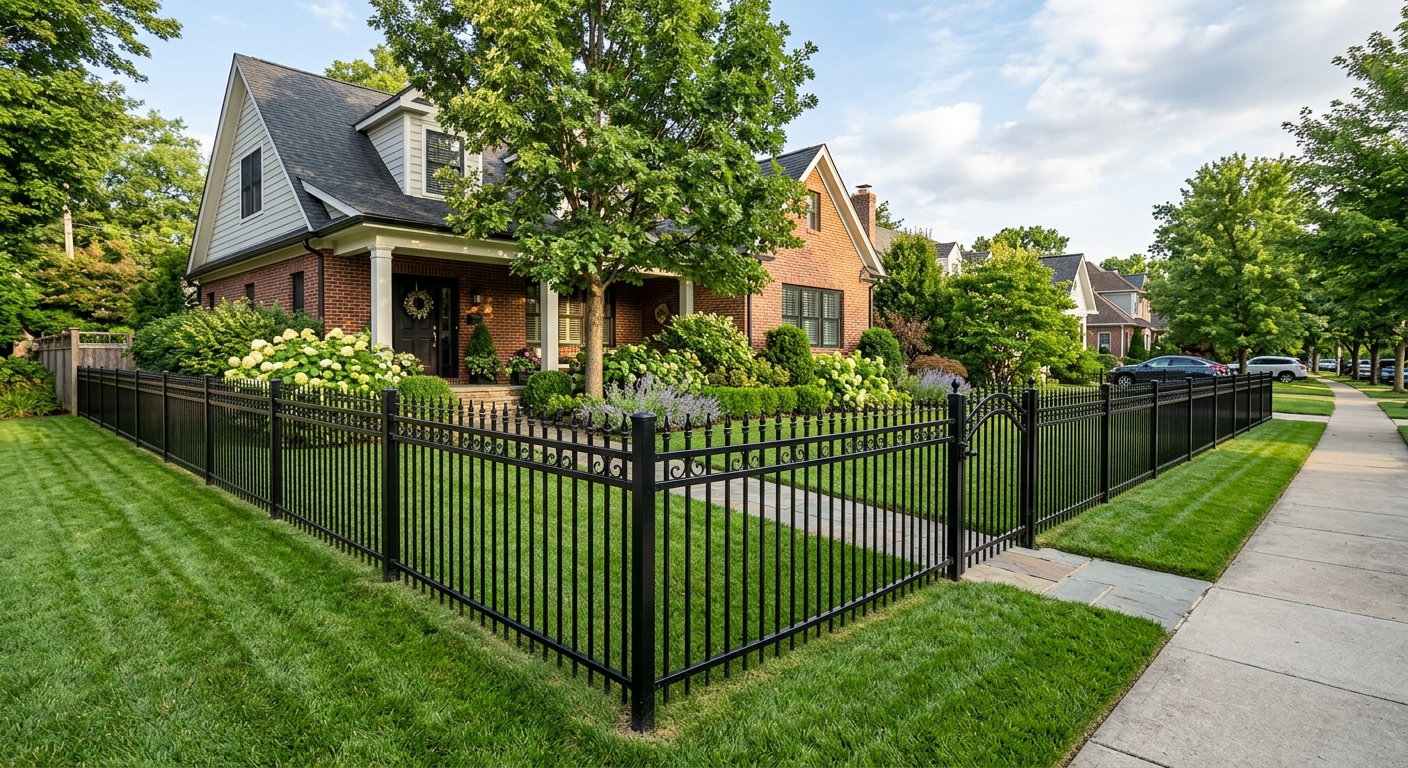
Fencing options and costs in Harrison Hot Springs
Harrison Hot Springs is a popular lakeside community, and that day-to-day demand shows up in fencing choices and lead times for local homeowners. With about 720 homeowner households in town and roughly 81.4% of households owning (Statistics Canada, 2021 Census), there’s steady interest in upgrading boundaries around detached properties—single-detached homes make up about 65.0% of dwellings (Statistics Canada, 2021 Census). Each detached lot is effectively a potential “fence job,” whether you’re replacing a tired backyard barrier or adding a more secure side-yard setup.
In the Lower Mainland–Southwest, mild winters don’t mean fencing can be installed like it’s “dry and easy.” Fraser Valley soils are often wetter, so posts frequently need deeper embedment to reduce frost heave risk and to resist shifting in soft ground. At the same time, coastal BC conditions accelerate wood wear if it’s not properly treated, and wind exposure near open lots can affect spacing and panel stiffness—especially for solid privacy fences.
Contractors in Harrison Hot Springs tend to see extra attention in the busier residential pockets closer to the waterfront and along higher-demand neighbourhood streets where properties sit closer together and where access for equipment is tighter. The result is that the same fence height can price differently based on access, soil moisture, and how many corners and gates you need. Use the table below to compare typical materials and what homeowners usually pay per linear foot in this market, then we’ll break down the biggest pricing drivers.
| Material |
Lifespan |
Maintenance |
Privacy Rating |
Price per Linear Foot |
| Pressure-treated pine (standard wood) |
10–15 years |
Stain/seal every 2–3 years |
Good (solid or close-board) |
$55–$85 |
| Cedar (natural rot resistance) |
15–25 years |
Stain every 2–4 years (or allow weathering then reseal) |
Excellent (best with solid boards) |
$70–$95 |
| Vinyl / PVC (no-maintenance) |
20–30 years |
Occasional wash only |
Excellent (solid panels) |
$75–$130 |
| Chain-link (galvanized steel) |
20–40 years |
Minimal (quick tension/repairs as needed) |
Low (open view) |
$30–$55 |
| Aluminum ornamental |
25–40 years |
Rinse/clean 1–2 times per year |
Medium (visible through pickets) |
$90–$170 |
| Composite / recycled material |
20–30 years |
Light cleaning; occasional repairs |
Good (solid styles) |
$85–$140 |
Prices are estimates only and vary by project scope, site access and material selection.
What affects the price of fencing in Harrison Hot Springs
In Harrison Hot Springs and across the Lower Mainland–Southwest, it’s common to see fencing quotes for what sounds like the “same job” land 30–50% apart. The reason isn’t just branding—it’s how crews price for site conditions, post embedment requirements, and wind/soil realities. Two bids can diverge because one contractor factors deeper holes and concrete setting for corner, gate and privacy panels (which reduces future lean), while another sizes materials closer to minimums. Labour availability also matters: crews who are booked around busy summer weeks near the lakeshore often build a schedule buffer into their quote.
Frost and heaving drive much of the embedment discussion. In Canadian practice, posts are typically set about 4–6 inches below the design frost depth, then contractors in wetter Lower Mainland soil often choose deeper embedment than the bare minimum to keep posts stable. Even though BC is generally milder than Ontario and Alberta, Harrison Hot Springs still sees cold snaps and saturated ground—so you’ll often see longer posts, tighter layout planning, and more concrete in high-stress locations.
Wind exposure changes the structural requirements too. While the Prairies can force very heavy reinforcement, BC’s coastal winds still matter: for solid wood and vinyl privacy, we typically see stronger posts and sometimes closer post spacing to prevent racking. On the other hand, the same damp soil that increases labour can lower material cost when you’re choosing chain-link (cheaper per linear foot) because installation is less dependent on heavy bracing and thicker panel framing—often leaving you closer to the chain-link band of $30,XXX–$55 per foot scale, while premium privacy options land in the higher $75,XXX–$130 range.
Concrete examples from local projects: (1) a sloped side yard near the waterfront often requires stepped rails and custom panel heights, adding labour versus flat-grade installs; (2) wet, soft ground can turn a “standard hole” into a deeper dig with extra concrete for corner/gate posts; and (3) removing an old fence that has buried posts can add disposal and patching time. When your home has older fencing or parts built around the same era as the area’s housing stock—about 18.1% of homes built before 1981 (Statistics Canada, 2021 Census)—you may also find older hardware, twisted posts, or unexpected obstructions that push the total upward.
| Price Factor |
Why It Matters |
Cost Impact |
| Fence length in linear feet |
Most materials and labour scale directly with total run length |
Highest impact; often the difference between small and mid-sized projects |
| Post depth required |
Frost heave risk drives deeper embedment and longer posts |
Can add more concrete, more digging time, and higher material waste |
| Post setting method |
Concrete vs. gravel pack affects stability and long-term leaning |
Concrete setting generally costs more but reduces call-backs |
| Material choice |
Vinyl and composite are more expensive; chain-link is typically lowest |
Shifts you across the regional bands (e.g., chain-link vs. vinyl) |
| Gate count and type |
Drive-through and double gates require heavier posts and hinges |
Often adds significant labour and hardware cost beyond the fence run |
| Grade and terrain |
Slopes require stepping or raked panels; rails may need custom fitting |
Increases labour and may raise material waste |
| Old fence removal and disposal |
Debris hauling, salvage, and extra labour affect time on site |
Can add a noticeable surcharge depending on volume and access |
| Permit fees and survey / property line locate |
Accurate line work avoids rework and neighbour disputes |
Small-to-moderate cost, but it can be large if a locate/survey is needed |
Permits & regulations in British Columbia
In British Columbia, fences above a height threshold often require a building permit—commonly around 2.0 m (6.5 ft) for the rear yard and about 1.0–1.2 m (3–4 ft) for the front yard or corner areas. Even when a permit isn’t required, your fence must still respect property lines and any municipal setback rules that apply to your specific location in Harrison Hot Springs. Because fence disputes are most often about where the line actually is, it’s smart to confirm the property boundary before any post holes are dug.
Before digging, you should arrange utility locates using BC 1 Call. Also, consider obtaining a survey or at least locating your property pins so the contractor can tie layout to verified boundaries. Shared fence ownership rules are governed by provincial line-fences legislation; in practice, that means understanding what’s “on the property line” versus fully within your yard, and how responsibility is handled if replacement is needed.
What typically DOES require a permit: new fence installations or upgrades that exceed the commonly used height thresholds (around 2.0 m at the rear and 1.0–1.2 m at the front/corner), or work that otherwise changes the structure significantly. What typically does NOT: low, standard-height boundary fences within typical limits, provided they stay within setbacks and do not alter the boundary beyond permitted heights.
To verify your contractor in BC, ask for and check: their BC business/licence information (often via the province’s business registry and the contractor’s stated registration), a certificate of liability insurance naming you as certificate holder if required, and proof of worker coverage/clearance documentation consistent with BC workplace coverage practices. Request the COI and any clearance letter documents directly, then confirm the policy is current (effective dates) and that the coverage amount is appropriate for construction work before scheduling.
Choosing the right fence material for Harrison Hot Springs
Your best material choice in Harrison Hot Springs comes down to your priorities—privacy, low maintenance, budget and expected lifespan—then matching those priorities to the Lower Mainland–Southwest climate. Pressure-treated pine is usually the budget-friendly starting point, but it needs staining or sealing every 2–3 years to prevent grey weathering and to keep water from undermining the boards over time. Cedar looks great and offers better rot resistance, yet it still benefits from periodic staining to extend its appearance and lifespan. Vinyl/PVC is the “set-and-forget” option: homeowners love it for low maintenance, but in occasional extreme cold and freeze–thaw cycles it can become brittle if the system isn’t designed for proper expansion and if the posts aren’t set correctly. Chain-link is the most budget-efficient for security with long service life, but it won’t give privacy unless you add a privacy screen. Aluminum is rust-resistant and durable, typically mid-range to higher cost, and it provides a clean look with moderate visibility.
Post depth is where cold-site thinking still matters in BC. While you won’t drive posts as deep as in the Prairies, contractors generally set posts below the design frost depth risk zone (often using guidance that results in about 4–6 inches below design frost depth) and frequently go deeper than bare minimums in wetter Fraser Valley soils. Concrete-set posts are commonly used for corner posts, gate posts, and privacy panel stability where soil is soft, even if some installers offer gravel packs for lighter sections.
Wind and snow load considerations also influence material selection. Solid privacy styles need sturdier posts and rails to resist racking, while open chain-link or aluminum can be more forgiving in wind because there’s less surface area. A practical example: if you’re comparing cedar privacy boards versus vinyl, the higher vinyl band (often around $75,XXX–$130 per linear foot installed in this region’s typical pricing approach) can be justified if you expect to keep the fence for decades and want to avoid regular staining. If budget is the priority and you’re willing to maintain, pressure-treated pine often brings you closer to the lower wood band (often $55,XXX–$85 per linear foot scale).
| Material |
Cold Tolerance |
Lifespan |
Annual Maintenance |
Best For |
Price Band |
| Pressure-treated pine |
Good with proper grade and sealing |
10–15 years |
Inspection + stain/seal every 2–3 years |
Budget privacy or boundary screening |
$55–$95 |
| Cedar |
Good; performs better against rot in wet conditions |
15–25 years |
Wash + stain every 2–4 years |
Appearance-first privacy and natural look |
$70–$105 |
| Vinyl / PVC |
Good; designed systems handle freeze–thaw |
20–30 years |
Quick rinse/clean as needed (often 0–1 times/year) |
Low-maintenance privacy |
$75–$130 |
| Chain-link |
Very good (metal holds up in cold) |
20–40 years |
Minimal checks for tension and repairs |
Security on a budget |
$30–$55 |
| Aluminum ornamental |
Very good; won’t rust |
25–40 years |
Rinse/clean 1–2 times/year |
Front-yard curb appeal with boundaries |
$90–$170 |
| Composite / recycled material |
Good; stable boards with correct installation |
20–30 years |
Light cleaning; check hardware annually |
Long-life privacy with less upkeep |
$85–$140 |
How to choose a fencing contractor in Harrison Hot Springs
Choosing the right fence contractor in Harrison Hot Springs starts with verification. In British Columbia, ask for their business registration/licence details, then review their liability insurance certificate (confirm policy dates and that it covers fencing/construction work). For workplace coverage, request proof of worker coverage/clearance documentation that applies in BC workplaces—before work begins, not after. If the contractor can’t provide these documents promptly, assume you’ll be carrying the risk if something goes wrong.
Next, get 2–3 itemised written quotes. A strong quote separates labour and materials (posts, rails, panels, gates, hardware, concrete), includes disposal/removal if you need it, and lists assumptions like fence height, total linear footage, and whether the company is handling permits. Avoid a “lump sum only” quote because you can’t compare scope apples-to-apples. Read exclusions carefully: ask whether old fence removal is included, whether they handle post-hole cleanout, and whether the quote includes property line locate/survey coordination or just “assumed” layout.
Warranty matters too. Confirm the workmanship warranty length (how long the contractor stands behind alignment, post set, and panel stability), and the product/manufacturer warranty (boards and hardware). Ask whether warranties are transferable if you sell your home—some manufacturers allow this with proof of purchase.
Payment schedule is a safety tool: never pay more than 10–15% upfront. Hold back the balance until the fence is complete and you’ve confirmed height, line, gate operation and cleanup. Finally, insist on a start date and completion estimate in writing so the project timeline is clear for your household.
- Request BC business/licence details and confirm they match the quote company name.
- Ask for a current certificate of liability insurance and review the effective dates.
- Verify worker coverage/clearance documentation that applies in BC workplaces.
- Get 2–3 itemised quotes with labour + material breakdown (no vague “includes everything”).
- Confirm whether permits are included or if you’re responsible for any permit pull.
- Ask if old fence removal and disposal are included, and what happens to salvaged materials.
- Clarify post embedment and setting method (concrete for corners/gates/privacy vs gravel pack).
- Confirm how they handle slope (stepped vs raked panels) and who decides final height.
- Check gate hardware: hinge type, latch quality, and whether posts are reinforced.
- Ask who locates the property line/pins and how the layout is verified before digging.
- Review warranty terms in writing: workmanship vs product, and transferability.
- Lock in payment milestones: no more than 10–15% upfront; holdback until completion.
Red flags I commonly see around Harrison Hot Springs include: quoted “minimum embedment” with no explanation of frost-risk planning; a quote that doesn’t mention gate reinforcement or corner-post setting; refusing to provide insurance/coverage documents in advance; asking for large upfront payments; and a contract that omits disposal, permits, or key scope details like slope handling and exact fence height.
Frequently asked questions — fencing in Harrison Hot Springs
Who owns and maintains a shared fence?
In Harrison Hot Springs and across British Columbia, shared fence ownership and maintenance are typically governed by provincial line-fences legislation. In practice, the key question is whether the fence is truly on the property line and what each neighbour agreed to when it was built (or last replaced). If the fence is entirely on one property, that owner generally handles maintenance and replacement. If it’s on the line, both parties may have responsibilities depending on cost-sharing arrangements, condition, and whether a replacement is considered necessary. Before upgrading, discuss in writing (even a simple email agreement) who will pay for what, and confirm the location with a survey or property line locate to avoid encroachment disputes.
How do I find my property line before fencing?
For a fence in Harrison Hot Springs, don’t rely only on “where it looks like the line is.” Start by locating your property pins (or getting a locate done) and, if there’s any doubt, order a survey or have the boundary confirmed before any post holes are dug. Many homeowner issues come from misaligned layouts—especially where older fences were installed decades ago. Once you have confirmed the boundary, ask your contractor to mark out the line and fence footprint. Also arrange BC 1 Call utility locates before digging. This protects you from striking buried services and helps the contractor plan post placement safely.
What's the most low-maintenance fence?
For low maintenance in British Columbia (including Harrison Hot Springs), vinyl/PVC is usually the most convenient. It typically needs only occasional washing and inspections of gate hardware, and it doesn’t require regular staining like pressure-treated pine or cedar. In most Lower Mainland–Southwest residential pricing, vinyl privacy installs often land around the $75–$130 installed per linear foot range depending on height, number of gates, and post setting requirements. If you want something durable but cheaper for security, chain-link is also low maintenance—often the $30–$55 band—but it won’t provide privacy unless you add a screen. In wet soils, make sure any “no-maintenance” system still gets stable corner and gate posts set correctly.
How tall can my fence be in Harrison Hot Springs?
Fence height rules in British Columbia commonly trigger different permit expectations depending on where the fence is located on the lot. A common guideline is around 2.0 m (6.5 ft) for rear yards and about 1.0–1.2 m (3–4 ft) for front yard or corner areas—fences above those thresholds often require a building permit. Even if you stay under typical thresholds, your fence still must respect property line location and municipal setback bylaws for your specific address. Because bylaw application can vary by location and how “front/corner/rear” is classified, confirm the intended height with your contractor and check permit requirements before ordering materials.
Should fence posts be set in concrete here?
In Harrison Hot Springs and the Lower Mainland–Southwest, concrete-set posts are often recommended for corner posts, gate posts, and any sections where privacy panels need extra rigidity—especially in wetter soils. While BC is milder than some other provinces, you still want to control frost heave risk by setting posts below the design frost depth zone (often using embedment guidance around 4–6 inches below design frost depth) and by digging holes that match local soil conditions. Concrete does add material and labour cost versus a gravel pack, but it can reduce future leaning and settlement issues. If you’re quoting chain-link or lighter styles, contractors may use different setting methods for some sections; ask directly how they plan to set posts for your gate and corner conditions.
What's the best fence for privacy?
For privacy in Harrison Hot Springs, a solid privacy fence with closely spaced boards or solid panels usually performs best. Vinyl/PVC and cedar are popular because they can be built to high privacy ratings with solid styles; vinyl is often preferred for “set-and-forget” upkeep, while cedar offers a natural look that blends well with lakeside properties. In typical local pricing, cedar privacy often sits in the mid-to-upper wood range, while vinyl privacy often lands closer to the higher vinyl band of $75–$130 per linear foot scale depending on height and gate count. Wood privacy can be a better value if you’re comfortable with staining cycles. Whatever you choose, ensure the contractor plans adequate post strength and spacing for wind and uses stable corner and gate posts in wet Fraser Valley-type soil.