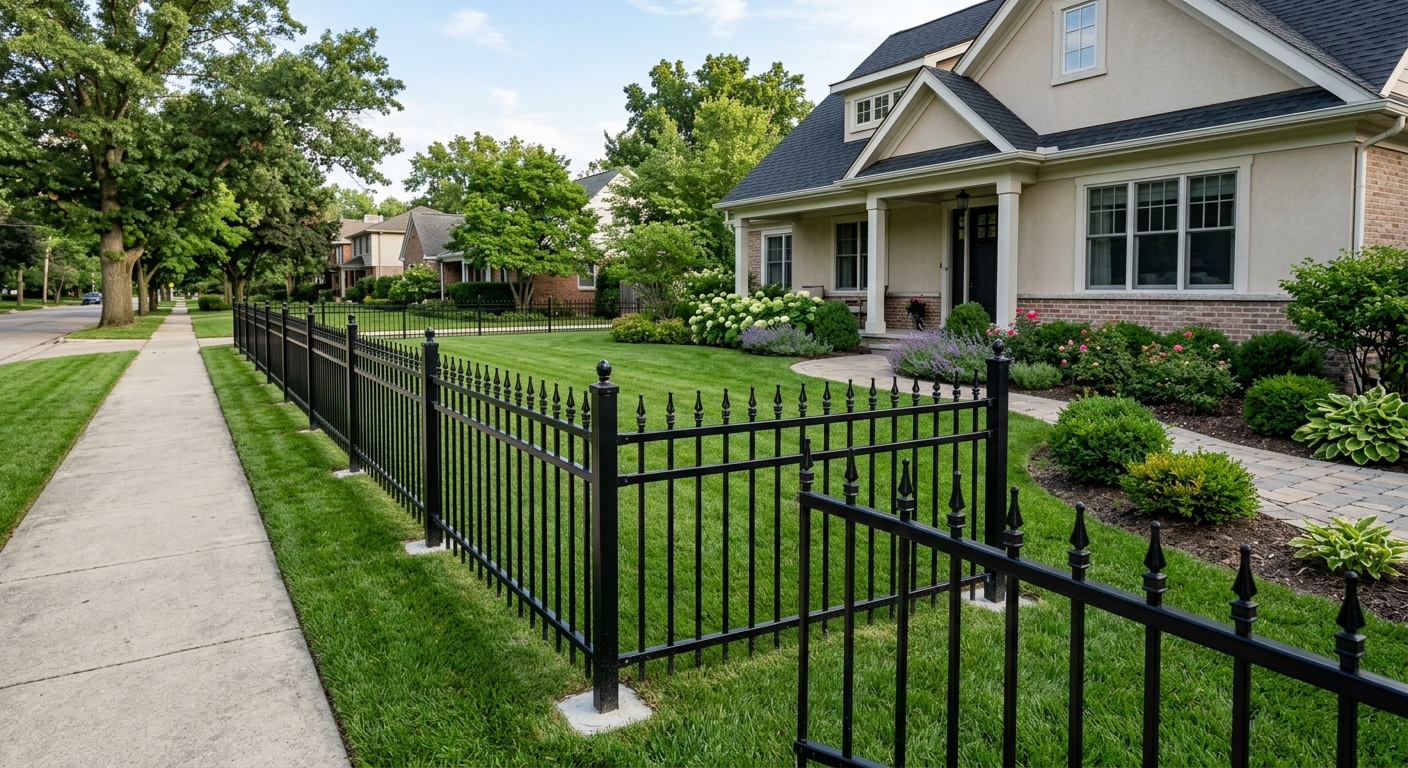
Fencing options and costs in Enderby
Enderby homeowners have a lot of fencing choices, but the best fit usually comes down to how much privacy you need, how much maintenance you’re willing to do, and how your yard is exposed to wind. With Enderby having 3,028 residents (Statistics Canada, 2021 Census) and about 73.9% of households owning their homes (Statistics Canada, 2021 Census), demand is steadier than in more transient communities—detached properties in particular are often the first candidates for fence upgrades. In fact, single-detached houses make up 59.9% of dwellings, so many lots are laid out for side-yard and backyard fencing.
In the Thompson–Okanagan region, your fence cost is strongly shaped by frost depth, soil conditions, and wind exposure in the valley. Contractors typically set posts below the local frost line so they don’t heave during freeze–thaw cycles. Interior frost conditions are generally deeper than coastal BC, which means more auger time, longer posts, and often concrete-set footings in clay or poorly drained areas. On more open lots, tighter post spacing and better bracing can also raise the price even if the fence height stays the same. In Enderby, that’s especially noticeable on properties near the river flats and other more exposed areas where prevailing breezes can hit fence lines directly.
Below is a practical cost comparison you can use when reviewing estimates from contractors in Enderby (or nearby in the Thompson–Okanagan region), then we’ll break down exactly what moves the price up or down for your specific site.
| Material |
Lifespan |
Maintenance |
Privacy Rating |
Price per Linear Foot |
| Pressure-treated pine (standard wood) |
10–15 years |
Stain/seal every 2–3 years |
High (solid boards) |
$19 – $28 |
| Cedar (natural rot resistance) |
15–25 years |
Light staining every 2–4 years |
High (solid boards) |
$23 – $35 |
| Vinyl / PVC (no-maintenance) |
25–35 years |
Occasional wash |
High (solid panels) |
$26 – $40 |
| Chain-link (galvanized steel) |
20–35 years |
Rinse/spot repair as needed |
Low (security only) |
$15 – $24 |
| Aluminum ornamental |
25–40 years |
Occasional wash |
Medium (open pickets) |
$30 – $52 |
| Composite / recycled |
20–30 years |
Minimal—wash as needed |
High (solid boards) |
$28 – $46 |
Prices are estimates only and vary by project scope, site access and material selection.
What affects the price of fencing in Enderby
In Enderby and across the Thompson–Okanagan region, quotes for the “same” fence can still land 30–50% apart once you factor in post depth, soil, wind exposure, and what’s included in the job. Two contractors may both propose, for example, a similar height of wood privacy fence, but one may plan for concrete-set posts in heavier clay (to resist frost heave), while the other relies on a gravel pack. The labour and materials difference can be significant—especially when you compare a wood build around the local wood band ($55–$85 per linear foot) versus a vinyl/PVC option ($75–$115 per linear foot) where installation complexity and hardware requirements can change the total.
Frost depth is the big driver. Local practice is typically to set posts 4–6 inches below the design frost depth to reduce movement from freeze–thaw cycles. In many interior valley locations, that often translates to deeper hole depths than coastal areas, and deeper holes usually mean more auger time, more concrete, and sometimes larger-diameter posts. In colder regions like the Prairies and parts of Alberta/Ontario, posts may need to go roughly 1.5–2.0 m into the ground for stability; interior BC often isn’t as extreme, but the same principle applies and the hole depth still affects cost. Wind exposure can also raise costs: open benches and valley bottoms may require closer post spacing and heavier bracing to keep panels from “oil-canning” or rack movement.
In Enderby, a few concrete examples commonly change the bill. If your yard has clay or poorly drained soil, concrete-set posts cost more than a lighter gravel pack but often save you from early leaning. If your fence line runs along a more exposed edge, adding diagonal bracing and wind-rated hardware can add labour even if you didn’t change fence length. And if your existing fence needs removal, disposal and backfill work typically adds time and hauling.
Those variables are why two similar projects can differ by several thousand dollars, even in a town of 3,028 people (Statistics Canada, 2021 Census). Next, here’s a breakdown of the cost factors that show up in detailed fence quotes.
| Price Factor |
Why It Matters |
Cost Impact |
| Fence length in linear feet |
Most materials and labour scale directly with total length |
High (primary driver) |
| Post depth required |
Frost line determines hole depth so posts don’t heave |
High (often adds concrete + auger time) |
| Post setting method |
Concrete vs. gravel pack vs. driven posts changes materials and install time |
Medium to high |
| Material choice |
Vinyl and composite typically cost more upfront; cedar costs more than PT pine |
Medium to high |
| Gate count and type |
Drive-through (double) gates require stronger posts, more hardware |
High per gate |
| Grade and terrain |
Slopes require stepped bases or raked panels to keep spacing uniform |
Medium |
| Old fence removal and disposal |
Demolition, hauling, and disposal fees add labour and equipment time |
Medium |
| Permit fees and survey / property line locate |
Paperwork, locating pins, and compliance steps prevent rework |
Low to medium (project-dependent) |
Permits & regulations in British Columbia
In British Columbia, fence rules are commonly tied to height and placement. As a practical guideline, fences above roughly 2.0 m (6.5 ft) at the rear and above about 1.0–1.2 m (3–4 ft) at the front or corner often trigger a building permit requirement, depending on local bylaw interpretation. Even when a permit is not required, you still need to respect property lines and municipal setback bylaws—so the fence can’t be “close enough” if it crosses a lot line.
Before you dig any post holes, call for utility locates in advance (BC 1 Call). Then, confirm your layout by obtaining a survey or at least locating your property pins so you can avoid encroachment disputes. In British Columbia, shared fence ownership and line-fence responsibilities are addressed under provincial line-fences legislation—so it’s smart to document the agreement with your neighbour if they’re contributing.
What typically does require a permit: installing a fence that exceeds the height thresholds (often the rear over ~2.0 m and front/corner over ~1.0–1.2 m) or adding structures that change how the fence will function. What typically does not require a permit: straightforward replacement of a fence within allowed height limits and staying within property lines, assuming no major change in footprint or structural support beyond like-for-like.
To verify a contractor, ask for their licence details (if applicable to their trade/service), then request a current certificate of insurance showing liability coverage and WSIB/WCB coverage where required. Look for the certificate expiry date, the named insured, and match it to the company doing the work. If they can’t provide up-to-date insurance documents before a site visit, that’s a warning sign. Next, we’ll look at how to choose a material that fits Enderby’s winters and frost-heave conditions.
Choosing the right fence material for Enderby
Choosing a fence material in Enderby is about matching priorities—privacy, low maintenance, budget, and lifespan—to a climate that drives freeze–thaw movement and winter damp. Pressure-treated pine is the most budget-friendly option, but it typically needs staining/sealing every 2–3 years to limit grey weathering and keep boards looking consistent. Cedar looks great and naturally resists rot better than many standard woods, but it still benefits from periodic maintenance to keep it from drying out and warping. Vinyl/PVC is the low-maintenance favourite for many homeowners, but in extreme cold it can become brittle if the system isn’t installed properly with correct post depth and hardware; it also costs more upfront.
Chain-link is usually the most economical and long-lived, but it offers minimal privacy unless you plan for slats, privacy mesh, or climbing plants. Aluminum ornamental provides a clean, rust-resistant look with little maintenance, though it’s best when you want visibility while still defining the property. Composite/recycled materials sit in the “set it and forget it” lane—often with solid privacy styles—while still requiring correct installation for frost stability.
For Thompson–Okanagan winter performance, post depth and proper setting matter more than people expect. Interior valley frost typically means deeper postholes than coastal areas, so concrete-set posts are often necessary on challenging soils or where contractors can’t guarantee stable grading and drainage. Where wind exposure is higher, adding bracing and using stronger framing members can be more cost-effective than trying to compensate with cheaper panels.
As a concrete example, if you’re choosing between pressure-treated pine (wood installs commonly fall in the $55–$85 range) and vinyl/PVC ($75–$115), that difference can be justified when you expect long-term maintenance costs. If you’d otherwise stain for the next decade, vinyl’s higher upfront cost can level out—especially for homeowners with limited time to keep on top of yearly wear.
| Material |
Cold Tolerance |
Lifespan |
Annual Maintenance |
Best For |
Price Band |
| Pressure-treated pine |
Good (with proper post depth and sealing) |
10–15 years |
Low to moderate (stain/seal every 2–3 years) |
Budget-friendly privacy |
$55 – $85 |
| Cedar |
Good (rot-resistant but still weathering) |
15–25 years |
Low to moderate (light stain every 2–4 years) |
Attractive privacy with better natural durability |
$65 – $95 |
| Vinyl / PVC |
Very good when installed correctly |
25–35 years |
Very low (wash as needed) |
Low-maintenance, long-term privacy |
$75 – $115 |
| Chain-link |
Excellent (galvanized steel system) |
20–35 years |
Very low (spot repair/clean) |
Security and boundaries |
$35 – $60 |
| Aluminum ornamental |
Excellent (non-rusting) |
25–40 years |
Very low (occasional wash) |
Curb appeal with light privacy |
$90 – $150 |
| Composite / recycled |
Very good (solid materials, low rot) |
20–30 years |
Low (wash/inspection) |
Solid privacy with minimal upkeep |
$80 – $125 |
How to choose a fencing contractor in Enderby
When you hire a fencing contractor in Enderby, start with proof they can legally and financially stand behind the work. In British Columbia, ask for (1) their business licence details where applicable, (2) liability insurance, and (3) WSIB/WCB coverage as required for their workers and subcontractors. How to check: request a current certificate of insurance and verify the coverage limits, that it covers fencing operations, and that the company name matches the estimate and invoice. For workers’ coverage, ask for the clearance documentation or evidence of enrollment/coverage that applies to their workforce—then confirm the effective dates align with your project timeline.
Next, get 2–3 itemised written quotes. You want a breakdown that separates labour, materials, posts/footings, gates, and removal/disposal if applicable—rather than a single lump sum. Carefully read what’s excluded: for example, are concrete and rebar included if posts must be concrete-set due to soil, or are they “allowances”? Will they pull permits if required, and is survey/property line location included or treated as an extra? Also confirm warranty terms: workmanship warranty length, the product/manufacturer warranty, and whether the warranty is transferable to future owners.
For payment, never agree to more than about 10–15% upfront. Hold back the balance until the job is complete and cleaned up, with gates aligned and posts plumb. Finally, ask for a written start date and completion estimate, plus a clear plan if weather delays occur—important in a place where frost depth and freeze–thaw timing can affect scheduling.
- They provide an itemised quote (labour vs materials vs footings vs gates).
- They specify post depth strategy tied to frost stability (not just “standard posts”).
- They show how concrete vs gravel pack is decided for your soil type.
- They include gate hardware specs (latch type, hinges, reinforcement).
- They confirm whether permit paperwork is included when height thresholds apply.
- They detail property line protection and how pins/locates will be used.
- They state who handles utility locates before digging (BC 1 Call).
- They list removal/disposal charges separately (and what is hauled away).
- They give a workmanship warranty in writing.
- They provide certificate of insurance with matching company name and coverage dates.
- They do not ask for large deposits—stays within about 10–15% upfront.
- They schedule an on-site measure and don’t quote from estimates alone.
Red flags I see in Enderby include: quotes that don’t mention post depth or footing method, “allowance” language that can quietly add thousands, missing insurance documents at the time of quoting, vague warranty language (no written workmanship term), and contractors who request a large upfront payment before any layout is confirmed.
Frequently asked questions — fencing in Enderby
How do I prevent wood fence rot in Enderby?
To prevent rot in Enderby, the biggest wins start below grade and at board ends. First, use pressure-treated pine properly and keep cut ends sealed; cedar also benefits from protecting end grain where moisture collects. Second, ensure posts are set below the frost-impacted zone using the footing method suited to your soil—if posts heave during freeze–thaw, gaps form and water traps accelerate rot. In interior BC, deeper hole depth is commonly needed to reduce movement, and concrete-set posts are often used where drainage is poor. Finally, keep ground clearance consistent (avoid burying bottom rails in damp soil) and plan for maintenance cycles: staining/sealing every 2–3 years for PT wood is typical. If your estimate includes concrete and correct post depth, you’re already addressing the rot risk at its source.
What is the cost per linear foot for fencing in Enderby?
For Enderby, fencing is often priced using local per-linear-foot bands that reflect frost-depth footing work, material choice, and wind exposure across the Thompson–Okanagan region. Typical installed ranges you’ll see: wood fencing often falls around $55 – $85 per linear foot, while vinyl/PVC commonly lands near $75 – $115. Chain-link is usually the lowest cost at roughly $35 – $60 per linear foot, while aluminum ornamental tends to be higher, around $90 – $150. Your exact per-foot cost can shift based on post depth/setting method, gate count, slope grading, and whether old fence removal and disposal are included. The best way to confirm your per-foot figure is an itemised quote that includes footings and hardware—not just boards and pickets.
Should I repair or replace my old fence in Enderby?
In Enderby, repair can make sense when the posts are solid and only the pickets/boards are tired. If the fence is leaning, has multiple broken rails, or you’re seeing rot at the post bases, replacement is often cheaper long-term because you’re dealing with movement from freeze–thaw and water exposure—not just cosmetic wear. A practical rule: if more than a third of the section needs board replacement or if footing lines are failing, replacement usually provides a better “reset” for alignment and durability. Also consider wind: open areas can rack older fences, making repeated spot repairs frustrating. Get an on-site assessment for post firmness and footing condition before you commit. If you plan upgrades, choosing materials matched to maintenance expectations (like cedar or vinyl) can also reduce future labour compared with repeatedly patching PT pine.
How do I handle a fence dispute with a neighbour in British Columbia?
For fence disputes in British Columbia, start by confirming the facts: property line location and the fence ownership/line-fence context. In practice, that means reviewing your survey (or arranging a proper locate of pins) and documenting the fence condition with photos and measurements. Because frost movement and storm damage can create disagreements about “who caused what,” keep the discussion anchored on the boundary and the agreement. Provincial line-fences legislation governs shared responsibility in many situations, but the process can still be handled informally first if both sides agree on what “good repair” looks like. If you can’t reach agreement, consider mediation or legal advice rather than starting demolition. For added clarity, ask your contractor to mark the proposed alignment and note where posts would be set relative to the lot line—this helps prevent further encroachment misunderstandings.
What fence style offers the best wind resistance in Enderby?
In Enderby, the “best” wind-resistant choice depends on how exposed your lot is, but the common theme is structural rigidity. For privacy fences, designs with solid boards and strong bracing typically resist racking better than lightly framed panels. However, extremely solid fences can catch wind load if spacing and reinforcement are weak—so reputable contractors use the right post spacing, thicker framing where needed, and correct hardware to handle gusts. In very windy runs, some homeowners choose semi-open designs (with spacing or lattice) to reduce pressure, while still adding bracing and tension at line posts. Regardless of style, wind performance improves dramatically when posts are set to the frost-stability standard and when gates are reinforced so they don’t twist and loosen. If your fence runs along a more exposed edge in Enderby, ask your contractor to detail how they’ll handle bracing and post spacing.
How much does a fence cost in Enderby?
Fence cost in Enderby depends mainly on total length, how many gates you need, and what your footing conditions require. As a broad planning guide using local installed bands, wood fences are often around $55 – $85 per linear foot, while vinyl/PVC is commonly $75 – $115 per linear foot. Chain-link usually runs about $35 – $60, and aluminum ornamental is typically $90 – $150. Your total can rise if you need concrete-set posts due to soil/drainage or if the site is sloped and needs stepped/raked panels for a straight visual line. If you’re in a neighbourhood with lots of older housing stock (many homes built before 1981), replacement and remediation work can also be more common, which affects scope and disposal. The most accurate number comes from an itemised quote that includes footings, hardware, and any removal.