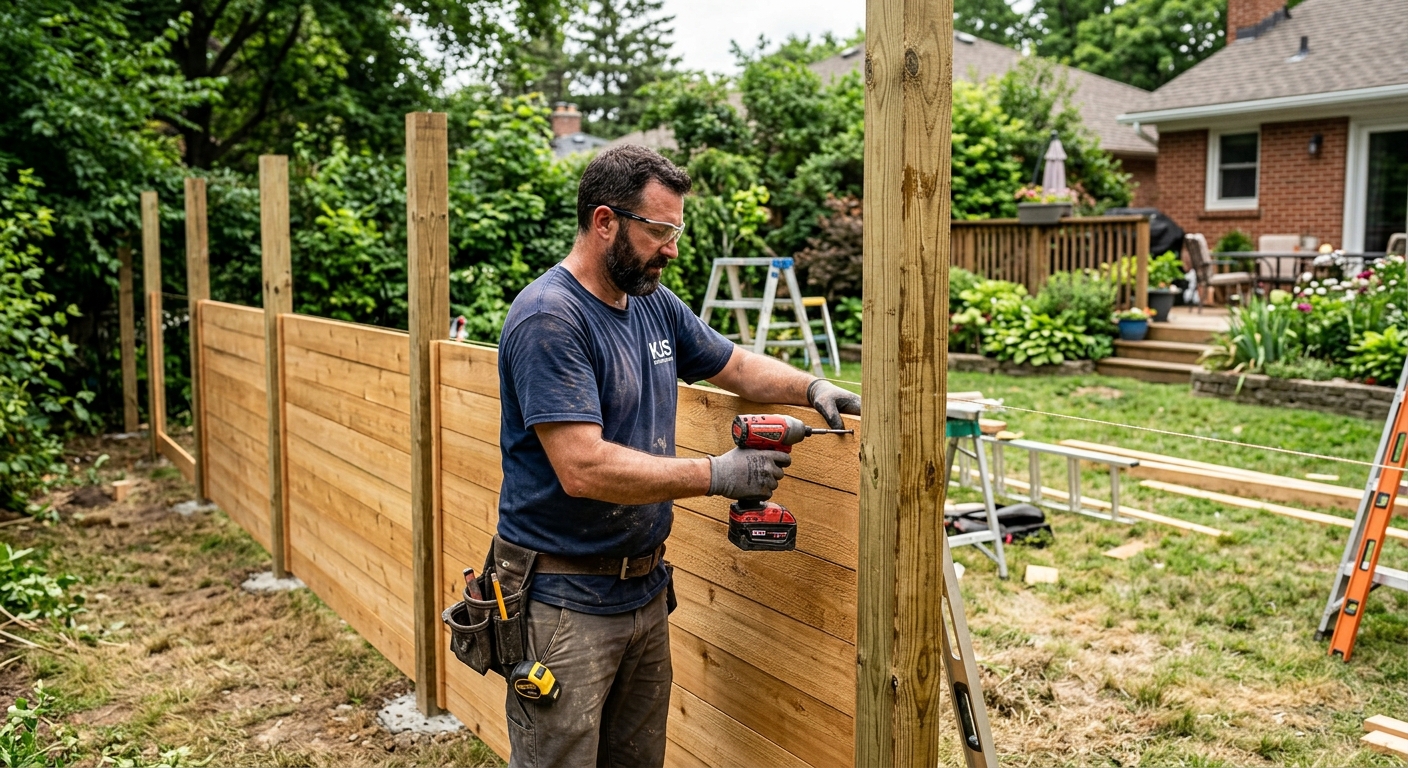
Fencing options and costs in Radium Hot Springs
Radium Hot Springs has a unique mix of scenic valley living and practical yard needs, so homeowners here usually want fencing that looks good and stands up to freeze–thaw cycles. With 1,339 residents (Statistics Canada, 2021 Census) and 74.8% of households owning their homes (Statistics Canada, 2021 Census), most local demand is driven by owner-occupied properties—each detached home is a potential fencing upgrade or boundary refresh. In fact, single-detached dwellings make up 33.1% of housing stock in the area (Statistics Canada, 2021 Census), which is why we often see longer perimeter runs and more corner/gate work.
In the Kootenays, Kootenay-wide frost and uplift pressure are a real cost driver. Posts usually must be set close to or below the regional frost depth to reduce frost heave, meaning deeper augering, more excavation time, and more concrete per post—especially at corners and drive gates. That’s different from milder regions where 2 ft post holes might be accepted. In Radium Hot Springs and nearby acreage stretches, wind and snow loading also push contractors toward tighter post spacing and stronger panel frames, particularly for taller privacy fences.
Within Radium Hot Springs, demand is especially common around the resort and residential edge areas where properties border public paths and neighbouring lots—homeowners often upgrade for privacy and pet control during spring and early summer. With these climate realities in mind, the options below summarize typical lifespan, maintenance expectations, and installed cost ranges you’ll see in the local market.
| Material |
Lifespan |
Maintenance |
Privacy Rating |
Price per Linear Foot |
| Pressure-treated pine (standard wood) |
10–15 years |
Stain/seal every 2–3 years to reduce grey weathering |
High (solid boards) |
$45 – $75 |
| Cedar (natural rot resistance) |
15–25 years |
Re-stain every 3–4 years (or choose clear sealers) |
High (solid boards) |
$55 – $90 |
| Vinyl / PVC (no-maintenance) |
25–35 years |
Occasional rinse; inspect for impacts and panel alignment |
High (solid privacy styles) |
$70 – $110 |
| Chain-link (galvanized steel) |
20–30 years |
Rare: spot-rinse; repair localized damage |
Low–Medium (no privacy unless slats are added) |
$30 – $55 |
| Aluminum ornamental |
25–40 years |
Minimal; rinse as needed and touch up chips |
Low (open pickets) |
$80 – $140 |
| Composite / recycled material |
25–35 years |
Low; clean and inspect fasteners annually |
High (solid/composite panels) |
$85 – $130 |
Prices are estimates only and vary by project scope, site access and material selection.
What affects the price of fencing in Radium Hot Springs
Homeowners in Radium Hot Springs often see quotes for the “same” fence that are 30–50% apart, even with the same overall height and material. In the Kootenays, that gap usually comes back to how each contractor designs around frost, wind, and site conditions—along with differences in crew efficiency and how much concrete excavation they plan for each post. The Kootenay market also tends to price labour with local travel, equipment time, and seasonal scheduling in mind, which can make availability tighter than in larger centres.
The biggest technical driver is post depth. In British Columbia’s cold winters, contractors typically set posts about 4–6 inches below the design frost depth, and that can mean deeper auger holes than homeowners expect. When posts need to go roughly 1.5–2.0 m into the ground in frost-prone areas, longer posts and more concrete per post raise material and labour costs. On the wind side, the Prairies often require tighter post spacing; here in the Kootenays it’s less extreme than open Prairie exposure, but exposed lots and higher runs still benefit from closer spacing and sturdier frames to reduce racking during freeze–thaw seasons and snow loading.
Concrete examples from local installs: (1) a 6 ft privacy fence with double gates on a sloped driveway often adds extra corner bracing and deeper gate posts because those are the first points of stress; (2) removing an old fence and hauling debris off-site increases excavation and disposal time, especially if the old posts are concrete-set; (3) a fence that needs more concrete at corners and end posts usually costs more than the same length of run across a flatter grade. If you compare a pressure-treated pine install that may sit in the $45–$75 per linear foot band against vinyl / PVC at $70–$110, the difference is often justified by stronger post and bracing design in real winter conditions—not just the material itself. Even the age of surrounding homes can matter: with 12.6% of area dwellings built before 1981 (Statistics Canada, 2021 Census), older lots sometimes have mature landscaping, buried services, and uneven boundaries that add locate and excavation time, which shows up in the final quote.
| Price Factor |
Why It Matters |
Cost Impact |
| Fence length in linear feet |
Most of the cost scales with labour and the number of posts, rails and panels |
High (primary driver) |
| Post depth required |
Frost line determines hole depth and post length to prevent heaving |
Medium–High |
| Post setting method |
Concrete setting below frost depth resists uplift; gravel packs can reduce concrete but depend on soil |
Medium–High |
| Material choice |
Vinyl and composite have higher material cost; chain-link and treated wood are usually lower |
Medium |
| Gate count and type |
Drive-through double gates require heavier frames, more hardware and stronger hinge posts |
High |
| Grade and terrain |
Slopes require stepping, raking, or custom panel layouts to keep height consistent |
Medium |
| Old fence removal and disposal |
Concrete-set posts and mixed materials increase labour and dump fees |
Medium–High |
| Permit fees and survey / property line locate |
Locates and any required permits reduce encroachment risk and rework |
Low–Medium |
Permits & regulations in British Columbia
In British Columbia, fences above a height threshold—often around 2.0 m (6.5 ft) at the rear and about 1.0–1.2 m (3–4 ft) at the front or corner—may require a building permit, depending on the location of the fence and the municipal zoning. All fences must respect property lines and municipal setback bylaws, so the exact placement matters just as much as the height.
Before digging any post holes in Radium Hot Springs, you should have utilities located. Call BC 1 Call (or the appropriate provincial utility locate service) before excavation to mark buried services. Also consider obtaining a survey or at least locating your property pins so the contractor can set the fence line correctly. Line-fence situations and shared fence ownership are handled under provincial line-fences legislation, so if the fence boundary is shared, confirm who is responsible for which sections.
What typically DOES require a permit: taller privacy/security fences over the local height thresholds, fences in areas that may affect sightlines (corner visibility), and any project your municipality flags for review. What typically does NOT: replacing like-for-like fences that stay within standard height limits and setbacks, and routine repairs—though you should still confirm with your municipality.
To verify your fencing contractor in British Columbia, check three things in writing: (1) their licence/registration status (through the appropriate provincial registry or their business profile), (2) their certificate of insurance naming you as an additional insured where applicable, and (3) worker coverage confirmation (WSIB/WCB equivalent documentation). Ask for a current certificate date, and keep copies for your records.
Choosing the right fence material for Radium Hot Springs
Your best fence material depends on what you care about most: privacy, low maintenance, budget, and how long you want the fence to look “set-and-forget.” In Radium Hot Springs, freeze–thaw cycles and winter moisture make durability in the post and rail connections just as important as face material.
Pressure-treated pine is usually the most budget-friendly. However, it needs staining or sealing every 2–3 years to avoid grey weathering and to keep water from soaking deep into the boards. Cedar looks better for many homeowners and has natural rot resistance, but it still benefits from regular staining/sealing to maintain colour and reduce surface cracking. Vinyl / PVC offers genuine low maintenance—no staining—but extreme cold can make it more brittle than wood, and impacts can create cracks that require section-level replacement. Chain-link is often the lowest installed cost and lasts well, but it provides little privacy unless you add slats or switch to a privacy style. Aluminum ornamental is rust-resistant and durable with minimal upkeep, but it’s primarily decorative and open, so it won’t give full privacy. Composite and recycled materials land in the “premium low maintenance” category, typically with stronger panel consistency for long-term looks.
On post depth: in the Kootenays, you should expect concrete-set posts for structural corners, end posts, and gate posts, with holes set below frost influence (often 4–6 inches below design frost depth) to reduce heaving. For privacy fences, closer post spacing and sturdier rails help with wind and snow load stress.
A practical example: if a pressure-treated pine privacy fence lands in the $45–$75 per linear foot range, while vinyl / PVC is commonly $70–$110, the extra spend is usually most justified when you want minimal spring/summer upkeep and have limited time for staining. In many Radium Hot Springs households, that trade-off is worth it—especially when the fence line is long and the boards would otherwise need frequent re-coating.
| Material |
Cold Tolerance |
Lifespan |
Annual Maintenance |
Best For |
Price Band |
| Pressure-treated pine |
Good with proper staining and hardware |
10–15 years |
Light: inspect + plan stain every 2–3 years |
Budget privacy where you’re comfortable maintaining |
$45 – $75 |
| Cedar |
Very good; natural oils resist rot |
15–25 years |
Low–moderate: re-stain about every 3–4 years |
Appearance-focused privacy with manageable upkeep |
$55 – $90 |
| Vinyl / PVC |
Good, but avoid impacts in extreme cold |
25–35 years |
Minimal: rinse and check for panel alignment |
Low-maintenance privacy and long-term appearance |
$70 – $110 |
| Chain-link |
Excellent (galvanized steel) |
20–30 years |
Minimal: check tension and coatings as needed |
Security, pets, or boundaries where privacy isn’t required |
$30 – $55 |
| Aluminum ornamental |
Excellent (powder-coated) |
25–40 years |
Minimal: rinse; touch up chips |
Decorative front yards and durable perimeter fencing |
$80 – $140 |
| Composite / recycled |
Good; consistent panel performance |
25–35 years |
Low: clean and check fasteners annually |
Premium low-maintenance privacy |
$85 – $130 |
How to choose a fencing contractor in Radium Hot Springs
Picking a contractor in Radium Hot Springs is mostly about proof: proof they understand Kootenay frost requirements, proof their insurance is current, and proof they price the job with your scope fully defined. Start by verifying British Columbia coverage paperwork. Ask for a certificate of insurance (liability) and confirm it is current; if they use subcontractors, confirm coverage extends to the crew. For worker protection, request proof of WSIB/WCB-equivalent coverage and ensure the certificate shows the correct legal business name. Don’t accept “we’re covered” without documents you can view and keep.
Next, get 2–3 itemised written quotes. You want a breakdown that separates labour (excavation/setting/assembly), materials (rails, panels, hardware), and any extras (removal, disposal, gates, concrete). A lump-sum number alone often hides where costs will rise—especially with deeper frost-depth augering and added concrete at corners.
Read the scope carefully: is permit pulling included (or is it excluded)? Is old fence removal included, and where does debris go? Confirm whether replacement posts include concrete setting at corners and gates, and whether the quote includes post-depth verification based on soil and frost assumptions. Ask for warranty terms: workmanship warranty length, product/manufacturer warranty, and whether the warranty is transferable if you sell the home.
Payment schedule matters. Never pay more than 10–15% upfront; hold a portion until the job is complete and walk the fence line with the contractor. Get a start date and completion estimate in writing, including weather-related contingencies typical for Kootenay freeze–thaw conditions.
- Request proof of current liability insurance and keep the COI on file.
- Ask for WSIB/WCB-equivalent worker coverage documentation.
- Confirm they will use a site locate/utility locate before digging.
- Get itemised quotes (labour, materials, concrete, gates, removal, disposal).
- Verify post-depth method (below frost influence) for your fence type.
- Confirm corner, end and gate posts are designed for uplift and lateral load.
- Ask how they handle sloped yards (stepped vs. raked panels).
- Check whether they include disposal fees for old fence materials.
- Request hardware grade details (hinges, latches, tension/rail types).
- Clarify warranty: workmanship length and manufacturer coverage.
- Ensure payment terms are staged (max 10–15% upfront).
- Get a written start date and completion timeline with weather notes.
In Radium Hot Springs, red flags include contractors who won’t show insurance documents, who propose shallow post holes “like in Ontario” without frost-depth design, who quote only a lump sum without concrete/post-depth detail, who skip a locate discussion before excavation, or who pressure you for a large upfront deposit (beyond 10–15%).
Frequently asked questions — fencing in Radium Hot Springs
What fence style offers the best wind resistance in Radium Hot Springs?
For wind resistance in Radium Hot Springs, solid privacy styles are often the worst choice if they’re built too loosely, because wind pressure can rack weak frames. The best balance is a well-framed privacy fence with properly set corner/end posts, solid rails, and consistent post spacing designed around the regional frost and freeze–thaw conditions. If you want visibility while improving wind performance, semi-privacy or picket styles with tighter framing can reduce sail-like pressure. For maximum stability, prioritize heavier hardware at corners and hinges on gates and ensure posts are set below frost influence with concrete where needed. In practice, that’s why many homeowners see better long-term results from vinyl privacy or cedar with a correctly engineered post layout rather than “lightweight” builds.
How much does a fence cost in Radium Hot Springs?
Fence costs in Radium Hot Springs typically depend on linear feet, gate count, and how deep posts must be set for frost protection. As a quick guide, pressure-treated wood installs often land in the $45 – $75 per linear foot range, while vinyl / PVC privacy usually comes in around $70 – $110 per linear foot. Chain-link is commonly lower at about $30 – $55 per linear foot, especially for boundary security where privacy isn’t required. The Kootenay frost line can add cost because deeper augering and more concrete are needed for end posts, corners, and double-drive gates. If your lot has slopes, old fence removal, or you need survey/property line locating, those factors can also push the final total upward.
How deep should fence posts be for Radium Hot Springs's frost?
In Radium Hot Springs and the broader Kootenays, post depth is set to reduce frost heave, not to match a “2 ft rule” from milder regions. A common approach is setting fence posts about 4–6 inches below the design frost depth, which typically means deeper holes than many homeowners expect. Practically, that often lands around the 1.5–2.0 m range depending on soil and the fence design, especially for structural locations like corners and gates. The key is how the contractor handles uplift pressure: deeper concrete-set footings for high-stress posts and correct hole excavation. Always ensure the contractor discusses soil conditions and confirms the post depth in writing in the quote.
Wood vs vinyl vs aluminum fence — which is best?
“Best” depends on your priorities. Wood (pressure-treated pine or cedar) is often the best match if you want a traditional look and you’re comfortable with maintenance—plan on staining/sealing regularly (every 2–3 years for treated pine, about every 3–4 years for cedar) to keep colour and slow weathering. Vinyl / PVC is usually best for low-maintenance homeowners because it typically needs only occasional rinsing and visual checks; however, impacts can crack panels in extreme cold. Aluminum is durable and rust-resistant with minimal upkeep, but it’s mostly decorative or semi-open, so privacy is limited. Cost-wise, vinyl often sits in the $70 – $110 per linear foot band, wood can start lower at $45 – $75, and aluminum typically runs higher around $80 – $140.
Do I need a permit to build a fence in British Columbia?
In British Columbia, permits may be required for fences that exceed height thresholds (commonly around 2.0 m at the rear and roughly 1.0–1.2 m at the front or corner), and rules can vary by zoning and sightline considerations. In Radium Hot Springs, the safest approach is to confirm the proposed fence height and location relative to property lines and setbacks before construction. Also remember the practical steps: have utilities located before digging and confirm your boundary line using a survey or property pins to avoid encroachment disputes. Shared fence responsibilities can also be governed by provincial line-fences legislation. If your fence plan appears to fall above the threshold, ask your contractor whether they include permit pulling or how you should arrange it.
How long does a wood fence last in Radium Hot Springs?
With correct post depth and quality installation, a wood fence in Radium Hot Springs commonly lasts about 10–15 years for pressure-treated pine and 15–25 years for cedar. The biggest longevity factors are how posts are set for frost heave and how well the wood is maintained. In a freeze–thaw climate, moisture movement at board ends and around rails accelerates wear, so staining and sealing matter even if the wood is pressure-treated. If you keep up with maintenance on a typical pine fence (every 2–3 years), you’ll often see noticeably better board life than homeowners who wait many years between coats. For best outcomes, choose quality hardware, ensure corners and gate posts are reinforced, and address any early issues after winter expansion.