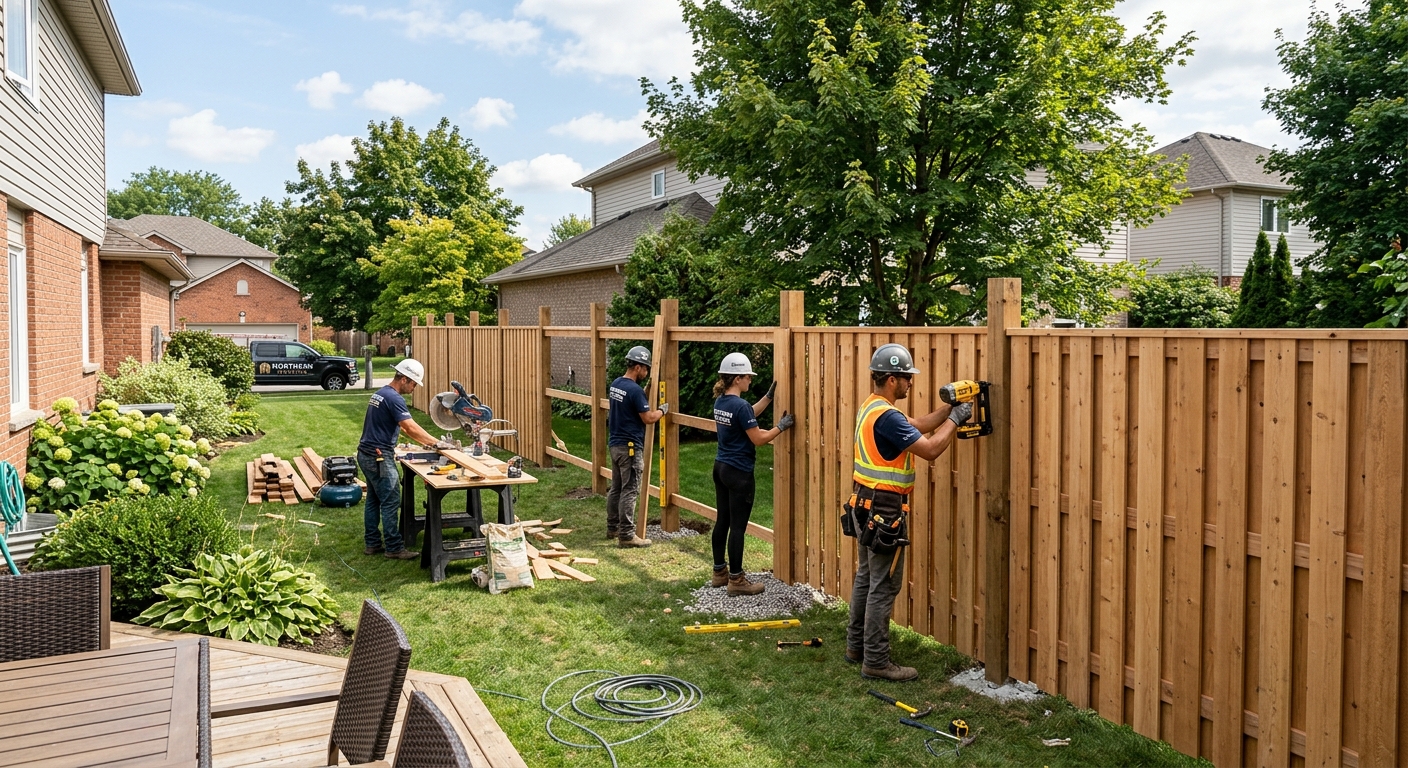
Fencing options and costs in Sidney
Sidney is a small community on Vancouver Island with a lot of homeowners who value tidy yards and clear boundaries. With 12,318 residents and 76.8% of households owning their homes (Statistics Canada, 2021 Census), fencing demand stays steady because most fence replacements are tied to routine maintenance, boundary adjustments, and landscaping upgrades. In the neighbourhoods around Prospect Road and Sidney-by-the-Sea, you’ll also see frequent updates as older housing stock—43.7% of homes built before 1981 (Statistics Canada, 2021 Census)—reaches the point where gates sag, panels warp, or posts lean from years of wet season exposure.
On Vancouver Island and the Coast, costs are shaped less by extreme cold and more by the combination of frequent rain, moderate coastal frost, and wind off the Strait of Georgia and Juan de Fuca Strait. Frost depths are relatively shallow (about 45–60 cm), but posts still need to be set deeper to prevent heaving—typically around 75–90 cm for residential fences—and concrete becomes common where soils are disturbed or clay-rich. Wind also matters: solid privacy fences can catch more wind load and may require closer post spacing or heavier rails than open styles like chain-link or ornamental aluminum.
Below is a side-by-side view of common materials used by local contractors, with typical lifespan, maintenance expectations, and installed price bands. Use it to shortlist your best fit before requesting an itemised quote.
| Material |
Lifespan |
Maintenance |
Privacy Rating |
Price per Linear Foot |
| Pressure-treated pine (standard wood) |
10–15 years |
Stain/seal every 2–3 years; inspect posts and fasteners |
High (with solid panels) |
$55 – $85 |
| Cedar (natural rot resistance) |
15–25 years |
Seal or stain every 2–3 years; keep top rails maintained |
High (solid or close-board) |
$70 – $110 |
| Vinyl / PVC (no-maintenance) |
25–35 years |
Rinse with water; occasional cleaning; avoid impacts |
High (solid privacy styles) |
$70 – $110 |
| Chain-link (galvanized steel) |
20–30+ years |
Low; rinse salt spray residue; replace gates/hardware as needed |
Low to Medium (add privacy slats if desired) |
$35 – $60 |
| Aluminum ornamental |
25–40 years |
Very low; clean as needed; check gate alignment |
Low to Medium (open pickets) |
$80 – $140 |
| Composite / recycled material |
25–35 years |
Low; clean seasonally; check for warping after impacts |
High (solid boards) |
$90 – $150 |
Prices are estimates only and vary by project scope, site access and material selection.
What affects the price of fencing in Sidney
In Sidney, two homeowners can receive bids for “the same fence” that still differ by 30–50% on Vancouver Island and Coast, mainly because the ground conditions, access, and wind-loading decisions aren’t identical. Even when material is the same, how the contractor handles layout, post setting, gates, and removal can swing labour hours and disposal costs. On top of that, coastal BC winters drive practical choices: you may see more concrete footings than you’d expect, because wet soils and clay pockets increase the risk of posts shifting over time.
Frost line depth is a big driver because it sets the required post depth. In Sidney, coastal frost is moderate (roughly 45–60 cm), but posts are commonly set deeper—often 75–90 cm—to reduce heaving and long-term leaning. In general, post holes are dug about 4–6 inches below design frost depth, and if contractors encounter saturated or clay-rich patches, they may reinforce with concrete for stability. That added excavation, form-and-pour work, and proper curing can push the total price toward the higher end of the local wood and vinyl ranges (for example, pressure-treated wood often lands around the $55 – $85 band per linear foot depending on detailing).
Wind exposure also changes the build. Privacy fences (solid boards) catch more wind, so you often see closer post spacing and stronger rails; open styles like chain-link tolerate higher wind with standard spacing, which helps keep projects closer to the $35 – $60 chain-link band. Concrete-set posts are sometimes more necessary than on drier yards, particularly where there’s slope, soft ground near drainage lines, or heavy pedestrian gates. Local housing age matters too—older properties near town centres often have mature landscaping and buried services, increasing the time needed for careful locating, digging, and line alignment, which can add hundreds of dollars even when the fence length is unchanged.
| Price Factor |
Why It Matters |
Cost Impact |
| Fence length in linear feet |
Most costs scale directly with total run |
Highest driver; more panels, posts, rails, and fasteners |
| Post depth required |
Sidney’s frost still demands deeper posts to prevent heaving |
Longer posts and deeper holes increase material and excavation |
| Post setting method |
Concrete vs gravel pack affects stability in wet/clay soils |
Concrete-setting adds labour, concrete supply, and disposal of spoil |
| Material choice |
Vinyl, cedar, chain-link, and aluminum behave differently under coastal conditions |
Upfront material cost and hardware differences (saline corrosion resistance) |
| Gate count and type |
Gates require heavier framing, hinges, and alignment |
Each additional gate can add a noticeable labour and hardware premium |
| Grade and terrain |
Sloped yards need stepped or raked panels for a clean line |
Extra layout time and more custom fitting |
| Old fence removal and disposal |
Demolition and hauling vary widely |
Can add labour hours, dump fees, and trailer time |
| Permit fees and survey / property line locate |
BC rules and accurate boundaries affect layout |
Admin costs and possible surveyor involvement |
Permits & regulations in British Columbia
In British Columbia, fences may require a building permit depending on height and location. While requirements can vary by municipality, a common threshold is fences above about 2.0 m (6.5 ft) at the rear, and roughly 1.0–1.2 m (3–4 ft) near the front or corner. Practically in Sidney, the best approach is to measure the proposed fence height from finished grade and confirm where it sits relative to your property line and any road-front setback requirements.
Before any post hole is dug, arrange utility locates—use BC 1 Call—because services like hydro, low-voltage lines, and sometimes irrigation or drainage connections can be close to where fence posts are planned. Next, verify property boundaries: if you have any doubt, obtain a survey or at minimum locate your property pins so the fence doesn’t creep onto a neighbour’s land. Shared fence responsibilities are handled under provincial line-fences legislation; if you’re building on or adjacent to a boundary, confirm who will own which portion and who maintains it.
To confirm a contractor’s credentials in BC, check: (1) licence/registration status in the appropriate online contractor directory for their trade classification (where applicable), (2) a current certificate of insurance for liability, ensuring it covers fence installation work, and (3) WCB/clearance coverage. Request a clearance letter or account verification proof so you can see it’s active before work starts.
If you’d like, I can also tell you exactly what to ask for on an itemised quote so permit-related scope (if needed) is clear up front.
Choosing the right fence material for Sidney
Choosing the right fence in Sidney comes down to matching your priorities—privacy, low maintenance, budget, and lifespan—to what coastal Vancouver Island does to materials: persistent moisture, wind-driven rain, and moderate frost that still moves soil. Pressure-treated pine is usually the lowest upfront wood option, but it typically needs staining or sealing every 2–3 years to limit greying and fastener corrosion. Cedar looks better and resists rot naturally, yet it still needs maintenance to stay uniform in colour and reduce surface checking.
Vinyl/PVC is popular for low maintenance, but it has to be installed correctly with appropriate expansion gaps and quality hardware; impacts from gardening equipment or sports balls can cause cracking that’s expensive to repair. Chain-link is the best “set it and forget it” choice for durability and long service life, but it offers low privacy unless you add slats or pair it with climbing plants. Aluminum ornamental is corrosion-resistant and offers a clean look with minimal rust risk in coastal salinity; it’s mid-range in cost, but it won’t give the same privacy as a close-board wood or vinyl design. Composite/recycled boards can deliver high privacy with low maintenance, though the initial cost is often closer to vinyl than to standard wood.
For post depth, coastal frost still matters. Even with shallow frost lines (about 45–60 cm), the typical residential installation in this area sets posts deeper—often 75–90 cm—and concrete footings are commonly used where soils are wet, clay-rich, or disturbed. On heavier privacy builds, wind exposure can increase the need for sturdier posts and closer spacing, which is one reason a “privacy fence” quote can land closer to the higher end of local wood or vinyl pricing (for example, cedar often sits above pressure-treated wood in the $55 – $85 to $70 – $110 range).
A simple way to justify the upgrade: if you’re replacing a tired privacy fence, moving from standard pressure-treated pine to cedar or vinyl can be worth it when you’re also paying for stable post setting—because the longer lifespan reduces repeat labour in future seasons. If your main goal is budget and longevity rather than privacy, chain-link at the $35 – $60 band is often the most cost-effective route, especially for side yards exposed to wind.
| Material |
Cold Tolerance |
Lifespan |
Annual Maintenance |
Best For |
Price Band |
| Pressure-treated pine |
Good (with proper sealing and fasteners) |
10–15 years |
Inspect + light touch-ups; stain/seal every 2–3 years |
Budget-first yards needing privacy panels |
$55 – $85 |
| Cedar |
Good (natural rot resistance, still needs protection) |
15–25 years |
Seal/stain every 2–3 years; check post tops and rails |
Better appearance with longer service life |
$70 – $110 |
| Vinyl / PVC |
Fair to good (can crack if exposed to impacts; needs correct installation) |
25–35 years |
Low; rinse and occasional cleaning |
Low maintenance privacy and clean lines |
$70 – $110 |
| Chain-link |
Good (galvanized fabric and proper tensioning) |
20–30+ years |
Low; clean salt residue and inspect hardware |
Security with minimal cost (privacy via slats/plants) |
$35 – $60 |
| Aluminum ornamental |
Good (powder-coated; no rust) |
25–40 years |
Very low; periodic washing |
Curb appeal and boundary definition |
$80 – $140 |
| Composite / recycled |
Good (varies by product; needs solid framing) |
25–35 years |
Low; seasonal cleaning and hardware checks |
Privacy with less upkeep |
$90 – $150 |
How to choose a fencing contractor in Sidney
When hiring a fencing contractor in Sidney, confirm credentials before you discuss design. In British Columbia, ask for (and verify) liability insurance, proof of WCB coverage (or active clearance documentation where applicable), and any relevant trade registration for the type of work being performed. Don’t rely on a photo of a certificate—request the current certificate of insurance and clearance letter details and check the dates match the start of your project.
Then get 2–3 itemised written quotes. A proper quote breaks out labour and materials separately (posts, rails, panels, concrete, hardware, gate framing, and any delivery). Look for line-by-line clarity on what’s included: removal and disposal of the old fence, utility locate costs, survey/property line locate costs (if needed), and whether concrete footings are included in your base price. If a quote only provides a lump sum without specifying post depth, post spacing, or footing method, you’re likely paying later through change orders.
Warranty is another differentiator. Ask for the workmanship warranty length, what product/manufacturer warranty covers (and for how long), and whether warranties are transferable if you sell your home. Payment should be structured so you never pay more than 10–15% upfront; hold back a portion until the job is complete, measured, and installed to the agreed line and level. Finally, request a start date and completion estimate in writing, because coastal rain can affect scheduling and curing times.
- Request proof of active liability insurance with matching project dates.
- Verify WCB coverage via clearance letter or account proof before scheduling excavation.
- Ask how they will set posts for Sidney’s frost risk (typical depth and method).
- Confirm whether concrete footings are included or only “if needed.”
- Ensure quotes list post spacing, rail type, and panel thickness.
- Get a written plan for gate hardware quality and hinge/bracing details.
- Confirm disposal of removed materials (dump fees included or not).
- Ask whether utility locates are performed by the contractor or the homeowner.
- Check if they include line layout, stringing, and post alignment verification.
- Request warranty terms in writing for both workmanship and materials.
- Agree on payment schedule: small deposit, then progress payments, holdback.
- Confirm start date, rain-day expectations, and cure time for concrete-setting.
Red flags I see in Sidney: (1) a quote that doesn’t specify post depth or footing method, (2) no written scope for gate construction and hardware type, (3) inability to provide an up-to-date certificate of insurance and WCB proof, (4) vague warranty language or “lifetime” claims without details, and (5) asking for a large deposit before layout and measurements are done.
Frequently asked questions — fencing in Sidney
How much does a fence cost in Sidney?
In Sidney, installed fencing prices typically fall within the local market bands for Vancouver Island and Coast. For example, chain-link is often the lowest-cost option, commonly around $35 – $60 per linear foot depending on height, gate count, and footing details. Wood privacy fences usually land higher; pressure-treated pine is often in the $55 – $85 range, while cedar and vinyl commonly run closer to the $70 – $110 band. Final pricing shifts with post depth, whether concrete footings are used, and how challenging the ground is (saturated spots, clay pockets, slopes, and access around mature landscaping). If your yard needs steps/raked panels or you’re adding a drive-through gate, expect a noticeable bump because gate framing and hardware are heavier.
How deep should fence posts be for Sidney's frost?
Even though coastal BC has a relatively shallow frost line (about 45–60 cm), Sidney fence posts still need to be set below frost to reduce heaving and long-term leaning. In practice, most residential installs set posts roughly 75–90 cm into the ground, using around 4–6 inches below design frost depth as the guiding principle. On wet, clay-rich, or disturbed soil—or where a privacy fence will catch strong wind—contractors commonly add concrete footings for stability. The exact depth should match your fence height, rail design, and local soil conditions, so the best quotes will specify the post depth and whether they’re using concrete versus gravel pack.
Wood vs vinyl vs aluminum fence — which is best?
“Best” depends on what you’re buying for. If you want maximum privacy and can handle periodic upkeep, cedar or pressure-treated wood can be a strong value—pressure-treated pine often prices in the $55 – $85 band, while cedar frequently lands nearer $70 – $110 due to material and detailing. Vinyl/PVC is usually chosen for low maintenance and can also sit around the $70 – $110 range, but it needs correct installation to avoid issues in extreme conditions and you must protect it from impacts. Aluminum ornamental is a great choice for corrosion resistance in coastal climates and typically falls into the $80 – $140 band, but it won’t provide the same privacy as close-board wood or vinyl. Many Sidney homeowners pick vinyl for privacy and chain-link for side yards exposed to wind, then aluminum for front curb appeal.
Do I need a permit to build a fence in British Columbia?
In British Columbia, fences above certain heights often require a building permit, commonly around 2.0 m (6.5 ft) at the rear and roughly 1.0–1.2 m (3–4 ft) near the front or corners. Exact requirements depend on location and how the fence relates to setbacks, so confirm with the municipality. Regardless of permits, you must respect property lines and setbacks. Before digging any post holes in Sidney, you should have utility locates done through BC 1 Call, and it’s smart to verify boundary markers (survey pins) if you’re not certain of the line. If you’re replacing an existing fence, your contractor should clarify whether the change triggers a permit based on the fence’s new height and placement.
How long does a wood fence last in Sidney?
Wood longevity in Sidney depends on material quality, installation (especially post depth and how posts are set), and maintenance. Pressure-treated pine commonly lasts about 10–15 years when it’s properly stained/sealed every 2–3 years and fasteners and post tops are monitored. Cedar typically performs better—often 15–25 years—because it naturally resists rot, though it still benefits from regular staining to maintain protection in wet coastal conditions. Long-term wear usually comes from post movement (insufficient depth or poor footing), fastener corrosion, and top-rail exposure to rain. That’s why a quote that specifies concrete-set posts or stable footing method often costs more upfront but can reduce early failures around the wetter sections of your yard.
Who owns and maintains a shared fence?
Shared fence ownership and maintenance is governed by provincial line-fences legislation in British Columbia. In practice, that means you may be responsible for your side, or parties may agree on joint ownership and cost-sharing depending on where the fence sits relative to the boundary and how it was originally built. If you’re planning changes (height adjustments, replacement, or moving posts), confirm whether you’re working on a boundary fence and who owns which portion before starting. It’s also important to align your layout to the correct boundary using pins or a survey, because disputes often start with post placement rather than the material itself. Your contractor should help with measurement and layout, but the ownership rules are ultimately a legal agreement between parties under provincial guidance.