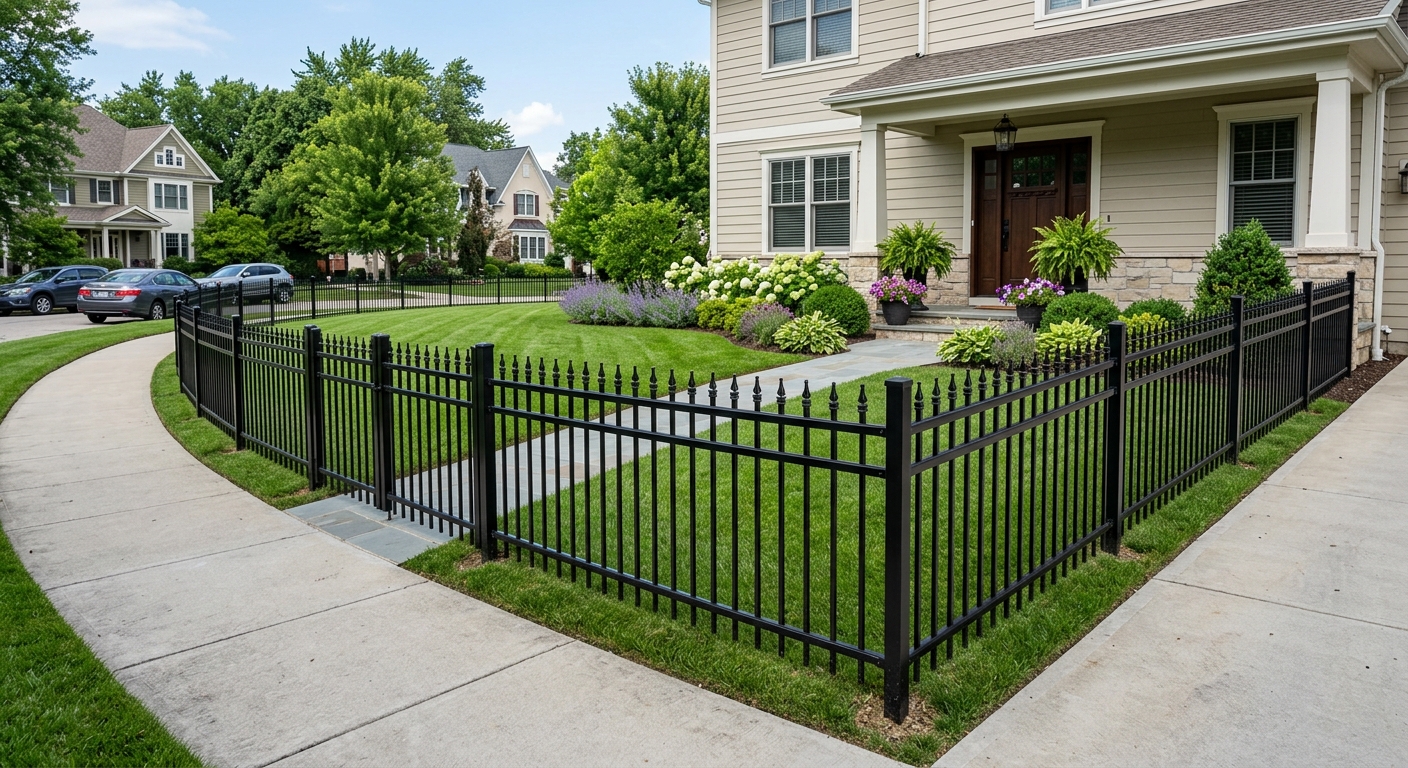
Fencing options and costs in Victoria-Downtown
In Victoria-Downtown, you’ll see a mix of heritage lots, newer infill builds, and older character homes all competing for the same yard space—so fencing decisions tend to be practical as well as aesthetic. With a 2021 population of 46,309 (Statistics Canada, 2021 Census), demand is steady enough that most contractors can schedule residential work, but access constraints like narrow laneways and mature landscaping can still affect timing and labour. Detached-property demand is often strongest in neighbourhood pockets where yards are larger and fencing is set to define boundaries and gardens; that makes each detached home a potential fencing customer. (Statistics Canada, 2021 Census)
On Vancouver Island and the Coast, the climate directly shapes cost. Coastal frost is relatively shallow (about 45–60 cm), yet posts must still be set below frost depth to prevent heaving and long-term leaning—typically around 75–90 cm for standard residential runs, with deeper concrete footings where soils are clay-rich, disturbed, or wet. Frequent wind exposure from the Strait of Georgia and Juan de Fuca Strait also nudges designs toward stronger posts, tighter spacing on privacy fences, and corrosion-resistant hardware. This is why material choice and post-setting method often matter as much as the fence height.
Trade demand is especially noticeable around James Bay, where many homes sit near the waterfront winds and homeowners commonly upgrade older fences that have started to bow or rot. Once you’ve picked a style and material, the next step is estimating your per-foot budget—use the table below to compare realistic options for Victoria-Downtown.
| Material |
Lifespan |
Maintenance |
Privacy Rating |
Price per Linear Foot |
| Pressure-treated pine (standard wood) |
10–15 years |
Stain/seal every 2–3 years; inspect rails annually |
Medium–High (solid boards) |
$55 – $85 |
| Cedar (natural rot resistance) |
15–25 years |
Annual visual checks; stain every 3–5 years depending on finish |
High (solid privacy) |
$70 – $110 |
| Vinyl / PVC (no-maintenance) |
20–30 years |
Minimal; rinse as needed |
Medium–High (solid panel styles) |
$70 – $110 |
| Chain-link (galvanized steel) |
25–35 years |
Occasional wash; check tension yearly |
Low (open mesh) |
$35 – $60 |
| Aluminum ornamental |
20–35 years |
Rinse/clean 1–2 times per year |
Low–Medium (spindles) |
$80 – $140 |
| Composite / recycled material |
25–30 years |
Very low; occasional cleaning |
High (board-style composites) |
$95 – $145 |
Prices are estimates only and vary by project scope, site access and material selection.
What affects the price of fencing in Victoria-Downtown
In Victoria-Downtown, it’s common to see the same basic fence spec price out 30–50% apart across Vancouver Island and Coast (and from contractor to contractor). The reason isn’t just profit margins—it’s how each crew calculates labour time for digging and aligning, how they set posts below frost influence, and what quality of hardware they use in coastal wind and salt air. The region’s mix of older lots, slopes, and tight access can also extend the day rate, even when the fence length looks straightforward on paper. Homeowners often feel that “it’s just panels,” but the ground work and finishing details are where costs concentrate—especially after wet seasons.
Frost depth drives post-setting requirements: while coastal BC frost is about 45–60 cm, we still design to prevent heaving by setting posts below that influence—often around 75–90 cm for typical runs. If soils are saturated or clay-rich, crews frequently switch to concrete setting for better stability. That can raise material and disposal costs. In contrast, cold-climate regions in Ontario and Alberta often require deeper post installs (roughly 1.5–2.0 m into the ground), which is why quotes there can trend higher for similar fence types. On Vancouver Island, you usually need less depth than the Prairies, but frequent wind exposure still matters: solid privacy sections can catch more wind and may require closer post spacing or stronger rails.
Here are a few local examples of what moves dollars up or down in Victoria-Downtown. If you’re replacing a failing fence on a narrow lot in James Bay, access can add time for equipment setup and precise alignment. If your yard has saturated soil after rain, post holes may require extra backfill and more concrete set to avoid future leaning. And if you choose cedar instead of chain-link, you’re not just paying for boards—you’re paying for a higher “system” cost (heavier rails, more careful fastening) that better holds up to coastal wind.
In practice, chain-link might land in the $35 – $60 band for a budget run, while vinyl or wood privacy commonly prices into the $70 – $110 range depending on height, gate needs, and whether concrete-set posts are specified.
| Price Factor |
Why It Matters |
Cost Impact |
| Fence length in linear feet |
Most costs scale directly with material quantity, post count, rails, and labour days |
High (+/− the most) |
| Post depth required |
Frost influence determines post length and hole depth to prevent heaving and leaning |
Medium–High |
| Post setting method |
Concrete vs. gravel pack vs. driven posts changes labour, waste handling, and stability |
Medium–High |
| Material choice |
Vinyl/cedar systems weigh and fasten differently; metal hardware affects longevity in salt air |
Medium–High |
| Gate count and type |
Drive-through or double gates require stronger frames, more hinges/latches, and careful alignment |
Medium–High |
| Grade and terrain |
Slopes require stepped or raked panels and more layout time |
Medium |
| Old fence removal and disposal |
Demo, hauling, and disposal add labour and sometimes extra time for buried posts |
Medium |
| Permit fees and survey / property line locate |
Administrative time plus locate work reduces risk of encroachment disputes |
Low–Medium |
Permits & regulations in British Columbia
In British Columbia, fence permit requirements depend on height and location on the property. As a rule of thumb in Victoria-Downtown, fences above about 2.0 m (6.5 ft) at the rear and about 1.0–1.2 m (3–4 ft) at the front or corner often trigger a building permit requirement. Municipal setback and property-line requirements also apply, and those can change based on your frontage, corner lot conditions, and how your fence relates to driveways or lanes.
Before you or your contractor digs any post hole, you should plan for utility locates. While you don’t need to be an expert to hire a fencing crew, homeowners should still confirm the contractor has requested locates through appropriate provincial utility locate channels (often referred to as BC 1 Call). You’ll also want a survey or at least a property line locate to confirm pin placement, so the fence doesn’t creep onto a neighbour’s land—encroachment disputes are expensive to fix.
Shared fence ownership is handled under provincial line-fences legislation, so if a fence is truly a boundary fence, the responsibilities can be shared. For licences and compliance, verify that your contractor provides proof of liability insurance and work coverage documentation (where applicable), plus a workmanship warranty. Ask to see their clearance letter/documentation and certificate of insurance before work starts.
What typically requires a permit: taller fences (especially above the height thresholds), and projects involving structural changes or special conditions. What typically does not: replacing an existing fence with the same height and alignment, when it stays within permitted height and setback rules (still confirm in writing with the contractor and municipal requirements).
Choosing the right fence material for Victoria-Downtown
Choosing the right fence material in Victoria-Downtown comes down to your top priority: privacy, low maintenance, budget, or long lifespan in coastal wind and wet weather. Pressure-treated pine is usually the budget starting point, but it needs staining or sealing every 2–3 years to limit greying and reduce weather checking on the boards. Cedar looks great and resists rot better, which suits Victoria’s damp conditions, but it still benefits from periodic maintenance if you want to keep a consistent colour and prevent surface wear.
Vinyl/PVC is popular for homeowners who want “set and forget” upkeep. It doesn’t rot and typically needs only rinsing, though extreme cold snaps can cause some materials to become brittle—so we manage installation with the right expansion allowances and hardware selection. Chain-link is the longest-lasting, lowest-cost option and handles wind well because it’s open; however, it won’t give privacy unless you add screening. Aluminum ornamental offers a rust-resistant look and good durability in coastal air, but it won’t block views like a solid fence.
For the post foundation: on Vancouver Island and the Coast, frost influence is relatively shallow (about 45–60 cm), but we still bury posts around 75–90 cm to help prevent heaving and long-term leaning. Where soils are disturbed or saturated, concrete-set posts are often the difference between a fence that stays straight and one that gradually twists.
To see where the price difference is justified: if you’re deciding between chain-link and vinyl, chain-link often lands in the $35 – $60 range per linear foot, while vinyl privacy commonly falls in the $70 – $110 range. Spending more makes sense when you need view blocking, wind performance with solid panels, and a fence that holds up visually through wet winters and windy shoulder seasons.
| Material |
Cold Tolerance |
Lifespan |
Annual Maintenance |
Best For |
Price Band |
| Pressure-treated pine |
Good (with proper sealing) |
10–15 years |
Stain/seal every 2–3 years; quick hardware checks |
Lower upfront cost with acceptable maintenance |
$55 – $85 |
| Cedar |
Good (keeps shape better than many softwoods) |
15–25 years |
Visual checks; stain every 3–5 years (depends on finish) |
Natural look, rot resistance, stronger curb appeal |
$70 – $110 |
| Vinyl / PVC |
Medium–Good (allow for expansion; quality rails) |
20–30 years |
Low: rinse and inspect posts annually |
Low maintenance and long-term appearance |
$70 – $110 |
| Chain-link |
Excellent |
25–35 years |
Low: tension and coating checks |
Security and wind-friendly boundary fencing |
$35 – $60 |
| Aluminum ornamental |
Excellent |
20–35 years |
Low: occasional rinse; inspect gate hardware |
Rust-resistant style with partial openness |
$80 – $140 |
| Composite / recycled |
Good (depends on manufacturer blend) |
25–30 years |
Low: cleaning; check fasteners |
Privacy boards with durable, low-maintenance performance |
$95 – $145 |
How to choose a fencing contractor in Victoria-Downtown
When you hire a fencing contractor in British Columbia—especially in Victoria-Downtown where access and wind exposure can complicate builds—start with verification. Ask for their licence details (where applicable), proof of liability insurance, and documentation showing appropriate worker coverage (often referenced as WSIB/WCB coverage depending on the jurisdiction). How to check: (1) request a certificate of insurance before work starts and confirm the policy limits and that the certificate is current; (2) ask for a clearance letter/documentation related to worker coverage; (3) verify their business information through the applicable provincial registry and make sure the name on the insurance matches the contractor completing the job.
Next, get 2–3 itemised written quotes. You want a breakdown that separates labour, materials, and extras like concrete setting, gate hardware, and any removal/disposal. Avoid lump-sum-only quotes that don’t describe post depth, footing method, and panel spacing—those details are what change outcomes in coastal wind and wet soils. Also read exclusions carefully: will they pull permits if needed, and is disposal of old fence material included?
For warranty, look for two layers: a workmanship warranty (how long they stand behind installation) and a product/manufacturer warranty (often covers components like rails or slats). Ask whether warranties are transferable if you sell your home.
On payment schedule, never pay more than 10–15% upfront. Use a holdback until final walkthrough and punch-list completion. Finally, insist on a start date and completion estimate in writing—weather and access matter on Vancouver Island, but the timeline should still be clear.
- Confirm post depth plan (typically set below frost influence) and footing method in writing.
- Ensure they specify panel type and spacing for wind exposure (especially for solid privacy).
- Ask what hardware is used (galvanized/powder-coated) for coastal corrosion resistance.
- Request a fence layout plan showing the line, gate locations, and any fence-to-house distances.
- Get itemised labour/materials pricing, not only a total number.
- Confirm whether permits are included where required for height thresholds.
- Ask if utility locates are booked before any digging.
- Verify property line strategy: survey vs. locate pins; don’t guess boundaries.
- Check whether old fence removal and disposal are included (or priced as an add-on).
- Review warranty terms in writing, including workmanship and product coverage.
- Ensure the contract states payment milestones and a holdback amount.
- Confirm who handles scheduling, cleanup, and final walkthrough corrections.
Red flags I commonly see in Victoria-Downtown include: quoting without stating post depth/footings, refusing to provide proof of insurance or worker coverage documentation, giving only lump-sum estimates with no scope exclusions, demanding a large deposit beyond 10–15%, and starting without confirming property-line layout or utility locates.
Frequently asked questions — fencing in Victoria-Downtown
Should I repair or replace my old fence in Victoria-Downtown?
If your fence is mostly intact but a few posts or rails have failed, a repair is often worth considering—especially if the line is straight and the mesh/boards aren’t warped. In Victoria-Downtown, coastal moisture and frequent wind can rot wood from the inside out, so the key is checking base rails and post bottoms where water sits. If you’re seeing leaning, widespread post failure, or rotting at multiple fence sections, replacement is usually safer because repairs can stabilize one area while adjacent sections continue to shift. If it’s an older wood fence, repairs can also become a recurring cycle unless the contractor upgrades post setting and hardware. For budget planning, note that chain-link can often be in the $35 – $60 range per linear foot, while wood privacy upgrades commonly land higher. Ask for a section-by-section assessment in your quote.
How do I handle a fence dispute with a neighbour in British Columbia?
Start by documenting the issue with photos and measurements, and then talk with your neighbour before you act. In British Columbia, boundary fencing and responsibility can be influenced by provincial line-fences rules, which means you shouldn’t assume it’s automatically “your fence” if the fence sits on or near the boundary. Next, confirm the property line using survey pins or a locate—don’t rely on eyeballing from sidewalks or existing fence positions. If the disagreement is about placement, a survey or locate is often the fastest way to reduce back-and-forth. If the dispute is about maintenance (for example, one side claims they should contribute due to shared ownership), keep communication calm and in writing. Use itemised quotes to show scope and costs clearly. If you need a taller fence, remember permits and height thresholds can complicate replacement decisions in Victoria-Downtown.
What fence style offers the best wind resistance in Victoria-Downtown?
In Victoria-Downtown, open styles generally handle wind better because they don’t catch as much pressure. That’s why chain-link often performs well for coastal exposure, assuming it’s tensioned correctly and posts are properly set below frost influence (typically around 75–90 cm for standard residential runs). Aluminum ornamental can also do well because the open picket design reduces sail effect, but gate hardware must be strong and aligned. Solid privacy fences can absolutely work here—yet they need the right design details: closer post spacing, heavier rails, and careful fastening so the fence doesn’t rack over wet winters and windy seasons. If your yard is exposed toward the Strait of Georgia or Juan de Fuca Strait winds, discuss vented privacy options with your contractor. Cost-wise, chain-link may be nearer the $35 – $60 band, while solid privacy materials like vinyl or cedar often fall higher.
How much does a fence cost in Victoria-Downtown?
Typical fencing costs in Victoria-Downtown depend heavily on linear footage, post setting method, and gate count. As a practical guide, chain-link installations commonly fall in the $35 – $60 per linear foot range, while wood and vinyl privacy fences often trend toward the $70 – $110 per linear foot range depending on height and how many concrete-set posts are required. Aluminum ornamental is usually more expensive, often in the $80 – $140 band, because it’s a more engineered system with durable framing and hardware. If your yard has slopes, requires stepped panels, or needs old fence removal and disposal, expect the per-foot price to rise. Also, coastal wet soil can increase labour time and footing material when posts are set for long-term stability. For the most accurate number, ask for an itemised quote with labour, materials, disposal, and the stated post depth in the scope.
How deep should fence posts be for Victoria-Downtown's frost?
Coastal BC has one of Canada’s shallowest frost lines—about 45–60 cm—but posts still must be set below frost influence to prevent heaving and long-term leaning. In Victoria-Downtown, a practical residential approach is usually burying posts around 75–90 cm, with deeper or concrete-set footings when soils are clay-rich, saturated, or disturbed. If your fence runs along a slope or near areas where water pools, I often recommend concrete-set posts because wet ground can reduce stability even when frost itself is relatively shallow. The contractor should show how they’ll achieve the designed post depth and what they’ll use for backfill. Don’t rely on “standard depth” alone—ask for the plan in writing, and confirm utility locates are done before digging.
Wood vs vinyl vs aluminum fence — which is best?
There isn’t a single “best” in Victoria-Downtown—it depends on your priorities. Wood (pressure-treated pine) can be the budget option, but it needs staining/sealing every 2–3 years to reduce weathering and protect the boards. Cedar looks nicer longer for many homeowners and resists rot better, yet it still benefits from periodic maintenance. Vinyl/PVC is often best for low maintenance and consistent curb appeal; it typically lands in the $70 – $110 band, though proper installation (like expansion allowances) matters in cold snaps. Aluminum ornamental is a strong choice for rust resistance and longevity, often in the $80 – $140 band, but it won’t give the same privacy as solid wood or vinyl privacy panels. Also consider wind: open styles usually resist wind pressure better. If you tell me your target privacy level and whether your yard is exposed, I can help you narrow the best match.