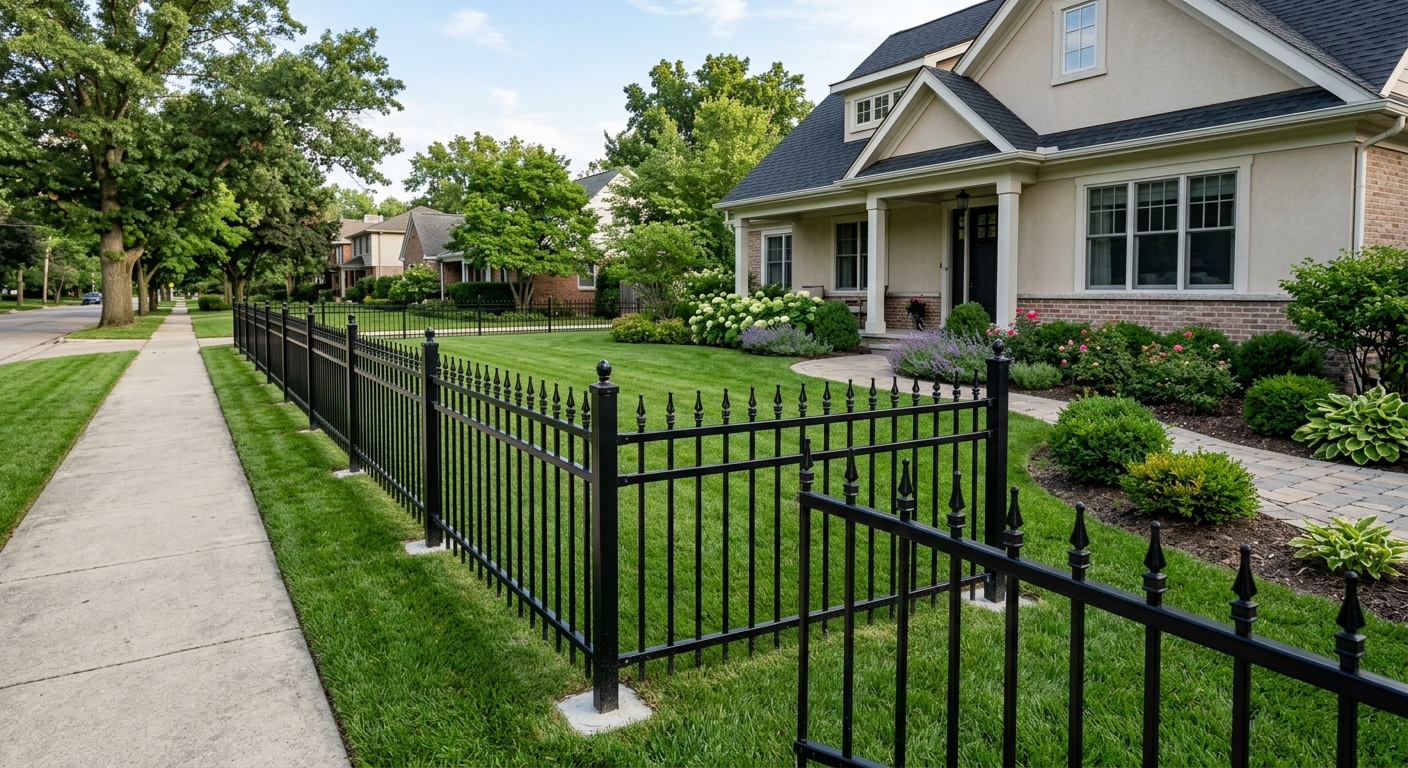
Fencing options and costs in Colwood
Colwood homeowners typically start shopping for fencing because the neighbourhoods around the municipality are packed with single-detached homes, and in the 2021 Census Colwood recorded 49.2% of dwellings as single-detached—each one is a potential fencing customer when landscaping matures or privacy needs change (Statistics Canada, 2021 Census). With 73.5% of households owning, many projects are planned for the long term rather than “quick fixes.” That demand shows up especially in areas like Colwood Corners and along the broader Langford/Colwood corridor, where yards are busier with pets, kids, and frequent gate use.
Pricing on Vancouver Island and the Coast is shaped by moderate coastal frost and frequent wind. Frost depth is shallow compared to inland provinces (so post depths are often less than Ontario or Alberta), but posts still need to be set below frost depth to reduce heaving and long-term leaning—commonly around 75–90 cm for typical residential fences, with concrete footings where soils are wet, clay-rich, or disturbed. Coastal wind also pushes design choices: solid privacy panels can catch more wind load, so they may require closer post spacing, heavier rails, or more robust hardware.
Material choice affects corrosion resistance too. Salinity near the Strait of Georgia makes quality galvanized or powder-coated metal hardware and better-treated boards worth paying for. Contractor availability can vary seasonally, and access (driveway setbacks, rock pockets, and sloped yards) often adds time, which is why two “similar” fences can land in different price bands. Use the table below to compare common options before you request site-specific quotes.
| Material |
Lifespan |
Maintenance |
Privacy Rating |
Price per Linear Foot |
| Pressure-treated pine (standard wood) |
10–15 years |
Stain or paint every 2–3 years; inspect boards and fasteners |
High (solid boards) |
$55 – $85 |
| Cedar (natural rot resistance) |
15–25 years |
Light staining/oiling every 2–4 years; replace fasteners as needed |
High (solid boards) |
$70 – $105 |
| Vinyl / PVC (no-maintenance) |
25–35 years |
Rinse with water; occasional wash if needed |
High (solid or semi-solid styles) |
$70 – $110 |
| Chain-link (galvanized steel) |
20–30 years |
Occasional rinse; check tension and coating integrity |
Low (open mesh; privacy slats optional) |
$35 – $60 |
| Aluminum ornamental |
25–40 years |
Rinse; tighten hardware if wind-driven movement occurs |
Low–Medium (pickets; screen inserts optional) |
$80 – $140 |
| Composite / recycled material |
20–30 years |
Minimal; periodic cleaning |
High (solid panel styles) |
$90 – $150 |
Prices are estimates only and vary by project scope, site access and material selection.
What affects the price of fencing in Colwood
In Colwood, two quotes for the “same looking” fence can still differ by 30–50% across the Vancouver Island and Coast market because labour time, site conditions, and engineering choices change the materials you actually need. Even within British Columbia’s coastal environment, contractor methods vary: some crews price for standard post depth and simple rail spacing, while others build in extra labour for concrete-set posts, venting in privacy panels, and slower alignment on sloped properties. Homeowner expectations also differ—some want a quick visual upgrade, while others want a fence that survives coastal wind, wet winters, and periodic freeze-thaw without leaning.
Frost line depth is a big driver. While coastal BC’s frost line is relatively shallow (often about 45–60 cm), posts still need to sit roughly 4–6 inches below the design frost depth. In practice, many residential installs end up burying posts around 75–90 cm; that can require longer pressure-treated members, extra excavation, and sometimes concrete setting. In the cold Ontario and Alberta regions, contractors commonly set posts 1.5–2.0 m deep, which raises costs substantially—less extreme than those regions here, but the principle still applies: deeper, more stable footing costs labour and materials. Wind exposure also matters: solid privacy fences can catch more gust force, so they may need closer post spacing, heavier rails, and higher-grade hardware compared with open styles like chain-link.
Local conditions raise costs in very specific ways. For example, a yard with saturated clay after a wet winter can require concrete footings and careful disposal of removed soil; a sloped site near Colwood Corners often needs stepped or raked panels, increasing labour and offcuts; and if you’re replacing an old fence with mixed materials (rotted wood, corroded posts), disposal and post extraction add time. On the other hand, a straight run with easy access can keep your project close to the regional wood band (about $55–$85 per linear foot) or chain-link band (about $35–$60 per linear foot), while premium options like vinyl may land in the $70–$110 per linear foot range when the site is straightforward.
| Price Factor |
Why It Matters |
Cost Impact |
| Fence length in linear feet |
Most costs scale directly with total run length (posts, rails, panels, labour time) |
Highest impact; drives the total estimate |
| Post depth required |
Frost depth determines hole depth and the minimum post length to prevent heaving |
Moderate to high impact if concrete footings are needed |
| Post setting method |
Concrete vs gravel pack vs driven posts changes time, materials, and long-term stability |
Concrete typically increases cost but improves footing reliability |
| Material choice |
Vinyl, cedar, and chain-link have different material and installation requirements |
Wide variance; vinyl/cedar often higher than chain-link |
| Gate count and type |
Gates require stronger frames, hardware, and alignment; drive-through gates are heavier |
Can add significant labour and hardware costs per gate |
| Grade and terrain |
Slopes require stepping/raking and extra layout time to keep consistent sightlines |
Higher labour on hills and uneven yards |
| Old fence removal and disposal |
Demolition, hauling, and extra labour to extract old posts adds work beyond new build |
Often adds cost if posts are concreted or in rocky soil |
| Permit fees and survey / property line locate |
Locates reduce the risk of encroachment and disputes; permits may be required for height |
Small to moderate cost, but can prevent costly rework |
Permits & regulations in British Columbia
In British Columbia, whether your fence needs a building permit often depends on height and location. As a practical starting point for homeowners in Colwood, fences above about 2.0 m (6.5 ft) at the rear and around 1.0–1.2 m (3–4 ft) at the front or corner are commonly the height ranges that trigger a permit requirement. Regardless of height, your fence must respect property lines and municipal setback bylaws, and it should not interfere with easements, drainage, or sightlines.
Before digging any post holes, call utility locates so you don’t hit services. In Canada, this is done through service locates (commonly Ontario One Call, BC 1 Call, or Alberta One-Call). Also, don’t rely on “we think it’s the line.” Obtain a survey or at least a property locate to confirm where pins and boundaries are, so you avoid encroachment disputes with neighbours. Shared fence ownership is governed by provincial line-fences legislation—many disputes come down to who is responsible for repairs and how costs are shared, so paper it down early when you’re replacing or modifying a fence on or near a boundary.
To verify a contractor’s British Columbia readiness, ask for: (1) their BC business registration details and licence information, (2) a current certificate of liability insurance showing adequate limits for fencing work, and (3) proof they’re registered for workplace coverage (often referenced as WSIB/WCB coverage in contractor documentation). Where possible, confirm the coverage details match the legal name on their quote and that the certificate lists the project as covered. For additional assurance, request clearance letters or verification documents referenced on their insurance certificate.
Choosing the right fence material for Colwood
Choosing the right fencing material for Colwood is mainly about matching your priorities—privacy, low maintenance, budget, and lifespan—to the reality of coastal BC weather: wind, wet winters, and repeated freeze-thaw around shallow frost. Pressure-treated pine is the budget-friendly starting point, but it typically needs staining or painting every 2–3 years to prevent grey weathering and to protect fasteners. Cedar offers better natural rot resistance and generally looks great longer, yet it still benefits from periodic maintenance to keep its colour and surface integrity. Vinyl/PVC is popular because it’s low effort—usually rinse-clean and go—but extremely cold snaps can make some components brittle if the product quality is low; buy quality and install correctly with appropriate hardware. Chain-link is the longest-running low-cost option and often lasts decades in coastal environments, but it won’t provide privacy unless you add slats or a screen. Aluminum ornamental sits in the mid-to-higher price range and won’t rust like untreated steel; it’s ideal for airflow-friendly boundary fencing that still looks polished.
For post depth, you still need stability even with moderate coastal frost. Many residential fences are buried around 75–90 cm to sit below frost movement, and concrete-set posts are recommended when soils are wet/clay-rich, when the fence is taller/heavier, or when you’re dealing with vehicle impact zones. Coastal wind load also matters: solid privacy fences often need closer spacing and stronger rails than open styles like chain-link. As a concrete price example, if you compare vinyl (often $70–$110 per linear foot in this region) to pressure-treated pine (about $55–$85), the additional upfront cost can be justified when you want minimal maintenance through the wet season and you don’t want to re-stain repeatedly.
| Material |
Cold Tolerance |
Lifespan |
Annual Maintenance |
Best For |
Price Band |
| Pressure-treated pine |
Good (with proper installation and sealing) |
10–15 years |
Low to moderate: visual checks; stain/paint every 2–3 years |
Budget privacy where you’ll maintain the finish |
$55 – $85 |
| Cedar |
Good (natural resistance in wet climates) |
15–25 years |
Low to moderate: re-stain/oil every 2–4 years |
Natural look with rot resistance for Colwood’s coastal moisture |
$70 – $105 |
| Vinyl / PVC |
Very good (choose quality for cold snap resilience) |
25–35 years |
Very low: rinse/clean as needed |
Low-maintenance privacy and corrosion resistance |
$70 – $110 |
| Chain-link |
Excellent (galvanized coating helps performance) |
20–30 years |
Very low: rinse; check tension occasionally |
Security and keeping wind exposure manageable (open design) |
$35 – $60 |
| Aluminum ornamental |
Excellent (powder-coated metal) |
25–40 years |
Very low: rinse; inspect hardware |
Wind-tolerant, rust-free boundary fencing with curb appeal |
$80 – $140 |
| Composite / recycled |
Good (product-dependent performance) |
20–30 years |
Very low: periodic cleaning |
Solid privacy with reduced rot concerns |
$90 – $150 |
How to choose a fencing contractor in Colwood
When you’re hiring a fencing contractor in Colwood, don’t assume “licensed” means the same thing across trades—verify it. For British Columbia coverage and readiness, ask for (1) their BC business registration and fencing-related eligibility (if applicable), (2) current liability insurance, and (3) proof of workplace coverage (often referred to as WSIB/WCB coverage in contractor paperwork). Check the certificate of insurance is current, lists the correct legal business name, and shows appropriate liability limits for construction work. If you’re given documents as PDFs, ensure the dates aren’t expired and that it includes fencing-install work rather than only general low-risk activities. For added confidence, request a clearance letter or direct verification if the contractor uses it in their insurance package.
Next, get 2–3 itemised written quotes. You want a breakdown that separates labour from materials and identifies: post depth and setting method, rail layout, panel type, and gate hardware. Scope clarity matters—confirm whether permit pull is included (when required), whether old fence removal and disposal are included, and whether touch-up staining or final clean-up is part of the contract. A good quote will also specify warranty terms clearly.
For warranty, look for a workmanship warranty (commonly expressed in years) and a manufacturer/product warranty for the fence materials. Ask whether the workmanship warranty is transferable if you sell the home. For payment, never pay more than 10–15% upfront; hold back a portion until the fence is complete and final alignment is confirmed. Finally, get a start date and a completion estimate in writing, because coastal weather can affect digging and curing times for concrete-set posts.
- Insist on itemised quotes (posts, rails, panels, gates, labour, disposal) instead of a single lump sum.
- Confirm post depth and setting method in writing (concrete vs gravel pack) for frost stability.
- Ask how they handle sloped yards (stepped vs raked panels) and who measures grades.
- Verify fence height measurements and style before ordering materials.
- Confirm whether utilities locate are requested/handled and who schedules it.
- Ask if permits are included when height thresholds require them.
- Require proof of current liability insurance with correct business name and dates.
- Request proof of workplace coverage (WSIB/WCB documentation as applicable) for crews.
- Check warranty: workmanship coverage duration and manufacturer warranty details.
- Clarify gate hardware quality (hinges, latches, closers) and whether materials match the fence style.
- Set payment milestones: 10–15% max upfront, progress payment tied to milestones.
- Get a written schedule and weather contingency approach for wet/cold periods.
Common red flags in Colwood include: quotes that avoid specifying post depth or setting method; no disposal plan for old posts and debris; warranties described vaguely (“lifetime on materials” without workmanship terms); insurance certificates that are expired or don’t match the contractor’s legal name; and a payment request exceeding 10–15% upfront without a signed schedule and clear scope.
Frequently asked questions — fencing in Colwood
How long does a wood fence last in Colwood?
In Colwood, the lifespan of a wood fence depends on species, coating quality, and how the posts are set below frost movement. Pressure-treated pine fences often last about 10–15 years when they’re maintained (staining or painting every 2–3 years) and when fasteners are corrosion-resistant. Cedar generally performs better in coastal moisture and can last 15–25 years with periodic maintenance. In Vancouver Island and the Coast, even though the frost line is relatively shallow, posts still need to be installed around 75–90 cm (typical residential practice) so they don’t heave and lean over time. If you’re choosing between materials, wood at roughly $55–$85 per linear foot can be a smart option if you’re comfortable with ongoing upkeep; switching to vinyl at about $70–$110 per linear foot is often chosen by homeowners who want a lower-maintenance path through wet seasons.
Who owns and maintains a shared fence?
In British Columbia, shared fence responsibilities are commonly addressed through provincial line-fences legislation. Practically, the “who owns what” question usually comes down to whether the fence sits on the boundary line and what your neighbour agrees to in writing for repairs or replacement. Many disputes happen when a fence is partly on one lot and partly on the other, or when the original installation was done without clear agreement. The best approach in Colwood is to confirm the property line with a locate or survey, then put agreement terms in writing—who pays for materials, who performs labour, and how changes are handled (height, privacy panels, or gate additions). If you’re planning to replace a shared section, start the conversation early and document it before any work begins to reduce the chance of later cost disagreements.
How do I find my property line before fencing?
The safest method is to obtain a property locate or survey before you install posts. In Colwood and across BC, don’t assume the fence line from a prior fence is the legal boundary. Look for your plan of subdivision (if applicable) and identify boundary pins with a professional property locate service. If you have older stake marks, treat them as clues only until verified. Utility locates are separate—they protect buried services, not property boundaries, so schedule BC 1 Call before digging post holes. Then ask your contractor to lay out the fence line based on the verified pins and show you the proposed post positions. This reduces the risk of encroachment disputes and avoids the expensive problem of removing and rebuilding because a fence was set a foot too far into a neighbour’s yard.
What's the most low-maintenance fence?
For most Colwood homeowners, vinyl/PVC is the low-maintenance winner: it generally needs only periodic rinsing and doesn’t rot like untreated wood. Vinyl is often priced in the regional band of about $70–$110 per linear foot, which can feel higher than pressure-treated pine (roughly $55–$85 per linear foot), but the maintenance gap is why it’s popular. Aluminum ornamental is also very low maintenance—powder coating resists coastal corrosion and you typically only need occasional cleaning and hardware checks. Chain-link is low maintenance and long-lasting too, but it’s not privacy-friendly unless you add slats or a screened panel. The “lowest maintenance” choice also depends on how tight your yard is: if access is difficult, having a system with fewer future repairs (instead of frequent stain touch-ups) can be worth the investment.
How tall can my fence be in Colwood?
Fence height rules in British Columbia can vary by front versus rear placement and by local bylaws. A practical guide many homeowners use is that higher fences—commonly around 2.0 m (6.5 ft) at the rear and roughly 1.0–1.2 m (3–4 ft) near the front or corners—are often the ranges where a building permit may be triggered. Even when a permit isn’t required, your fence still must respect property lines, setbacks, and any restrictions related to visibility/sightlines at intersections or driveways. Because municipal details can change and corner lots are often scrutinized, confirm your exact location and planned height with your contractor and the permitting requirements before ordering materials. If you’re aiming for privacy in Colwood, it’s worth planning the run carefully so you meet both privacy needs and compliance.
Should fence posts be set in concrete here?
Often, yes—especially in Colwood when you want maximum long-term stability. Coastal frost is moderate, but it’s still enough that posts must be set below frost depth to reduce heaving and leaning; typical residential installs can bury posts around 75–90 cm. Concrete-set posts are particularly recommended when soils are wet or clay-rich, when you’re dealing with disturbed ground, or when the fence is tall/heavy and subject to wind exposure. Gravel pack methods can work in some stable conditions, but many homeowners prefer concrete because it improves consistency of footing and reduces post movement during wet winters. The key is that your quote should specify the post depth and setting method in writing. If a contractor avoids that detail, it’s usually a sign to ask more questions before you proceed—post installation is where failures most often start in coastal BC.