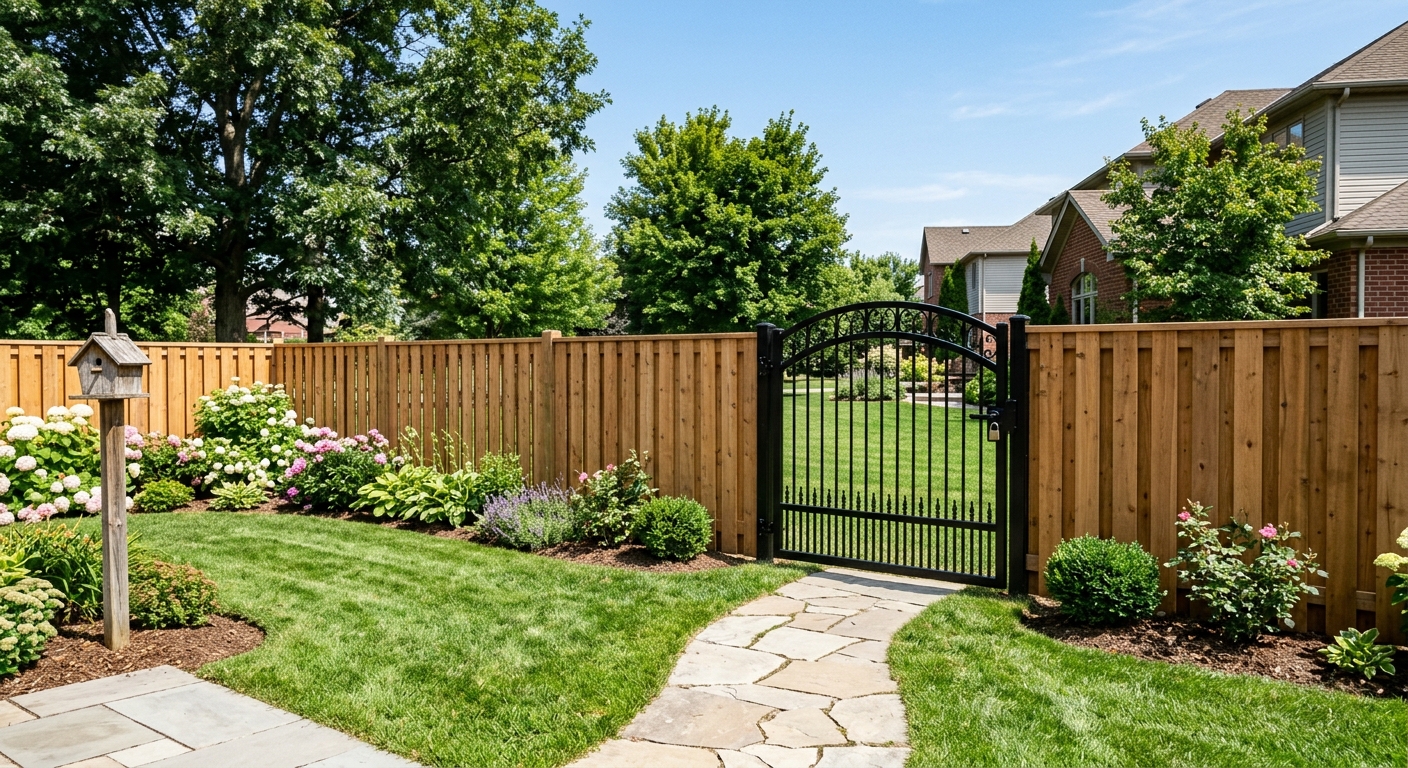
Fencing options and costs in Riley Park
In Riley Park, British Columbia, homeowners typically start by asking the same question: which fence will last, look right, and won’t become a recurring weekend project? With a local population of 22,555 people (Statistics Canada, 2021 Census), demand stays steady across the Lower Mainland–Southwest—especially because many residents live in detached homes, where fencing often defines both front-yard curb appeal and back-yard privacy. In practice, each fenced property is a potential project, and that steady housing turnover helps keep contractor availability relatively strong in the area.
Cost is shaped by the Lower Mainland–Southwest climate: mild winters can still bring wet soil and freeze–thaw cycles. That means contractors often set posts below the design frost depth to limit heaving, and wet, Fraser Valley–type soils frequently call for deeper holes and more concrete at key locations like corner posts, privacy panels, and gates. If you’re near high-wind exposure corridors (or your yard is open to prevailing breezes), you may also see tighter post spacing and reinforced rails to stop racking.
Trades are especially in demand along the more developed residential blocks around West 16th Avenue and the south-facing streets closer to the rail corridor, where fences tend to be older and replacement cycles are common. From there, the decision usually comes down to material: chain-link for budget, wood for a classic look, vinyl/PVC or cedar for lower maintenance, and aluminum/composites for a longer, cleaner lifespan. Use the comparison table below to sanity-check budget ranges before you request itemised quotes.
| Material |
Lifespan |
Maintenance |
Privacy Rating |
Price per Linear Foot |
| Pressure-treated pine (standard wood) |
10–15 years |
Stain/seal every 2–3 years |
High (solid pickets/panels) |
$55–$95 |
| Cedar (natural rot resistance) |
15–25 years |
Stain/seal every 2–4 years |
High (solid pickets/panels) |
$70–$120 |
| Vinyl / PVC (no-maintenance) |
20–30 years |
Occasional wash only |
High (solid styles) |
$75–$130 |
| Chain-link (galvanized steel) |
20–35 years |
Occasional rinse; rust spots check |
Low to Medium (privacy slats optional) |
$30–$55 |
| Aluminum ornamental |
25–40 years |
Wash annually; repaint rarely |
Low (open pickets) |
$90–$170 |
| Composite / recycled material |
20–30 years |
Wash only; replace boards as needed |
High (solid panel styles) |
$85–$145 |
Prices are estimates only and vary by project scope, site access and material selection.
What affects the price of fencing in Riley Park
If you’re seeing quotes that differ by 30–50% for the same fence in the Lower Mainland–Southwest, it’s usually not “random pricing”—it’s the combination of site conditions, installation method, and finish grade. Even within British Columbia, labour and hauling vary by crew availability, driveway access, and how many posts must be concreted versus set in gravel packs. A job that looks straight on a satellite image can become expensive once crews deal with slope, old fence removals, and tight access for post-hole augers and transport trailers.
One of the biggest drivers is post embedment. In most of Canada, guidance often points to setting posts roughly 3 ft (about 0.9 m) minimum in many areas, but contractors in the Lower Mainland–Southwest commonly go deeper than the bare minimum to reduce heaving in freeze–thaw conditions. In colder regions like Ontario and Alberta, posts may need to extend 1.5–2.0 m, and that concrete setting requirement is a big reason those areas can feel higher-cost. While coastal BC frost effects can be shallower than the Prairies, your posts still need adequate depth and proper setting—especially in wetter soils—so crews spend more time digging and setting than on a dry-site install.
Concrete examples from Riley Park projects: (1) a backyard with heavy clay/soggy spots typically needs deeper holes and more concrete at corners and gate posts; (2) a fence line with mature shrubs or narrow alley access means slower production and additional labour for careful panel handling; (3) installing a solid privacy fence in wind-exposed sections often requires stronger rails and tighter spacing—raising the materials and labour share.
That’s why you’ll see wood and chain-link land at different ends of the regional bands, with chain-link often starting around $30–$55 per linear foot, while vinyl/PVC or cedar privacy styles commonly land around $75–$130 (and higher for upgraded details). Next, use the checklist table to map your site to likely line-item costs.
| Price Factor |
Why It Matters |
Cost Impact |
| Fence length in linear feet |
Labour and materials scale directly with total run |
High |
| Post depth required |
Frost and wet soil influence how deep holes must be |
High |
| Post setting method |
Concrete vs. gravel pack changes time and materials |
Medium to High |
| Material choice |
Vinyl/PVC and cedar have higher product costs than chain-link |
Medium |
| Gate count and type |
Double gates and swing hardware add framing and install time |
High |
| Grade and terrain |
Slopes require racked panels or stepped rails and extra labour |
Medium |
| Old fence removal and disposal |
Hauling and debris time can be substantial |
Medium to High |
| Permit fees and survey / property line locate |
May apply depending on height and location details |
Low to Medium |
Permits & regulations in British Columbia
In British Columbia, fences are often regulated by a combination of municipal bylaws and permit thresholds. A building permit is commonly required for taller fences—typically around 2.0 m (6.5 ft) for rear yards and about 1.0–1.2 m (3–4 ft) for front yards or corner-side areas. Even when a permit is not required, you must respect property lines and any local setbacks. Because Vancouver-area lots (including many in Riley Park) can have tight frontages and older survey boundaries, the “where exactly is my line?” question matters as much as the fence height.
Before any digging, call for utility locates (BC One Call). If you’ll be setting posts near services, you want locates completed before you drill. Next, confirm your boundary information: obtain a survey or at least have your property pins located so you’re not encroaching. Shared fence ownership arrangements are governed by provincial line-fences legislation, so disputes about who pays or who repairs should be handled with that framework in mind—not just neighbour-to-neighbour assumptions.
For homeowner verification steps in Riley Park: request the contractor’s certificate of liability insurance (make sure the COI is valid for the project period), and ask about their WCB/WSIB coverage—then verify the coverage documentation matches the legal entity on the quote. Finally, check the contractor licence status using British Columbia’s online registry tools and ensure the name/company on their quote matches their licence and insurance paperwork. This is the fastest way to separate a legitimate crew from a “we’ll figure it out later” operation.
Choosing the right fence material for Riley Park
Choosing the right fence material in Riley Park is mostly about matching your priorities—privacy, low maintenance, and lifespan—to a wet, mild climate with periodic freeze–thaw. Pressure-treated pine is usually the budget-friendly option, but it needs staining or sealing about every 2–3 years to slow grey weathering and protect the wood from moisture. Cedar looks warmer and is naturally more rot-resistant, yet it still benefits from periodic staining to keep it looking even and performing well.
Vinyl/PVC is popular for “install it and forget it” lifestyles: it won’t rot and typically needs only occasional washing. The trade-off is that vinyl can become brittle if you’re dealing with extreme cold snaps, so premium profiles and correct mounting matter. Chain-link is the lowest-cost long-life choice (often the entry point around $30–$55 per linear foot installed), but it offers limited privacy unless you add slats or screen. Aluminum ornamental fencing resists rust and generally lasts extremely well, but it’s more of a boundary/appearance fence than a true privacy solution; it often prices higher (commonly $90–$170 per linear foot installed depending on style and height).
Lower Mainland–Southwest frost considerations influence every material through post embedment. Even with a shallower coastal frost effect than colder provinces, contractors often set posts deep enough to reduce heaving and use concrete at key structural points—especially gate posts and corners. In windier yard orientations, solid wood and vinyl privacy panels benefit from stronger rails and tighter spacing to reduce racking. If you’re spending the extra money, a practical example is upgrading from pressure-treated pine to cedar privacy: the higher upfront cost can be justified where you want a longer appearance lifespan and fewer re-stains over time—particularly if you plan to stay in the home for many years.
| Material |
Cold Tolerance |
Lifespan |
Annual Maintenance |
Best For |
Price Band |
| Pressure-treated pine |
Good (with proper seal) |
10–15 years |
Light inspection + stain cycle every 2–3 years |
Budget privacy with classic appearance |
$55–$95 |
| Cedar |
Good (naturally rot resistant) |
15–25 years |
Wash + stain/seal every 2–4 years |
Premium look with strong moisture resistance |
$70–$120 |
| Vinyl / PVC |
Good (premium profiles recommended) |
20–30 years |
Wash as needed; inspect hardware |
Low-maintenance privacy |
$75–$130 |
| Chain-link |
Very good (galvanized steel) |
20–35 years |
Occasional rinse/check |
Security boundary at lowest cost |
$30–$55 |
| Aluminum ornamental |
Excellent (powder-coated) |
25–40 years |
Wash annually |
Rust-free appearance boundary |
$90–$170 |
| Composite / recycled |
Good (varies by brand) |
20–30 years |
Wash only; replace boards if damaged |
Durable privacy with low upkeep |
$85–$145 |
How to choose a fencing contractor in Riley Park
To hire well in Riley Park, start by verifying the contractor’s British Columbia licence, their liability insurance, and their workers’ compensation coverage. Practically, you want to see a certificate of insurance (COI) that lists your address or at least the correct insured entity and project period, and documentation that coverage is active. For licensing, check the online contractor registry so you know the name on their quote matches the licensed business. Coverage verification matters because fencing work includes digging, lifting panels, and working around utilities—if coverage isn’t in place, you risk being left with the bill if something goes wrong.
Next, ask for 2–3 itemised written quotes. “All-in” lump sums often hide the real drivers: how many concrete-set posts are included, whether gate framing is extra, and whether old fence removal and disposal are included. A proper quote separates labour and materials (posts, rails, panel type, fasteners/hardware, and concrete), and it lists allowances for things like stepped installation on slopes.
Read the scope line-by-line: does the quote include a permit pull (if required), property line locate/survey allowance, and utility locating coordination? Confirm warranty terms too: ask for the workmanship warranty length, the manufacturer warranty for the product, and whether the warranty is transferable to you as the homeowner. Keep the payment schedule sensible—never more than 10–15% upfront. Hold back the remainder until the fence is complete, inspected, and any snag lists are corrected. Finally, get the start date and a realistic completion estimate in writing, including weather delays specific to the Lower Mainland–Southwest.
- Licence verification: company name on the quote matches the registry entry.
- Liability insurance COI is current and covers the scope (fencing installation + hauling/groundwork).
- Workers’ compensation coverage is documented and active for the crew working your site.
- 2–3 itemised quotes: labour vs. materials, not only one total price.
- Concrete setting details: which posts are concreted (corners, gates, line posts) and why.
- Post spacing and panel style specified (including racking/stepped approach for sloped yards).
- Gate hardware included (hinges/latches/locking hardware) and whether double gates are framed as such.
- Old fence removal and disposal explicitly included or priced as an option.
- Permit pull responsibility stated clearly (included or excluded).
- Utility locate responsibility stated (typically BC One Call coordination before digging).
- Warranty written: workmanship + product, including length and what voids coverage.
- Payment terms: maximum 10–15% deposit; holdback released after punch list completion.
Concrete red flags to watch for in Riley Park: (1) a contractor who refuses to provide a COI or won’t match it to the legal business name; (2) quotes that don’t specify how posts are set (gravel pack vs. concrete) or the post spacing; (3) unclear scope around gate framing, hardware, or disposal; (4) no written warranty or only a verbal promise; (5) demanding large deposits (beyond 10–15%) before work begins.
Frequently asked questions — fencing in Riley Park
What is the most weather-resistant fence for Riley Park's climate?
For most Riley Park homeowners, vinyl/PVC and chain-link tend to be the most weather-resistant choices in the Lower Mainland–Southwest. Vinyl won’t rot in wet spells, and chain-link’s galvanized steel handles moisture well, with long service lives when it’s properly tensioned. That said, “weather-resistant” also depends on how posts are installed: in this region, crews still typically set posts below local frost influence to limit heaving during wet freeze–thaw cycles, and they often use concrete at corners and gates. If your goal is maximum longevity with minimal upkeep, vinyl privacy styles or cedar (with proper staining) are common winners. As a budget reference, chain-link installs often start around $30–$55 per linear foot, while vinyl/PVC privacy more commonly falls around $75–$130 installed.
How do I prevent wood fence rot in Riley Park?
Wood rot prevention starts with post installation, not just surface treatment. In Riley Park’s wet, mild conditions, moisture collects at the base of posts first, so contractors usually set posts with enough depth and—often—use concrete for structural posts like corners and gates. Ask whether line posts are gravel-packed or concreted and whether they’ll use proper fasteners designed for outdoor exposure. Next, choose a good wood product (pressure-treated pine or cedar) and commit to maintenance: even cedar generally needs staining/sealing every couple of years to prevent uneven weathering and moisture penetration. Practical tip: keep plants trimmed back so airflow reaches the fence line, and don’t let sprinkler spray sit against the pickets. If you’re selecting a budget path, know you’ll likely be managing maintenance cycles on pressure-treated pine rather than paying for low-upkeep vinyl.
What is the cost per linear foot for fencing in Riley Park?
In Riley Park and the broader Lower Mainland–Southwest, realistic installed costs usually follow the common project bands: chain-link tends to price around $30–$55 per linear foot, wood often falls roughly in the $55–$95 range, and vinyl/PVC privacy commonly lands around $75–$130 installed. Aluminum ornamental typically sits higher, often in the $90–$170 range depending on height and style. Your actual quote can swing based on fence length, gate count, slope/grade, and whether your posts need deeper holes and more concrete setting because of wet soils. If your yard is tight for equipment access or you need old fence removal/disposal, those line items can push the price toward the upper end.
Should I repair or replace my old fence in Riley Park?
Repair can make sense when only a few boards are failing, a rail needs re-fastening, or a section hasn’t had post movement. Replacement is usually the better value when multiple posts are leaning, there’s significant rot at the base, rails are twisted, or the fence line has shifted due to poor post embedment and soil moisture. In Riley Park, wet conditions can accelerate base rot, so a quick inspection of the bottom 10–20 cm of wood is key. Also check the hardware: if hinges/latches for a gate are worn or the gate sag is structural, repairs often become repeat repairs. Ask contractors to assess whether posts can be stabilized and whether the fence can be realigned with minimal digging. If you’re replacing anyway, it’s often smarter to upgrade materials and confirm the post setting plan now—so you’re not paying for early failure again.
How do I handle a fence dispute with a neighbour in British Columbia?
In British Columbia, fence disputes are typically handled through boundary/property-line rules and the provincial line-fences framework governing shared responsibilities. Start by confirming the fence location versus your property lines—ideally with a survey or property pin locate—because disputes often begin with “it looks right” rather than accurate measurements. Next, document the issue with photos and dates: for example, leaning posts, missing sections, or drainage/vegetation problems. If the fence is shared or affects both properties, communicate in writing and propose a repair plan (not just blame). A practical step is to ask a contractor for a written assessment of what needs replacement (posts, rails, gates) and get itemised cost estimates so you can compare scope fairly. Keep in mind that permit requirements and height limits can apply depending on where and how tall the fence is. If agreement is impossible, consider formal dispute pathways rather than escalating informally.
What fence style offers the best wind resistance in Riley Park?
For wind resistance in Riley Park and the Lower Mainland–Southwest, the best results usually come from structural reinforcement rather than just “solid vs. open.” Solid privacy fences can catch more wind load, so they often need tighter post spacing and stronger rails to prevent racking and panel twisting. If you’re dealing with breezy backyard exposure, chain-link with tensioned fabric and proper line posts can be more forgiving because it allows airflow (lower wind pressure on the fence surface). Cedar or vinyl can still be very effective if the installer uses the right framing and hardware, and if gate posts are properly concreted and aligned. Snow load matters too—if snow accumulates behind a solid fence during wet winters, ensure the system is built to handle stress over time. When in doubt, request the contractor explain their plan for post spacing, rail size, and whether line posts are concreted in addition to corners and gates.