Fencing options and costs in Brookswood
Brookswood, British Columbia is a neighbourhood where fences do more than mark boundaries—they help define yards for kids, pets and privacy without creating a closed-in look. With a population of 13,336 (Statistics Canada, 2021 Census), you’ll find steady local demand, especially in established pockets where homeowners tend to refresh front and side boundaries. In the Lower Mainland–Southwest, detached homes are a common target for backyard and side-yard upgrades, and every fence line becomes a “repeat customer” opportunity as families settle and remodel.
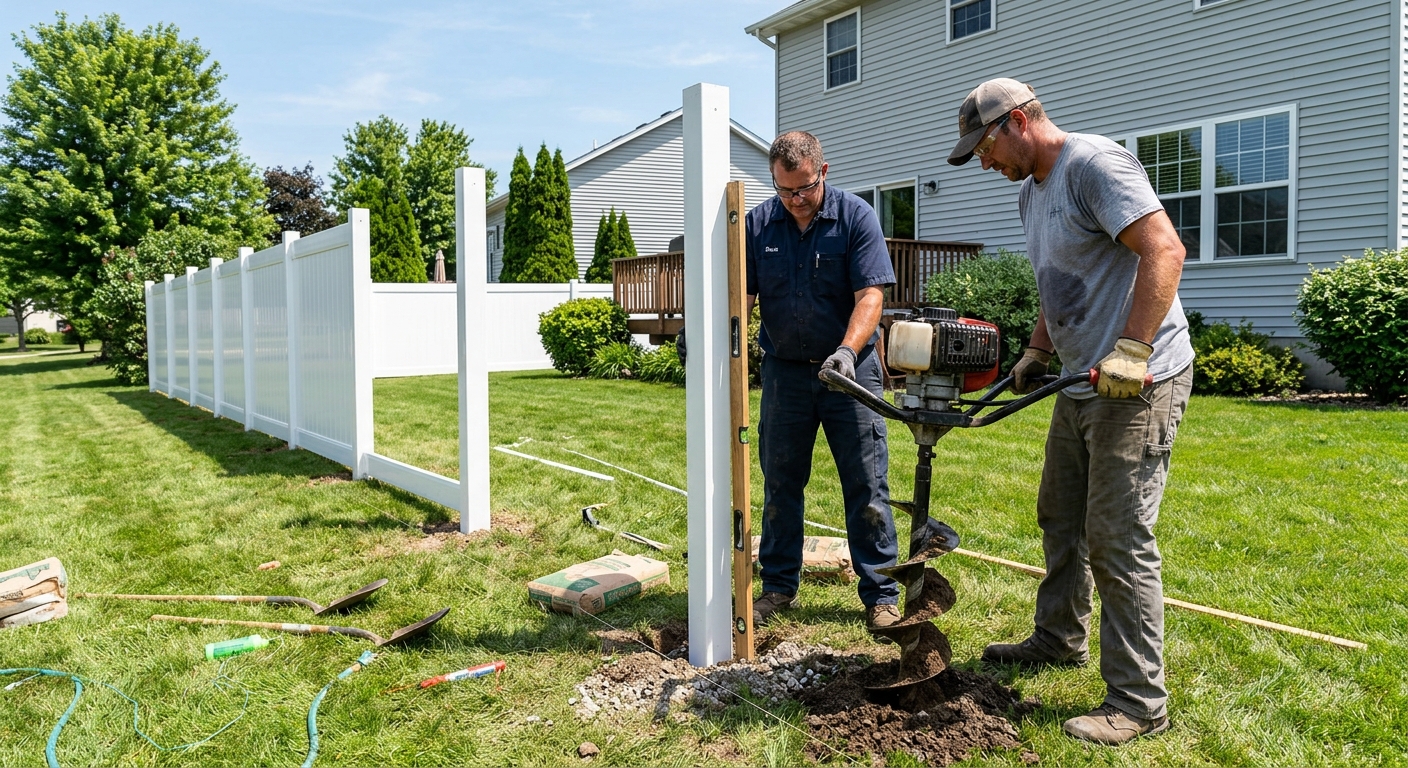
Cost in Brookswood is shaped by the Fraser Valley soil and coastal-influenced weather: frost is typically milder than Ontario, but wind-driven rain and wet ground still push contractors toward deeper post embedment, good drainage, and concrete setting for privacy panels, corners and gates. That adds labour and concrete to keep posts from shifting in wet seasons and to reduce heaving risk after freeze–thaw swings. Access also matters in areas with mature landscaping—crews may need extra time for staging, hauling and removal of old fencing.
Trade demand is especially noticeable around older residential streets in the Brookswood/Fernridge area, where many lots have existing fence lines that need replacement due to warping, failing pickets, or sagging gates.
Below is a practical comparison of common materials and what they typically cost installed in this part of the Lower Mainland–Southwest, then you can match the right option to your budget and privacy needs.
| Material |
Lifespan |
Maintenance |
Privacy Rating |
Price per Linear Foot |
| Pressure-treated pine (standard wood) |
10–20 years (depends on staining and drainage) |
Stain/seal every 2–3 years; check for warping and fastener rusting |
Good to very good (solid boards / close spacing) |
$55 – $95 |
| Cedar (natural rot resistance) |
15–25 years with proper sealing and airflow |
Light staining or sealing every 3–4 years; inspect for surface checking |
Very good (solid boards / privacy styles) |
$70 – $115 |
| Vinyl / PVC (no-maintenance) |
20–30+ years if installed level with correct hardware |
Minimal—rinse with water; occasionally replace damaged sections |
Very good (solid privacy styles) |
$75 – $130 |
| Chain-link (galvanized steel) |
20–35 years |
Occasional cleaning; replace stretched or broken ties |
Low to medium (privacy slats optional) |
$30 – $55 |
| Aluminum ornamental |
25–40 years (powder-coated) |
Wash as needed; repaint rarely if powder coat is warranted |
Low (visual barrier only unless using infill) |
$90 – $170 |
| Composite / recycled material |
20–30 years |
Very low—periodic cleaning; occasional fastener checks |
Good to very good (solid panel systems) |
$95 – $155 |
Prices are estimates only and vary by project scope, site access and material selection.
What affects the price of fencing in Brookswood
In the Lower Mainland–Southwest, the same fence line can come back 30–50% different between quotes because of what’s happening under the surface: soil moisture, post depth, and how much effort it takes to install straight on uneven ground. In British Columbia, crews often plan for mild but wet freeze–thaw cycles—meaning posts still need to be set below the design frost depth to reduce heaving. While BC may not demand the deep embedment seen in colder provinces, contractors frequently still go deeper than the bare minimum and use concrete for privacy panels, corner posts and gate hardware. That labour and material time is a major reason wood fencing in Brookswood often lands closer to the mid-to-upper end of the $55 – $95 range, depending on the build.
Wind exposure also impacts design. While you don’t get the prairie-level sustained winds, Fraser Valley openings and yard shape can still create pressure on panels and gates. When wind loads rise, contractors may tighten post spacing, add bracing, or upgrade to heavier rails, which pushes labour hours and material costs upward—especially for solid wood and vinyl privacy styles.
Two local examples commonly seen in Brookswood that change pricing: (1) wet, clay-leaning soil often won’t “hold” a clean hole wall, so crews widen holes and use more concrete/gravel to keep posts plumb; (2) sloped lots near established hedges require stepped boards and extra layout time, which reduces production speed. If you’re replacing an old fence, disposal and trimming down old concrete footings can add hours that aren’t obvious until the crew is on site.
Material choice matters too. A chain-link line can stay near $30 – $55, while upgrading to vinyl/PVC privacy typically shifts you into the $75 – $130 territory because of structural post systems and component pricing. That’s often where the budget difference is real—not just marketing—because vinyl and PVC rely on correctly spaced posts and solid, square gate frames to stay straight in damp weather.
| Price Factor |
Why It Matters |
Cost Impact |
| Fence length in linear feet |
Most costs scale directly with length (posts, rails, labour) |
Largest variable; can swing the total by 50%+ depending on footage |
| Post depth required |
Frost considerations determine hole depth and required post length |
Deeper holes increase concrete volume, post cost and excavation labour |
| Post setting method |
Concrete setting vs gravel pack changes stability and labour time |
Concrete-set posts generally cost more but reduce sag and heave |
| Material choice |
Vinyl vs cedar vs chain-link changes component pricing and installation method |
Material premium can be significant (e.g., chain-link vs vinyl privacy) |
| Gate count and type |
Gates require reinforced framing, hinges and often diagonal bracing |
Each additional gate adds cost; drive-through gates cost more than walk-through |
| Grade and terrain |
Slopes require stepping panels or raked layouts |
More layout time and sometimes extra materials; can add 10–20% on-site |
| Old fence removal and disposal |
Demolition and hauling are labour- and time-intensive |
Can add several thousand dollars depending on length and what’s left in ground |
| Permit fees and survey / property line locate |
Some projects require permits; accurate line location prevents rework |
Extra administrative and survey costs; prevents expensive corrections |
Permits & regulations in British Columbia
In British Columbia, fences often trigger permit requirements when they exceed common height thresholds—typically around 2.0 m (6.5 ft) for rear yards and about 1.0–1.2 m (3–4 ft) for the front or corner areas. Exact rules depend on where the fence sits (frontage vs interior yard) and the specific municipal bylaws, but the height threshold is the trigger homeowners usually need to plan around. Regardless of permit needs, every fence must respect property lines and municipal setback bylaws.
Before you dig any post hole, call for utility locates. In BC, use BC 1 Call so you don’t hit buried services. You’ll also want to obtain a survey or at least a property pin locate so you’re not building on a neighbour’s land. Shared fence ownership is typically handled through provincial line-fences legislation, but the practical takeaway is this: if you’re repairing or replacing a shared boundary fence, document agreement and responsibilities in writing.
How to verify your contractor in Brookswood: ask for proof of their British Columbia licence (where applicable for their trade scope), request a current Certificate of Insurance (liability coverage) and confirm worker coverage where required for their workforce (WSIB/WCB coverage). Your contractor should also be able to provide a clearance letter or proof of coverage upon request. Then, when applicable for your job’s scope, confirm whether a permit is being pulled by the contractor or by you—get it clarified in writing before the first post goes in the ground.
Choosing the right fence material for Brookswood
Choosing the right fence material in Brookswood comes down to what you want most: privacy, low maintenance, or best value over time. The Lower Mainland–Southwest climate is mild, but it’s also frequently wet, which means wood benefits from correct installation and treatment, while “set it and forget it” options can reduce maintenance headaches. Pressure-treated pine is the most budget-friendly pathway, but it needs staining/sealing every 2–3 years to reduce greying and protect against moisture cycling. Cedar has natural rot resistance and generally looks better as it weathers, though it still performs best with periodic sealing and attentive fasteners. Vinyl/PVC offers low maintenance and consistent colour, but it must be installed with correct expansion allowances and hardware so panels don’t stress in cooler snaps. Chain-link is the lowest cost and often the longest life with the least fuss, but it gives little privacy unless you add slats or plant screening. Aluminum ornamental looks sharp, won’t rust, and is a mid-range choice—yet it’s mainly a visual boundary unless you choose a more closed design.
Post depth matters here too. For Lower Mainland conditions, frost is typically shallower than central Canada, but embedment still matters to prevent movement during wet freeze–thaw cycles. Many contractors set posts below the design frost depth (often expressed as about 4–6 inches below it) to limit heaving; on wet or softer sites, deeper holes and concrete for corners and gate posts are common. For stronger privacy builds, that means you may find yourself paying closer to wood’s upper band (often within the $55 – $95 range) rather than the low end because of more concrete and layout time.
A real-world value example: if you’re comparing chain-link near $30 – $55 versus vinyl privacy near $75 – $130, the difference is usually justified when your goal is daily privacy (solid panels and fewer sight lines) and you want minimal upkeep. If you only need boundary marking and airflow for pets, chain-link plus garden screening can be the better spend.
| Material |
Cold Tolerance |
Lifespan |
Annual Maintenance |
Best For |
Price Band |
| Pressure-treated pine |
Good (with proper treatment and drainage) |
10–20 years |
Inspection; light prep and staining as needed every 2–3 years |
Budget privacy with straightforward repairs |
$55 – $95 |
| Cedar |
Good (handles damp cycles well) |
15–25 years |
Seal/stain every 3–4 years; check for fastener corrosion |
Attractive privacy with better natural rot resistance |
$70 – $115 |
| Vinyl / PVC |
Fair to good (avoid impact damage in colder snaps) |
20–30+ years |
Rinse/clean as needed; occasional hardware checks |
Low-maintenance privacy in wet coastal conditions |
$75 – $130 |
| Chain-link |
Good |
20–35 years |
Minimal; occasional tension/repairs |
Security boundary, pets, and long-term durability |
$30 – $55 |
| Aluminum ornamental |
Good |
25–40 years |
Wash as needed |
Decorative front boundary with rust-free performance |
$90 – $170 |
| Composite / recycled |
Good (manage impact and correct supports) |
20–30 years |
Very low; periodic cleaning and hardware checks |
Privacy panels with reduced maintenance |
$95 – $155 |
How to choose a fencing contractor in Brookswood
Start by confirming contractor basics in British Columbia, because fencing failures are usually installation-related: posts out of plumb, weak gate frames, poor drainage, or fasteners that rust early. Ask for their Certificate of Liability Insurance and confirm it matches the scope of your job (work at height/yard access) and the effective dates. For coverage, request proof of WSIB/WCB coverage for their workers where applicable—your contractor should be able to provide clearance or proof documentation. For licensing, verify their British Columbia trade credentials relevant to their work scope and check any online registry listings they reference.
Next, get 2–3 itemised written quotes. You want a breakdown that clearly lists labour versus materials, plus post count, post setting method (concrete vs gravel pack), gate hardware, and whether removal/disposal is included. A reputable quote spells out what’s excluded: grading beyond the fence line, landscaping restoration, permit fees, and any required property line locate or survey.
Warranty should be clear. Ask for a workmanship warranty length (for example, for sagging panels or misalignment due to installation) and separate product/manufacturer warranties for rails, pickets, hardware and gate components. Confirm whether the warranty is transferable if you sell your home.
Payment schedule matters. Never pay more than 10–15% upfront, and hold back the remainder until the job is complete, cleaned up and inspected with you. Require a start date and completion estimate in writing—especially in the Lower Mainland–Southwest where rain can affect concrete curing and scheduling.
- Ask who pulls the permit (if required) and whether permits are included in the quote.
- Confirm whether utility locates and property line locate are included or your responsibility.
- Require itemised post depth and post-setting method on wet/softer soils.
- Check gate reinforcement details (rails, hinges, braces) in writing.
- Verify disposal/removal of old fence materials is included, if applicable.
- Request a workmanship warranty in plain language and the coverage period.
- Ask whether warranties are transferable to a new homeowner.
- Confirm colour/finish warranty for vinyl and powder-coat warranty for aluminum.
- Use a quote sheet that lists material grades and hardware brands, not “builder’s grade.”
- Get a written schedule: start date, estimated completion and weather contingency plan.
- Pay with traceable methods; keep a signed acceptance checklist at completion.
- Ensure the quote includes site protection (staging, tree/plant protection, cleanup standards).
In Brookswood, red flags to watch for include: vague “lump-sum” pricing with no post/embedment details, refusing to provide insurance proof, promising a fence will be “no concrete needed” for privacy panels without explaining drainage and frost considerations, incomplete warranty terms (no workmanship length), and asking for large upfront deposits beyond 10–15%.
Frequently asked questions — fencing in Brookswood
Do I need a permit to build a fence in British Columbia?
In British Columbia, many fences do not require permits if they’re below common height thresholds, but permits are often required when fences exceed roughly 2.0 m (rear) and about 1.0–1.2 m (front or corner), depending on the local bylaws. For Brookswood homeowners, the best approach is to plan based on fence location first, not just overall height—front and corner fences are more likely to fall under stricter limits. Always confirm setbacks and the exact height at the property line, because a fence that looks “short” on your side can be over the threshold along a slope. Also remember that utility locates are required before digging any post hole, and a property line locate/survey helps avoid encroachment disputes. A solid privacy upgrade is typically priced in the wood range of $55 – $95 or vinyl range of $75 – $130, but permit-related steps can add time even when the material cost stays similar.
How long does a wood fence last in Brookswood?
A well-built wood fence in Brookswood commonly lasts around 10–20 years for pressure-treated pine and about 15–25 years for cedar, assuming proper post embedment, good drainage, and routine maintenance. The Lower Mainland–Southwest climate is mild but wet, so the real determinant is how moisture is managed: posts set too shallow can move during freeze–thaw cycles, and boards that trap water can grey and check faster. If you stain pressure-treated pine every 2–3 years, you often see better colour stability and slower surface breakdown. Cedar generally holds up better to damp conditions, but it still benefits from periodic sealing and fastener checks. If your current fence is sagging at corners or gates, that’s often a sign the post setting method and embedment weren’t sufficient—those are installation issues, not just “wood quality” issues.
Who owns and maintains a shared fence?
Shared fence ownership and responsibilities are commonly addressed under provincial line-fences legislation in British Columbia, but the practical outcome depends on where the fence sits relative to the property line and what both neighbours agreed to when it was installed or last replaced. In Brookswood, it’s common for side-yard boundary fences to have shared interest, especially on older lots. The best way to handle this is to identify whether the fence is truly on the boundary, document the agreement in writing (who pays for materials, who pays for labour, and who performs maintenance), and confirm whether repairs are cosmetic or structural. If you’re doing a replacement, ask your contractor for an option that distinguishes between “repair” and “full replacement” scopes so you can align costs with the shared understanding. Also, keep in mind that permit requirements (if applicable based on height/location) can affect planning and scheduling, even for shared fences.
How do I find my property line before fencing?
Before you build in Brookswood, confirm property lines by locating the pins or obtaining a survey so you’re fencing within your boundary—not on a neighbour’s land. Start with your title documents and any prior survey you may have, then ask for a professional property line locate if pins are unclear. Contractors can also help mark lines from provided survey data, but the homeowner should ensure the reference is correct. This step is important because replacing a fence “a little too far over” can lead to costly rework and neighbour disputes. In British Columbia, shared boundary situations make precise location even more important. After you confirm the boundary, call BC 1 Call before any digging so utilities are marked; this avoids service damage and project delays. Finally, build the agreed line into your contractor’s measurements—an itemised quote should reference the fence length and layout, not just a general total.
What's the most low-maintenance fence?
For low day-to-day effort in British Columbia, vinyl/PVC and properly installed aluminum are typically the easiest. Vinyl/PVC generally falls in the $75 – $130 installed range and usually needs only occasional rinsing, plus periodic checks for hardware after storms. Aluminum ornamental is often more expensive—frequently within the $90 – $170 band—but it won’t rust and is also low maintenance. Chain-link is low maintenance too, often in the $30 – $55 range, though it won’t provide privacy unless you add slats or a screen. Wood can be workable and cost-effective, but pressure-treated pine usually requires staining every 2–3 years and cedar still needs periodic sealing. In Brookswood’s wet cycles, that maintenance keeps boards looking good and reduces the risk of early fastener failure, which is why “lowest maintenance” often aligns with vinyl or metal products.
How tall can my fence be in Brookswood?
Fence height limits in Brookswood depend on where the fence sits—front yard, corner area, or rear yard—and local bylaws. As a general BC guideline, permits are often triggered around 2.0 m (6.5 ft) at the rear and about 1.0–1.2 m (3–4 ft) at the front or corner, but exact numbers and exceptions can vary by municipal rules and the fence’s specific location on your lot. That means a fence plan can’t be judged only by “overall height from the ground you’re standing on.” Slope and yard grading matter, especially where one side is noticeably higher. If you’re planning privacy (solid panels), expect the cost to rise because corners, posts and gates must be reinforced—often pushing prices toward wood’s $55 – $95 band or vinyl’s $75 – $130 band. Always confirm the height at the property line and ask your contractor to include the permit decision in the scope before work starts.