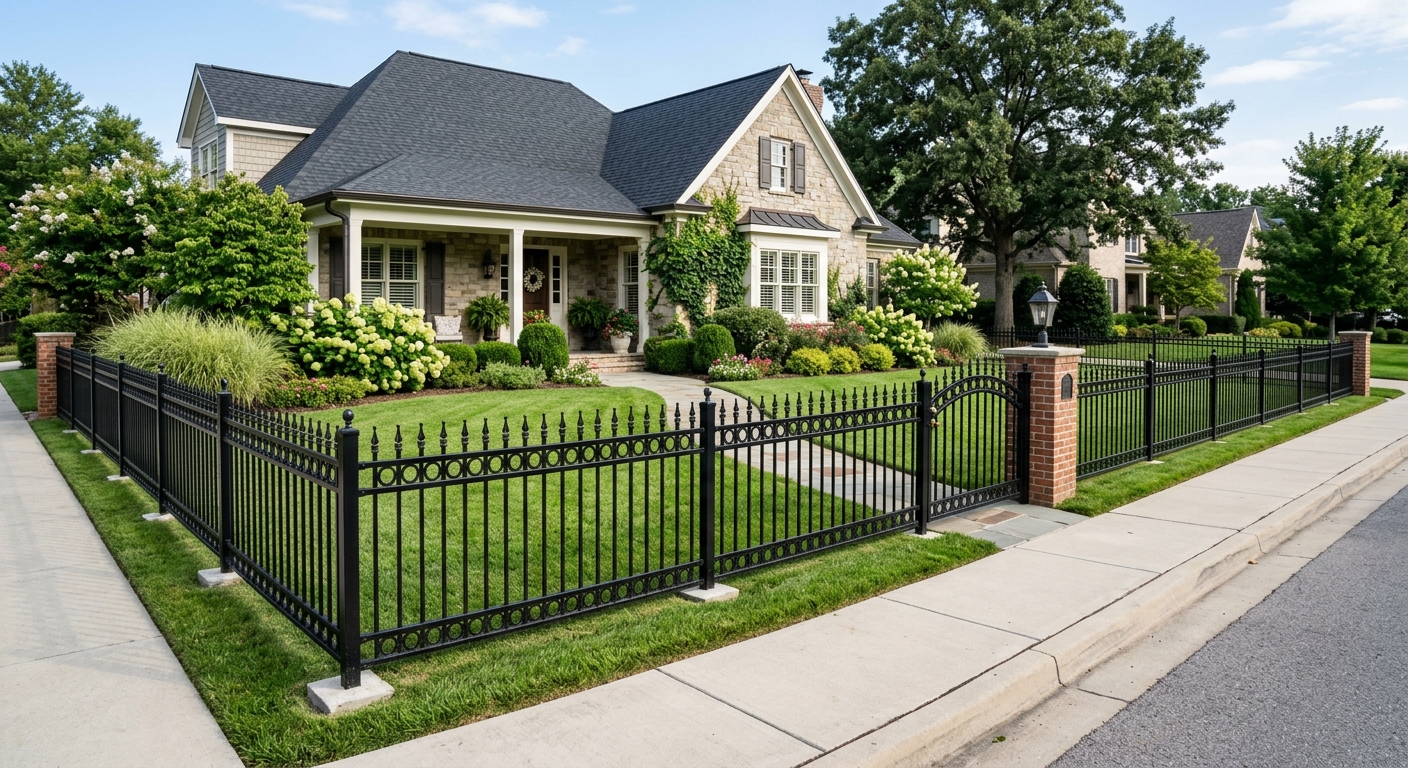
Fencing options and costs in Handsworth
In Handsworth, choosing a fence is less about picking a look and more about matching materials to how the Lower Mainland–Southwest behaves year-round. With a population of 1,965 (Statistics Canada, 2021 Census), the local market is small enough that scheduling and crew availability can affect pricing, especially when multiple neighbours tackle projects in the same dry-window. Demand is also tied to housing type: each detached property is effectively a “potential fencing job,” so fence work tends to cluster where more private yards need clear boundaries and yard security.
Costs in the Lower Mainland–Southwest are shaped by mild but not trivial frost and frequent moisture. Even though BC frost is generally shallower than farther inland, contractors still set posts below the design frost depth to limit heaving, and Fraser Valley–style wetter soils can mean deeper holes, more concrete, and more labour than a dry-site install. Wind exposure also matters when lots are open and exposed to coastal breezes; it pushes crews toward sturdier post spacing and reinforcement for solid wood and vinyl privacy fences.
In Handsworth, you’ll often see especially active fencing demand around the Upper Handsworth and surrounding residential pockets where yards back onto open space and weather loading can be higher. If you’re comparing options, the table below gives a practical snapshot of lifespan, upkeep, and typical installed pricing per linear foot for this tier of community. From there, you can decide what’s worth paying extra for in our local climate.
| Material |
Lifespan |
Maintenance |
Privacy Rating |
Price per Linear Foot |
| Pressure-treated pine (standard wood) |
10–15 years |
Stain or seal every 2–3 years |
High (solid / close pickets) |
$12 – $18 |
| Cedar (natural rot resistance) |
15–25 years |
Light staining as needed every 3–5 years |
High (solid / close pickets) |
$16 – $26 |
| Vinyl / PVC (no-maintenance) |
20–30 years |
Occasional wash; no staining |
Very High (solid panels) |
$18 – $30 |
| Chain-link (galvanized steel) |
20–30 years |
Rinse/inspect tension; rarely paint |
Low to Medium (privacy slats needed) |
$10 – $16 |
| Aluminum ornamental |
25–40 years |
Rinse; touch-up if damaged |
Low (open pickets) |
$22 – $40 |
| Composite / recycled material |
20–30 years |
Low; wash as needed |
High (solid designs) |
$20 – $34 |
Prices are estimates only and vary by project scope, site access and material selection.
What affects the price of fencing in Handsworth
If you ask for two quotes in British Columbia for what looks like the “same fence,” it’s normal to see 30–50% differences. In the Lower Mainland–Southwest, those gaps often come down to how crews price for moisture-saturated soils, deeper post embedment, and how much reinforcement they plan for wind and wet rot risk—not just the picket or panel cost. The other big driver is labour efficiency: a straight run with easy access is far cheaper than a fenced boundary that has gates, removal, disposal, and sloped grade.
Frost line depth sets how deep posts must be set to prevent heaving. Even if you’re not in the deepest cold regions, published guidance and local practice lead contractors to place posts roughly 4–6 inches below the design frost depth, which can translate into deeper holes than you’d expect on the coast. In wetter Fraser Valley-style soils, that means more excavation and more concrete for corner posts, gate posts, and privacy sections. When posts are longer or require concrete setting rather than a gravel pack, material and labour both rise.
Wind exposure matters too: while the Prairies are harsher on average, coastal BC experiences frequent gusts that stress panels. That’s why solid wood and vinyl privacy fences can require tighter spacing and sturdier frameworks.
- If your yard has clay-like wet patches, expect additional concrete and longer set time because holes don’t drain quickly.
- On properties with old fence footings left in place, removal and disposal can add cost even if the new fence is “only” average height.
- On tight lanes or driveways with limited access, unloading and carrying materials can raise labour hours.
As a quick reference point: a basic chain-link install often stays closer to the $30–$55 band, while privacy materials like vinyl/PVC commonly land in the $75–$130 range depending on height, panel design, and gate count.
| Price Factor |
Why It Matters |
Cost Impact |
| Fence length in linear feet |
Most components scale directly with footage. |
High (primary driver) |
| Post depth required |
Frost protection controls hole depth and post length. |
Medium to high |
| Post setting method |
Concrete setting costs more than gravel backfill but resists movement. |
Medium (can jump with wet soils) |
| Material choice |
Vinyl and cedar cost more to buy and install; chain-link is lowest. |
High |
| Gate count and type |
Gates require heavier hardware and stronger posts. |
Medium to high |
| Grade and terrain |
Slopes mean stepped rails or raked panels, plus extra layout time. |
Medium |
| Old fence removal and disposal |
Demolition, hauling, and disposal fees add labour. |
Medium |
| Permit fees and survey / property line locate |
Some projects require administrative steps before digging. |
Low to medium |
Permits & regulations in British Columbia
In British Columbia, fences above a height threshold—typically around 2.0 m (6.5 ft) at the rear and about 1.0–1.2 m (3–4 ft) at the front or corner—often need a building permit. Your municipality’s bylaws still matter, including setback rules and how you define “front” versus “rear” for corner lots. In all cases, the fence must stay within property lines; if the location is even slightly off, you can end up paying to move it later.
Before you dig a post hole, call for utility locates through the applicable provincial one-call service (commonly referred to as BC 1 Call in BC). Also consider getting a survey or at least verifying property pins and corner markers prior to installation—this is the fastest way to avoid encroachment disputes with neighbours.
Shared fence ownership and line-fence responsibilities in BC are governed by provincial line-fences legislation, but the practical takeaway is the same: confirm who owns which side, and document any agreements in writing before work begins.
Licence and insurance verification (what to check, step-by-step): (1) Ask for the contractor’s BC business details and licensing information and verify it through the appropriate online registry the contractor provides you. (2) Request a current certificate of liability insurance and confirm the coverage is active for the project period. (3) For work crews, confirm the coverage documentation for workplace safety (WSIB/WCB coverage as applicable to the contractor/worker setup) and keep copies with your contract. If your contractor provides a clearance letter, retain it as proof for your records.
Choosing the right fence material for Handsworth
In Handsworth and the Lower Mainland–Southwest, material choice should match your priorities: privacy level, low maintenance, upfront budget, and how long you want to stay ahead of repairs. The region’s wet cycles and occasional cold snaps mean untreated edges and poor post sealing can fail faster than you’d expect. That’s why “looks good on day one” isn’t enough—how the fence handles moisture and temperature swings is everything.
Pressure-treated pine is the budget-friendly workhorse, but it still needs staining or sealing every 2–3 years to prevent grey weathering and slow moisture penetration. Cedar typically resists rot better and looks warmer for longer, though it still benefits from periodic maintenance to keep surface finish even and prevent early warping at fastener points. Vinyl / PVC is popular for no-stain upkeep and strong privacy panel designs, but extreme cold can cause brittleness if the system isn’t installed correctly; it’s also sensitive to how posts and rails are aligned. Chain-link is the lowest-cost way to define property lines; for privacy, you’d usually add slats, which reduces airflow and can change wind behaviour. Aluminum is ornamental and rust-resistant with minimal maintenance, but it’s not a privacy fence.
Post-depth practice matters locally. In our market, even though BC frost is typically shallower than inland regions, crews often set posts below design frost depth and will commonly use concrete for corner, privacy-panel corners, and gate posts—especially in wetter soils. That’s one reason you’ll see privacy systems (often $75–$130) cost more than chain-link (often $30–$55): you’re paying for stronger frameworks, more hardware, and sometimes more concrete.
A realistic example: if you’re replacing a run of fencing and comparing chain-link to wood privacy, you may choose to spend an extra few hundred to over a thousand dollars when going from a chain-link range to a wood privacy install, because the privacy benefit (and the stronger layout for panels) is what you’re actually buying.
| Material |
Cold Tolerance |
Lifespan |
Annual Maintenance |
Best For |
Price Band |
| Pressure-treated pine |
Good (if kept sealed at joints) |
10–15 years |
Low to moderate (2–3-year staining cycle) |
Budget privacy with traditional look |
$55 – $95 |
| Cedar |
Good (surface finish matters) |
15–25 years |
Low to moderate (every 3–5 years) |
Rot resistance + premium appearance |
$75 – $120 |
| Vinyl / PVC |
Fair to good (system alignment important) |
20–30 years |
Very low (wash/inspect) |
Low-maintenance privacy |
$75 – $130 |
| Chain-link |
Excellent (steel durability) |
20–30 years |
Very low (check tension) |
Perimeter security on a budget |
$30 – $55 |
| Aluminum ornamental |
Excellent (no rust) |
25–40 years |
Very low (rinse/spot touch-ups) |
Attractive curb definition |
$90 – $170 |
| Composite / recycled |
Good (choose UV-stable products) |
20–30 years |
Low (wash as needed) |
Privacy with minimal upkeep |
$85 – $150 |
How to choose a fencing contractor in Handsworth
Start by verifying coverage and professionalism—this is where fencing jobs either go smoothly or become expensive. In British Columbia, you should ask for the contractor’s licensing/business details, plus a certificate of liability insurance that matches the scope and the jobsite dates. For worker protection, request documentation that confirms workplace coverage (WSIB/WCB coverage as applicable to the contractor’s workforce structure) and keep copies for your records. If you’re unsure what you’re looking at, ask them to explain each document; a reputable contractor will answer clearly.
Next, get 2–3 itemised written quotes. Look for a breakdown that separates labour (posts, rails, labour hours) from materials (fence panels/pickets, fasteners, concrete) rather than a single lump sum. Confirm whether permit paperwork or permit pulling is included—if a permit is required for a taller fence, you don’t want that to appear “later” as an added charge. Also ask about disposal: removal of an old fence, hauling, and landfill fees should be explicit.
Warranty matters. Ask for the workmanship warranty length and what it covers (posts shifting? panel replacement? alignment issues?). Then note the manufacturer/product warranty—check whether it’s limited to materials, whether it covers colour fading, and whether it’s transferable if you sell your home.
For payment, use a sensible schedule: never pay more than 10–15% upfront. Hold back a portion until the full run is complete, level/stepped correctly on slopes, gates operate cleanly, and cleanup is finished. Finally, insist on a written timeline with start date and realistic completion estimate.
- Confirm the quote includes linear footage measured on site, not just an estimate.
- Ask how post depth is determined and whether wet soil means deeper holes and/or more concrete.
- Verify what’s included for corner posts, gate posts, and brace panels (common failure points).
- Check whether the contractor is supplying fasteners rated for exterior BC conditions.
- Ensure the scope states whether rails are aligned for stepped/raked installation on slopes.
- Confirm permit responsibility: who pulls it, what’s included, and typical timeline impact.
- Make disposal explicit for old fence removal and any concrete/footings.
- Require a materials list or brand/product spec in the quote.
- Ask for an on-site layout/flagging step before build begins.
- Get the warranty in writing for both workmanship and materials.
- Confirm the payment schedule and holdback amount in the contract.
- Review safety measures for digging and utility locate confirmation before posts are set.
In Handsworth, watch for red flags like: vague insurance wording (“we’re insured” without a certificate), quotes that don’t mention post depth or concrete vs. gravel backfill, missing gate hardware specs, and workmanship warranties that are shorter than the manufacturer’s product warranty without a clear reason. Another common issue is excluding disposal/haul-away for old fencing and presenting it as a “surprise” add-on once excavation starts.
Frequently asked questions — fencing in Handsworth
What's the best fence for privacy?
For privacy in Handsworth and the broader Lower Mainland–Southwest, the best results usually come from solid wood privacy fencing (close pickets or solid panels) or vinyl/PVC privacy systems with framed pickets. Chain-link can be made more private with privacy slats, but slats reduce airflow and can increase wind strain on the frame, so the installation needs to be robust. In pricing terms, privacy options typically sit in the higher bands—wood installs often land around $55 – $95 while vinyl/PVC is commonly closer to $75 – $130, depending on height, gate count, and whether the contractor uses concrete-set posts for corners and gates. If your yard is exposed to coastal gusts, ask how the contractor braces rails and spaces posts—this is often what separates a fence that looks great from one that stays straight over wet seasons.
How do I compare fencing quotes?
Start by comparing “apples to apples.” Ask each contractor for an itemised quote listing labour and materials separately, plus a note on what’s included for post depth, concrete setting, rails, and gate hardware. For BC jobs, the depth of embedment matters: posts should be set below local frost-risk depth to reduce heaving, which affects both hole excavation and post length. Also compare exclusions: removal and disposal of the old fence, utility locate confirmation responsibility, and whether permit pulling is included. If one quote is much lower, it may be using lighter framing, fewer braces, or cheaper fasteners. A realistic check is to see whether their pricing aligns with typical bands: chain-link often clusters around $30 – $55, while privacy materials like vinyl/PVC tend to land nearer $75 – $130. Finally, confirm the warranty and payment schedule are the same level of risk protection for you.
How long does fence installation take in Handsworth?
Typical install timelines in Handsworth vary mainly with linear footage, gate count, and whether there’s old fence removal. A straightforward run with clear access and no demolition can be a relatively quick job, but you should plan for additional time when excavating deeper holes in wetter soils or when the site is sloped and requires stepped/raked panel installation. If a permit is required for height and your chosen contractor handles it, that can add lead time before digging begins. As a homeowner-friendly expectation, small projects (short runs with one gate) are often completed in days, while longer boundary fences can take closer to a week or more depending on crew size, weather windows, and curing time where concrete is used at corner and gate posts. Ask your contractor for a written start date and completion estimate that accounts for concrete set time, not just “build hours.”
Can I install a fence on a slope in Handsworth?
Yes—fences can absolutely be installed on slopes in Handsworth, and most contractors design the layout using stepped panels or raked rails so the fence follows the grade without looking uneven. The key is doing it intentionally during layout, not after the fact. Expect more labour time for measurement and cutting, and sometimes more material waste, which is why slope can nudge cost upward compared to a flat run. Also consider drainage: in wet seasons, poor grading around post holes can increase freeze-heave risk (even in BC’s milder frost conditions). If the yard has tricky drainage or soft spots, ask whether the contractor uses concrete-set posts for key points and whether they adjust embedment in wetter ground. Your quote should spell out how the contractor will treat transitions where neighbours’ yards meet or where there are grade changes near gates.
What is the most weather-resistant fence for Handsworth's climate?
For Handsworth’s wet, mild-but-not-trivial climate, the most weather-resistant choices are usually aluminum ornamental and vinyl/PVC, with good installation practices. Aluminum won’t rust and handles moisture well, while vinyl is valued for low maintenance in damp conditions. Wood can also perform very well, but it depends heavily on selecting rot-resistant material (like cedar) and maintaining surface protection; pressure-treated pine generally needs more frequent staining to keep it looking solid over repeated wet cycles. In practical terms, choose vinyl/PVC if you want privacy with low upkeep and you’re comfortable with the higher upfront investment (often closer to $75 – $130), or choose aluminum if your priority is durability and curb definition rather than full privacy. Regardless of material, ask how they address post setting and bracing—because that’s where weather turns into movement.
How do I prevent wood fence rot in Handsworth?
Wood rot prevention in British Columbia is mostly about keeping the “wrong water” out and keeping posts stable. First, insist on proper post setting: posts should be embedded below local frost-risk depth to reduce heaving, and using concrete for corner posts, gate posts, and privacy-panel corner supports helps keep movement low in wetter soils. Second, use exterior fasteners rated for treated wood and keep end grain protected where boards connect. Third, don’t skip maintenance: for pressure-treated pine, staining or sealing every 2–3 years helps prevent greying and reduces moisture penetration. Cedar needs less aggressive treatment but still benefits from periodic maintenance to even out surface wear. Finally, ask the contractor about the exact wood grade, treatment type, and whether they’ll detail boards to shed water. A well-installed cedar fence often costs more than the basic band (often trending above $55 – $95 for pressure-treated), but it’s usually the better long-term rot-control choice.