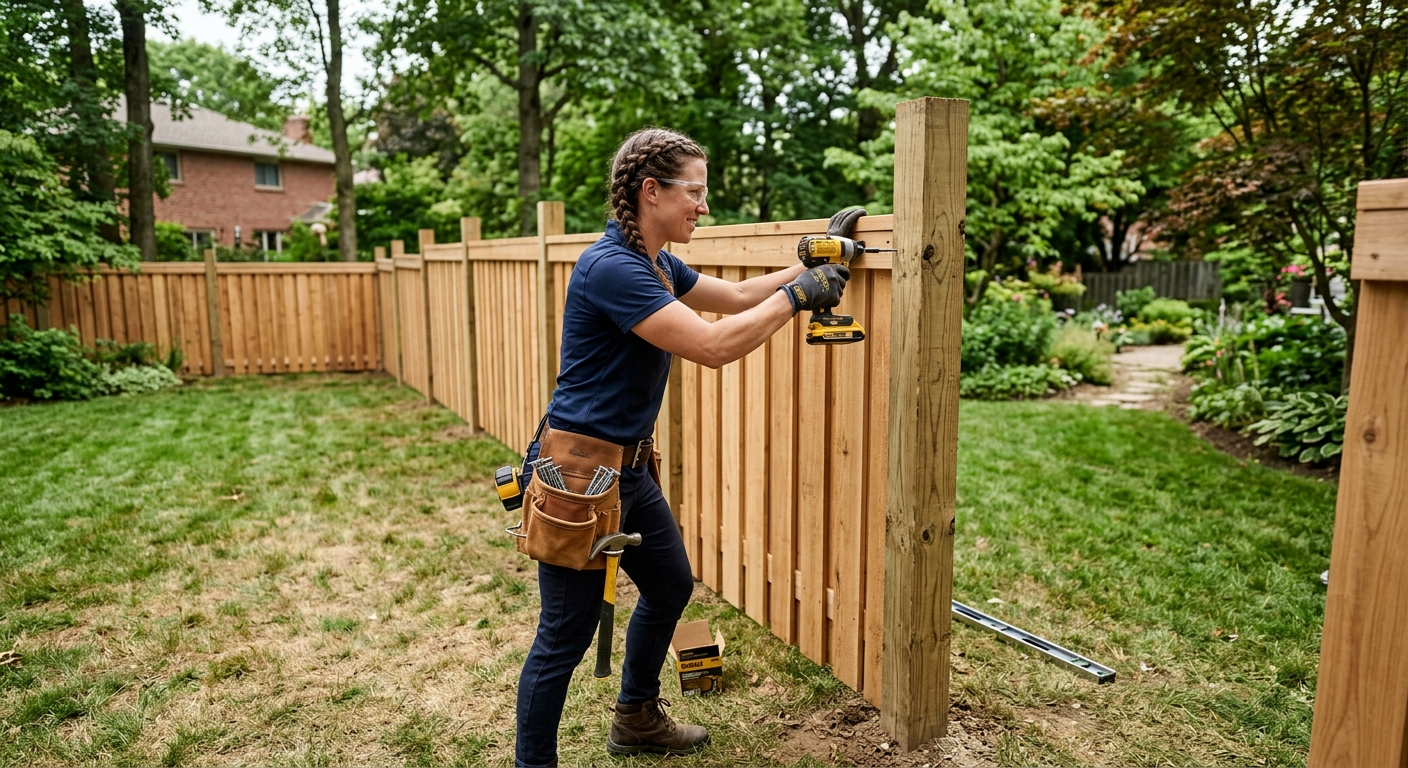
Fencing options and costs in Penticton
Penticton is a classic Thompson–Okanagan community where fencing needs to handle both freeze–thaw cycles and windy, open-lot conditions. With a population of 36,885 and 10,985 homeowner households (63.3% of households own) (Statistics Canada, 2021 Census), there’s a steady mix of projects—repairs, infill fencing for detached homes, and privacy upgrades around yards and pools. Roughly 40.3% of dwellings are single-detached homes (Statistics Canada, 2021 Census), which also means many fences are long, continuous runs with gates, and frequent requests for privacy along front and side setbacks.
Pricing in Penticton is shaped less by “what fence looks nice” and more by what your soil and exposure demand. In the interior Okanagan valleys, frost depth is typically deeper than coastal areas, so standard post holes often need to be set well below grade to avoid heaving. On top of that, lots near larger roads or open benches can experience higher wind loads, which affects post spacing, bracing, and sometimes the choice between solid and open-style panels.
Contractor availability also varies by season. You’ll generally get faster scheduling in the shoulder months, while late spring and summer can see higher labour demand for fence installs, especially in neighbourhoods where property upgrades are frequent, such as the South Main / West Bench area and around the downtown core. Once you know which material class fits your priorities, you can compare estimated unit pricing below.
| Material |
Lifespan |
Maintenance |
Privacy Rating |
Price per Linear Foot |
| Pressure-treated pine (standard wood) |
10–15 years |
Stain/seal every 2–3 years |
High (solid boards) |
$20–$30 |
| Cedar (natural rot resistance) |
15–25 years |
Light staining/finish as needed (often every 3–4 years) |
High (solid boards) |
$25–$40 |
| Vinyl / PVC (no-maintenance) |
20–30 years |
Rinse annually; no painting required |
High (solid/slatted options) |
$26–$42 |
| Chain-link (galvanized steel) |
25–40 years |
Occasional rinse; tighten hardware as needed |
Low–Medium (privacy slats optional) |
$14–$22 |
| Aluminum ornamental |
25–35 years |
No rust; wash as needed |
Low–Medium |
$30–$55 |
| Composite / recycled material |
20–30 years |
Rinse and spot-clean; no staining |
High (solid panels) |
$28–$48 |
Prices are estimates only and vary by project scope, site access and material selection.
What affects the price of fencing in Penticton
In Penticton, it’s common to see quotes for the “same” fence run that differ by 30–50% once you compare the fine print—especially post depth, footing method, and how much labour goes into hardware and gate framing. Even within the Thompson–Okanagan region, projects can price higher than very mild coastal microclimates because interior soils and freeze depth push installers to set posts deeper and use sturdier components. In practice, that’s why a simple timber privacy fence can land in the lower end of a wood band for sheltered yards, while an exposed bench lot with heavier wind load can move toward the upper end.
The biggest driver is frost-related post depth. The regional rule of thumb in interior BC is to set posts roughly 4–6 inches below the design frost depth so freeze–thaw cycles don’t heave the fence line. In colder interior pockets, that often means digging deeper and using concrete-set posts, which raises both material cost and labour time. To illustrate the material impact: cedar or vinyl privacy can sit at the higher end of their bands (for example, vinyl/PVC at $75–$115), while pressure-treated pine typically comes in more competitively (about $55–$85 for wood installation, depending on complexity).
Wind exposure also matters. When sites are open to prevailing winds, contractors space posts more tightly, add bracing, and may switch to open-style panels to reduce wind loading—each choice affects labour hours and the cost of hardware. In Penticton specifically, two local examples that move budgets: (1) clay or poorly drained soil slows excavation and increases footing time; (2) longer, fence-adjacent slopes near the lakeward side require stepped or raked panels, which increases layout time and materials waste. If your home is older—Penticton has 45.5% of homes built before 1981 (Statistics Canada, 2021 Census)—you’ll also see more work around irregular property lines, mature trees, and buried obstacles, all of which add time.
| Price Factor |
Why It Matters |
Cost Impact |
| Fence length in linear feet |
Most materials (posts, rails, boards/panels) and labour scale directly with total length |
High |
| Post depth required |
Frost line determines hole depth and therefore post length and excavation time |
High |
| Post setting method |
Concrete-set posts cost more than gravel packs and driven options, but reduce heave risk |
Medium–High |
| Material choice |
Vinyl and composite typically cost more upfront; cedar costs more than pressure-treated |
Medium–High |
| Gate count and type |
Double gates require heavier frames and stronger hinges/latches |
Medium |
| Grade and terrain |
Sloped yards may need racked panels or stepped footings and extra layout |
Medium |
| Old fence removal and disposal |
Disposal fees and labour increase with debris volume, fasteners, and anchor points |
Low–Medium |
| Permit fees and survey / property line locate |
Locating pins reduces risk of encroachment work; permits may apply depending on height |
Low–Medium |
Permits & regulations in British Columbia
In British Columbia, fences can fall under permit requirements when they exceed height thresholds that local bylaws treat as “regulated” structures—commonly around 2.0 m (6.5 ft) for the rear yard and about 1.0–1.2 m (3–4 ft) for front yard or corner locations (depending on municipal rules). Regardless of height, every fence must respect property lines and applicable municipal setback bylaws. Before any post holes are dug, arrange utility locates using the proper provincial service (for BC, call BC 1 Call). This is essential even for small jobs because buried services are common near older neighbourhoods and replacement-driveway areas.
A practical step that prevents expensive disputes: get a survey or confirm your property pins/locate points before installation. This is especially important in Penticton where many older lots have established boundary markers and mature landscaping that can obscure where the true line sits.
Shared fence ownership is handled through provincial line-fences principles. If you’re modifying a boundary fence, talk to your neighbour early and keep documentation.
Contractor verification (what to do before signing): ask for the certificate of insurance showing general liability and confirm current clearance/coverage where applicable (WSBC coverage for eligible work). In many cases, you can verify company information and credentials through the BC online licensing registry for trades/contractors, and you should request a copy of the insurance certificate for your job file. A legitimate contractor should also be able to provide references for similar Penticton installs and explain exactly how they set posts below the frost-affected zone.
Choosing the right fence material for Penticton
Choosing a fence in Penticton is really about matching the material to how you use the yard. Pressure-treated pine is usually the most budget-friendly option, but it needs staining or sealing every 2–3 years to prevent grey weathering and surface checking. Cedar costs more up front yet offers better natural rot resistance and often looks warmer and cleaner over time; it still benefits from periodic maintenance. Vinyl/PVC is the low-maintenance pick for homeowners who want minimal upkeep—though in extreme cold snaps it can become more brittle than wood, so proper framing and temperature-rated components matter.
Chain-link is the most economical to install and typically lasts a long time, but it offers little privacy unless you add privacy slats or plant screening. Aluminum ornamental fencing looks sharp and won’t rust, making it a good choice for front-yard definition; however, it won’t deliver privacy like a solid privacy screen.
Regardless of material, Thompson–Okanagan frost depth drives post performance. In practice, that means planning for posts set below the local frost-affected zone (commonly deeper than coastal installs) and using concrete-set posts when soils are clayish, poorly drained, or you’re on an exposed site where heaving would be more obvious. Wind and snow load considerations also matter: open styles (like chain-link or decorative aluminum) reduce wind pressure, while solid panels require sturdier bracing and closer post spacing to avoid racking.
A realistic budget justification example: if you compare a privacy wood fence on the lower end of the wood band ($55–$85 per linear foot) to vinyl/PVC ($75–$115 per linear foot), the 20–40% difference can be worth it if you’re trying to avoid repeated staining and want a maintenance-free approach for many years—especially if your yard landscaping is hard to access or you’re busy. If you’re on a tighter budget, cedar often sits in the middle ground: better appearance and rot resistance than pressure-treated, without vinyl’s higher upfront cost.
| Material |
Cold Tolerance |
Lifespan |
Annual Maintenance |
Best For |
Price Band |
| Pressure-treated pine |
Good (with proper sealing and good post depth) |
10–15 years |
2–3 year stain plan (spot-check annually) |
Budget privacy when you’re okay maintaining |
$55–$85 |
| Cedar |
Good (resists rot in damp conditions) |
15–25 years |
Light finish as needed (often every 3–4 years) |
Natural look with better longevity |
$60–$100 |
| Vinyl / PVC |
Good (can be brittle in severe cold if not installed well) |
20–30 years |
Rinse annually; inspect fittings |
Low maintenance privacy |
$75–$115 |
| Chain-link |
Very good (galvanized steel performs well) |
25–40 years |
Occasional rinse/tighten |
Security with minimal upkeep |
$35–$60 |
| Aluminum ornamental |
Excellent (no rust) |
25–35 years |
Wash as needed; check hinges |
Front-yard aesthetics and durability |
$90–$150 |
| Composite / recycled |
Good (designed for exterior freeze–thaw) |
20–30 years |
Rinse/spot-clean; no staining |
Privacy with low maintenance |
$85–$130 |
How to choose a fencing contractor in Penticton
Start by verifying British Columbia credentials and insurance the same way you would for any exterior trade. Ask the contractor for: (1) proof of licensing/registration where required for the work they’re performing, (2) a current certificate of general liability insurance, and (3) confirmation of workers’ coverage for eligible work (WSBC/WCB coverage as applicable). Where to look: request the insurance certificate for your file (it should list the named insured and policy dates), and verify the business details through BC’s online licensing registry. If they can’t produce an insurance certificate on request, that’s a major red flag.
Next, compare quotes on scope, not just totals. Get 2–3 itemised written quotes that break down labour (excavation, setting, bracing, gate installation) and materials (posts, rails, panels, hardware, concrete/gravel if used). Ensure the proposal states whether permits are included, whether property line locate/survey verification is part of the job, and how waste disposal is handled after old fence removal.
Warranty terms should be explicit: workmanship warranty length (for example, how long they stand behind post-setting and alignment) and a manufacturer/product warranty where applicable. Ask if the warranty is transferable to future owners, especially if you plan to sell. Payment should be staged—never more than 10–15% upfront. Hold back the balance until the fence line is complete and straight, gates latch properly, and cleanup is done. Finally, require a written start date and completion estimate so you’re not stuck with an unfinished barrier mid-season.
- Confirm licensing/registration applicable to fencing work in BC.
- Request current general liability insurance and check policy dates.
- Verify WSBC/WCB coverage confirmation where applicable to the crew.
- Get 2–3 itemised quotes: labour + materials, not just a lump sum.
- Ask for post depth assumptions and whether they’ll use concrete-set posts where required by soil/frost risk.
- Confirm gate type, frame material, latch/hinge quality, and number of gates in writing.
- State whether old fence removal and disposal are included.
- Clarify grading approach: stepped vs raked panels for slopes.
- Ask who pulls/handles permits (if required based on fence height and location).
- Ensure the quote includes cleanup and disposal details.
- Review warranty: workmanship duration, product warranty coverage, and transferability.
- Payment schedule: 10–15% max upfront; holdback until completion.
Red flags I see in Penticton include: vague “we’ll set posts below frost” language without depth/post-setting method; no written proof of insurance or coverage; quotes that don’t list gate hardware or disposal scope; change orders that aren’t itemised; and crews starting without a confirmed property line locate when the site has mature plantings or unclear boundary markers.
Frequently asked questions — fencing in Penticton
Should I repair or replace my old fence in Penticton?
In Penticton, the decision usually comes down to whether the fence posts have moved from freeze–thaw heave. If the fence line is still mostly straight and only boards are failing, repair is often cost-effective: replacing rails, re-screwing or re-planking can extend life for a few seasons. If you notice leaning sections, gaps widening at the bottom, or posts that flex when pushed, replacement is usually the safer move—because re-attaching to unstable posts won’t hold. Also consider the material condition: pressure-treated pine that has rotted at ground contact points typically needs more than patching. For budget planning, many homeowners compare a wood installation band of about $55–$85 per linear foot versus the higher upkeep costs of repeated small repairs.
How do I handle a fence dispute with a neighbour in British Columbia?
In British Columbia, boundary fences can involve neighbour-facing issues, especially when it’s unclear who maintains what along the line. The first step is to locate the true property line—either through your survey pins or a property survey—and keep photos and notes showing where the fence sits and how it affects use. If your fence is shared or you suspect encroachment, communicate early and calmly, then put agreements in writing. Ask your contractor to document measurements from pins and to include a sketch in the quote so you’re not relying on estimates. If the disagreement persists, you may need formal mediation or legal guidance, but you’ll get further if the physical facts (pins, offsets, and fence height at relevant locations) are clear from the start. Also factor in BC’s height and setback rules: a change in height can turn a small dispute into a compliance issue.
What fence style offers the best wind resistance in Penticton?
Wind resistance is mostly about how the fence sheds wind load. In Penticton’s more exposed lots (including areas with open benches), solid privacy panels can take more stress if post spacing and bracing aren’t engineered to match. The best approach depends on your goal: if you want privacy, choose a solid design but make sure the installer tightens post spacing, uses solid corner posts, and adds proper bracing so the fence can resist racking. If you can accept less privacy, open styles like chain-link or aluminum ornamental generally perform better in high wind because wind passes through the structure instead of pushing against it. In Thompson–Okanagan, deeper post setting below frost and sturdy hardware are critical regardless of style—heave plus wind is what often causes early failures.
How much does a fence cost in Penticton?
Fence cost in Penticton depends mainly on length, post depth and setting method, and whether you’re adding gates or removing an old fence. Typical installation price bands for the city tier are: wood around $55–$85, vinyl/PVC around $75–$115, chain-link around $35–$60, and aluminum/metal around $90–$150. A privacy fence with concrete-set posts and a couple of gates often lands nearer the upper end because excavation time and bracing increase labour and materials. As a reference point, if you’re choosing between wood and vinyl for a similar layout, vinyl’s higher band can be justified when you want lower long-term upkeep in Penticton’s interior freeze–thaw environment. Your contractor’s site conditions (soil type, grade, and wind exposure) are usually the difference between a mid-range and high-end quote.
How deep should fence posts be for Penticton's frost?
In Penticton and the interior Thompson–Okanagan valleys, fence posts typically need to be set below the frost-affected zone so the fence doesn’t heave during freeze–thaw cycles. A common local practice is to set posts roughly 4–6 inches below the design frost depth, which often results in deeper hole and/or longer post requirements compared to coastal installations. On heavier clay soils or poorly drained ground, it’s common for contractors to use concrete-set posts to stabilize the fence line. The exact depth depends on your soil, exposure, and the local design assumptions used by the contractor, so ask for their post-depth method in writing. If someone quotes “standard depth” without referencing frost performance or soil conditions, that’s a gamble with long-term alignment.
Wood vs vinyl vs aluminum fence — which is best?
There isn’t one “best” fence for everyone in Penticton; it depends on your priority and how much maintenance you want to handle. Wood (pressure-treated pine) is usually the most budget-friendly but needs staining/sealing roughly every 2–3 years to reduce weathering, especially where boards sit near the ground. Cedar looks great and resists rot better, but it still benefits from periodic finishing. Vinyl/PVC is the easiest to live with—lower maintenance and long service life—but it’s pricier and needs proper installation so it doesn’t become brittle in severe cold. Aluminum is excellent for durability and front-yard definition (no rust), but it won’t provide privacy like a solid wood or vinyl panel unless you add screening. If privacy and minimal upkeep are your top goals, vinyl commonly wins; if you want the best value and don’t mind maintenance, wood (or cedar) is often the practical choice.