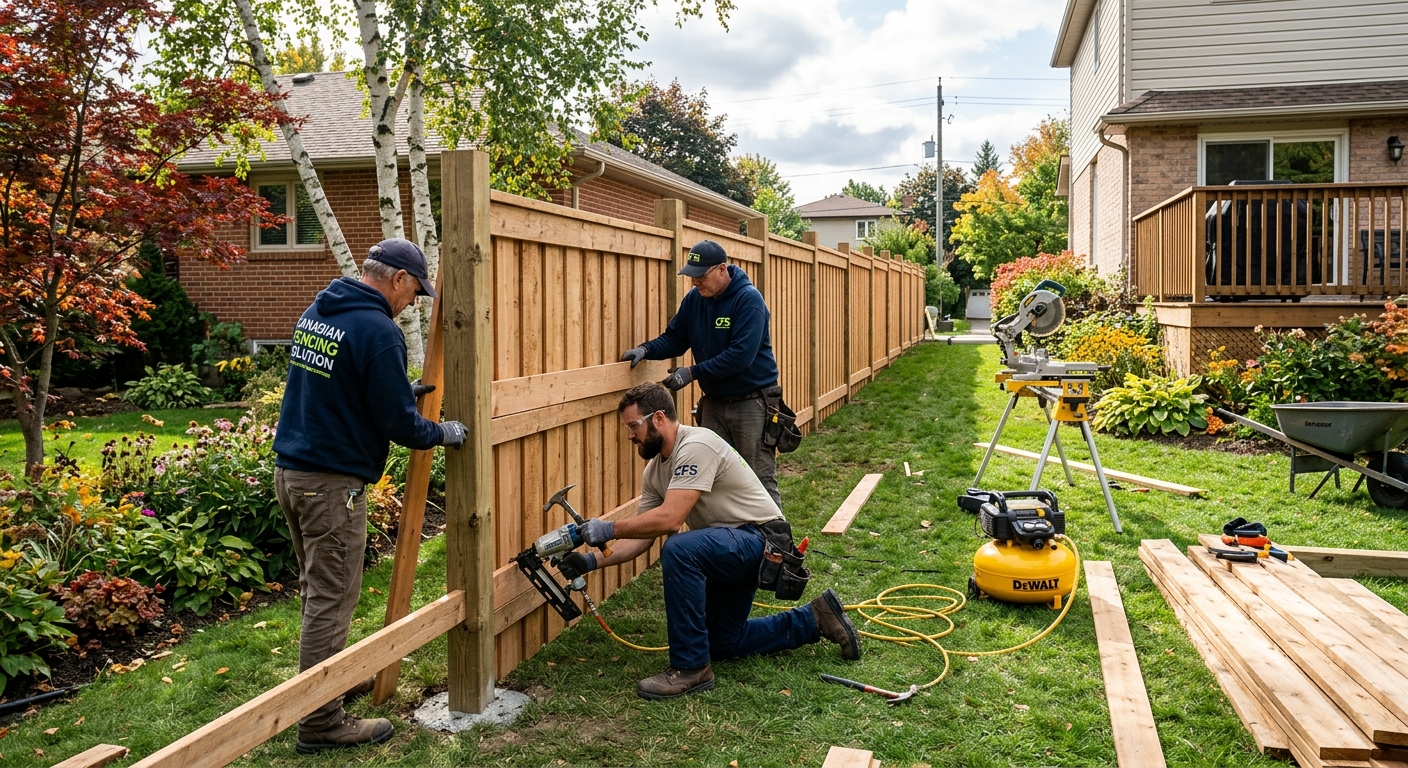
Fencing options and costs in Coldstream
Coldstream homeowners typically have several fencing choices, and the right pick usually depends on privacy needs, maintenance tolerance, and how exposed your yard is. With 11,171 residents (Statistics Canada, 2021 Census) and 89.6% of households owning their homes, demand stays steady year-round because most fences are installed or upgraded when properties change hands, when renovations happen, or when older backyards need safer, more defined boundaries. Coldstream’s housing stock skews toward single-detached homes (82.8% of dwellings), so fencing often becomes a “full perimeter” project rather than a small side run, which affects labour hours and hardware quantity.
In the Thompson–Okanagan region, frost depth and soil conditions strongly influence installation costs. Contractor pricing is shaped by how deep posts must be set to avoid freeze–thaw heaving, plus whether concrete-setting is required on clay or poorly drained spots. Coldstream lots near higher, breezier benches can also see higher wind loads; that typically means tighter spacing, sturdier posts, and more bracing than you’d see in sheltered valley pockets. That combination is why fence installs in the area often price closer to the upper end of the local bands for wood and vinyl, especially when homeowners want a solid privacy look. Fence work is especially in demand around the Bench Road corridor and nearby rural properties where yards face open winds.
To make comparisons easier, use the table below as a planning starting point for a typical installed project.
| Material |
Lifespan |
Maintenance |
Privacy Rating |
Price per Linear Foot |
| Pressure-treated pine (standard wood) |
10–15 years |
Stain or seal every 2–3 years |
Medium to High |
$18 – $28 |
| Cedar (natural rot resistance) |
15–25 years |
Seal/stain every 2–3 years (recommended) |
High |
$25 – $40 |
| Vinyl / PVC (no-maintenance) |
20–30 years |
Rinse as needed; no staining |
High |
$25 – $42 |
| Chain-link (galvanized steel) |
25–35 years |
Occasional tightening/straightening |
Low |
$14 – $22 |
| Aluminum ornamental |
30–40 years |
Wash annually or as needed |
Low to Medium |
$25 – $50 |
| Composite / recycled material |
20–30 years |
Minimal; periodic rinse |
High |
$28 – $48 |
Prices are estimates only and vary by project scope, site access and material selection.
What affects the price of fencing in Coldstream
In Coldstream, two fencing quotes for the “same” fence can differ by roughly 30–50% because the unseen work varies: post depth and post setting, grading and terrain adjustments, wind bracing requirements, gate hardware, and whether an existing fence is removed and disposed of. Across Thompson–Okanagan, contractors also price labour differently depending on access (long driveways, tight gates), hauling distance, and how often they’re scheduling around other exterior projects.
The biggest technical driver is frost. Local practice typically sets posts about 4–6 inches below the design frost depth to prevent heaving during freeze–thaw cycles. In colder interior valleys and higher-elevation pockets, this can mean deeper holes and larger-diameter footings, and concrete-set posts are common where soils are clayey or poorly drained. On top of that, if your fence line runs through wind-exposed benches, installers may reduce post spacing and upgrade rails and brackets to handle higher wind pressure, which increases both materials and labour.
Coldstream-specific examples that move price up or down include: (1) clay/low drainage zones that need concrete rather than a gravel pack, (2) sloped grade that requires stepped panels or raked rails to keep the fence straight, and (3) wind-exposed orientations that call for heavier bracing and more frequent posts even for “standard” privacy designs. If you’re comparing budget material, a pressure-treated pine privacy fence often sits nearer the wood band, while vinyl usually lands closer to the higher end of the vinyl band once you add concrete setting and upgraded hardware. If your yard is secure but open to wind, you may find aluminum ornamental pricing can rise with bracing and hinge-heavy gate builds, even though panels are lighter than solid wood.
| Price Factor |
Why It Matters |
Cost Impact |
| Fence length in linear feet |
More linear feet means more posts, rails, fasteners and labour time |
High impact (often the #1 driver) |
| Post depth required |
Frost protection dictates hole depth and sometimes post length and footing size |
Medium to high (can change the entire build method) |
| Post setting method |
Concrete setting adds auger time, concrete volume, and curing considerations |
Medium to high |
| Material choice |
Vinyl and composite cost more per component; cedar varies by board grade |
Medium |
| Gate count and type |
Double-drive gates, latching, and hinges require extra framing and hardware |
Medium to high |
| Grade and terrain |
Slope requires stepping/racking, extra layout time, and sometimes custom panel lengths |
Medium |
| Old fence removal and disposal |
Demolition, load-out, and dump fees add labour and truck time |
Low to medium (can become medium quickly) |
| Permit fees and survey / property line locate |
Some builds need permitting; locating pins can prevent boundary disputes |
Low to medium |
Permits & regulations in British Columbia
In British Columbia, permit requirements for fencing generally depend on height and location (front/corner vs. rear). As a practical homeowner guideline, fences above a common height threshold—often around 2.0 m (6.5 ft) at the rear and roughly 1.0–1.2 m (3–4 ft) at the front or corner—may require a building permit. Even when a permit is not triggered by height, you still must respect property lines and any municipal setback bylaws that apply to your specific lot.
Before you dig any post holes, always call for utility locates through BC 1 Call (to have buried services marked). Also confirm your property line before installation: many disputes happen when fences creep onto neighbouring lots, especially on older parcels where markers are less obvious. If you’re unsure, obtain a survey or have your pins located.
Shared fence ownership and maintenance responsibilities are governed by provincial line-fences legislation. Practically, that means you may need agreement or documentation on repairs, replacement, and how costs are shared—particularly if one neighbour wants a change in height or style.
To verify a Coldstream contractor in British Columbia, ask for (1) proof of a valid licence/registration where applicable for fencing-related trade work, (2) a current certificate of liability insurance, and (3) proof of workers’ compensation coverage (WSIB/WCB coverage). Confirm details by checking the contractor’s online registry listing (where available) and reviewing the COI for policy limits and effective dates; if they provide a clearance letter or coverage verification, keep it with your signed contract. This step-by-step approach helps you avoid uninsured work and protects your property during digging and installation.
Choosing the right fence material for Coldstream
Choosing a fence material in Coldstream is really about matching your priorities to how the interior BC climate performs on fences. Pressure-treated pine is the budget-friendly option, but it typically needs staining or sealing every 2–3 years to prevent grey weathering and to slow surface cracking. Cedar looks more natural and handles rot better than pine due to its natural oils; it still benefits from regular maintenance to keep boards evenly coloured and protected at cut ends and post tops. Vinyl/PVC is the low-maintenance choice, but it has a higher upfront cost and can become brittle if installers use the wrong rail design or hardware for extreme cold; quality systems with proper fastening and designed expansion gaps perform best. Chain-link lasts a long time and stays strong in winter, but it won’t give privacy, and many homeowners add privacy slats later. Aluminum ornamental is attractive and rust-resistant, yet it’s usually more about boundary definition and security than screening wind and sightlines.
For Thompson–Okanagan conditions, post depth matters as much as material. Because freeze–thaw cycles can heave shallow posts, installers commonly set posts deeper—typically at least 4–6 inches below the design frost depth—and concrete-set posts are often selected for colder pockets, clay soils, or poorly drained ground. That foundation work can make both wood and vinyl jump closer together in price versus “just comparing board cost.” For instance, moving from pressure-treated pine to cedar can be justified when you want a cleaner look and longer lifespan; if pine budgeting starts around the wood band (roughly $55–$85 per installed linear foot in this tier), cedar often prices higher in practice, but homeowners tend to recover part of that difference through fewer replacements and less frequent “redo” work.
Wind exposure and snow loading also matter. In open benches, heavier rails and closer post spacing help keep a privacy fence rigid in gusts. Solid panels generally handle better when braced correctly, while open-style systems reduce wind load but provide less privacy—so the “best” choice depends on how exposed your backyard faces.
| Material |
Cold Tolerance |
Lifespan |
Annual Maintenance |
Best For |
Price Band |
| Pressure-treated pine |
Good (with proper staining and sealed tops) |
10–15 years |
Light prep and re-stain every 2–3 years (not monthly) |
Budget privacy with willingness to maintain |
$55 – $85 |
| Cedar |
Excellent (natural rot resistance) |
15–25 years |
Check and seal/stain every 2–3 years |
Natural look + longer wear |
$70 – $110 |
| Vinyl / PVC |
Very good (with correct installation) |
20–30 years |
Rinse and inspect fasteners as needed |
Low maintenance privacy |
$75 – $115 |
| Chain-link |
Excellent (galvanized steel) |
25–35 years |
Occasional tightening/straightening |
Security on a budget (no privacy) |
$35 – $60 |
| Aluminum ornamental |
Excellent (no rust) |
30–40 years |
Wash annually; check hardware |
Attractive boundary with security |
$90 – $150 |
| Composite / recycled |
Good (designed for freeze–thaw) |
20–30 years |
Minimal; periodic rinse |
Long-term privacy with low upkeep |
$85 – $140 |
How to choose a fencing contractor in Coldstream
When hiring a fencing contractor in Coldstream, verify three things before you sign: licensing/registration where applicable, liability insurance, and workers’ compensation coverage (WSIB/WCB coverage). The “how to check” part matters. First, ask for their certificate of liability insurance and review the effective dates, policy limits, and whether they name you correctly as an additional insured if your contract requires it. Second, check workers’ compensation coverage by requesting proof/clearance verification; don’t accept expired paperwork. Third, verify their business standing via the appropriate online registry or professional listing available in British Columbia. If they can’t provide current documents quickly, that’s a red flag.
Next, get 2–3 itemised written quotes. You want a breakdown showing labour and materials separately (posts, rails, panels, concrete, gates, hardware, and any removal/disposal). Avoid lump sums that don’t explain how they’ll handle slope, wind exposure, or post depth. Read the scope carefully: confirm whether permits are included (where needed), whether the contractor will pull and protect existing boundary markers, and whether old fence removal and disposal are part of the price.
Warranty should be in writing. Ask for the workmanship warranty length (often different from the product/manufacturer warranty), whether it’s transferable to future owners, and what conditions void coverage (for example, neglecting staining or using non-approved clearing compounds). Payment should be staged—never more than 10–15% upfront. Use a holdback until completion and final inspection. Finally, request a start date and completion estimate in writing, including scheduling expectations for post curing if concrete setting is required.
- Confirm proof of liability insurance (current COI, limits, and effective dates)
- Verify workers’ compensation (WSIB/WCB coverage) with up-to-date clearance/verification
- Ask for evidence of relevant licensing/registration where the trade is regulated
- Get 2–3 itemised quotes with labour and materials broken out
- Ensure post depth and post-setting method are stated (concrete vs. gravel pack)
- Check who handles utility locates and whether BC 1 Call tickets are referenced
- Confirm slope solution (stepped vs. raked panels) and whether extra labour is included
- List gate hardware details: hinges, latches, and whether a double gate needs reinforcement
- Clarify disposal: old fence removal, dump fees, and hauling are included or not
- Confirm warranty terms separately for workmanship and product/manufacturer
- Set payment schedule with a holdback until final walkthrough
- Require a written start date and completion timeline
Red flags in Coldstream include: contractors who won’t put post depth and setting method in writing; “cash price” quotes without documentation or insurance; vague scopes that exclude disposal or permits; starting work before utility locates are confirmed; and warranties that are only verbal or don’t distinguish workmanship from product coverage.
Frequently asked questions — fencing in Coldstream
How much does a fence cost in Coldstream?
In Coldstream, installed fence costs typically land in the regional price bands depending on material and how much foundation work your site requires. For wood installations, a common planning range is $55–$85 per linear foot, while vinyl/PVC often runs $75–$115 per linear foot once you include heavier hardware and concrete-set posts where soils are clay or drainage is poor. Chain-link can be more budget-friendly at $35–$60 per linear foot, but it won’t provide privacy. Aluminum ornamental usually prices higher at $90–$150 per linear foot because of the hardware, framing, and fencing gate build-outs. Your final number still depends on the linear footage, gate count, sloped terrain, and how exposed your yard is to wind.
How deep should fence posts be for Coldstream's frost?
Because Coldstream is in the Thompson–Okanagan interior, frost can push deeper than in milder coastal areas. The local approach is to set posts about 4–6 inches below the design frost depth so they don’t heave during freeze–thaw cycles. In practice, that means installers often dig deeper and use longer posts than homeowners expect, especially on heavier soils or higher/elevated pockets. Where clay or poorly drained ground is present, concrete-set posts are commonly used to stabilize the column through winter movement. If a contractor proposes shallow post holes “because it’s only a fence,” ask them to explain the frost-depth basis and their planned post depth and setting method in writing.
Wood vs vinyl vs aluminum fence — which is best?
“Best” depends on what you value most. Wood (pressure-treated pine or cedar) can look classic and provide solid privacy, but wood generally needs maintenance—often staining or sealing every 2–3 years to reduce weathering. Vinyl/PVC gives low maintenance and strong privacy, but costs more upfront and performs best when installed with the right hardware and expansion considerations for Coldstream’s cold snaps. Aluminum ornamental is a strong choice for rust resistance and curb appeal, and it lasts a long time, but it typically offers less privacy because it’s more open by design. If your priority is privacy screening and you don’t want ongoing maintenance, vinyl usually wins; if you want the most natural look and can maintain it, cedar is often worth the extra.
Do I need a permit to build a fence in British Columbia?
In British Columbia, some fences require a permit based on height and location on your lot. A common rule of thumb is that fences above about 2.0 m (6.5 ft) at the rear and around 1.0–1.2 m (3–4 ft) at the front or corner may require a building permit. Even if your fence is below the threshold, it still must respect property lines and municipal setback bylaws. Before you dig, you must also call for utility locates through BC 1 Call to have buried services marked. For Coldstream homeowners, the safest path is to have your contractor confirm the height/location trigger before scheduling post excavation and to document permit responsibility in your contract.
How long does a wood fence last in Coldstream?
A well-built wood fence in Coldstream typically lasts about 10–15 years for pressure-treated pine, and around 15–25 years for cedar, depending on how it’s installed and maintained. The biggest lifespan killers are shallow or improperly set posts (leading to heaving during freeze–thaw), untreated bottom edges, and water trapping where boards sit against soil or debris. Maintenance matters too: staining or sealing every 2–3 years helps protect the wood from moisture cycling and grey weathering. If you choose a wood fence, pay close attention to post depth and whether the contractor uses concrete-set posts where soil conditions warrant it. That foundation work often determines whether the fence stays straight for the full expected service life.
Who owns and maintains a shared fence?
In Coldstream and across British Columbia, shared fence responsibilities are governed by provincial line-fences legislation, but the practical outcome depends on how the fence was established and what both neighbours agree to. Typically, if a fence is considered a boundary fence, each party may share maintenance obligations and replacement costs; however, the exact ownership and cost-sharing can vary based on circumstances and documentation. Before replacing or changing a shared fence, communicate with the neighbour and confirm in writing what both sides are responsible for. If your fence line might be near a boundary, verify the property line (survey or locate pins) so you’re not dealing with an encroachment issue while discussing maintenance or repairs.