Fencing options and costs in Terrace
Terrace homeowners typically have strong demand for new fencing because the housing mix creates lots of backyard perimeters to protect or define. In Terrace, 3,415 homeowner households own their homes (70.1% of households), and single-detached houses make up about 60.0% of dwellings (Statistics Canada, 2021 Census). That matters: a detached property is effectively a full perimeter project—front yards, side yards, and back yards—so fencing is a repeat upgrade cycle rather than a one-off repair.
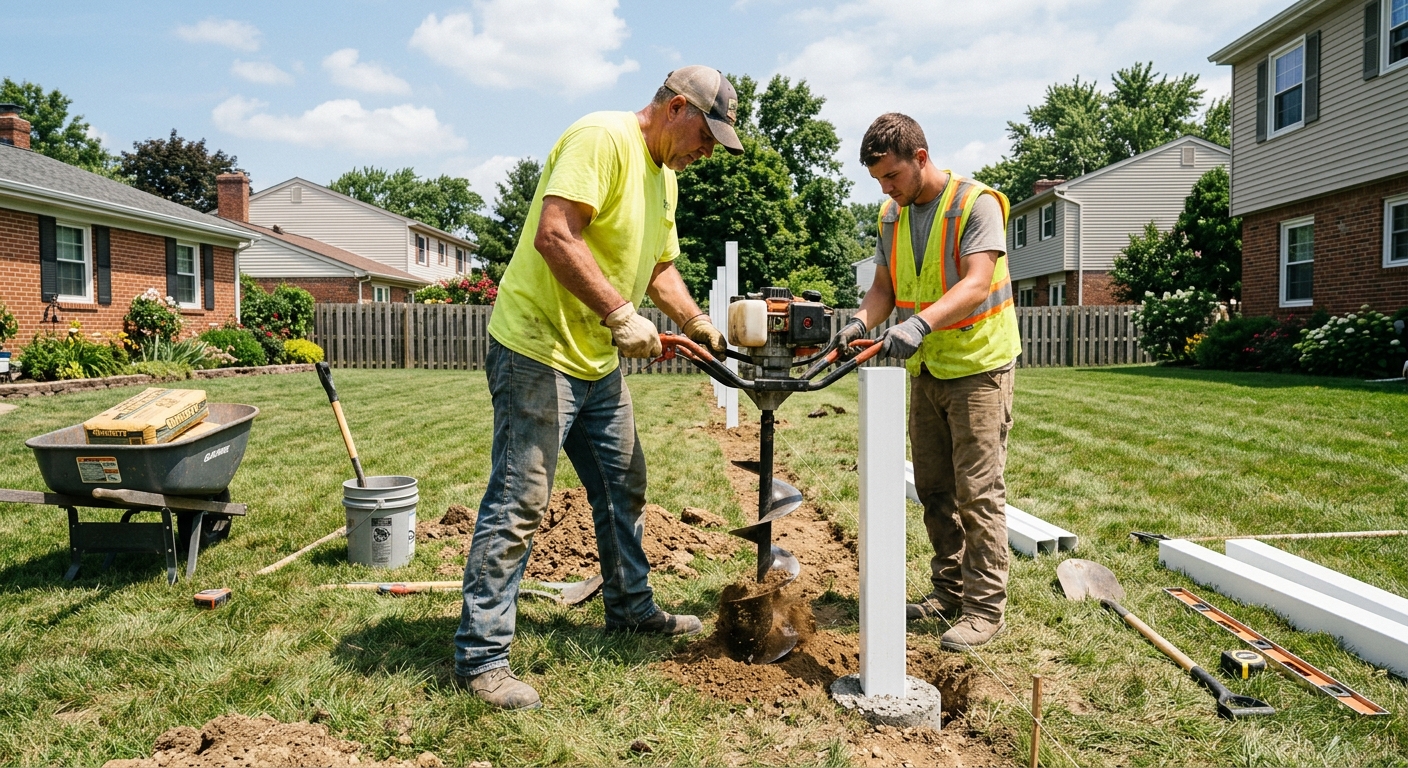
In the North Coast, fence pricing is shaped less by “brand” and more by weather exposure and ground conditions. Terrace sits in a cool, wet marine climate where freeze–thaw cycles still affect how posts behave. Even though frost depth is often shallower than many inland regions, reputable installers still set concrete-set posts below frost to reduce heaving, especially on saturated soils. Wind exposure near open corridors and hillside lots can also push contractors toward closer post spacing and sturdier rails, which increases labour time and hardware.
In neighbourhoods like Thornhill, where many yards back onto treed lanes or exposed edges with damp soil, we commonly see higher costs than a sheltered downtown street: longer digging time, more post/rail bracing, and extra corrosion-resistant fasteners. With those factors in mind, the table below compares common options by lifespan, upkeep, and typical per-foot pricing you can use as a baseline for your Terrace quotes.
| Material |
Lifespan |
Maintenance |
Privacy Rating |
Price per Linear Foot |
| Pressure-treated pine (standard wood) |
10–15 years |
Stain/finish every 2–3 years |
6.5/10 (depends on slat spacing) |
$55 – $85 |
| Cedar (natural rot resistance) |
15–25 years |
Seal/stain as needed, usually 2–4 years |
7.5/10 (solid boards) |
$65 – $95 |
| Vinyl / PVC (no-maintenance) |
20–30 years |
Rinse as needed; occasional cleaning |
7/10 to 9/10 (solid panel styles) |
$80 – $120 |
| Chain-link (galvanized steel) |
20–35 years |
Minimal; rinse and inspect tension |
2/10 to 4/10 (privacy requires screening) |
$35 – $55 |
| Aluminum ornamental |
25–40 years |
Wash occasionally; check gate hardware |
2/10 to 5/10 (decorative pickets) |
$90 – $140 |
| Composite / recycled material |
20–30 years |
Low; wash and inspect for warping |
6/10 to 8/10 (solid or semi-solid) |
$100 – $135 |
Prices are estimates only and vary by project scope, site access and material selection.
What affects the price of fencing in Terrace
It’s normal to see Terrace fence quotes spread out by 30–50% for what sounds like the “same fence,” because contractors price the realities of ground conditions, exposure, and build quality. Two yards can have identical linear footage on paper, yet one lot might sit on saturated soil that requires more excavation and concrete setting, while another drains well and can use faster post work. In the North Coast, supply logistics and labour mobilization also play a role; crews may need to schedule jobs around weather windows and delivery timing, which can shift labour hours.
The biggest drivers are frost behaviour and wind. Even with a relatively shallow frost line compared with inland regions, typical practice is to set posts about 4–6 inches below the design frost depth, then concrete-set when soils are saturated to reduce heaving during freeze–thaw cycles. In colder Ontario and Alberta regions, posts often go 1.5–2.0 m into the ground, and similar thinking shows up in Terrace when soil is wet and unstable—extra digging depth increases concrete and longer posts, pushing wood projects from the low end toward the mid range of the $55–$85 band. Wind exposure also matters: on more exposed waterfront or higher-slope lots, contractors tighten post spacing and add heavier rails; that’s one reason vinyl / PVC ($80–$120) often costs more than homeowners expect when it’s built for wind, not just aesthetics.
Two concrete examples from Terrace: (1) removing an old, leaning fence with multiple half-rot posts can add 1–2 labour days because concrete footings must be broken out and hauled; this is commonly a few hundred to over $1,000 depending on disposal volume. (2) a gate upgrade on a driveway—especially a double drive gate—often adds hardware and bracing, which can swing the final quote toward the higher end of the material band by $500–$1,500 even if your fence line stays the same.
| Price Factor |
Why It Matters |
Cost Impact |
| Fence length in linear feet |
Most labour and materials scale directly with length (posts, rails, fasteners) |
High |
| Post depth required |
Frost protection determines post length and how deep the hole must be |
High |
| Post setting method |
Concrete-set posts cost more than gravel pack or driven posts, but reduce heaving in wet soils |
Medium to High |
| Material choice |
Vinyl, cedar, and chain-link vary widely in unit price and installation effort |
Medium to High |
| Gate count and type |
Drive-through double gates require heavier frames, latches, and bracing |
Medium |
| Grade and terrain |
Slopes require stepped panels, raked layouts, and more labour for alignment |
Medium |
| Old fence removal and disposal |
Hauling and footing removal add labour; disposal fees vary by volume |
Medium |
| Permit fees and survey / property line locate |
Locates reduce boundary disputes and may be required for taller installs |
Low to Medium |
Permits & regulations in British Columbia
In British Columbia, fence height can trigger permit requirements. As a practical rule of thumb, fences above about 2.0 m (6.5 ft) at the rear and around 1.0–1.2 m (3–4 ft) at the front or corner often require a building permit, depending on the site and municipal rules. In Terrace and across B.C., you must also keep the fence within your property line and follow any local setback requirements. If you’re replacing an older fence, don’t assume it automatically complies—setbacks and height allowances are based on current bylaws.
Before digging any post holes, call for utility locates. In B.C., contact BC 1 Call to reduce risk of hitting underground services. If you’re unsure where your property pins are, obtain a survey or at minimum a locate to confirm boundaries before installation.
For shared fence ownership, B.C. line-fences legislation sets expectations around who maintains a fence on or near a boundary. If your project touches a lot line, confirm who is responsible for the fence, posts, and upkeep.
Contractor verification (Terrace homeowner checklist): request proof of a valid B.C. contractor licence for fencing-related work, ask for a Certificate of Insurance (liability coverage) showing the policy is active for the project dates, and confirm coverage through their workers’ compensation account (WSIB/WCB coverage for workers). If they cannot provide current documentation, treat that as a major risk.
Choosing the right fence material for Terrace
Choosing the right fence material in Terrace comes down to matching your priorities—privacy, low maintenance, budget, and lifespan—to a climate that’s cool, wet, and often windy. Pressure-treated pine is usually the most budget-friendly option, but it does require protection: homeowners typically need to stain or finish every 2–3 years to slow greying and surface checking. Cedar looks great and naturally resists rot better than standard wood, but it still benefits from sealing and regular inspection.
Vinyl / PVC is a popular “set it and forget it” choice because it needs minimal care and is resistant to moisture-related rot—important in North Coast conditions where wet boards can fail faster if not treated properly. That said, vinyl can become brittle if it’s low quality or poorly installed; reputable contractors use correct rail spacing and hardware. Chain-link is the lowest cost and often lasts the longest, but it won’t provide privacy unless you add a privacy screen or slats, which adds both material and wind-load considerations.
Aluminum ornamental is rust-resistant and low maintenance, but it’s more about definition than privacy. For post depth, Terrace’s frost protection still matters: even with a relatively shallow frost line, posts should be set below frost, and in saturated soils concrete-set posts are typically the safer approach. Wind exposure can also influence spacing and bracing—heavier panels can cost more upfront but resist sagging that leads to early repairs.
Where the price difference is justified: switching from pressure-treated pine (often starting around the $55–$85 band) to cedar or vinyl usually pays off when you want fewer maintenance trips. For example, a vinyl / PVC fence can land in the $80–$120 range; if your goal is long-term low upkeep in a damp climate, that additional cost can be worth it—especially if your yard is hard to access for painting or staining.
| Material |
Cold Tolerance |
Lifespan |
Annual Maintenance |
Best For |
Price Band |
| Pressure-treated pine |
Good (needs finishing for wet-season performance) |
10–15 years |
1–2 light visits (clean, inspect; stain every 2–3 years) |
Budget-focused projects needing privacy |
$55 – $85 |
| Cedar |
Good (rot resistance helps in wet coastal conditions) |
15–25 years |
Seasonal inspection; seal/stain as needed (often every 2–4 years) |
Looks + privacy with better natural durability |
$65 – $95 |
| Vinyl / PVC |
Moderate to good (quality installation is key in cold snaps) |
20–30 years |
Minimal (rinse and check hardware) |
Low maintenance in a cool, wet climate |
$80 – $120 |
| Chain-link |
Good |
20–35 years |
Low (inspect tension, wash if needed) |
Security and pet control with minimal upkeep |
$35 – $55 |
| Aluminum ornamental |
Excellent |
25–40 years |
Low (wash and check gate alignment) |
Decorative definition with long-term durability |
$90 – $140 |
| Composite / recycled |
Good (can resist rot; performance depends on product spec) |
20–30 years |
Low (wash and inspect for board movement) |
Privacy panels with reduced maintenance |
$100 – $135 |
How to choose a fencing contractor in Terrace
When you hire a contractor in Terrace, start with proof—not promises. In British Columbia, confirm they’re properly licensed for the type of work they’re doing, and ask for a Certificate of Insurance (liability) that names you or shows the policy is in force for the project period. For worker protection, verify they have current workers’ compensation coverage (commonly referred to as WSIB/WCB coverage depending on the program). Where to look: their online business listing/licence details (via provincial contractor registry sources), and a current COI document they can email before work begins. If they offer only verbal confirmation, that’s a risk you shouldn’t take.
Next, get 2–3 itemised written quotes. You want a breakdown that separates labour versus materials (posts, rails, gates, hardware), and clearly states the post setting method (concrete-set versus gravel pack), any frost-depth assumptions, and how they’ll handle slope transitions. A true itemised quote should also specify exclusions: permit pull responsibility, site grading, and whether disposal of the old fence is included.
Warranty matters too. Ask for (1) workmanship warranty length, (2) manufacturer product warranty length, and (3) whether warranties are transferable if you sell the home. Payment schedule should stay conservative: never pay more than about 10–15% upfront, and use a holdback until the fence is fully complete and you’ve received a final walkthrough. Finally, ask for a written start date and an estimated completion timeline so you can plan around weather windows common in the North Coast.
- Ask for their B.C. licence number and verify it matches fencing work.
- Request a current Certificate of Insurance for liability.
- Confirm workers’ compensation coverage for their crew.
- Require itemised quotes (labour vs materials) instead of a single lump sum.
- Confirm post setting method (concrete-set is typical in saturated soils).
- Get the post spacing and rail spec in writing (especially for wind-exposed yards).
- Confirm gate type (walk-through vs double drive) and hardware grade.
- Ask how they’ll build on slopes (raked vs stepped panels).
- Clarify disposal: old fence removal and hauling included or extra?
- Ask whether permit pull is included if your fence height triggers it.
- Review warranty: workmanship and product warranty lengths and conditions.
- Set payment milestones: keep upfront at 10–15% max; hold back at completion.
Terrace-specific red flags: (1) they propose driven posts only in wet ground without discussing concrete/set depth, (2) they won’t put frost-depth/post depth details in the quote, (3) they can’t provide insurance or workers’ compensation proof, (4) they require a large deposit up front with no holdback, and (5) they skip a slope plan and leave panel alignment “to be decided later.”
Frequently asked questions — fencing in Terrace
What's the best fence for privacy?
For privacy in Terrace, the most reliable choices are solid-panel wood (pressure-treated pine or cedar) and privacy-style vinyl / PVC, because slat spacing and panel overlap determine how well you block sightlines. In a cool, wet marine climate, vinyl privacy panels can be compelling if you want fewer maintenance tasks—pricing often starts around the $80–$120 range for installed vinyl systems, especially when built to resist coastal wind. Cedar can also deliver excellent privacy with a warmer look, typically coming in near the mid range of wood pricing when the design uses solid boards and correct post depth.
How do I compare fencing quotes?
Compare quotes line-by-line, not just by the total number. Make sure each quote lists the same fence length in linear feet, the same material spec (board thickness or vinyl panel system), and the post setting method. In Terrace, key differences are usually post depth and whether posts are concrete-set to reduce freeze–thaw heaving in saturated soils. Also check gate scope: a quote that includes a walk-through gate but not a driveway double gate will look cheaper but isn’t apples-to-apples. Ask whether old fence removal/disposal and any required permit pull are included.
How long does fence installation take in Terrace?
For typical backyards in Terrace, crews often complete installation in a few days once materials arrive, but the timeline can stretch with saturated soil, steep grades, and gate complexity. Concrete-set posts take longer for curing before certain rail or panel steps proceed, and wet weather can delay digging or finishing. If you also require removal of an older fence, expect extra time for footing extraction and hauling. A realistic approach is to request a written schedule that includes start date, daily crew estimate, and completion window—so you aren’t surprised by a weather-driven pause during the damp North Coast season.
Can I install a fence on a slope in Terrace?
Yes, you can install a fence on a slope in Terrace, and good contractors will plan for either stepped panels or a raked layout that follows the grade smoothly. The slope affects labour hours because posts must be set at different heights while keeping rails level enough to look straight and function properly. It also affects material waste and alignment hardware, which can raise costs even if linear footage is unchanged. When quoting, ask how they’ll measure and layout the transition so you understand whether you’re getting a true stepped design or a simplified approach that might create uneven gaps during freeze–thaw movement.
What is the most weather-resistant fence for Terrace's climate?
For Terrace’s cool, wet coastal conditions, weather resistance usually points to vinyl / PVC or cedar—with the “best” option depending on whether you want low maintenance versus natural look. Vinyl systems resist moisture-related rot and typically require only cleaning and hardware checks, which is helpful in a region where damp boards can fail faster if not protected. Cedar also performs well thanks to natural rot resistance, though it still needs maintenance to maintain colour and prevent surface breakdown over time. In windy areas, the most weather-resistant outcome is the one built with correct post depth, proper bracing, and tight post spacing; that’s often where a cheaper design underperforms even if the material itself is durable.
How do I prevent wood fence rot in Terrace?
Preventing wood rot in Terrace starts below the surface: use correct post depth and—on saturated soil—concrete-set posts to reduce heaving and keep bases stable during freeze–thaw cycles. Above ground, choose good quality pressure-treated lumber or cedar, then apply proper staining or sealing on a maintenance cycle (commonly every 2–3 years for pressure-treated pine). Avoid leaving ground contact at the bottom rail line and keep the fence clear of trapped moisture (for example, don’t stack mulch right against the posts). Finally, ensure corrosion-resistant fasteners and good drainage around posts; if one quote skips these details, it’s likely the rot problem will return sooner.