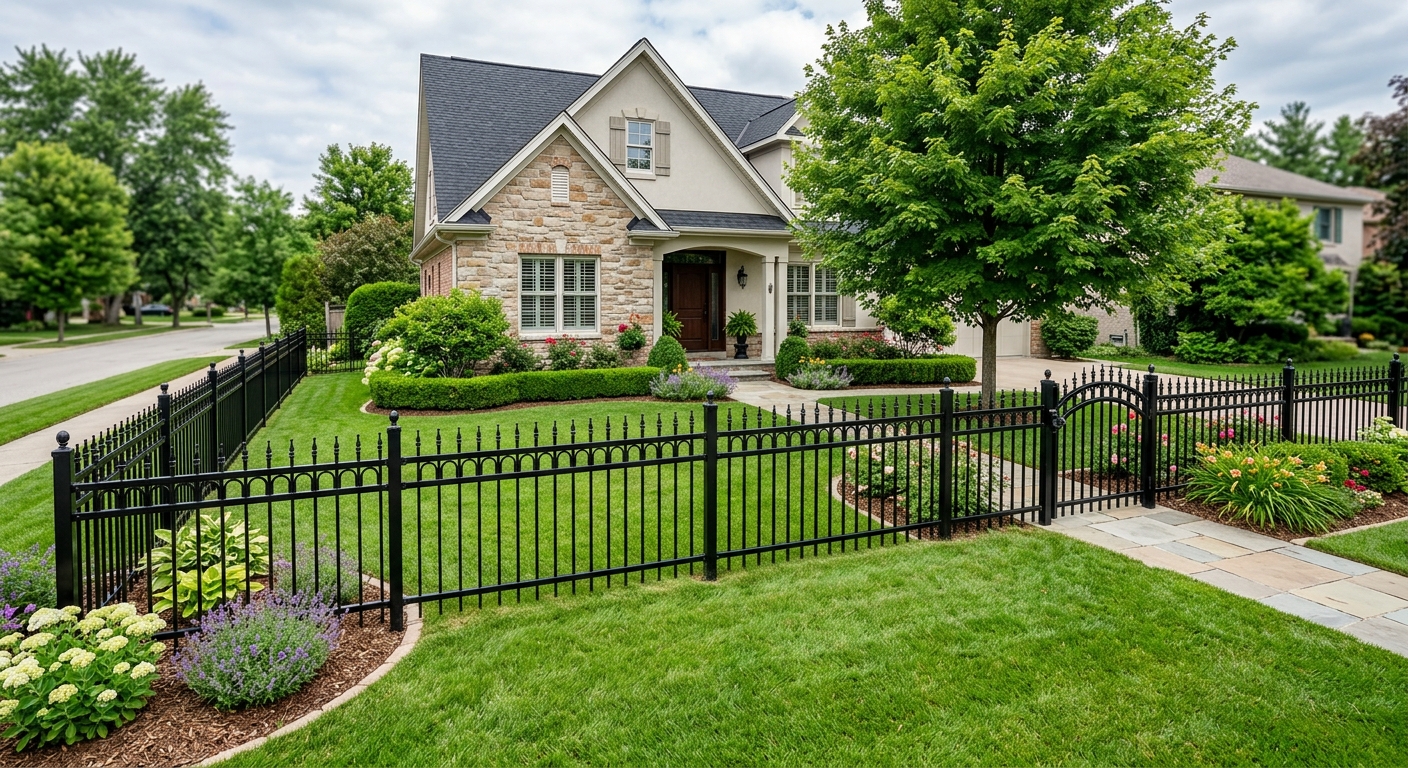
Fencing options and costs in Sooke
Sooke homeowners often start fence planning because most local properties are detached homes—62.3% of dwellings are single-detached, and that kind of backyard setup creates consistent demand for privacy, pet safety, and garden boundaries. With 80.3% of households owning their homes (Statistics Canada, 2021 Census), many residents also tend to invest in longer-term upgrades rather than temporary repairs. That said, Vancouver Island and the Coast conditions shape what “good value” means here: Sooke gets frequent coastal wind off the Strait of Georgia, and winters are wet enough to punish poor installation. While the frost line on Vancouver Island is relatively shallow (about 45–60 cm), the real cost driver is still post depth—posts are commonly buried around 75–90 cm so they don’t heave and tilt over time. Wet soils, occasional rock pockets, and access constraints (driveway angles, narrow side yards near places like East Sooke Road corridors) add digging and alignment time, which affects contractor availability and final pricing.
In practice, you’ll see the widest swings between open styles (more forgiving in wind) and solid privacy fences (more “sail area,” requiring closer spacing and/or heavier posts). Material choice also changes how crews work: cedar and pressure-treated boards need careful fastening and top rails to resist warping; vinyl and PVC install faster but rely on correct post setting; metals typically cost more upfront but fare well in salt-air exposure. Use the table below to compare typical budgets and ongoing upkeep, then match the option to your privacy and maintenance goals.
| Material |
Lifespan |
Maintenance |
Privacy Rating |
Price per Linear Foot |
| Pressure-treated pine (standard wood) |
10–15 years |
Stain/seal every 2–3 years; periodic rail tightening |
7/10 (solid panels) |
$55 – $85 |
| Cedar (natural rot resistance) |
15–20 years |
Reseed/spot-stain; check for loose boards annually |
8.5/10 (solid panels) |
$75 – $110 |
| Vinyl / PVC (no-maintenance) |
20–30 years |
Wash with water/spray; replace occasional warped piece |
8–9/10 (solid privacy styles) |
$70 – $110 |
| Chain-link (galvanized steel) |
25–35 years |
Occasional tightening; keep plants trimmed |
3/10 (open mesh) |
$35 – $60 |
| Aluminum ornamental |
25–40 years |
Rinse; check gate hardware and hinges |
4.5/10 (semi-open) |
$80 – $140 |
| Composite / recycled material |
20–30 years |
Wash; inspect posts/fasteners |
8–9/10 (board-style composites) |
$95 – $150 |
Prices are estimates only and vary by project scope, site access and material selection.
What affects the price of fencing in Sooke
Two Sooke fence projects that look identical on paper can come in 30–50% different once you price real-world site conditions and installation method. On Vancouver Island and the Coast, labour and access time matter as much as material. Digging in wet ground, setting posts deep enough for moderate coastal frost, and lining panels against slopes can add hours. Availability can also vary between neighbourhoods around Langford and Sooke’s growth corridors, since crews often schedule multiple installs to reduce mobilization costs.
One of the biggest reasons quotes differ is frost-line-related post depth. Even though coastal frost is shallower than inland provinces, posts still need to be set below frost depth to prevent heaving and long-term leaning. In practice, that means typical residential posts are buried roughly 75–90 cm (often with concrete footings where soils are saturated or clay-rich). The result is longer posts, more excavation, more concrete, and sometimes disposal of excess spoil. By contrast, in cold Ontario and Alberta regions, deeper freeze lines commonly push posts to about 1.5–2.0 m into the ground—making concrete setting and material length a major cost driver there. You can see similar pricing logic here even if the depth isn’t as extreme.
Next is wind exposure. Coastal BC wind can catch solid privacy fences more than open styles, so heavier posts, closer post spacing, or vented designs can be necessary. For example, a cedar privacy fence might sit near the $75–$110 per linear foot range, while a chain-link option might land around $35–$60—yet the chain-link job can still cost more if it needs heavy tensioning hardware on long runs or if a slope requires stepped sections.
Local examples that frequently move a Sooke quote up or down include: (1) a sloped yard near West Coast Road requiring stepped/raked panels, (2) saturated winter soil that makes concrete-setting and hole stabilization necessary, and (3) removing an old fence that’s buried in roots or fastened to older posts. With 31.4% of homes built before 1981 (Statistics Canada, 2021 Census), it’s also common to find older rail systems that complicate matching heights, locating end posts, and removing compromised hardware—adding labour but improving the finished alignment.
| Price Factor |
Why It Matters |
Cost Impact |
| Fence length in linear feet |
Every material and labour line item scales with total length (posts, rails, fasteners, mesh/boards). |
High |
| Post depth required |
Determines post length, excavation volume, and whether concrete footings are recommended. |
High |
| Post setting method |
Concrete-set posts stabilize in wet/clay soils; gravel pack can reduce concrete use on better-draining sites. |
Medium–High |
| Material choice |
Vinyl/PVC and aluminum cost more per unit but can reduce maintenance and hardware corrosion risk. |
High |
| Gate count and type |
Gates need stronger framing, alignment checks, and often extra bracing to handle wind load. |
Medium–High |
| Grade and terrain |
Slope requires racked panels or stepped layout; uneven ground increases layout time and cut waste. |
Medium |
| Old fence removal and disposal |
Demolition, hauling, and disposal costs can be significant, especially with older pressure-treated boards. |
Medium |
| Permit fees and survey / property line locate |
Confirming boundaries and pulling any required paperwork protects you from encroachment issues. |
Low–Medium |
Permits & regulations in British Columbia
In British Columbia, fence rules depend on height, location, and local bylaws. As a practical benchmark, fences above a height threshold—often around 2.0 m (6.5 ft) at the rear and about 1.0–1.2 m (3–4 ft) at the front or corner—may require a building permit. Even when a permit isn’t triggered, you must keep the fence within your property lines and follow municipal setback requirements.
Before any digging, you should call for utility locates through the appropriate one-call system for your area (in BC, use BC 1 Call). Next, if you don’t already know your boundary lines, obtain a survey or have your property pins located so the fence doesn’t creep onto a neighbour’s lot or into a required setback. Where fencing is shared, line-fence responsibilities are governed by provincial line-fences legislation, so it’s smart to document where the fence sits and who owns/maintains which sections.
On contractor checks: to verify a British Columbia licence, liability insurance and workers’ coverage, ask for their certificate of insurance (COI) and confirm the work is covered. For workers’ compensation coverage, confirm they have the required provincial coverage for their trade activities (clearance letter or proof of active account). You can also verify business and contractor details through publicly available online registries, and request the original WSIB/WCB-style clearance documentation before work starts.
Choosing the right fence material for Sooke
Picking a fence in Sooke is mostly about matching material behaviour to coastal wind, wet winters, and how much maintenance you’re willing to do. Pressure-treated pine is the entry price option, but it typically needs staining or sealing every 2–3 years to reduce grey weathering and surface cracking. Cedar offers better natural rot resistance and a warmer look, but it still benefits from periodic maintenance and proper fastening so boards don’t twist. Vinyl/PVC is popular for low maintenance—wash it and move on—but it can become brittle if panels are stressed or if posts weren’t set correctly. Chain-link is usually the longest-life, lowest upfront option, yet it offers very limited privacy. Aluminum ornamental provides rust resistance and a clean finish, but it’s more about appearance and boundary definition than privacy. Composite/recycled products can provide solid privacy styles with less rot risk than untreated wood, but the upfront cost is usually higher.
Because Vancouver Island and the Coast use moderate coastal frost (about 45–60 cm), fence posts are commonly buried around 75–90 cm so they stay below frost influence. Concrete-set posts are often recommended where soils are saturated, clay-rich, or disturbed—especially on privacy fences with higher wind loads and on taller gates. In windier runs, solid panels can catch more air, so vented designs or closer post spacing can prevent sway and reduce stress on rails.
A simple cost example: upgrading from chain-link at roughly $35–$60 per linear foot to cedar at around $75–$110 per linear foot can be justified if you need privacy from wind-driven weather and neighbours’ yards. But if your priority is pet containment and long-term reliability with minimal upkeep, chain-link often wins the “best value” calculation—provided you keep vegetation trimmed and maintain tension hardware.
| Material |
Cold Tolerance |
Lifespan |
Annual Maintenance |
Best For |
Price Band |
| Pressure-treated pine |
Good (with proper installation and sealing) |
10–15 years |
Light inspection; plan staining every 2–3 years |
Budget privacy with willingness to maintain |
$55 – $85 |
| Cedar |
Good (coastal moisture managed) |
15–20 years |
Spot-stain/clean; check rails annually |
Natural look and strong rot resistance |
$75 – $110 |
| Vinyl / PVC |
Fair to good (avoid panel stress) |
20–30 years |
Wash/rinse; occasional hardware check |
Low maintenance privacy |
$70 – $110 |
| Chain-link |
Very good |
25–35 years |
Trim plants; tighten tension seasonally if needed |
Security/pet containment with low cost |
$35 – $60 |
| Aluminum ornamental |
Very good |
25–40 years |
Rinse; lubricate gate hardware as required |
Attractive boundary with airflow |
$80 – $140 |
| Composite / recycled |
Good (depends on fasteners and post setting) |
20–30 years |
Wash; inspect fasteners and post transitions |
Privacy without rot concerns |
$95 – $150 |
How to choose a fencing contractor in Sooke
Start with contractor verification, because fences are simple-looking but installation mistakes are expensive—especially when posts need to sit deep enough to resist coastal frost heave and wind stress. In British Columbia, ask for their business licence details (if applicable to their trade), then request a certificate of insurance showing general liability for your project. For workers’ coverage, confirm they have the required provincial workers’ compensation coverage; you should be able to receive a clearance letter or proof that their account is active. If they won’t provide documentation upfront, that’s a major warning sign.
Next, get 2–3 itemised written quotes rather than a lump sum. You want line items for posts and concrete/gravel, rails, boards/panels/mesh, gate hardware, excavation labour, permit administration (if needed), and disposal/haul-away. Read the scope: what’s excluded (existing fence removal, rock excavation, trimming shrubs, property-line locate, permit pulls)? Clarify whether disposal of old materials is included or billed separately. For warranty, separate the workmanship warranty from the product/manufacturer warranty, and ask if it’s transferable to future owners.
On payment: avoid paying more than 10–15% upfront. For the rest, use progress-based payments tied to milestones, and hold a portion until the final walkthrough confirms alignment, gate operation, and cleanup. Also require a start date and completion estimate in writing—Sooke weather windows can shift, so the schedule should reflect wet-dig risks and cure times for concrete-set posts.
- Ask for COI (liability) and confirm project is covered for fencing work.
- Request proof of active workers’ compensation coverage (clearance letter/proof).
- Verify the contractor’s business details through online registries before signing.
- Require itemised pricing: labour + materials + excavation + concrete/gravel.
- Confirm whether permit pulls are included or separately charged.
- Clarify property-line locate/survey responsibility if boundary is uncertain.
- Get the post depth plan (target depth and whether concrete footings are used).
- Ask how they handle slopes: stepped vs. racked panels and max height steps.
- Confirm gate framing is reinforced for wind exposure (hinge/bracing details).
- Set expectations for debris and disposal: included vs. extra charge.
- Review warranty length for workmanship and product; ask if transfer is allowed.
- Use a payment schedule: no more than 10–15% upfront; holdback until completion.
Red flags I commonly see with problematic fencing installs in Sooke: (1) quotes that don’t specify post depth or setting method, (2) “lump sum only” pricing with no allowance for rock/saturated soil, (3) refusal to provide insurance and workers’ coverage proof, (4) promises of instant completion without accounting for concrete cure/alignments, and (5) unclear responsibility for permits or property-line disputes.
Frequently asked questions — fencing in Sooke
What is the cost per linear foot for fencing in Sooke?
In Sooke, most installed fence projects commonly land within the regional price bands for Vancouver Island and the Coast. As a rule of thumb, chain-link fencing often sits around $35–$60 per linear foot, while vinyl/PVC typically comes in closer to $70–$110 per linear foot. Pressure-treated wood is usually the budget approach at roughly $55–$85 per linear foot, and cedar tends to fall near $75–$110 per linear foot depending on height and layout. Your exact rate changes with post depth (including frost-related burial), whether concrete footings are used, gate count, slope complexity, and site access—especially on wet or clay-rich yards. (Statistics Canada, 2021 Census)
Should I repair or replace my old fence in Sooke?
Often you can repair, but not always. In Sooke’s damp coastal conditions, the decision usually comes down to post stability and rail integrity. If the posts are still solid (no leaning) and the damage is limited to a few boards, repairs can be cost-effective. If you see rot at the base, multiple loose posts, or sagging panels after past storms, replacement usually makes more sense because new posts set correctly resist frost heaving and wind sway better. Also consider whether removal is easy: older fences built before 1981 are more likely to have outdated fasteners or buried wood sections, which increases removal and disposal time. When the structure is compromised, replacing typically reduces ongoing maintenance and future emergency board swaps.
How do I handle a fence dispute with a neighbour in British Columbia?
Start by getting clarity in writing. In British Columbia, fence responsibilities involving boundary lines are influenced by provincial line-fences legislation, but the practical part is making sure the fence location is correct. If there’s any doubt, order a survey or have property pins located—this helps prevent accusations caused by off-by-a-few-centimetres placements, which can happen on sloped lots. Communicate about who owns or maintains which sections, especially for shared fences. Don’t ignore the permit/property-line angle: in Sooke, fences that exceed height thresholds may need a permit, and bylaws govern setbacks. If you can’t resolve the issue, consult a professional who can advise on next steps; keep photos, measurements, and copies of any contractor estimates you obtained.
What fence style offers the best wind resistance in Sooke?
In Sooke and across Vancouver Island and the Coast, wind is a real factor, because solid panels can act like a sail. The most wind-tolerant options are usually open or vented styles: chain-link (open mesh) and aluminum ornamental (with airflow through pickets) tend to catch less wind pressure, so they often need less reinforcement than solid privacy fences of the same height. If you want maximum privacy, choose a design that’s built for wind load: reinforced posts, closer post spacing, and solid framing for gates. For privacy fences, wood, vinyl/PVC, and composite can perform well when posts are set properly below frost influence (commonly 75–90 cm in residential practice) and concrete footings are used where soils are wet or clay-rich.
How much does a fence cost in Sooke?
Fence cost in Sooke depends on linear footage, height, material, gates, and how difficult the site is to dig. If you’re budgeting for materials and installation, a common planning approach is to multiply your linear footage by the per-linear-foot range for your chosen option. For example, a chain-link fence may be around $35–$60 per linear foot, while vinyl/PVC is often $70–$110 per linear foot installed. Pressure-treated wood typically falls around $55–$85 per linear foot, and aluminum ornamental can be higher, often $80–$140 per linear foot. Wet soil, slope, rock pockets, old fence removal, and whether concrete-set posts are recommended can shift the final figure noticeably. For a specific project number, request an itemised quote with post-depth and setting details.
How deep should fence posts be for Sooke's frost?
For Sooke, you’re dealing with moderate coastal frost—shallower than many inland regions—but posts still need to be set below frost influence to prevent heaving and long-term leaning. In typical residential practice across Vancouver Island and the Coast, posts are often buried around 75–90 cm. That depth is designed to get below the active frost zone while considering wet soils. The exact depth should be confirmed by the installer based on your soil type, fence height, and whether concrete footings are used. If you’re setting taller privacy fences or adding heavy gates, contractors often recommend concrete-set posts to stabilize the foundation in saturated or clay-rich areas. Always ask for the planned post depth and setting method in your written scope.