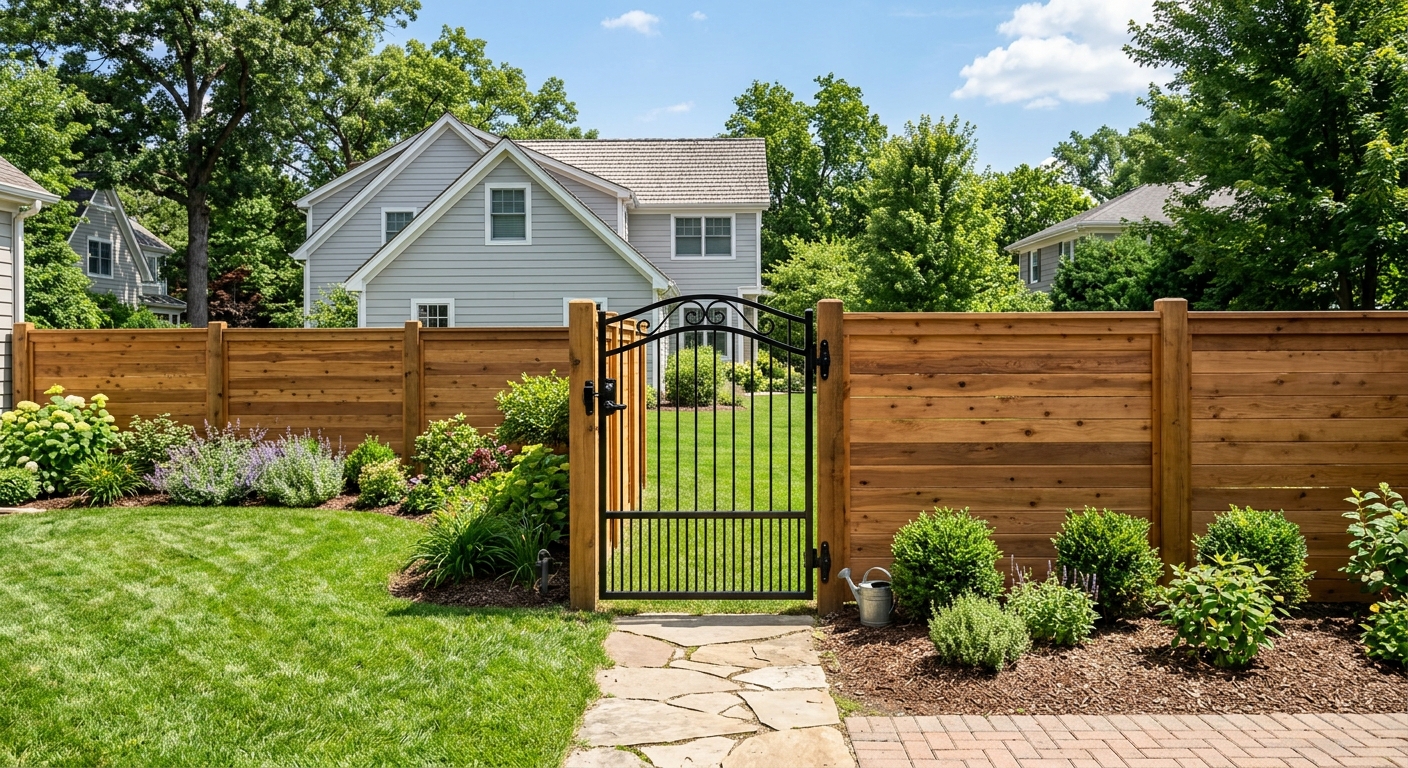
Fencing options and costs in Victoria West
Victoria West is a compact community on the west side of Vancouver Island, with 8,365 residents (Statistics Canada, 2021 Census). For homeowners, that density matters because fenced backyards and side-yard boundaries are common, and each detached property and growing family household is a potential fence project. If you’re seeing more fence work around the neighbourhoods by Cook Street and the Gorge-waterfront edge, you’re not imagining it—wind exposure and salty coastal air make material selection and install quality especially important in this part of the city.
On the Vancouver Island and Coast market, pricing is shaped by moderate coastal frost and frequent wind. Frost depth is relatively shallow (about 45–60 cm), but posts still need to be buried below frost depth to reduce heaving and long-term leaning—typically around 75–90 cm for typical residential runs, with concrete footings more common where soils are disturbed, wet, or clay-rich. That excavation-and-setting labour is a major reason contractor bids can differ even for the “same” fence style.
When comparing options, think in terms of privacy, corrosion resistance, and maintenance time. Solid privacy fences catch wind, so heavier posts or closer spacing can raise costs, while open styles like chain-link tend to tolerate higher exposure with standard spacing. Below is a practical range homeowners in Victoria West usually see for material and typical installation quality, before considering site access, gates, removal, and property-line work—then you can map your priorities to a realistic budget.
| Material |
Lifespan |
Maintenance |
Privacy Rating |
Price per Linear Foot |
| Pressure-treated pine (standard wood) |
8–15 years |
Stain/seal every 2–3 years; check for warping |
High (solid panels) |
$55–$85 |
| Cedar (natural rot resistance) |
15–25 years |
Seal/stain every 3–4 years; minor board replacement |
High (solid panels) |
$75–$110 |
| Vinyl / PVC (no-maintenance) |
25–35 years |
Rinse annually; inspect posts in extreme cold |
High (solid pickets/boards) |
$70–$110 |
| Chain-link (galvanized steel) |
20–30 years |
Occasional rinse; tighten hardware |
Low (open mesh) |
$35–$60 |
| Aluminum ornamental |
25–40 years |
Rinse; repaint only if required by colour choice |
Medium (ornamental gaps) |
$80–$140 |
| Composite / recycled material |
20–30 years |
Rinse; occasional stain/clean as recommended |
High (board systems) |
$95–$135 |
Prices are estimates only and vary by project scope, site access and material selection.
What affects the price of fencing in Victoria West
In Victoria West (and across Vancouver Island and the Coast), two bids for the same fence line can vary by 30–50% because costs aren’t just “materials”—they’re labour time, excavation difficulty, hardware selection, and how the contractor builds for coastal wind. One crew may budget a standard post spacing and minimal concrete; another may plan for wind and wet-soil stability with deeper holes and concrete-set posts, which reduces future leaning and repairs. Availability can also sway timelines and labour rates, especially during spring and early summer when many homeowners plan fence replacements.
Frost depth drives how deep posts must be set. Typical practice is to set posts about 4–6 inches below the design frost depth, so on Vancouver Island you often see around 75–90 cm of burial in normal residential conditions. In cold Ontario and Alberta, posts often need 1.5–2.0 m of ground penetration, which increases material costs for longer posts and labour for deeper excavation—so contractors familiar with those cold regions sometimes carry the same “durability mindset” into coastal BC projects where soils are saturated or clay-rich.
Wind exposure changes structural choices. Solid privacy fences can catch wind like a sail; to manage that, installers may use heavier rails, more robust posts, or tighter spacing. On the coast, wood can also fail faster without proper treatment due to wet cycles, so “cheapest wood” isn’t always cheaper when you price re-staining and board replacement.
Concrete examples from Victoria West: a backyard with clay-saturated spring soil commonly increases excavation time and pushes installers toward concrete footings; a narrow side yard behind townhomes can raise labour because access slows trenching and alignment. Meanwhile, a straightforward run on well-drained ground without old fence removal can keep costs closer to the wood band of $55–$85 per linear foot. If you need a higher-end finish like vinyl/PVC at $70–$110, the upfront premium often offsets future maintenance trips.
| Price Factor |
Why It Matters |
Cost Impact |
| Fence length in linear feet |
Labour and materials scale directly with total run |
Largest single driver; longer lines multiply every cost item |
| Post depth required |
Frost protection sets how long posts must be |
Deeper holes increase excavation time and post/material usage |
| Post setting method |
Concrete vs gravel pack affects stability in wet soils |
Concrete increases material and labour but reduces future leaning |
| Material choice |
Durability and corrosion resistance vary by product |
Vinyl and aluminum generally cost more than treated wood or chain-link |
| Gate count and type |
Gates require heavier hardware and precise alignment |
Drive-through double gates often add the most cost |
| Grade and terrain |
Slopes require stepped installs or raked panels |
More labour for measuring, cutting, and keeping a straight line |
| Old fence removal and disposal |
Haul-away, disposal fees, and salvage time |
Can add significant labour and dump costs |
| Permit fees and survey / property line locate |
Documentation and locating pins prevent boundary disputes |
May add fees and scheduling time, especially for complex lines |
Permits & regulations in British Columbia
In British Columbia, fence permit requirements usually depend on height and where the fence sits on the property. As a practical rule of thumb in many BC municipalities, fences above about 2.0 m (6.5 ft) at the rear and about 1.0–1.2 m (3–4 ft) at the front or corner often trigger a building permit requirement. Height alone isn’t the only factor—fences must also respect property lines and municipal setback bylaws, which is why locating your boundary before digging is so important.
Before any post holes are dug, call for utility locates through the province’s one-call process (BC 1 Call). You should also confirm your property line by getting a survey or locating your property pins, especially if you’re replacing an older fence that may have drifted over the years. If you’re building on or near a boundary, shared fence responsibilities are governed by BC’s line-fences framework, so it’s wise to document agreements in writing.
To verify a fencing contractor for your Victoria West project, do three checks: (1) licence/registration status using the relevant online registry where applicable; (2) liability insurance—ask for a current Certificate of Insurance showing fencing-related work; and (3) worker coverage for the contractor’s crews—WSIB/WCB coverage documentation should be provided. If the contractor can’t clearly supply these documents or gives vague answers, that’s a red flag before you pay anything.
Choosing the right fence material for Victoria West
Choosing the right material in Victoria West is about matching your priorities—privacy, low maintenance, budget, and lifespan—to coastal conditions. Vancouver Island and the Coast has moderate frost and frequent wind, plus wet cycles that can accelerate wood wear if the product and install aren’t right. For many homeowners, pressure-treated pine is the budget starter: it’s usually the most affordable upfront, but it needs staining/sealing every 2–3 years to reduce grey weathering and keep fasteners and boards performing. Cedar looks better and resists rot naturally, yet it still benefits from periodic sealing, especially where sprinkler overspray or poor drainage keeps boards constantly damp.
Vinyl/PVC delivers the “set it and forget it” feel—no routine staining—but it’s higher upfront and can become brittle in extreme cold if the system is poorly built or posts are not set properly. Chain-link is the longest-life low-cost option (and it tolerates wind well), but it won’t give true privacy unless you plan for privacy slats or climbing plants. Aluminum ornamental provides corrosion resistance and a clean look, but it won’t fully block sightlines.
For post depth: even with a shallow coastal frost line of about 45–60 cm, you still want posts set below frost depth (often ~75–90 cm). Concrete-set posts are often worth it on wet, clay-rich, or disturbed soils and around heavier gates, where stability matters.
A clear dollar example: if you can budget closer to the wood band of $55–$85 per linear foot, pressure-treated pine may work for a temporary-to-mid-term goal. If you’re planning for decades and want minimal upkeep, vinyl/PVC at $70–$110 is frequently justified because you’re trading higher upfront cost for fewer maintenance cycles.
| Material |
Cold Tolerance |
Lifespan |
Annual Maintenance |
Best For |
Price Band |
| Pressure-treated pine |
Good when properly sealed and fastened |
8–15 years |
Light inspections; stain/seal every 2–3 years |
Lowest initial budget, traditional look |
$55–$85 |
| Cedar |
Good; performs well with correct drainage |
15–25 years |
Seal/stain every 3–4 years; replace any warped boards |
Better appearance with natural rot resistance |
$75–$110 |
| Vinyl / PVC |
Good with proper system design |
25–35 years |
Rinse as needed; check hardware after harsh winters |
Low-maintenance privacy fencing |
$70–$110 |
| Chain-link |
Excellent in coastal conditions |
20–30 years |
Occasional rinse and tighten connections |
Security with airflow and cost control |
$35–$60 |
| Aluminum ornamental |
Excellent; metal is corrosion-resistant |
25–40 years |
Rinse; touch-up only if colour system requires |
Attractive boundary definition, mid-budget |
$80–$140 |
| Composite / recycled |
Good; stability depends on installation |
20–30 years |
Clean/rinse; follow manufacturer guidance |
Durable privacy with reduced rot concerns |
$95–$135 |
How to choose a fencing contractor in Victoria West
For a Victoria West fence, verify the contractor’s credentials before you let anyone dig. In British Columbia, ask for proof of licensing/registration where applicable, current general liability insurance, and worker coverage paperwork (WSIB/WCB documentation) for insured crews. You can also request clearance letters or coverage documents directly from the insurer/agency they use. Where to look: check the contractor’s details on the relevant online registry for professional/contractor status (if applicable), and review their Certificate of Insurance dates and scope of work—make sure fencing installation and site work are covered. If they can’t provide these documents promptly, it’s better to move on.
Next, get 2–3 itemised written quotes. Avoid “all-in” numbers that don’t show labour hours, materials, post depth assumptions, and what’s included for gates, line location, and disposal. A proper quote should separate: fence fabrication/materials, labour, excavation and post setting method, hardware type, and any permit/survey costs.
Check warranty details carefully. There should be a workmanship warranty (often for fence stability/installation defects) and a manufacturer warranty for the product itself. Confirm whether warranties are transferable if you sell your home. For payment, never pay more than 10–15% upfront; use a holdback until the job is complete and you’ve done a final walkthrough. Insist on a start date and completion estimate in writing so wind-driven scheduling changes don’t leave you guessing.
- Ask what post depth and frost allowance they use for Vancouver Island conditions.
- Confirm whether posts are concrete-set and what soils trigger concrete use.
- Request a site visit for measurements, slope notes, and access constraints.
- Get an itemised quote (labour + materials breakdown, not a lump sum).
- Clarify exclusions: permit pull, property-line locate, tree/shrub removal, and dump fees.
- Verify gate hardware quality and whether gates are shimmed/blocked properly.
- Confirm how they handle old fence removal and disposal.
- Check that the quote includes layout and alignment string lines.
- Ask about product colour/finish guarantees (powder-coat vs paint touch-ups).
- Review workmanship warranty length and what “defect” means in writing.
- Confirm payment schedule (max 10–15% deposit, holdback at completion).
- Ensure they provide a written schedule and contact plan for delays.
In Victoria West, common red flags include: (1) quoting without discussing post setting depth or frost considerations; (2) refusing to show insurance/coverage documents before you sign; (3) vague warranty language that doesn’t define workmanship vs product defects; (4) lump-sum quotes that omit disposal, permits, or locate work; and (5) asking for a large deposit upfront without a written schedule.
Frequently asked questions — fencing in Victoria West
Who owns and maintains a shared fence?
In British Columbia, shared or boundary fences are usually handled under the line-fences framework, but the exact responsibilities can depend on where the fence sits, who installed it, and whether the neighbours treat it as a shared structure. Practically in Victoria West, the best approach is to identify the property boundary (survey pins if needed) and then confirm whether the fence is entirely on one lot or spans the line. If it’s shared, maintenance obligations often split based on agreement, local practice, and the condition of the fence. Before starting, get clarity in writing: who pays for repairs, how replacement decisions are made, and how disputes are handled. If the fence is older or leaning, take photos now—date-stamped documentation helps when discussing maintenance and replacement.
How do I find my property line before fencing?
Before you dig in Victoria West, confirm the boundary to avoid encroachment disputes. Start by locating your property pins or markers—many homeowners can find them with prior survey info, but overgrown yards and older fences can make this harder. If pins are unclear, order a survey or request a locate/assessment so your contractor can set string lines accurately. Also call for utility locates through BC 1 Call before any post holes are dug, since you’ll be excavating below the surface and need to avoid hidden services. For shared-boundary situations, property-line certainty matters even more: a “close enough” fence can create ongoing maintenance arguments. Using a survey up front is often cheaper than moving posts after boards are already installed.
What's the most low-maintenance fence?
For low-maintenance, vinyl/PVC typically ranks highest for many Victoria West homeowners because it doesn’t require staining like wood. In this region, wet cycles and wind can make wood look tired quickly without regular upkeep, so the “wash and inspect” approach appeals to busy families. Expect routine care such as rinsing salt and grime off and checking hardware after harsh storms. If you want a budget-friendly low-maintenance alternative, chain-link is also very durable, but it won’t provide privacy by itself without additions like slats or growth-supporting planting. As a reference point, vinyl/PVC projects commonly fall around the $70–$110 per linear foot band in the Vancouver Island and Coast market, while chain-link can be lower, often aligning with $35–$60.
How tall can my fence be in Victoria West?
Fence height limits in British Columbia generally depend on your position on the lot (front/corner vs rear) and whether the fence triggers a permit requirement. A practical rule of thumb used in many BC contexts is that fences over about 2.0 m (6.5 ft) at the rear and around 1.0–1.2 m (3–4 ft) at the front or corner often require a building permit. Even if your fence height is under the threshold, it still must respect property lines and municipal setback bylaws. Because setbacks and exact thresholds can vary by municipality, the safest way for Victoria West homeowners is to confirm the plan with your local requirements before ordering materials. If you’re doing anything near a corner or boundary, ask your contractor to document the height and location in writing as part of the scope.
Should fence posts be set in concrete here?
Often, yes—especially when stability is critical. On Vancouver Island and the Coast, coastal frost is moderate (about 45–60 cm), but posts still need to be set below frost depth to prevent heaving and long-term leaning. That frequently means buried posts around 75–90 cm, and concrete-set posts are commonly recommended when soils are wet, clay-rich, disturbed, or when you’re installing heavier privacy panels and gates. Concrete adds cost, but it can reduce future leaning repairs and callbacks. A well-built fence with proper post depth and correct setting method is typically the best value over time, even if it nudges pricing toward the mid-range wood or vinyl bands (for example, $55–$85 for standard treated wood projects). For lighter open styles, some installers rely on gravel pack methods where conditions allow—but it should be site-specific, not one-size-fits-all.
What's the best fence for privacy?
For privacy in Victoria West, solid-panel systems usually perform best, typically using cedar, pressure-treated wood, vinyl/PVC, or composite boards. Privacy depends on having a close picket/board spacing and a layout that blocks sightlines, and wind exposure is why sturdier framing and proper post setting matter here. Vinyl/PVC is popular for privacy because it holds up with minimal maintenance, but extreme cold can cause brittleness issues if the system isn’t installed correctly—so post depth and hardware matter. Cedar gives excellent appearance and natural rot resistance, though it still needs periodic sealing. If you’re balancing cost and performance, pressure-treated wood projects commonly land around $55–$85 per linear foot, while vinyl/PVC often sits around $70–$110. If wind is a concern, ask about post spacing and rail sizing so the fence stays straight through wet winters and windy coastal cycles.