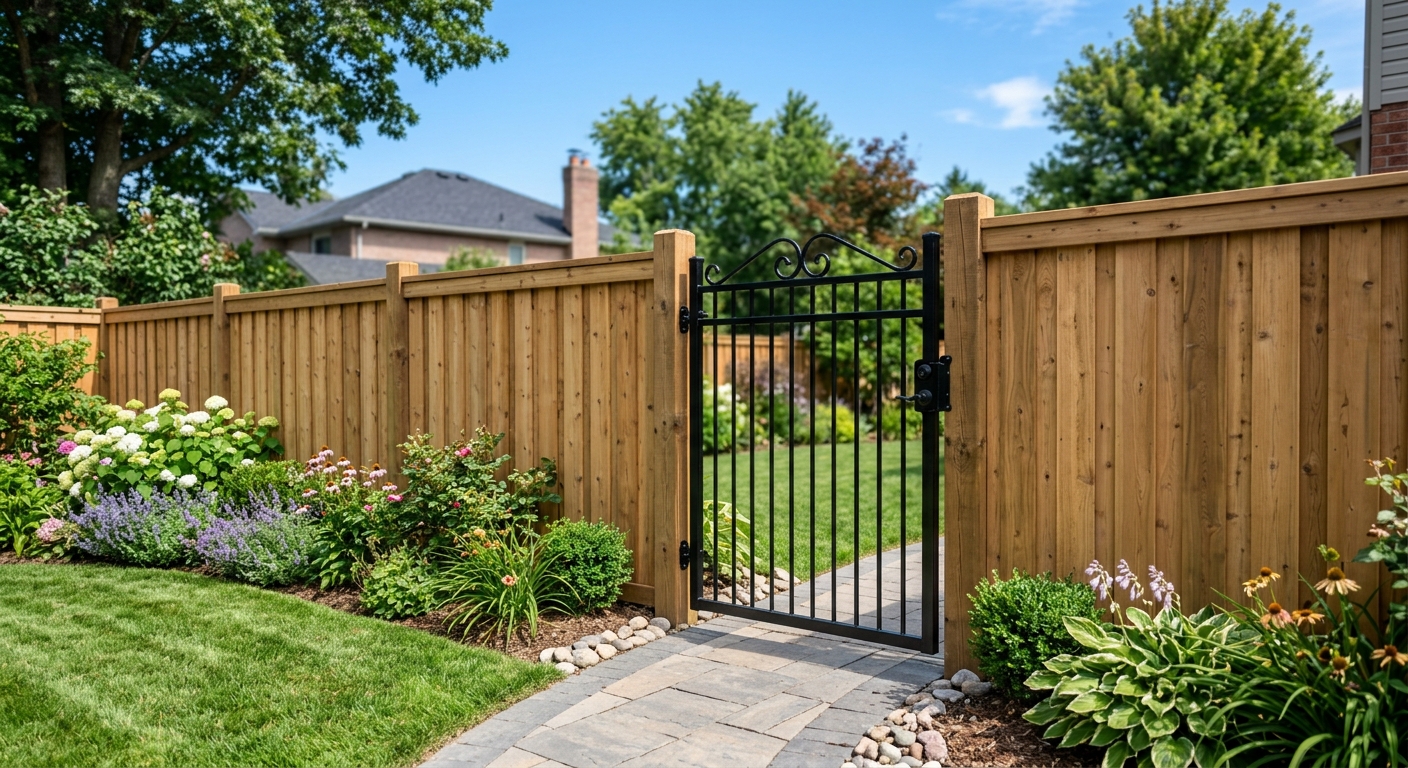
Fencing options and costs in South Pender Harbour
South Pender Harbour is a small waterfront community (population 1,187 per Statistics Canada, 2021 Census), so most fencing jobs come from repeat customers, local trades networks, and homeowners on long-standing lots who want practical upgrades. With fewer new builds than big-market hubs, demand is often concentrated around streets and bayfront areas where properties are older and yard boundaries are more likely to need replacing. In a neighbourhood like Garden Bay Road / waterfront lanes (where wind and salt spray can be factors), fence longevity and maintenance planning matter as much as the upfront price.
In the Lower Mainland–Southwest, pricing is shaped by mild but not trivial frost and wind. Even though coastal BC winters are milder than interior provinces, posts still need to be set below the local frost depth to reduce heaving, and wetter Fraser Valley–type soils can require deeper holes and more concrete for privacy panels, corners, and gates. That’s why two fences that look similar can differ by 30–50% when one yard is sloped, access is tight, or the ground stays wet—labour intensity rises, not just material cost.
Contractor availability also plays a role. When crews are booked with siding, deck, and fence backlogs, installs may take longer and mobilization costs increase. For planning purposes, the broad regional installed price bands are: chain-link is the lowest-cost option, wood typically sits mid-range, and vinyl/PVC and metal are higher due to material and structural requirements. Use the comparison below to ballpark your budget, then refine it with an itemised quote.
| Material |
Lifespan |
Maintenance |
Privacy Rating |
Price per Linear Foot |
| Pressure-treated pine (standard wood) |
10–15 years |
Stain/seal every 2–3 years |
Medium (lattice option: high) |
$55–$95 |
| Cedar (natural rot resistance) |
15–25 years |
Light stain/seal every 3–4 years |
High (solid board) |
$70–$125 |
| Vinyl / PVC (no-maintenance) |
20–30 years |
Wash as needed; inspect latches |
High (solid picket/board) |
$75–$130 |
| Chain-link (galvanized steel) |
25–40 years |
Occasional tension checks |
Low (privacy slats optional) |
$30–$55 |
| Aluminum ornamental |
25–40 years |
Rinse/clean; repaint only if damaged |
Low to Medium |
$90–$170 |
| Composite / recycled material |
20–30 years |
Wash; no staining |
Medium to High (depends on style) |
$85–$150 |
Prices are estimates only and vary by project scope, site access and material selection.
What affects the price of fencing in South Pender Harbour
In South Pender Harbour and across the Lower Mainland–Southwest, fencing quotes can differ by 30–50% even when the visual end result is similar. The biggest reason is that your “same fence” often isn’t the same installation: longer labour time, heavier post setting, and different materials for wind resistance or rot protection. British Columbia pricing is also influenced by coastal availability of trained crews and the cost of hauling materials and disposing of old sections—if a yard is narrow or there’s slope and wet ground, crews spend more hours per linear foot.
Post depth is the classic driver. Frost still requires posts to be set below the design frost depth; a practical rule of thumb is setting below grade by roughly 4–6 inches beneath the frost line, which means deeper holes and longer posts. In colder parts of the broader Canadian climate, you’ll sometimes see 1.5–2.0 m embeds, and while coastal BC is generally shallower than Ontario and Alberta, South Pender Harbour installs commonly go deeper than the absolute minimum—especially where soil stays moist. That’s one reason you may see a wood fence land closer to $55–$95 per linear foot rather than the low end.
Wind exposure changes panel design and labour too. Coastal BC is mild, but wet conditions accelerate wood rot if the wrong treatment is used, so contractors may recommend cedar or concrete-set details for corners and gates. Chain-link can stay closer to $30–$55, but privacy slats or thicker windscreens can push it upward.
Concrete examples: (1) a gate with a double-leaf drive-through often needs heavier corner posts and more concrete to keep alignment; (2) replacing an older fence in saturated soil may require extra excavations and a gravel pack plan before setting posts; (3) steep yards near the waterfront may require stepped rails or raked top rails, increasing fitting time and materials. With South Pender Harbour’s mix of older lots and coastal weather exposure, planning for those site realities helps you avoid surprises.
| Price Factor |
Why It Matters |
Cost Impact |
| Fence length in linear feet |
Most labour and materials scale directly with length |
High (primary driver) |
| Post depth required |
Frost and heaving risk determine hole depth and post length |
Medium to high |
| Post setting method |
Concrete vs gravel pack changes material, time, and settlement risk |
Medium |
| Material choice |
Vinyl/PVC and cedar have higher material costs and structural needs |
High |
| Gate count and type |
Hinges, latches, bracing, and heavier posts raise complexity |
Medium to high |
| Grade and terrain |
Slope requires raked/stepped systems and more cutting/fit |
Medium |
| Old fence removal and disposal |
Hauling and dump fees can be significant |
Medium |
| Permit fees and survey / property line locate |
Locates reduce dispute risk; permits add administrative time |
Low to medium |
Permits & regulations in British Columbia
In British Columbia, fences may require a building permit depending on their height and location. A common threshold homeowners run into is around 2.0 m (6.5 ft) for rear yards and about 1.0–1.2 m (3–4 ft) for front yards or corners—exact requirements can vary based on local bylaws and how the fence relates to streets or lanes. Regardless of permit needs, your fence must stay within your property lines and follow applicable setbacks.
Before digging post holes, you must arrange utility locates. In BC, homeowners and contractors typically use BC 1 Call to mark underground services; marking protects you from major hazards and avoids costly delays. Also consider getting a survey or at least a property pin/locate confirmation before installation; it’s one of the fastest ways to prevent encroachment disputes with a neighbour.
Shared fence ownership is handled under provincial line-fence principles. If you’re replacing a boundary fence, confirm who owns the fence sections and how costs will be split before work begins.
To verify a contractor before they start: check for a British Columbia business licence (where applicable), request proof of general liability insurance with an expiry date and appropriate coverage limits, and ask about workers’ compensation coverage (WSBC/WCB clearance or equivalent documentation). A good contractor will provide a certificate of insurance upon request and will usually have the clearance readily available. For the homeowner, the most practical approach is to review dates, confirm the legal entity on paperwork matches the quote, and keep copies for your records.
Choosing the right fence material for South Pender Harbour
Choosing a fence material in South Pender Harbour is mostly about balancing privacy, maintenance, and how well the system tolerates coastal wet conditions and wind. Pressure-treated pine is typically the budget-friendly entry point, but the trade-off is surface weathering and the need to stain or seal regularly—often every 2–3 years—to keep it looking good and to reduce premature decay. Cedar offers better natural rot resistance and usually looks warmer than pressure-treated pine, but it still benefits from periodic maintenance, especially near damp ground and shaded corners.
Vinyl/PVC is the low-maintenance crowd-pleaser: it generally won’t need staining, and it’s good for homeowners who want fewer ongoing tasks. However, contractors still need to design for structural movement and secure post hardware; in extreme cold snaps, vinyl can become brittle if the system is underbuilt. Chain-link is the most economical long-term option and is very durable, but it won’t provide privacy unless you add slats, a screen, or switch to a higher-privacy design.
For Lower Mainland–Southwest installs, posts often still require deeper embeds than a “bare minimum” because of frost heaving risk, even though coastal BC frost effects are milder than interior provinces. Concrete-setting is frequently used at corners, gate posts, and sometimes at intermediate posts where soils are wet or uneven to keep alignment.
Here’s a practical dollar example: if a pressure-treated privacy fence is quoted in the $55–$95 range per linear foot, switching to vinyl can land around $75–$130 per linear foot. That premium is usually justified when you want true no-stain maintenance and longer-term appearance—especially if you’d otherwise spend weekends on sealing at least every few years.
| Material |
Cold Tolerance |
Lifespan |
Annual Maintenance |
Best For |
Price Band |
| Pressure-treated pine |
Good when properly treated and detailed |
10–15 years |
1–2 small checks; plan staining every 2–3 years |
Budget privacy with routine upkeep |
$55–$95 |
| Cedar |
Good; performs well in wet coastal exposure |
15–25 years |
1–2 inspections; stain/refresh every 3–4 years |
Natural look and better rot resistance |
$70–$125 |
| Vinyl / PVC |
Very good; can be sensitive if under-supported |
20–30 years |
Wash as needed; check hardware seasonally |
Low-maintenance privacy |
$75–$130 |
| Chain-link |
Excellent; steel remains stable in cold |
25–40 years |
Minimal; tension and post alignment checks |
Security and long service life |
$30–$55 |
| Aluminum ornamental |
Excellent; resists rust in coastal damp |
25–40 years |
Rinse and spot-touch only if needed |
Attractive curb appeal and security |
$90–$170 |
| Composite / recycled |
Good; stable in damp and cold |
20–30 years |
Wash; check fasteners |
Clean look with reduced upkeep |
$85–$150 |
How to choose a fencing contractor in South Pender Harbour
When you’re hiring a fencing contractor in British Columbia, verify licensing and insurance before you sign—especially for an outdoor project where excavation, lifting, and driving posts can cause claims. For liability, ask for a current certificate of insurance (general liability) and confirm the coverage limits and expiry date. For worker coverage, request proof of WSBC/WCB clearance (or the appropriate documentation they carry for the project). If they can’t produce certificates quickly, that’s a warning sign.
Next, get 2–3 itemised written quotes. You want a labour-and-materials breakdown (posts, rails, pickets/panels, concrete, gate hardware, fasteners, and surface finishing), not a single lump-sum number. Ask whether the quote includes excavation, concrete setting where required, and disposal of old fencing. Also confirm if a permit pull is included (when required), and whether the contractor will provide a locate plan or guidance for property line verification.
Warranty matters for two reasons: workmanship can fail at post alignment and fastening, and products can have manufacturing defects. Ask for the workmanship warranty length, whether it covers removal and replacement, and if the manufacturer warranty is included and transferable to you.
For payment scheduling, avoid front-loading the risk. A common safe approach is to keep upfront deposits around 10–15%, with the remainder due after key milestones. Use a holdback until the job is complete and any finishing items are confirmed. Finally, insist on a written start date and completion estimate so schedule slips don’t become “extras” later.
- Confirm the quote includes fence length in linear feet and number of posts.
- Ask whether corner, end, and gate posts are concrete-set and where.
- Request material specs (pressure-treated grade, cedar grade, vinyl type, hardware).
- Get a detailed gate quote (single vs double, latch type, swing clearance).
- Ensure old fence removal and hauling/dump fees are either included or clearly excluded.
- Verify utility locates process is discussed and scheduled before digging.
- Ask about property line verification method (survey/locate guidance).
- Check whether slope is handled with raked panels or stepped rails (and how it’s priced).
- Confirm warranty coverage for workmanship and product/manufacturer defects.
- Verify insurance certificate limits and coverage dates before signing.
- Request proof of WSBC/WCB coverage (clearance/documentation).
- Keep deposits to 10–15% and hold back until final walk-through.
Red flags in South Pender Harbour: (1) a contractor who won’t provide insurance or WSBC/WCB documentation on request; (2) quotes that don’t list post quantity, embedment approach, or gate hardware details; (3) “same price” revisions that change materials without explanation; (4) asking for large upfront payments (well beyond 10–15%); (5) starting excavation without confirming utility locate marks or talking through frost/soil setting method for posts.
Frequently asked questions — fencing in South Pender Harbour
How do I find my property line before fencing?
Before you build in South Pender Harbour, confirm your boundary so you don’t accidentally place fence posts on a neighbour’s land. Start by locating your property pins (or arranging for a property pin locate) and check your survey documents if you have them. If you’re uncertain, a surveyor can mark the boundary and provide a reference plan that contractors can use for layouts. It’s also smart to ask your fence contractor how they plan to stake the line and how they’ll document the layout before digging. Because fences often fall under height rules and setback bylaws in BC, knowing the exact boundary helps avoid permit complications and neighbour disputes (Statistics Canada, 2021 Census notes the area’s small population means relationship-focused resolutions matter).
What's the most low-maintenance fence?
In British Columbia, the lowest-maintenance options are usually vinyl/PVC and properly installed chain-link with good tension and hardware. Vinyl typically avoids staining and yearly repairs; you’ll mainly do occasional cleaning and hardware checks. If your goal is privacy with minimal upkeep, vinyl privacy panels are often the easiest “set it and forget it” choice in coastal wet conditions. Budget-wise, that choice commonly prices around $75–$130 per linear foot for installed work, while chain-link is often much lower at $30–$55 but won’t give privacy unless you add slats or screens. Cedar and pressure-treated wood can be low-effort too, but they usually require periodic staining/sealing to prevent premature weathering and rot in damp, shaded areas.
How tall can my fence be in South Pender Harbour?
Fence height limits in BC depend on whether it’s in a front/corner location or the rear yard, and permits may be required at certain heights. A common guidance point is that rear fences around 2.0 m (6.5 ft) can trigger permit requirements, while front or corner fences often fall around 1.0–1.2 m (3–4 ft). South Pender Harbour homeowners should also factor in setbacks and visibility considerations. Because bylaw specifics can vary by municipality and property context, the best practice is to ask your contractor to confirm whether your planned height and location require a permit before installation. Your contractor should also describe any required documentation and whether they include permit pulling in the quote.
Should fence posts be set in concrete here?
It depends on your soil, frost heaving risk, and which posts are involved. In the Lower Mainland–Southwest, even with mild coastal winters, posts still need to be set below the design frost depth to reduce heaving; that often means deeper holes and careful setting. Concrete is commonly used for corner posts, end posts, and gate posts because these areas experience the most stress and movement. On wetter or uneven sites near South Pender Harbour’s coastal influence, concrete-set posts can improve alignment and longevity versus a simple gravel pack. For straight runs on stable soil, some jobs may use gravel or a non-concrete method—your contractor should explain the recommended approach after inspecting your ground conditions and frost depth assumptions.
What's the best fence for privacy?
The best privacy fence is usually one with solid panels—like cedar board-on-board, vinyl privacy styles, or pressure-treated pine with proper board spacing. In South Pender Harbour, privacy panels also need bracing and secure post setting because wind can push on large solid surfaces, and wet conditions can degrade wood if it isn’t detailed correctly. Vinyl privacy typically ranks high for long-term privacy with low upkeep, commonly within $75–$130 per linear foot installed. Cedar privacy is durable and attractive, often landing in a similar mid-to-upper range depending on height and board style. Pressure-treated pine can be the most budget-friendly privacy path, often around $55–$95, but plan for regular staining/sealing so it doesn’t grey or deteriorate faster in shaded, damp spots.
How do I compare fencing quotes?
Comparing quotes is easiest when they’re itemised and comparable. Ask each contractor to quote the same fence height, exact linear feet, number of posts, and the same gate count/type (walk-through vs double). Confirm what’s included: labour, materials, post setting method (concrete vs gravel pack), hardware grade, and whether old fence removal and disposal are included. In BC, also check whether permit pulling is included when your planned height triggers it, and whether utility locate steps are part of their process before digging. Finally, verify paperwork: insurance certificate and WSBC/WCB clearance documentation. If one quote is much cheaper, it may be using lighter hardware, fewer posts, or a different post embedment approach—those shortcuts can show up as leaning panels later.