Fencing options and costs in Westridge
Westridge homeowners often ask what fencing will cost, and the short answer is that your quote will depend on both your material choice and how your yard performs in the Lower Mainland–Southwest climate. Westridge is small—population was 2,521 in 2021 (Statistics Canada, 2021 Census)—so most fencing work comes in clusters when crews are already servicing nearby Surrey, Burnaby, Richmond, or Abbotsford-style neighbourhoods. The local mix of housing also matters: detached properties are the dominant driver of demand because they typically include wider side yards and more perimeter line to cover, which increases linear-feet pricing.
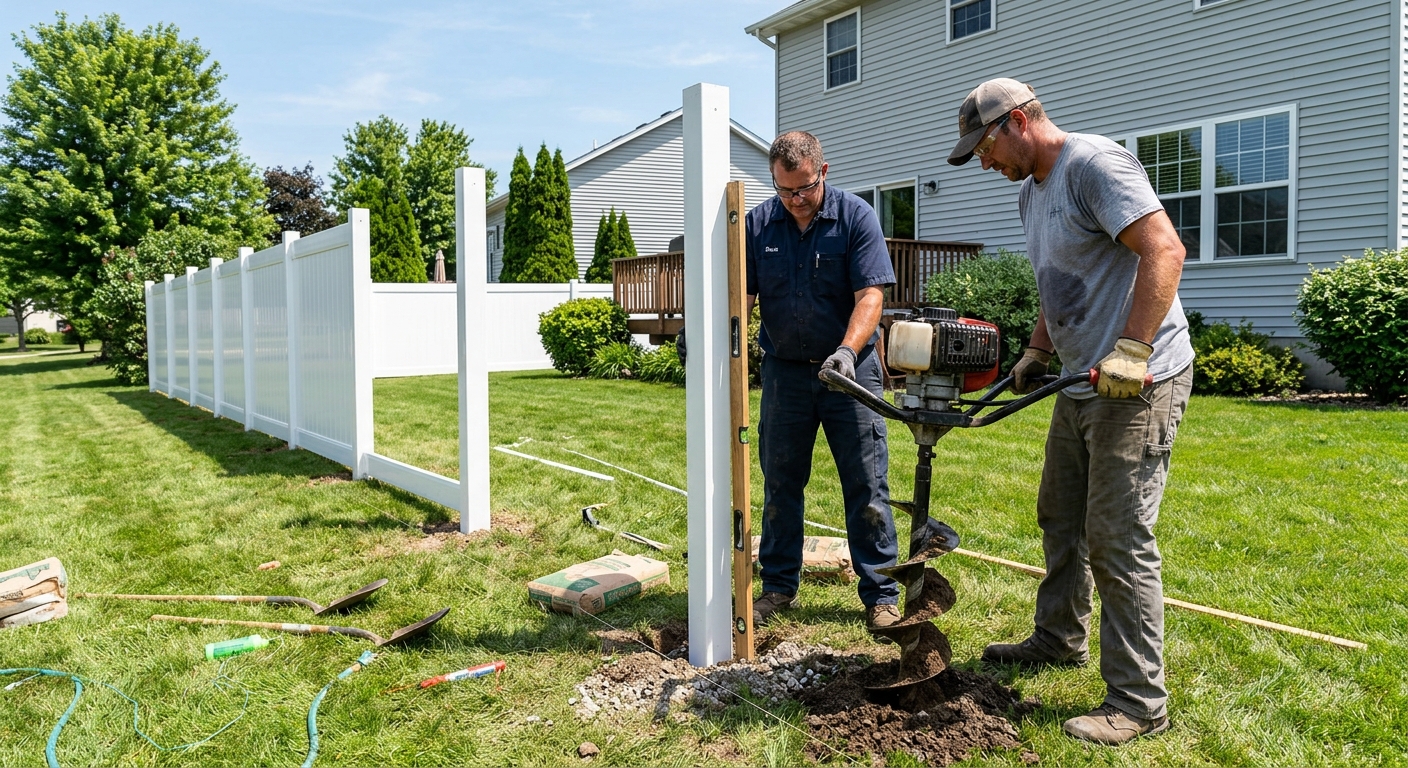
In the Lower Mainland–Southwest, frost is usually mild but not trivial, and wind can still be a factor on more exposed lots. Even with shallower coastal frost than the Prairies, posts still need to be set below the design frost depth to limit heaving—often meaning deeper holes and more concrete for corner posts, gate posts, and privacy panels. Wetter Fraser Valley–type soils can also soak up more labour time during excavation and disposal, which is why two fences that look identical on paper can price 30–50% differently.
In Westridge, fencing tends to be especially in demand along neighbourhood edges where privacy and wind protection are priorities—commonly around the more exposed perimeter properties near local commercial spines and school-area crossings, where driveways and boundary lines are tightly managed. With those realities in mind, here’s a practical comparison of the main options and typical installed cost bands to help you shortlist materials before you request a detailed quote.
| Material |
Lifespan |
Maintenance |
Privacy Rating |
Price per Linear Foot |
| Pressure-treated pine (standard wood) |
10–15 years |
Stain/seal every 2–3 years; tighten hardware as needed |
High (solid board patterns) |
$55–$95 |
| Cedar (natural rot resistance) |
15–25 years |
Light stain/maintenance every 3–4 years (varies by finish) |
High (board and close-pick styles) |
$70–$115 |
| Vinyl / PVC (no-maintenance) |
25–35 years |
Rinse occasionally; inspect for warping/cracks after extreme cold |
High (solid privacy panels) |
$75–$130 |
| Chain-link (galvanized steel) |
20–30 years |
Minimal; occasional tensioning and coating touch-ups |
Low–medium (privacy slats optional) |
$30–$55 |
| Aluminum ornamental |
25–40 years |
Wash yearly; check for gate alignment |
Low–medium (decorative pickets) |
$90–$170 |
| Composite / recycled material |
20–30 years |
Low; inspect joints and keep surface clean |
Medium–high (solid designs) |
$105–$160 |
Prices are estimates only and vary by project scope, site access and material selection.
What affects the price of fencing in Westridge
In Westridge and across the Lower Mainland–Southwest, fence quotes can swing by 30–50% for the same visual goal (for example, “a 6 ft privacy fence”), mainly because crews price for site conditions, fastening standards, and how posts are engineered for frost movement and wind load. Even within British Columbia, “flat and dry” yards often come in lower than “wet, sloped, and tight access” properties, because excavation, rework, and disposal time are real cost drivers. For homeowners comparing options, it helps to remember that labour + install method can change as much as the material itself.
First, the frost line depth sets how deep posts must be set. In much of Canada, published guidance often lands around minimum embedment near 3 feet; in cold Ontario and Alberta, that can mean roughly 1.5–2.0 m into the ground with concrete setting and longer posts—raising both material and labour costs. In coastal BC, the frost is shallower, but contractors still commonly go deeper than the bare minimum and set concrete for privacy panels, corner posts, and gates to reduce heaving and future sag. Second, wind exposure matters: even if winds aren’t as constant as the Prairies, taller solid boards catch wind loads, so you’ll see tighter spacing and stronger rails on projects closer to exposed lot edges.
Two common Westridge examples that change the price: (1) wetter soils often require deeper holes and more concrete volume for stable posts; (2) sloped yards usually need stepped or raked panels, which increases layout time and waste. A practical comparison: if a chain-link run might land near $30–$55 per linear foot, switching to vinyl privacy at about $75–$130 per linear foot is often justified because you’re paying for sturdier framing, heavier posts at corners, and panel systems designed to resist wind and moisture cycling.
| Price Factor |
Why It Matters |
Cost Impact |
| Fence length in linear feet |
Most costs scale directly with perimeter length, including posts, rails, and labour trips. |
High |
| Post depth required |
Frost movement means deeper embedment and longer posts; hole depth drives concrete quantity and labour time. |
Medium–High |
| Post setting method |
Concrete setting stabilizes posts in wetter soils; gravel pack or driven posts can be cheaper but depend on soil. |
Medium |
| Material choice |
Vinyl/PVC and composite cost more to fabricate and often require stronger framing systems. |
High |
| Gate count and type |
Drive-through and double gates require heavier posts, hinges, and latching hardware. |
Medium–High |
| Grade and terrain |
Slopes require stepped sections, raked rails, and extra layout time. |
Medium |
| Old fence removal and disposal |
Hauling, dump fees, and unexpected rot or buried posts add labour. |
Low–Medium (can be High on heavy demolition) |
| Permit fees and survey / property line locate |
Some heights and locations trigger permit needs; a survey can prevent boundary disputes and rework. |
Low–Medium |
Permits & regulations in British Columbia
In British Columbia, fences above a height threshold often require a building permit—commonly around 2.0 m (6.5 ft) at the rear and about 1.0–1.2 m (3–4 ft) at the front or corner, depending on municipal rules. Regardless of permits, your fence still must respect the property line and any municipal setback bylaws. If you plan to build near a corner, lane, or street-facing boundary, the front/corner height limits are usually where projects get delayed because a fence layout that works in the backyard may need different panel heights at the front.
Before you dig any post holes, arrange utility locates. Use the appropriate one-call process for your area to avoid striking buried services (e.g., BC 1 Call). Also obtain a survey or property line locate so you know where your pins are before the first shovel hits the ground—this is one of the most common causes of costly rework and neighbour disputes. Shared fence ownership rules are governed by provincial line-fences legislation, which can affect who pays for repairs and replacement when a boundary fence is involved.
Step-by-step to verify your contractor in Westridge:
- Ask for the contractor’s licence (and licence number if applicable) and confirm it via the BC business/licensing registry or the contractor’s published profile.
- Request a certificate of insurance showing liability coverage (and confirm the coverage is current).
- Ask for proof of coverage for workplace injuries (WSBC coverage, where applicable), or the contractor’s clearance documentation.
- Verify the certificate name matches the legal entity doing the work.
Typically requiring a permit: building fences over the common height thresholds (especially rear near 2.0 m and lower front/corner limits) and any fence that triggers local building rules. Typically not requiring a permit: lower fencing that stays within the permitted height limits and doesn’t affect required setbacks, though you should confirm with your municipality for your specific address.
Choosing the right fence material for Westridge
The best fence material for Westridge comes down to your priorities—privacy, low maintenance, budget, and lifespan—then matching that to the local wet-winter reality of coastal BC. Pressure-treated pine is usually the budget-friendly pick, but it needs staining or sealing every 2–3 years to slow grey weathering and protect fasteners and end-grain. Cedar looks great and resists rot better than pine, but it still benefits from periodic maintenance to keep colour uniform and prevent premature surface breakdown. Vinyl/PVC is popular for homeowners who want to “set and forget,” because it requires little more than rinsing, but it can become brittle if panels are installed with poor framing or if extreme cold stresses components. Chain-link is the most economical and long-lasting, but it won’t give you true privacy unless you add slats or a secondary screening layer.
For privacy-focused yards, posts and framing matter as much as the material. Even with milder BC frost, posts generally still need to be set below frost movement potential to prevent heaving—often meaning concrete-set corner posts, gate posts, and carefully set line posts. In wetter soils, concrete setting is frequently used for privacy panels because it helps stability during freeze-thaw and rainy-season soil saturation. Wind and snow load considerations show up most in taller solid fences: you’ll typically see tighter rail spacing and stronger posts to avoid sagging and panel waviness.
As a concrete dollar example: if a chain-link boundary run is quoted around $30–$55 per linear foot, moving to vinyl privacy at roughly $75–$130 per linear foot can be justified when you want day-to-day comfort—visual screening, wind buffering, and a finish that holds up in our wet season without repeated staining.
| Material |
Cold Tolerance |
Lifespan |
Annual Maintenance |
Best For |
Price Band |
| Pressure-treated pine |
Good (needs proper sealing and hardware) |
10–15 years |
2–3 year stain/seal schedule; quick checks for loose pickets |
Budget privacy and traditional look |
$55–$95 |
| Cedar |
Good (naturally rot-resistant) |
15–25 years |
Light stain/maintenance about every 3–4 years |
Longer-lasting natural appearance |
$70–$115 |
| Vinyl / PVC |
Very good when installed with correct framing and expansion practice |
25–35 years |
Rinse/clean; inspect after extreme cold |
Low-maintenance privacy |
$75–$130 |
| Chain-link |
Excellent (galvanized steel durability) |
20–30 years |
Minimal; tension check and occasional coating touch-ups |
Security, pets, and cost control |
$30–$55 |
| Aluminum ornamental |
Excellent (powder-coated metal) |
25–40 years |
Wash yearly; lubricate hinges |
Attractive perimeter definition |
$90–$170 |
| Composite / recycled |
Good (varies by brand; best with solid post support) |
20–30 years |
Low; clean and inspect fasteners/joints |
Modern look with low maintenance |
$105–$160 |
How to choose a fencing contractor in Westridge
Choosing the right fencing contractor in Westridge starts with verification and then moves to how clearly they scope the work. In British Columbia, confirm the contractor’s business licensing status (and that they can legally contract in your area). Next, request liability insurance documentation—your goal is to see an up-to-date certificate of insurance naming the right legal entity. For workplace coverage, ask for proof of WCB/WSBC coverage; reputable contractors should provide clearance/coverage documents on request.
Then get 2–3 itemised, written quotes that break out labour and materials (posts, rails, pickets/panels, hardware, and disposal). You’re looking for clarity: what’s included versus excluded, such as permit pulls, utility locate costs, and whether haul-away is part of demolition. Scope gaps are where disputes happen—especially when contractors discover old post remnants, soft spots, or buried concrete that wasn’t shown in initial measurements.
Pay smartly. Avoid large upfront payments; a good rule is never more than 10–15% upfront, with the remainder tied to milestones. Hold back until you’re satisfied with line straightness, post stability, proper gates swing/alignment, and cleanup. For warranty, ask for two things: a workmanship warranty (how long they stand behind installation) and the manufacturer/product warranty (how long the material is guaranteed). Also ask if the warranty is transferable if you sell your home.
Finally, request a written start date and a completion estimate. Weather and excavation timing can shift, but your contract should still name a realistic window.
- Verify BC business/licence details and request the legal name on paperwork.
- Request a current certificate of liability insurance.
- Confirm workplace coverage (WSBC/WCB) with clearance documentation.
- Get itemised quotes: labour, materials, hardware, and disposal separated.
- Ask if permit pull is included (if your fence height likely exceeds local thresholds).
- Confirm utility locates are included or who schedules them.
- Ask how they handle slopes: stepped vs raked panels and who layouts levels.
- Clarify post setting method (concrete vs gravel pack) and where it’s used (corners/gates).
- Request gate hardware specs and load-rated hinges/latches for drive-through openings.
- Confirm removal of old fencing and disposal costs are included.
- Review warranty terms in writing for workmanship and product (transferability if you sell).
- Set payment schedule with a small deposit (10–15%) and holdback until completion.
Concrete red flags I see in Westridge: (1) quotes that won’t specify post depth or setting method; (2) no proof of insurance/coverage or hesitation to provide it; (3) lump-sum bids without line-item materials and labour; (4) “same fence price” assurances without a site walk for wet soil, slope, or gate hardware; (5) asking for large upfront payments before measurements and permits (if required) are confirmed.
Frequently asked questions — fencing in Westridge
How long does a wood fence last in Westridge?
In Westridge, a properly built wood fence typically lasts about 10–15 years for pressure-treated pine and roughly 15–25 years for cedar, assuming posts are set correctly and the fence is maintained. The Lower Mainland–Southwest’s wetter seasons mean moisture exposure is frequent, and grey weathering can happen faster if ends and fasteners aren’t sealed. The biggest longevity driver is how posts are embedded to resist frost movement, then how well the material is protected at the cut edges. If you’re budgeting, a pine fence is often priced within the wood band of about $55–$95 per linear foot installed; cedar usually moves you higher because of material cost but buys you better rot resistance. For best results in BC, plan on maintenance re-coating about every 2–3 years for pine and about every 3–4 years for cedar (depending on finish and sun exposure). (Statistics Canada, 2021 Census)
Who owns and maintains a shared fence?
Shared fence ownership in British Columbia generally depends on how the fence relates to the boundary and the provincial line-fences framework, rather than what a previous owner decided informally. Practically, if your fence sits on the lot line, neighbour expectations can vary—some properties treat it as shared and split repairs, while others assume the homeowner maintains their side. The safest approach in Westridge is to confirm boundary placement (survey or property line locate) and put expectations in writing if both parties agree to share costs. Maintenance responsibility usually follows ownership: if you own only your side, you’re responsible for your fence line elements; if it’s treated as shared, neighbours may split replacement and repairs. If there’s damage, start with documented photos, written proposals, and a clear cost breakdown from the contractor—itemised quotes reduce conflict. When fences exceed local height thresholds, permits may add time, so coordination is important before replacement. (Statistics Canada, 2021 Census)
How do I find my property line before fencing?
Before fencing in Westridge (or anywhere in the Lower Mainland–Southwest), you want to confirm where your pins are and whether your proposed fence alignment respects property lines and setbacks. Start by getting a survey or having a property line locate completed; many homeowners can identify pin locations, but pin verification is the step that matters when fences are close to corners or shared boundaries. You can also check your parcel records through your documentation and then mark proposed alignment on-site based on the locate results. This is especially important if your yard is sloped or if a previous fence was installed slightly off line—correcting it later can cost more in labour and materials. For accurate quoting, contractors should also measure from known reference points. If you install without confirming, encroachment disputes can force removal or redesign after the fact. In short: verify pins first, plan your fence line, then obtain permits if height thresholds apply. (Statistics Canada, 2021 Census)
What's the most low-maintenance fence?
For low maintenance in British Columbia, vinyl/PVC is often the top choice for privacy because it doesn’t need staining and it resists rot. Many homeowners like that it stays looking “finished” through wet seasons. However, “low maintenance” doesn’t mean “no care”—you should still rinse it periodically and check gates and hardware after storms. In the same region, chain-link is also very low maintenance because it’s galvanized and straightforward, but it typically offers poor privacy unless you add slats or screening. Aluminum ornamental is similarly low maintenance for appearance and rust resistance, but it’s not a privacy fence in the same way solid panels are. If you compare prices, vinyl privacy commonly lands in the $75–$130 per linear foot installed band, while chain-link can be around $30–$55 per linear foot—so the “maintenance savings” are really about time and upkeep preference versus upfront cost. (Statistics Canada, 2021 Census)
How tall can my fence be in Westridge?
Fence height limits in Westridge are set by municipal bylaws, and in British Columbia a permit may be required when you build above common thresholds—often around 2.0 m (6.5 ft) at the rear and about 1.0–1.2 m (3–4 ft) at the front or corner. That doesn’t mean every lot is identical, because setbacks and corner visibility rules can change what’s allowed. If you’re planning a tall privacy fence, ask your contractor to confirm your exact height and location details before work begins so you don’t end up with a need to redesign or lower sections. A practical strategy is to match privacy where you need it most (typically rear yard) and use a lower profile near the street-facing side to avoid permit friction. Your quote should also state whether permit pull is included if your planned height likely crosses the threshold. (Statistics Canada, 2021 Census)
Should fence posts be set in concrete here?
In Westridge, concrete setting is often recommended—especially for corner posts, gate posts, and privacy-panel runs—because it improves stability in wetter soils and helps resist movement from freeze-thaw cycles. While coastal BC has shallower frost than inland Canada, mild but real frost still means posts need to be embedded below the local frost movement potential. In practice, many contractors in the Lower Mainland–Southwest set posts deeper than the absolute bare minimum and use concrete where structural loads are highest. That said, not every situation requires concrete for every post: some soils may allow alternative methods like gravel pack or other engineered approaches, but it must match your yard’s drainage and soil conditions. If you want the best risk reduction for sagging and heaving, budget for concrete-set critical posts and stable embedment. This is also one reason solid privacy upgrades (like vinyl) cost more than chain-link: you’re paying for the stronger foundation and framing system—often in the $75–$130 per linear foot range rather than $30–$55 for chain-link. (Statistics Canada, 2021 Census)