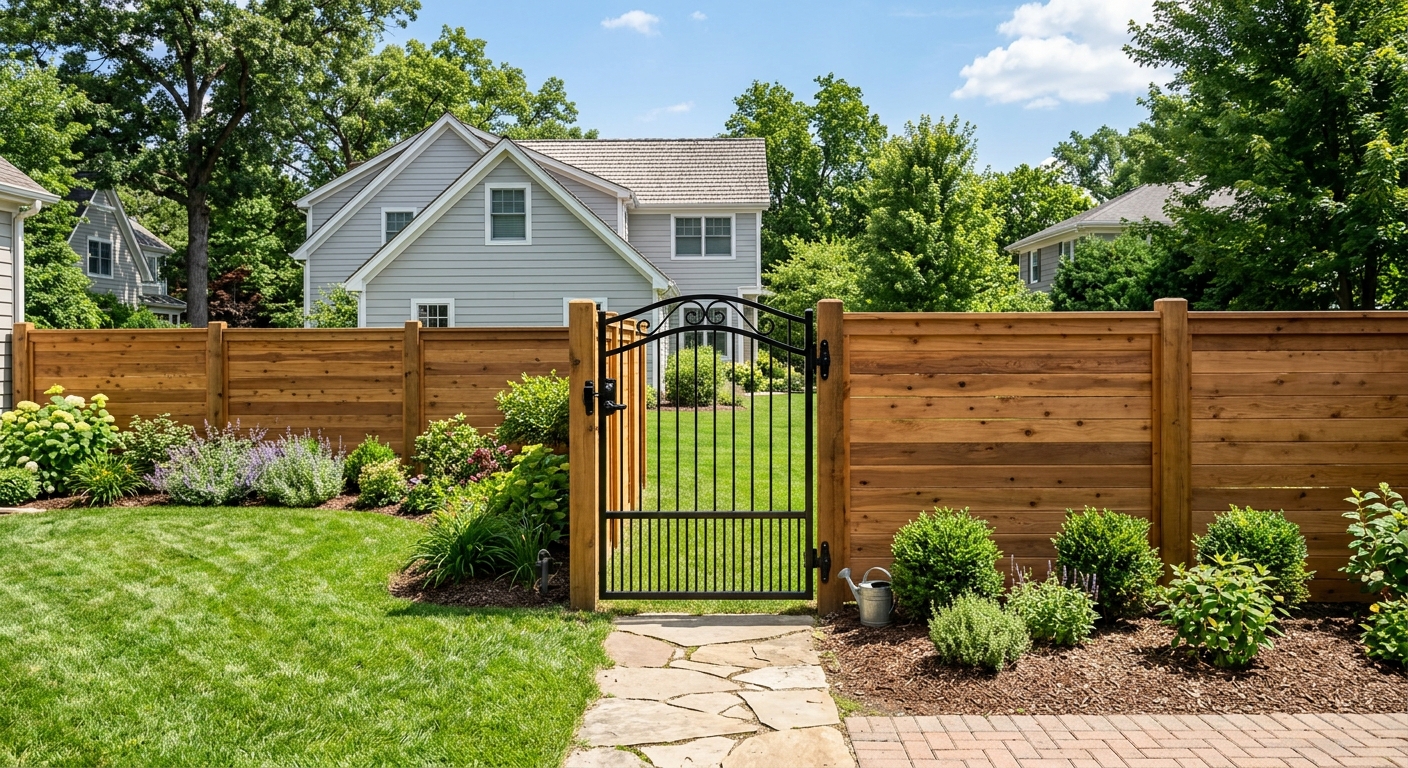
Fencing options and costs in Kaslo
Kaslo homeowners typically shop for fencing with one priority in mind—privacy and weather resilience—especially when a good portion of local housing stock is single-detached (84.9% of dwellings), making yards and side access common. With 380 homeowner households (72.4% of households own) and many properties built before 1981 (58.1%), it’s also common to see older lot lines, aging boundary fences, and posts that have settled—so “replace vs. repair” becomes a major decision point.
In the Kootenays, fence pricing is shaped by the region’s frost line and freeze–thaw cycles. Posts generally must be set at or near frost depth (often with bell-shaped concrete footings below it) to reduce frost heave, which increases excavation time, concrete quantity, and sometimes the need for longer structural posts. Kaslo’s lakeside microclimates can be gentler than exposed valley bottoms, but you still get winter freeze cycles and wind-driven snow loads that can rack taller panels, particularly on corner lots and in windy stretches around town.
On busy job sites—like the areas close to the downtown core and lakefront back lanes, where access can be tight and removals are common—contractors tend to price faster mobilization and more careful post placement into the estimate. Use the comparison table below to align typical materials with realistic budgets, then you can ask for a quote that matches your exact height, post depth, and gate needs.
| Material |
Lifespan |
Maintenance |
Privacy Rating |
Price per Linear Foot |
| Pressure-treated pine (standard wood) |
10–15 years |
Stain/seal every 2–3 years; re-treat cut ends |
High (solid boards) |
$18 – $28 |
| Cedar (natural rot resistance) |
15–25 years |
Light staining every 2–4 years to maintain colour |
High (solid boards) |
$22 – $38 |
| Vinyl / PVC (no-maintenance) |
20–30 years |
Rinse annually; inspect posts/rails after hard winters |
High (solid or board-style) |
$35 – $55 |
| Chain-link (galvanized steel) |
20–40 years |
Occasional tension check; repaint rarely needed |
Low–Medium (privacy slats optional) |
$18 – $32 |
| Aluminum ornamental |
25–40 years |
Wash with mild detergent; touch-up if scratched |
Low (open pickets) |
$28 – $45 |
| Composite / recycled material |
20–30 years |
Minimal; keep bottom edge clear of debris |
High (solid styles) |
$30 – $50 |
Prices are estimates only and vary by project scope, site access and material selection.
What affects the price of fencing in Kaslo
In Kootenay communities around British Columbia, quotes for the “same” fence can swing by about 30–50% because the hidden work is different—mainly excavation depth, concrete quantity, rail reinforcement for snow/wind, and the complexity of corners and gates. Two yards that look similar often produce different labour hours once you factor in frost-driven post depth, bumpy ground, and whether the contractor needs to remove and dispose of an old fence.
Post depth is the biggest driver here. In colder regions of B.C. and the Kootenays, posts often need to be set roughly 4–6 inches below the design frost depth to reduce heaving. Practically, that means deeper augering and longer posts than “milder-region” rules of thumb—so concrete setting becomes common and material costs rise. For example, choosing a vinyl/PVC or composite privacy fence may start in the $70 – $110 per linear foot band, but if your corners and gate posts must be concrete-set deeper, that premium increases further because reinforced posts and more concrete are required.
In Kaslo specifically, cost can shift quickly based on local conditions. A long straight run on level ground with easy access is usually closer to the low end of wood installation pricing ($45 – $75 per linear foot), while a sloped lot or a job with frequent removals pushes the price up due to additional excavation, racking/stepped rails, and disposal charges. Conversely, chain-link jobs can stay closer to the lower band ($30 – $55 per linear foot) because they’re lighter to install and typically involve fewer heavy post components—unless you need privacy slats and tighter tensioning for strong winter winds.
| Price Factor |
Why It Matters |
Cost Impact |
| Fence length in linear feet |
Most labour and materials scale directly with length |
High (often the majority of total cost) |
| Post depth required |
Frost line determines how deep holes must be excavated |
High; deeper frost depth increases both labour and concrete |
| Post setting method |
Concrete vs. gravel pack changes stability and frost heave resistance |
Medium–High; concrete-set typically costs more but performs better |
| Material choice |
Vinyl, cedar, chain-link and aluminum differ in rail design and install time |
Medium; can swing estimates by the chosen price band |
| Gate count and type |
Double drive-through gates need heavier posts, more bracing and hardware |
Medium–High depending on gate size and swing direction |
| Grade and terrain |
Slopes require stepped rails or raked panels to keep spacing consistent |
Medium; adds labour and sometimes extra materials |
| Old fence removal and disposal |
Hauling, dump fees and rework protection for landscaping affect time |
Medium; can add a noticeable one-time charge |
| Permit fees and survey / property line locate |
Locates reduce the risk of encroachment and change framing layout |
Low–Medium; can become Medium on complex boundaries |
Permits & regulations in British Columbia
In British Columbia, fences can trigger permitting requirements depending on height and location relative to streets and setbacks. A common threshold is that fences above roughly 2.0 m (6.5 ft) at the rear and 1.0–1.2 m (3–4 ft) at the front or corner often require a building permit, but the exact requirement depends on municipal rules. All fences must respect property lines and local setback bylaws—so even a “ready-made” design must be positioned correctly.
Before any digging, call for utility locates using the provincial process (e.g., BC 1 Call) so you don’t hit buried services when augering post holes. Also, obtain a survey or a property pin locate before installing if your boundary is unclear. This helps avoid encroachment disputes—an issue that’s more common on older properties, where fences may not match modern pins.
Shared fence ownership rules are governed by provincial line-fences legislation, so if you’re replacing or upgrading a boundary fence, confirm who maintains which side and what costs are shared.
For contractors: you should verify licence status, liability insurance, and coverage commonly required for work sites (including WCB/WCB clearance where applicable). Ask for a certificate of insurance that names you as the certificate holder/additional insured (when offered), plus proof of current coverage. Many contractors can also provide a clearance letter and their account details upon request.
Choosing the right fence material for Kaslo
Choosing a fence material in Kaslo is really about matching your priorities—privacy, maintenance level, budget and how the fence holds up through winter freeze–thaw cycles. With older housing stock (58.1% of homes built before 1981) you’ll often find fences that failed at the post base first, so start with the post-depth plan and then pick a material that complements it.
Pressure-treated pine is the budget-friendly route, but it typically needs staining or sealing every 2–3 years to prevent grey weathering and to protect cut ends where rot starts. Cedar offers better natural rot resistance and a warmer look, but it’s not “set and forget”—it still benefits from periodic staining. Vinyl/PVC is popular for low maintenance and privacy board styles, yet in extreme cold it can become more brittle; proper installation with correct post alignment and rail design matters. Chain-link is usually the lowest-cost option and lasts a long time, but it provides limited privacy unless you add slats, which can increase wind load and may require stronger tensioning. Aluminum is mid-range and rust-resistant, with a good lifespan, but it’s typically ornamental (less private). Composite/recycled materials offer a more “wood-like” solid feel with minimal maintenance, but upfront costs are generally higher.
For Kootenay conditions, deeper, concrete-set posts are commonly used for structural stability—especially at corners and gate posts—because frost heave can lift lighter systems. Taller privacy fences also need good snow/wind bracing and tighter post spacing to limit racking. For example, moving from a pressure-treated privacy fence in the $45 – $75 band to vinyl/PVC in the $70 – $110 band can be justified when you want fewer maintenance weekends and better straightness through winter, but if you’re budget-tight, cedar can be a good middle ground.
| Material |
Cold Tolerance |
Lifespan |
Annual Maintenance |
Best For |
Price Band |
| Pressure-treated pine |
Good if properly set and sealed at cuts |
10–15 years |
Ongoing (stain/seal every 2–3 years) |
Budget-focused privacy |
$45 – $75 |
| Cedar |
Good; performs well with regular surface care |
15–25 years |
Low–moderate (stain every 2–4 years) |
Attractive, rot-resistant privacy |
$55 – $90 |
| Vinyl / PVC |
Very good with correct installation in cold |
20–30 years |
Minimal (rinse/inspect) |
Low maintenance privacy |
$70 – $110 |
| Chain-link |
Excellent for cold; tension matters |
20–40 years |
Minimal (periodic tension check) |
Security with openness (slats optional) |
$30 – $55 |
| Aluminum ornamental |
Excellent; no rot |
25–40 years |
Minimal (wash and check hardware) |
Decorative front/side boundaries |
$80 – $140 |
| Composite / recycled |
Good; can become brittle if improperly supported |
20–30 years |
Minimal |
Solid privacy with low upkeep |
$85 – $130 |
How to choose a fencing contractor in Kaslo
Start by verifying the basics: in British Columbia, a legitimate contractor should be able to show you proof of current business authorization, and they should carry liability insurance that fits the job size. Ask for a certificate of insurance (COI) and check the policy dates, coverage limits, and whether the COI lists you correctly as a certificate holder or includes additional insured wording if offered. For work coverage, request proof of WCB coverage or a clearance letter showing current status—contractors in good standing can usually provide it promptly.
Next, get 2–3 written, itemised quotes. You want a breakdown for labour and materials (posts, rails, panels, fasteners, hardware), plus line items for excavation, concrete, gate installation, and removal/disposal. A solid quote should specify what’s included and excluded: permit pull (if needed), utility locate responsibility, grading work, and whether they replace any damaged landscaping. Ask about warranty details—separate workmanship warranty from manufacturer/product warranty, and confirm whether the warranty is transferable if you sell your home.
Payment matters in Kaslo’s smaller market. Never pay more than about 10–15% upfront; hold back the balance until the fence is complete and meets the scope in writing. Also request a written start date and an estimated completion timeline so you can plan around weather and curing time for concrete-set posts.
- Confirm the quote includes post hole depth and post setting method (concrete vs. gravel pack).
- Ask for panel/bracing details for wind exposure and tall privacy runs.
- Verify the contractor provides utility-locate coordination or responsibilities.
- Request an itemised list of gates, latches, hinges, and hardware grade.
- Check that corners and gate posts are designed as structural posts.
- Confirm disposal/haul-away is included if you’re removing an old fence.
- Look for a workmanship warranty length in the contract.
- Ask whether product warranty covers vinyl/composite failure or only materials.
- Require a written start date and weather allowance wording.
- Verify insurance dates and coverage limits before work begins.
- Don’t accept “allowances” without clear definitions and quantities.
- Ensure final measurement and layout tie to pins/locates or agreed line-fence documentation.
In Kaslo, a few red flags I see often: (1) quotes that don’t state how deep posts go or whether concrete footings are used at corners/gates; (2) “lump sum” pricing with no removal/disposal or gate hardware listed; (3) refusal to provide an insurance COI or proof of current WCB coverage; (4) payment requests over 25% upfront without a signed schedule; and (5) vague scope language like “as required” for excavation without explaining what triggers extra charges.
Frequently asked questions — fencing in Kaslo
How tall can my fence be in Kaslo?
In Kaslo and across British Columbia, fence height rules typically depend on whether it’s in the front/corner area versus the rear, and whether local setback bylaws treat the fence like a “structure” at that height. A common guideline is that fences above about 2.0 m (6.5 ft) at the rear and roughly 1.0–1.2 m (3–4 ft) at the front or corner often require a building permit, but you should confirm with the applicable municipal bylaw and your contractor can help interpret it for your exact line.
Also consider practical performance: taller privacy fences catch more winter wind and snow load in the Kootenays, which can require tighter post spacing and stronger rails—so the total cost may move you from the lower end of a wood band (for example, around $45 – $75) toward the higher end depending on materials and framing.
Should fence posts be set in concrete here?
In Kaslo’s Kootenay climate, concrete-set posts are often the safer choice because frost heave from freeze–thaw cycles can lift posts that are only backfilled with gravel or tamped soil. As a rule of thumb, many installers plan post holes to be set at or just below design frost depth (often with extra depth—commonly another 4–6 inches below design frost depth) and use concrete, especially at corners, end posts and gates.
That doesn’t mean every situation requires full concrete everywhere, but if your yard is exposed, the fence is tall, or the fence sees significant wind, concrete at structural locations typically improves long-term stability. Expect that deeper excavation and additional concrete will affect your quote—often pushing prices toward the upper range of the selected material band.
What's the best fence for privacy?
For privacy in Kaslo, the best-performing choices are usually solid privacy designs: cedar or pressure-treated wood with closely spaced boards, vinyl/PVC privacy panels, or composite solid styles. These block sightlines while still allowing you to plan for strong bracing against winter racking.
If you want low maintenance, vinyl/PVC is often a good fit because it doesn’t require staining every few years; pricing typically aligns with the $70 – $110 per linear foot band (depending on height, post depth plan, and gate complexity). If you’re optimizing budget, pressure-treated pine can start closer to $45 – $75, but you’ll need to plan for periodic staining to reduce weathering and protect the fence through Kaslo’s damp freeze–thaw seasons.
How do I compare fencing quotes?
To compare quotes fairly in Kaslo, make sure you’re comparing apples-to-apples: same fence height, same post spacing, and the same post setting method (concrete vs. gravel pack vs. driven). Ask for itemised breakdowns for labour and materials—posts, rails, panels, concrete, hardware, gate construction—and confirm excavation depth details. If one quote is cheaper but skips disposal, includes fewer gates, or doesn’t specify frost-depth post planning, it will usually cost more later.
Look for clarity on exclusions: permit pull (if required), utility locate responsibility, and landscaping reinstatement. Also confirm warranty terms (workmanship vs. product/manufacturer) and the payment schedule. If you see large upfront payments, vague scope language, or no written schedule, treat it as a risk signal.
How long does fence installation take in Kaslo?
Timing varies with length, access, and whether you’re removing an old fence. For smaller boundary sections, crews can sometimes complete installation within a couple of days, but longer runs, multiple corners, and gate builds typically extend the timeline because posts must be set correctly and may require concrete curing time.
In Kaslo’s winter transition periods, rain and freeze conditions can slow excavation and concrete work. This is why reputable contractors put a start date and a completion estimate in writing and include weather allowance language. If your quote includes concrete-set posts, ask whether the timeline assumes standard curing conditions; that can affect when gates are hung and when the final walkthrough happens.
Can I install a fence on a slope in Kaslo?
Yes, but you’ll get the best results when the design matches the slope: stepped panels (stair-step) or raked panels that follow the grade. In Kaslo, slopes are common and the key is keeping consistent panel height and ensuring the post holes are excavated to the proper depth for frost protection—especially on the downhill side where soil may behave differently.
Be aware that sloped sites can increase labour because posts need more careful layout, and rails may need custom spacing to avoid gaps or “bowing.” This may move you toward the higher end of your chosen material price band—for example, if you’re comparing a pressure-treated privacy fence around $45 – $75 versus a vinyl/PVC privacy fence around $70 – $110, the slope design effort affects both, but stronger framing and added bracing can make the slope premium more noticeable on taller fences.