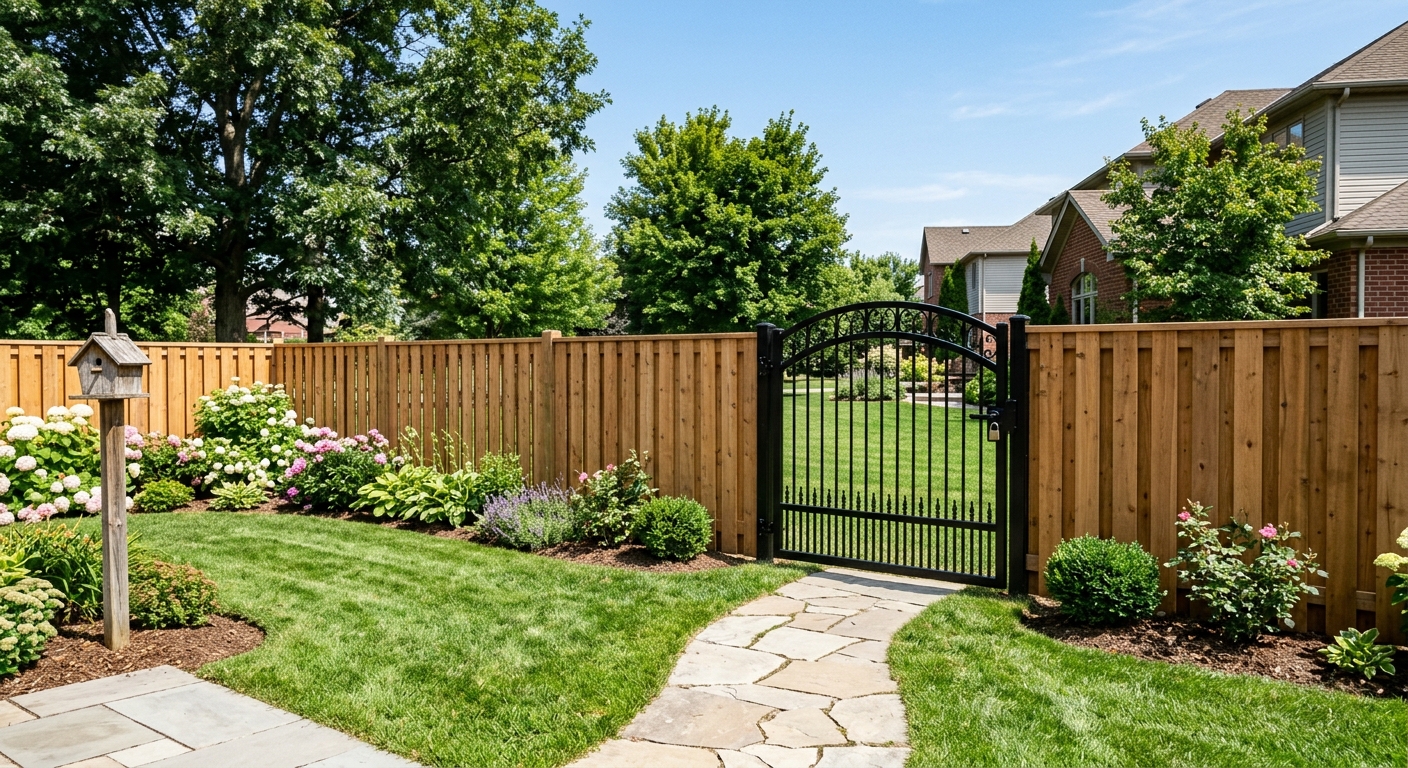
Fencing options and costs in Keremeos
In Keremeos, choosing the right fence starts with understanding what homeowners actually need in the yard—privacy, durability, and a system that survives the freeze–thaw rhythm of the Thompson–Okanagan. With 78.4% of households owning homes and 71.6% of dwellings being single-detached, there’s steady demand for boundary and backyard fencing as properties change hands, add pets, or expand gardens (Statistics Canada, 2021 Census). You’ll also see a lot of older housing stock—38.3% of homes were built before 1981—which often means existing fence lines may need replacement because older posts have shifted or rotted at the grade line.
Pricing in this part of British Columbia is shaped by frost depth and wind exposure on the benches and valley edges. In interior valleys, the frost depth is typically deeper than coastal areas, so standard post-and-rail layouts often get upgraded: posts are set below the regional frost line, and crews use concrete-set posts more often when soils are clayey or poorly drained. Those choices add labour time and materials, but they reduce future heaving and leaning—common complaints after a couple of winters. Contractor availability also affects cost: on busy weeks, crews may batch installs, and that can change scheduling but not always the per-foot rate.
In Keremeos, trade demand is especially noticeable around the town’s residential cores where fences run along multiple property boundaries and access is tight—think older lots near Main Street and the surrounding neighbourhood blocks—so gate placement and line locating become part of the job cost. Use the table below as your quick reference before you call for a site measure.
| Material |
Lifespan |
Maintenance |
Privacy Rating |
Price per Linear Foot |
| Pressure-treated pine (standard wood) |
10–15 years |
Stain/seal every 2–3 years |
Medium–High (solid boards) |
$55–$85 |
| Cedar (natural rot resistance) |
15–25 years |
Light stain/oil every 2–3 years (optional upkeep) |
High (solid pickets/boards) |
$75–$115 |
| Vinyl / PVC (no-maintenance) |
20–30 years |
Occasional wash; no staining |
Medium–High (solid or board-style) |
$75–$115 |
| Chain-link (galvanized steel) |
20–35 years |
Minimal (rinse; occasional tension/repairs) |
Low (adds privacy only with slats/vines) |
$35–$60 |
| Aluminum ornamental |
25–40 years |
Minimal (wash; occasional touch-up) |
Low–Medium (ornamental/see-through) |
$90–$150 |
| Composite / recycled material |
20–30 years |
Low (wash; minor cleaning as needed) |
High (board-style) |
$85–$140 |
Prices are estimates only and vary by project scope, site access and material selection.
What affects the price of fencing in Keremeos
In Keremeos and the wider Thompson–Okanagan, two quotes for the “same” fence can differ by 30–50% because the real costs aren’t only the material—they’re the ground conditions, post depth, and how much labour it takes to install straight lines through slopes, hard access, and existing obstructions. Your local soil and frost strategy matters here: in interior BC, building practice sets posts below the design frost line so they don’t heave during freeze–thaw cycles. A typical rule of thumb is to set posts 4–6 inches below the design frost depth, and when you’re dealing with clay or waterlogged ground, crews often choose concrete-set posts to stabilize the footing. That adds auger time, concrete cost, and more labour per post—especially when fence lines run long distances.
Wind exposure also changes design. In more exposed yards, stronger winds push installers toward tighter post spacing and heavier hardware. Chain-link and open aluminum may stay within budget band pricing, while board-style privacy fences can move upward because they resist wind loads differently. Coastal BC is milder but wetter, which can accelerate wood rot if treatment and airflow details aren’t right; in Keremeos we’re more focused on frost and drainage, not just rot control.
Concrete examples from this market: (1) If your fence line is on a bench where the soil is clayey and compresses, a contractor may recommend deeper concrete-set posts rather than a gravel pack—expect a shift toward the $75–$115 band for wood/vinyl-like systems. (2) If the lot is relatively sheltered with solid, free-draining soil, you may keep the project closer to the $55–$85 band for pressure-treated wood because fewer posts need upgraded footing. (3) If you’re replacing a long old fence with many damaged posts, removal and disposal can add enough labour that a “budget” material choice becomes closer to the mid-range.
| Price Factor |
Why It Matters |
Cost Impact |
| Fence length in linear feet — the primary cost driver |
More posts, rails, fasteners and labour for every additional foot |
High (often the biggest swing in total price) |
| Post depth required — frost line determines post length and hole depth |
Deeper frost-safe installations reduce heaving and leaning over time |
Medium–High (can change material and footing method) |
| Post setting method — concrete vs. gravel pack vs. driven posts |
Concrete increases stability; gravel packs can work where drainage is good |
Medium–High (concrete-set adds labour and materials) |
| Material choice — vinyl vs. cedar vs. chain-link |
Different material stiffness, hardware needs and expected service life |
Medium (moves projects across $35–$60 / $75–$115 / $90–$150 bands) |
| Gate count and type — walk-through vs. drive-through (double) |
Gates require stronger framing, hinges, and sometimes reinforced posts |
Medium–High (one gate can add noticeable cost) |
| Grade and terrain — sloped yards require stepped or raked panels |
Custom panel adjustments increase time and labour |
Medium (especially for privacy board fences) |
| Old fence removal and disposal |
Hauling and disposal plus extra demo labour |
Medium (often overlooked in “low” estimates) |
| Permit fees and survey / property line locate |
Some fence heights and locations trigger permitting; accurate line locating avoids rework |
Low–Medium (varies by scope and whether locate is required) |
Prices rise quickly when deeper frost-safe footing, extra gates, or complex terrain are involved.
Permits & regulations in British Columbia
In British Columbia, fence rules are tied to property lines, setbacks, and sometimes height thresholds. While local requirements vary by municipality, as a general guide many BC communities treat fences above roughly 2.0 m (6.5 ft) along the rear and around 1.0–1.2 m (3–4 ft) at the front or corner as likely to require a building permit. Even when a permit isn’t triggered, you still need to respect municipal setback bylaws and property boundaries, and you should assume the work must comply with the area’s permitting and zoning framework.
Before any digging, call for utility locates through the province’s “one-call” service so you don’t hit buried lines. Next, confirm your property line—ideally with a survey or at least locating your property pins/markers—before posts are set. This is particularly important in older Keremeos neighbourhoods where boundary markers may have shifted or been fenced over.
Shared fence ownership is governed by BC’s line-fences principles: where parties share a boundary, responsibilities can be split depending on who benefits and what’s agreed.
For hiring checks, ask for: (1) a valid BC business licence/registration number if the contractor operates under one in your area, (2) proof of liability insurance for the work site, and (3) coverage that applies to the contractor’s workers (commonly WSBC for workplace coverage). To verify, request the contractor’s certificate of insurance (and ensure it lists fencing work), and check any professional/business registry info they provide. If they can’t produce current insurance documentation promptly, that’s a serious warning sign.
Choosing the right fence material for Keremeos
In Keremeos, match the material to your priorities while respecting the Thompson–Okanagan winter reality: posts must be installed deep enough to avoid frost heave and the yard must drain well around the footing. For most interior BC installs, that means planning for deeper post holes than you’d see in mild coastal areas and using concrete-set posts more often when soils are clay-heavy or poorly drained. If your yard is exposed to prevailing winds, consider stronger framing and hardware, and in board-style privacy fences ask for designs that handle wind load without excessive flex.
Pressure-treated pine is usually the best budget start, but it needs staining or sealing every 2–3 years to prevent grey weathering and protect the surface. Cedar has natural rot resistance and tends to age well visually, but it still benefits from periodic oil/stain. Vinyl/PVC offers the low-maintenance lifestyle—no staining—but can become brittle if exposed to extreme cold shocks; good installation and proper post spacing matter. Chain-link is the lowest-cost and longest-life option in many cases, but it won’t give privacy unless you add slats, mesh, or planters/plant screens. Aluminum ornamental gives a clean look and rust resistance with minimal upkeep, yet it’s typically not considered a privacy fence.
A concrete way to decide: if you’re comparing a pressure-treated wood privacy fence versus vinyl/PVC in a typical Keremeos run, you might see wood land around the $55–$85 band, while vinyl often trends toward $75–$115. The extra cost is justified when you want to eliminate staining labour and want a consistent look through seasons, especially if you don’t want to re-stain every couple of years.
| Material |
Cold Tolerance |
Lifespan |
Annual Maintenance |
Best For |
Price Band |
| Pressure-treated pine |
Good (with proper post depth and sealing) |
10–15 years |
Low–Moderate (2–3 yearly staining) |
Budget privacy with straightforward upkeep |
$55–$85 |
| Cedar |
Good (handles interior freeze–thaw well) |
15–25 years |
Low–Moderate (periodic oil/stain) |
Appearance-focused privacy |
$75–$115 |
| Vinyl / PVC |
Good (depends on installation quality in cold snaps) |
20–30 years |
Very Low (wash if needed) |
Low-maintenance privacy |
$75–$115 |
| Chain-link |
Excellent (galvanized steel resists weather) |
20–35 years |
Very Low (inspect tension/hardware) |
Security/perimeter fencing on a budget |
$35–$60 |
| Aluminum ornamental |
Excellent (no rust) |
25–40 years |
Very Low (occasional cleaning) |
Front-yard curb appeal and boundary definition |
$90–$150 |
| Composite / recycled |
Good (designed for freeze–thaw use) |
20–30 years |
Low (cleaning as needed) |
Durable privacy with reduced upkeep |
$85–$140 |
How to choose a fencing contractor in Keremeos
When you’re hiring in British Columbia, the difference between a fence that lasts 15 years and one that leans after a couple of winters is often the install details—post depth, concrete vs. gravel pack, and how hardware is fastened. Start by verifying coverage and credentials. Ask for their BC business information (where applicable), then request a certificate of insurance that names you or includes the work location and covers liability for fencing installation. For worker protection, confirm the contractor has the required workplace coverage for their employees (commonly WSBC). If they can’t provide proof quickly—or it’s expired—pause the conversation.
Next, get 2–3 itemised written quotes. You want labour and materials broken out: posts and rails, fasteners and hardware, concrete and auger work, panel type, gate hardware, and any line-straightening/bracing. Clarify what’s included or excluded: is permit pulling included where required, is disposal of your old fence included, and are you getting utility-locate responsibility handled? A professional quote spells these out. For warranty, ask for two layers: a workmanship warranty (how long they stand behind their installation) and the product manufacturer warranty (what defects the material company covers). Also confirm whether the warranty is transferable if you sell your home.
Payment matters. Never pay more than about 10–15% upfront; hold back the remainder until the job is complete and inspected. Request a start date and a completion estimate in writing so you’re not stuck waiting through weather windows—especially in interior frost conditions.
- Confirm they list their current liability insurance certificate before signing.
- Ask for WSBC/workplace coverage confirmation for employees.
- Require a written, itemised quote (no all-in lump sum only).
- Check how they plan for post depth and frost heave—ask what depth they will set.
- Verify whether posts are concrete-set or gravel-packed based on your soil.
- Ensure gate framing and hardware are included (hinges, latches, reinforcement).
- Ask whether utility locates are included or your responsibility.
- Confirm property line locating expectations (pins/survey locate).
- Get disposal/haul-away listed clearly if you’re removing an old fence.
- Require protection for landscaping and driveway access during installation.
- Ask for a workmanship warranty term in writing and what it covers.
- Clarify payment schedule: limit upfront to 10–15% and hold a completion holdback.
If a contractor in Keremeos won’t put post depth, footing method, and warranty terms in writing, uses vague wording like “as per estimate,” offers unusually low pricing without an explanation, demands large upfront payments, or disappears after you ask for insurance/warranty documents, treat it as a red flag and keep shopping.
Frequently asked questions — fencing in Keremeos
How do I find my property line before fencing?
In Keremeos, the safest way to confirm your boundary before you install any posts is to locate your property pins/markers (or hire a survey if markers are missing or unclear). Start by checking any survey documents you received at purchase or through your closing package, then confirm what’s still visible on the ground. Because fences sit permanently in the ground, guessing boundaries can lead to costly rework. Also, before digging, you must get utility locates so you don’t hit buried services in the Thompson–Okanagan area. If you’re working near a shared boundary, it’s smart to discuss line-fences expectations early so both sides agree on location and responsibility before installation begins.
What's the most low-maintenance fence?
For low day-to-day work in British Columbia, vinyl/PVC is usually the easiest: it doesn’t need staining, and it typically only requires an occasional wash. Cedar can be relatively straightforward too, but it generally needs periodic oil/stain to maintain its look and reduce surface drying. Pressure-treated pine is workable and budget-friendly, but plan on staining every 2–3 years to reduce grey weathering. If you’re comparing price bands, vinyl/PVC often lands around the $75–$115 range depending on style and gate count—so the “maintenance savings” is the main justification. If you’re sensitive to climb-the-ladder work every season, vinyl is often the better fit for Keremeos yards.
How tall can my fence be in Keremeos?
Height limits in BC are tied to local municipal rules and where the fence sits (front/corner vs rear), plus the possibility of permit requirements. As a general guide used in many BC contexts, fences above roughly 2.0 m (6.5 ft) in the rear and around 1.0–1.2 m (3–4 ft) at the front or corners often trigger a building permit review. The best way to be sure in Keremeos is to confirm with your contractor or local permitting office using your exact location and planned height. Even without a permit, the fence must respect the property line and any municipal setback bylaws. This is especially important where fences run along older lots with less obvious boundaries.
Should fence posts be set in concrete here?
In Keremeos and the interior valleys of the Thompson–Okanagan, concrete-set posts are commonly recommended because frost heave is the long-term enemy. Post depth matters: installs are typically set below the regional frost line so freeze–thaw cycles don’t lift posts out of the ground. Whether concrete is necessary depends on your soil and drainage. If you have clayey, poorly drained ground, concrete helps stabilize the footing. If your soil drains well and the fence is sheltered, some contractors may use a gravel pack approach. Practically, your quote should state the chosen setting method and post depth. If a contractor won’t talk about frost-safe post depth, that’s a bigger concern than whether you personally prefer concrete.
What's the best fence for privacy?
For privacy in British Columbia, the best results usually come from solid board or panel designs—typically cedar, pressure-treated pine, vinyl/PVC, or composite. Chain-link and ornamental aluminum will not block views effectively unless you add slats or supplementary privacy screening. In Keremeos, privacy fences also need sturdier framing if your yard faces winds, because flexible panels can rattle and warp over time. If you’re deciding between options based on cost, a pressure-treated wood privacy fence often falls in the $55–$85 range, while cedar and vinyl/PVC commonly trend higher (often $75–$115) because of materials and the hardware needed for a stable privacy build. The “best” option is usually the one that matches your upkeep tolerance and your local wind exposure.
How do I compare fencing quotes?
When you compare quotes in Keremeos, don’t judge only by the total price—compare what’s included. Ask for an itemised breakdown: material type and thickness, post setting method (concrete vs gravel pack), planned post depth for frost protection, footing size if noted, the number and type of gates, and whether disposal/removal of the old fence is included. Confirm whether utility locates and permit/paperwork responsibilities are included where required. Also compare warranties: workmanship term and whether the product warranty is manufacturer-backed and transferable. Finally, check payment schedules—reputable contractors usually limit upfront payments to about 10–15% and hold the remainder until completion. If one quote is far below the usual $35–$60 chain-link range or the $75–$115 privacy range without explaining differences, investigate the scope.