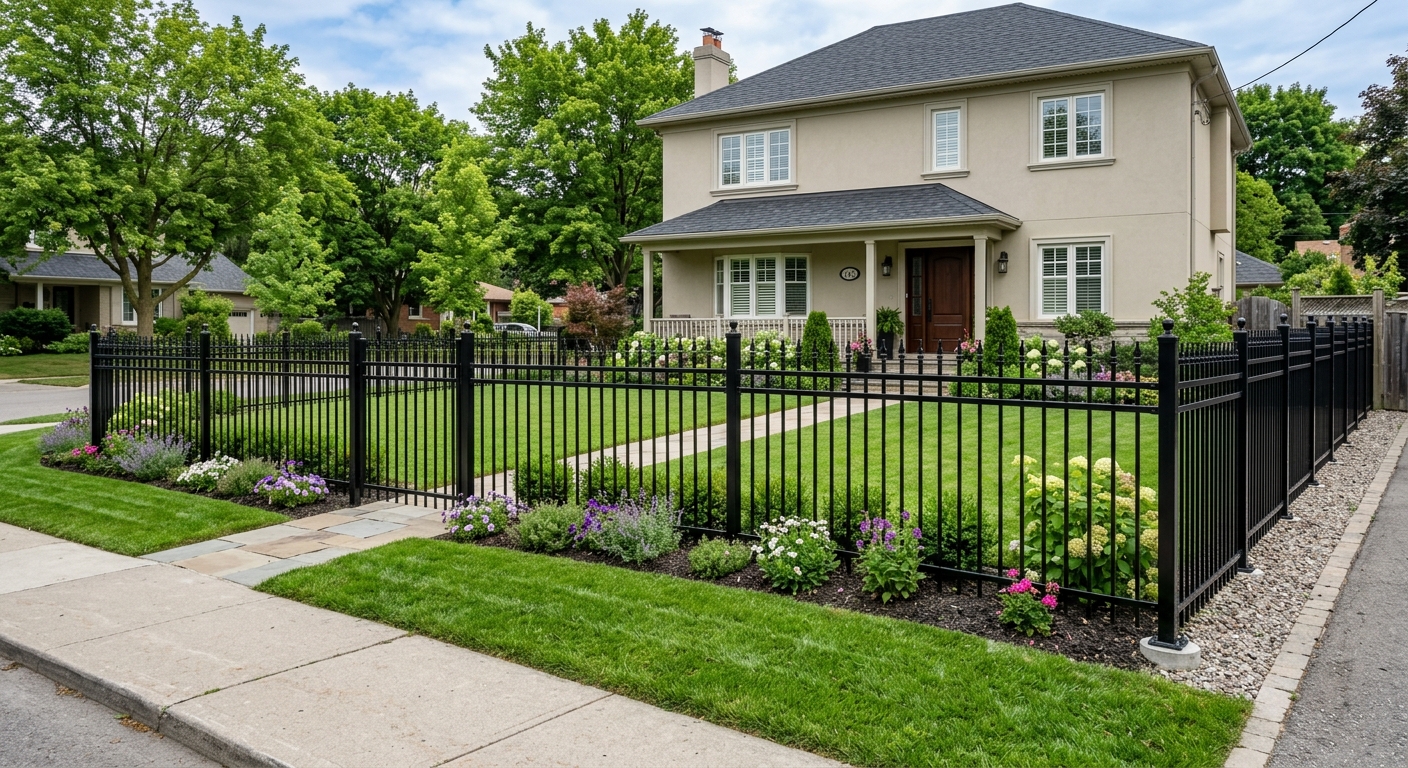
Fencing options and costs in Promontory
In Promontory, British Columbia, choosing a fence starts with matching the look you want to how the Lower Mainland–Southwest climate behaves around your home. With a population of 11,820 (Statistics Canada, 2021 Census), you may not feel like a “big city,” but demand is steady because fence projects follow housing churn and yard upgrades. Promontory and nearby communities also feature plenty of detached properties—each one is a common reason homeowners look for privacy, pet containment, or boundary clarity. That demand is strongest in and around the settled residential pockets where lots are close together and neighbours rely on fencing for day-to-day privacy.
Lower Mainland–Southwest pricing is shaped by mild but not trivial frost and frequent wet conditions. Frost is usually less severe than inland Canada, yet contractors still set posts below the local frost depth to limit heaving and avoid leaning panels after freeze–thaw cycles. Wetter Fraser Valley–style soils can mean deeper holes, more concrete, and more labour than a dry-site install. On top of that, wind exposure matters: crews often design for regular gusts by tightening post spacing and choosing sturdier panel styles for solid wood and privacy fencing. Availability of skilled installers in the region can also influence your final quote when schedules are busy after spring thaw.
Below is a practical cost-and-performance comparison for common fence materials in Promontory, so you can align your budget with the lifespan and upkeep you’re comfortable with.
| Material |
Lifespan |
Maintenance |
Privacy Rating |
Price per Linear Foot |
| Pressure-treated pine (standard wood) |
10–15 years |
Stain/paint every 2–3 years |
High (with solid panels) |
$55–$95 |
| Cedar (natural rot resistance) |
15–25 years |
Seal/stain as needed, typically 2–4 years |
High (with solid boards) |
$65–$105 |
| Vinyl / PVC (no-maintenance) |
20–30 years |
Rinse as needed; occasional panel fixes |
High (solid privacy designs) |
$75–$130 |
| Chain-link (galvanized steel) |
20–35 years |
Minimal; occasional coating touch-ups |
Low to Medium (privacy slats optional) |
$30–$55 |
| Aluminum ornamental |
25–40 years |
Light cleaning; no rust (powder-coated) |
Low (open pickets) |
$90–$170 |
| Composite / recycled material |
20–30 years |
Low; wash down and inspect fasteners |
High (solid styles) |
$95–$145 |
Prices are estimates only and vary by project scope, site access and material selection.
What affects the price of fencing in Promontory
In the Lower Mainland–Southwest, it’s normal to see the same fence concept priced 30–50% differently across British Columbia because the “hidden” variables are where labour and materials get consumed. A 6-foot privacy fence doesn’t cost the same everywhere once you factor in soil moisture, how much post embedment is needed, gate hardware, and how complex the layout is around driveways and property corners. Even before material choice, the work is labour-intensive: each post location must be set correctly and aligned so the finished line looks straight on a damp, windy day.
Frost line depth is a big driver even though Promontory isn’t on the Prairie-level frost map. Published guidance often points to minimum post embedment of about 3 feet in much of Canada, and in BC crews commonly set posts deeper than bare minimum—often roughly 4–6 inches below the design frost depth—so posts don’t heave after freeze–thaw. In colder inland regions, posts can need 1.5–2.0 m into the ground and concrete setting becomes standard; in the Lower Mainland–Southwest you may not go quite that deep every time, but wetter soils still push contractors toward deeper holes and more concrete for privacy panels, corner posts, and gate posts.
Local examples that raise cost in Promontory include: (1) clay-to-silt pockets that stay wet longer—meaning larger excavations and slower backfilling; (2) sloped yards where crews must step or rake panels, increasing labour and materials; and (3) wind-exposed corners where stronger framing and tighter spacing are worth paying for. If you’re comparing options, chain-link often anchors at the lower end (around $30–$55), while vinyl privacy commonly lands higher (around $75–$130) due to structure and components.
Finally, housing age can matter. Older lots often have less predictable footing/soil and may include buried services near fences, which can add locating time and change post positions—sometimes adding hundreds of dollars just to get the line right before build-out.
| Price Factor |
Why It Matters |
Cost Impact |
| Fence length in linear feet |
Every extra foot adds posts, rails, and installation time. |
High (primary driver) |
| Post depth required |
Frost/soil conditions determine hole depth to prevent heaving. |
High (material + labour) |
| Post setting method |
Concrete-set posts increase durability but raise costs. |
Medium to High |
| Material choice |
Vinyl/PVC and composite are structurally and materially costlier. |
Medium to High |
| Gate count and type |
Drive-through gates require heavier frames and hinges. |
High (hardware + labour) |
| Grade and terrain |
Slopes require stepping/raking and additional layout time. |
Medium |
| Old fence removal and disposal |
Dismantling, hauling, and dump fees add time. |
Medium |
| Permit fees and survey / property line locate |
Required documentation and locating protects against encroachment. |
Low to Medium |
Permits & regulations in British Columbia
In British Columbia, fences above a height threshold—often around 2.0 m (6.5 ft) at the rear and about 1.0–1.2 m (3–4 ft) at the front or corner—commonly require a building permit. Requirements can vary by municipality and by fence position relative to streets and lanes, so the safe approach is to confirm height and location before you order materials. All fences must respect property lines and municipal setback bylaws.
Before digging any post hole, you should arrange utility locates. In practice, homeowners should call BC 1 Call (or an equivalent approved utility locate service) and wait for markings before a contractor excavates. It’s also wise to obtain a survey or at least a property-pin locate so the fence line matches your boundary—this avoids neighbour disputes that can trigger costly rework after installation.
Shared fence ownership is addressed under provincial line-fences legislation, which can affect responsibilities for maintenance and replacement if boundaries are disputed. For verification steps, homeowners in Promontory should ask the contractor to provide: (1) proof of a valid British Columbia business licence/contractor authorization when applicable for fencing work in your area, (2) certificate of insurance with liability coverage, and (3) proof of worker coverage (commonly WCB). Where the contractor can’t provide clearance or coverage documentation, it’s a sign to pause and request updated paperwork.
Work that typically does not need a permit is minor repairs or in-kind replacements that keep the same height and location and don’t change drainage, building footprints, or encroach on setbacks—however, when you’re increasing height, changing the fence line, or building a large privacy barrier near corners, a permit check is usually warranted.
Choosing the right fence material for Promontory
Choosing the right fence material in Promontory comes down to what you want to protect: privacy, curb aesthetics, pets/kids, or the least amount of ongoing work. The Lower Mainland–Southwest climate is mild but wet, with freeze–thaw that still tests posts over time. That means surface materials and post setting both matter.
Pressure-treated pine is usually the budget starting point, but it’s not “set and forget.” Without staining or painting, wood can grey and weather quickly; most owners plan on treatment every 2–3 years, especially on solid privacy faces that stay damp. Cedar offers better natural rot resistance and often a more premium appearance, but it still benefits from sealing to maintain colour and reduce surface checking.
Vinyl/PVC is popular for low maintenance and consistent privacy panels, yet in extreme cold it can become more brittle than wood. That said, when properly installed with the correct hardware and compatible fastening, vinyl performs well through BC seasons and typically avoids the recurring repaint cycle. Chain-link is the lowest cost and longest lived, but it won’t give you privacy unless you add slats or grow-through solutions. Aluminum ornamental is attractive and won’t rust like untreated metal; it’s usually mid-to-higher priced, but it provides open visibility rather than true privacy.
Post depth in Promontory still needs attention: even with a shallower coastal frost profile than harsher inland regions, crews typically set posts deeper than the bare minimum and often use concrete for corner posts, gate posts, and privacy lines. In wind-exposed spots, tighter post spacing and sturdier framing reduce racking. For example, if chain-link sits around $30–$55 per linear foot in installed pricing, moving to vinyl privacy at roughly $75–$130 is justified when you want year-round privacy without frequent staining—your “savings” is time and upkeep avoidance, not just materials.
| Material |
Cold Tolerance |
Lifespan |
Annual Maintenance |
Best For |
Price Band |
| Pressure-treated pine |
Good with proper staining and correct post embedment |
10–15 years |
Inspect twice yearly; stain/paint every 2–3 years |
Budget-friendly privacy with regular upkeep |
$55–$95 |
| Cedar |
Good; handles coastal moisture better than pine |
15–25 years |
Seal/stain as needed, typically every 2–4 years |
A premium look and better natural rot resistance |
$65–$105 |
| Vinyl / PVC |
Very good in BC seasons; avoid improper installation in deep cold |
20–30 years |
Minimal—wash and check hardware |
Low maintenance privacy |
$75–$130 |
| Chain-link |
Excellent; galvanized steel holds up across freeze–thaw cycles |
20–35 years |
Minimal—spot-check tension and coating |
Containment and security on a budget |
$30–$55 |
| Aluminum ornamental |
Excellent; powder-coating resists salt-air corrosion |
25–40 years |
Light cleaning; inspect gates/hardware |
Decorative boundary with long-term durability |
$90–$170 |
| Composite / recycled material |
Good; designed for moisture and temperature swings |
20–30 years |
Low—wash down and inspect fasteners |
Wood-like privacy with less upkeep |
$95–$145 |
How to choose a fencing contractor in Promontory
Picking the right fencing contractor in Promontory means verifying coverage and workmanship—not just getting a low number. In British Columbia, ask for proof of a valid licence/authorization (where applicable for the work), a current certificate of liability insurance, and worker coverage such as WCB. To check: (1) confirm the contractor’s registration or business standing using the official B.C. business/licensing registry or the contractor’s stated business number, (2) review the certificate of insurance details (coverage limits, effective dates, and that you’re not the named additional insured unless required), and (3) verify WCB coverage status using the WCB information available through the contractor’s provided clearance or coverage documentation.
Next, get 2–3 itemised written quotes. You want labour and materials broken out, not a lump sum. Make sure the post style and setting method are stated (for example, concrete-set versus gravel pack), and that gate hardware is included (hinges, latches, frames). Read the scope for exclusions like: disposal of removed fence, site restoration, re-grading, touch-up staining, and whether permits/locates are handled. If a quote doesn’t mention utility locates, ask who calls and who pays.
Warranty matters in fencing: demand a clear workmanship warranty length (often covering post setting/settlement issues), plus the manufacturer’s material warranty. Ask whether the warranty is transferable to you and what proof you must keep. For payment, never pay more than 10–15% upfront; request a final holdback until the completed walk-through and punch-list are done. Get a written start date and a completion estimate, and ensure it includes how weather delays are handled in the Lower Mainland–Southwest.
- Request written confirmation of post depth/embedment approach for frost-related heaving protection.
- Ask whether corner posts and gate posts are concrete-set and why (soil/wet-site considerations).
- Confirm the exact fencing height, panel spacing, and whether it matches your privacy goal.
- Ensure quotes specify the materials (board grade, thickness, rail type) and not just “wood fence.”
- Verify the quote includes gate hardware quality (latches, hinges, reinforcement).
- Check whether disposal/haul-away of old fence is included or billed separately.
- Confirm utility locates are scheduled before any digging.
- Ask how slope is handled (stepped vs. raked panels) and whether it changes pricing.
- Require an itemised breakdown: labour, posts/rails, hardware, and any permit/survey add-ons.
- Verify warranty details in writing: workmanship term and what failures are covered.
- Confirm payment schedule: small deposit, then progress payments, holdback at completion.
- Ask for insurance documents before work begins so you’re protected if something goes wrong.
Concrete red flags in Promontory: contractors who won’t say how deep posts are set for frost/heaving; quotes that omit gate hardware details; no written scope about old-fence removal and disposal; refusal to provide insurance/warranty information up front; and pricing that looks too low because it uses minimal framing or doesn’t address wet soil and drainage around posts.
Frequently asked questions — fencing in Promontory
What fence style offers the best wind resistance in Promontory?
In Promontory and the broader Lower Mainland–Southwest, wind resistance is about how much surface area the fence presents and how well the posts are braced. Solid privacy fences can be very effective for privacy, but they need a properly reinforced framing layout—especially on corner lines and near driveways—so panels don’t rack after gusts. Many homeowners get the best balance with a well-built wood privacy or reinforced vinyl privacy design using stronger corner posts and tighter spacing. If you want maximum wind tolerance with fewer panel stresses, an open style like aluminum ornamental or a chain-link fence is naturally less “sail-like,” though it won’t provide privacy unless you add slats. Proper post embedment (below local frost concerns) and correct post setting method usually matter more than the brand name of material.
How much does a fence cost in Promontory?
For typical residential fence installs in Promontory, most budgets land within the regional material bands common in Vancouver, Surrey, Burnaby, Richmond, and Abbotsford. Chain-link is often the lowest-cost route, commonly around $30–$55 installed per linear foot, while wood privacy generally sits mid-range around $55–$95. Vinyl/PVC privacy usually costs more, commonly around $75–$130, because of material and structural requirements. Your final number moves up or down based on linear length, number of gates, grade/slope (stepped panels), whether old fencing is removed, and how wet your soil is for post holes. In the Lower Mainland–Southwest, wetter soils can increase labour and concrete needs, so two similar fences can differ by hundreds even with the same height.
How deep should fence posts be for Promontory's frost?
Even though Promontory’s coastal conditions are milder than much of inland Canada, freeze–thaw can still heave inadequately set posts. A practical contractor approach in the Lower Mainland–Southwest is to set posts below the design frost depth—often translated into roughly 4–6 inches below that design line—so the post base doesn’t shift as temperatures cycle. You’ll also hear general Canadian guidance of about 3 feet minimum embedment in many areas, but BC contractors frequently go deeper than the bare minimum depending on soil moisture and frost considerations. On wet or heavier soils, we often use concrete for corner posts, gate posts, and privacy lines because it stabilizes the base and helps prevent movement. If a quote only states “standard post depth” without numbers, ask for the embedment depth and setting method in writing.
Wood vs vinyl vs aluminum fence — which is best?
“Best” in Promontory depends on your priorities. Wood (pressure-treated pine or cedar) is a strong choice for classic looks and solid privacy, usually starting around $55–$95 for installed pricing, but it does require periodic staining or sealing every couple of years to slow weathering. Vinyl/PVC is usually best if you want low maintenance and consistent privacy panels; it often runs around $75–$130, with minimal upkeep beyond occasional cleaning and hardware checks. Aluminum ornamental is excellent for long-term corrosion resistance and tidy curb appearance; it typically costs more, often around $90–$170, and it’s not as private because pickets are open. For wind resistance, a properly framed privacy fence can outperform an open fence in day-to-day gusts because the system is designed for reinforcement—not just the material label.
Do I need a permit to build a fence in British Columbia?
Often in British Columbia, permits are triggered by fence height and location. A common threshold is around 2.0 m (6.5 ft) at the rear and roughly 1.0–1.2 m (3–4 ft) at the front or corners, though your municipality’s bylaws can affect the exact rule. If you’re planning a tall privacy fence, confirm the height and setback requirements before ordering materials. In Promontory, the practical homeowner step is to check the fence plan against your property line and any municipal setbacks, and then ask the contractor whether the project requires a building permit. Also, before digging, ensure utility locates are done—contractors should coordinate this. Finally, keep documentation: a proper survey or pin locate helps prevent encroachment disputes that can turn into costly rework.
How long does a wood fence last in Promontory?
A well-installed wood fence in Promontory commonly lasts about 10–15 years for pressure-treated pine and 15–25 years for cedar, assuming the post embedment and setting method are done correctly for wet soils and freeze–thaw cycles. Longevity is strongly tied to maintenance: pressure-treated wood typically needs staining or painting about every 2–3 years to reduce grey weathering and protect the surface. Cedar has better natural rot resistance, but it still benefits from sealing to preserve appearance and help the boards handle persistent moisture. Wind and drainage around the base matter too—if water pools next to posts or if boards sit too low, lifespan shortens. The best way to extend life is to ensure posts are set below frost-heave risk and that corner and gate posts are reinforced and properly anchored.