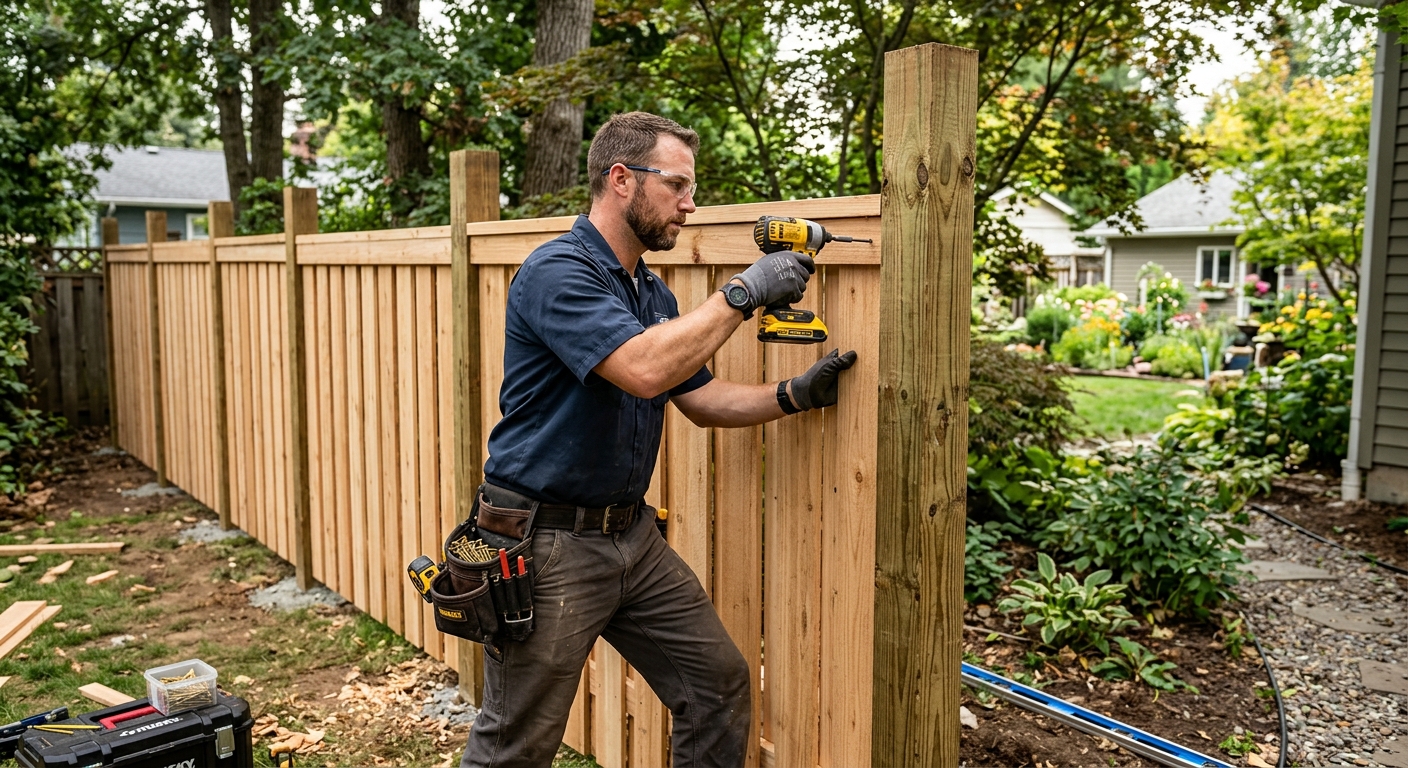
Fencing options and costs in Agassiz
Agassiz is a smaller Fraser Valley community (population 6,300 per the Statistics Canada, 2021 Census), but fenced lots are everywhere because homes still need practical boundaries, pets need secure runs, and many yards are designed for privacy. A key local demand driver is housing stock: Lower Mainland neighbourhoods in the region often include a high share of detached homes, and each detached property is a potential fencing project (Statistics Canada, 2021 Census). If you’re planning a new boundary, replacing an aging barrier, or upgrading privacy along a backyard, you’ll find several good material choices—each priced differently.
In the Lower Mainland–Southwest, the climate is mild but not trivial: frost and wind still matter, and wet soils can be unforgiving for posts that aren’t installed deep enough or set correctly. Contractors price more for jobs with heavier wet digging, deeper holes for stability, and panels that need extra bracing in windy stretches. That’s why two similar fences can differ noticeably when one yard has dense clay or drainage issues and the other is a clean, workable site. Labour availability can also shift with season—late spring and early summer installs are typically the busiest time.
In Agassiz itself, trades often see steady demand in family-heavy pockets like the residential areas around downtown and the newer fringe streets where homeowners upgrade from older wire or short wood runs to privacy fencing. With that context, the table below compares common options and what you can realistically budget per linear foot.
| Material |
Lifespan |
Maintenance |
Privacy Rating |
Price per Linear Foot |
Price Range |
| Pressure-treated pine (standard wood) |
10–15 years |
Stain/seal every 2–3 years |
Medium–High (solid panels) |
$55–$95 |
$2,000–$6,000 |
| Cedar (natural rot resistance) |
15–25 years |
Light stain/oil every 2–4 years |
High (solid cedar boards) |
$70–$110 |
$2,800–$7,000 |
| Vinyl / PVC (no-maintenance) |
20–30 years |
Rinse annually; minimal repairs |
High (solid vinyl styles) |
$75–$130 |
$3,000–$8,500 |
| Chain-link (galvanized steel) |
25–40 years |
Occasional re-tension and coating checks |
Low (see-through) |
$30–$55 |
$1,200–$4,500 |
| Aluminum ornamental |
30–45 years |
Wash as needed |
Low–Medium (open pickets) |
$90–$170 |
$3,500–$10,000 |
| Composite / recycled material |
20–30 years |
Clean only; replace boards if damaged |
Medium–High (solid composite lines) |
$90–$160 |
$3,200–$10,500 |
Prices are estimates only and vary by project scope, site access and material selection.
What affects the price of fencing in Agassiz
In Agassiz and across the Lower Mainland–Southwest, fencing quotes can swing by 30–50% for the “same” height and length because the installer’s realities differ: soil conditions, access for a post-hole auger, the amount of concrete setting, and how many gate parts or reinforced corners you need. On top of that, material costs and the crew’s time per panel are different province-wide; Vancouver/Surrey/Abbotsford-area demand can push labour rates up compared with quieter pockets in other regions of British Columbia. The result is that two homeowners may compare a vinyl price that looks similar on paper, but one includes deeper post embedment, proper bracing, and disposal—while the other doesn’t.
Post depth is the big technical driver. Frost line depth sets how deep posts must be set—typically 4–6 inches below the design frost depth—to reduce heaving. While Agassiz is coastal-influenced (shallower than inland Canadian regions), contractors still commonly set posts deeper than the bare minimum for wet-soil stability, especially at corner posts, privacy sections, and gates. In colder provinces like Ontario and Alberta, crews often end up 1.5–2.0 m into the ground, which is why you’ll see concrete setting and longer posts reflected in labour and material totals. Wind exposure also matters: prairie-style assumptions don’t fit Agassiz perfectly, but wind off open lots can still justify tighter post spacing and heavier panel frames.
Concrete examples from Fraser Valley installs: (1) wet clay can mean more excavation time and extra concrete because holes don’t hold shape—raising costs versus a dry, workable site; (2) sloped yards often require stepped or raked rails, increasing labour versus flat grades; (3) if you’re replacing old wood with rotted bases, disposal and post removal add time. As a reference point, a typical wood privacy upgrade often lands inside the $55–$95 band, while vinyl/PVC privacy generally runs $75–$130 depending on style and reinforcement.
| Price Factor |
Why It Matters |
Cost Impact |
| Fence length in linear feet |
The more panels, rails, and posts you need, the more labour and material time. |
Highest driver; small length changes move total cost quickly. |
| Post depth required |
Frost risk and soil stability determine post length and hole depth. |
Deeper holes add concrete, auger time, and longer materials. |
| Post setting method |
Concrete vs gravel pack vs driven posts changes labour, strength, and longevity. |
Concrete setting typically costs more but performs better in wet soils. |
| Material choice |
Vinyl/PVC needs stronger structural components; cedar needs different handling; chain-link is lighter. |
Shifts you between the regional bands (e.g., chain-link lowest, vinyl mid-high). |
| Gate count and type |
Drive-through and wide gates require heavier frames, latches, and often double posts. |
Gate work can add a noticeable fixed premium. |
| Grade and terrain |
Slopes require stepped/raked panels and additional layout time. |
Often increases labour by more than most homeowners expect. |
| Old fence removal and disposal |
Rotten posts, buried rails, and debris handling add time and load-out costs. |
Can add a one-time removal/disposal line item. |
| Permit fees and survey / property line locate |
Some installations require administrative steps and documented boundaries. |
Often small relative to total, but it can change the schedule and scope. |
Permits & regulations in British Columbia
In British Columbia, fence permitting depends mainly on the fence’s height and location. As a practical rule of thumb, fences above about 2.0 m (6.5 ft) at the rear and above roughly 1.0–1.2 m (3–4 ft) at the front or corner often trigger a building permit requirement. Even when a permit is not required, the fence must respect property lines and the local municipal setback rules that apply in your area. Before you dig any post hole in Agassiz, call for utility locates—use BC 1 Call—so crews can avoid buried services (hydro, telecom, gas, and irrigation lines).
To prevent boundary disputes, many homeowners should also obtain a survey or at least locate the property pins before installation. Line-fence situations (like shared boundaries between neighbours) are governed by provincial line-fences legislation, which affects ownership expectations and responsibilities when maintenance or replacement is needed.
What typically DOES require a permit: taller fences (especially over the rear/front thresholds noted above), and structures or fencing that sit within areas requiring additional review by the municipality. What typically does NOT: routine replacement of an existing fence at the same height and footprint, and standard low residential fences within common height limits—though you should confirm because bylaws vary by location.
To verify a contractor in British Columbia, ask for three things and check them: (1) a valid BC business/contractor licence number (look it up on the provincial registry/online sources); (2) a current certificate of insurance showing they’re covered for general liability; and (3) evidence they have WSIB/WCB coverage (workers’ compensation coverage). For each document, request the latest clearance letter or coverage confirmation and confirm the expiry dates before work starts.
Choosing the right fence material for Agassiz
Choosing a fence in Agassiz is really choosing how you want to balance privacy, maintenance, and long-term durability in a wet-mild coastal climate. Pressure-treated pine is usually the budget option and installs easily, but it needs staining or sealing every 2–3 years to limit grey weathering and surface checking. Cedar costs more upfront, but its natural rot resistance and attractive grain make it a favourite for backyard privacy where homeowners want a warmer look. Vinyl/PVC is the “set it and forget it” choice for many families—low maintenance and resistant to rot—but extreme cold snaps can stress some lower-quality rails and posts if the framing isn’t built correctly.
Chain-link is the lowest-cost fencing material and often lasts the longest structurally, but it provides little privacy unless you add slats, privacy mesh, or choose a higher framework design. Aluminum ornamental is mid-range to high in cost: it won’t rust and looks clean year after year, but it’s mostly for visibility and curb appeal, not sound or privacy blocking.
Post depth matters in the Lower Mainland–Southwest. Even with shallower frost conditions than colder provinces, proper embedment is still important to prevent movement in wet soils. Many installers use deeper holes and concrete setting for corner posts, privacy rails, and gate posts rather than relying only on minimal embedment. Wind and snow load considerations are most relevant for heavier solid panels: if your yard is exposed, you’ll want tighter spacing and stronger bracing.
Where price differences make sense: if you’re comparing wood at roughly $2,000–$6,000 versus vinyl privacy at around $3,000–$8,500 for a typical homeowner run, the extra upfront cost can be justified if you want to avoid recurring staining and repairs and plan to stay in the home long enough to spread the investment over 10–20+ years.
| Material |
Cold Tolerance |
Lifespan |
Annual Maintenance |
Best For |
Price Band |
| Pressure-treated pine |
Good; protect the finish in freeze–thaw wet periods |
10–15 years |
Stain/seal check and touch-ups as needed |
Budget privacy with willing maintenance |
$55–$95 |
| Cedar |
Good; performs well in damp, mild coastal conditions |
15–25 years |
Seal/oil plan every 2–4 years |
Attractive privacy that resists rot |
$70–$110 |
| Vinyl / PVC |
Very good; quality framing needed to prevent cracking |
20–30 years |
Rinse and inspect fasteners after storms |
Low maintenance privacy |
$75–$130 |
| Chain-link |
Excellent; galvanization handles winter well |
25–40 years |
Occasional tensioning and coating checks |
Security and pet containment |
$30–$55 |
| Aluminum ornamental |
Excellent; no rust in wet conditions |
30–45 years |
Wash and inspect annually |
Front yard curb appeal with light privacy |
$90–$170 |
| Composite / recycled |
Good; keep boards supported and spacing correct |
20–30 years |
Clean and inspect for damage |
Consistent look with low maintenance |
$90–$160 |
How to choose a fencing contractor in Agassiz
Start by verifying the basics in British Columbia, because fencing is part structural work, part site work. Ask for proof of licensing (and confirm the details online if you can), general liability insurance, and workers’ compensation coverage. For coverage, request documentation showing WSIB/WCB compliance and ensure the dates are current; a contractor should also carry liability appropriate for excavating, material handling, and gate hardware installation.
Next, get 2–3 itemised written quotes—not one lump sum. You want a breakdown that separates labour and materials (posts, rails, panels, fasteners, gates), and a clear line for concrete setting, removal, and disposal if you need it. Read the exclusions: for example, is site prep included (clearing shrubs, repairing sprinkler lines, levelling), are permit or property-line locate fees included, and does the quote include garbage load-out for old fence sections?
Warranty matters. Ask for the workmanship warranty length (how long the contractor stands behind alignment, post movement, and install defects) and the product/manufacturer warranty (what’s covered for materials like vinyl rails or composite boards). Also ask whether the warranty is transferable if you sell the property.
Payment schedule should be conservative. Never pay more than 10–15% upfront; hold back a portion until completion and punch-list items are addressed. Finally, ask for a written timeline: a start date and a realistic completion estimate based on weather and access.
- Confirm BC licence details and that the company name matches the quote contract.
- Request a certificate of insurance and verify it’s current before work begins.
- Ask for workers’ compensation coverage confirmation (WSIB/WCB) and confirm expiry dates.
- Require itemised labour + materials pricing (posts, rails, panels, gate hardware).
- Confirm post-setting method (concrete vs gravel pack) and embedment expectations for frost stability.
- Clarify corner posts, line posts, and gate reinforcement spacing in the written scope.
- Check whether slope work includes stepped or raked panels and who sets the final grades.
- Verify old fence removal and disposal is included or quoted as a separate line.
- Ask whether permit pulling (if required) is included or billed separately.
- Make sure property line locate/survey requirements are addressed before digging.
- Get a written start date and completion window that accounts for rain delays.
- Confirm warranty terms in writing: workmanship vs product warranty, and coverage transferability.
Concrete red flags I see around Agassiz: contractors who won’t put embedment and post-setting details in the contract, quotes that lump everything together without listing gates/rails/hardware, vague warranty language (“we’ll fix it if needed” with no term), asking for large upfront payments, or refusing to provide insurance/coverage proof in advance.
Frequently asked questions — fencing in Agassiz
How deep should fence posts be for Agassiz's frost?
For Agassiz, you still need to design for frost movement and wet-soil stability, even though the coastal climate is generally milder than inland Canada. A common practice is to set posts so the embedment sits about 4–6 inches below the design frost depth, then adjust in wetter Fraser Valley soils for stability. In practice, many crews end up setting line posts deeper than a simple “minimum,” particularly for corner posts, privacy panels, and gate posts. If the contractor is proposing very shallow holes, asks for minimum concrete, or won’t discuss embedment and post reinforcement, that’s a safety and longevity concern. This is also why quotes can differ: deeper holes mean more excavation time, more concrete, and longer posts.
Wood vs vinyl vs aluminum fence — which is best?
“Best” depends on what you value most. If budget and classic look matter, pressure-treated pine usually comes in around the wood band of $55–$95 per linear foot, and cedar often costs more but can last longer with better appearance in damp conditions. If you want the lowest maintenance path in British Columbia, vinyl/PVC is popular—commonly priced in the $75–$130 band—because it resists rot and won’t require staining. Aluminum ornamental is typically higher (often $90–$170) and is best for visibility and curb appeal rather than privacy. For a backyard privacy goal in Agassiz, vinyl or cedar privacy styles usually make the most sense; for security with less privacy, chain-link is often the most cost-efficient.
Do I need a permit to build a fence in British Columbia?
In British Columbia, permits depend largely on fence height and placement. As a rule of thumb, fences above about 2.0 m (rear) and above roughly 1.0–1.2 m (front or corner) often require a building permit. Even if a permit isn’t triggered, your fence must still follow property line rules and municipal setback bylaws that apply to your location in Agassiz. Before digging post holes, you should also ensure utility locates are completed through BC 1 Call. For your specific project, a reputable local contractor should help you confirm whether a permit is likely required and should clearly state in the quote whether permit pulling is included or separate.
How long does a wood fence last in Agassiz?
A properly installed wood fence in Agassiz commonly lasts about 10–15 years for pressure-treated pine, with cedar typically reaching 15–25 years due to its natural rot resistance. Lifespan depends less on the board alone and more on how the fence is built: correct post embedment for frost stability, quality drainage around post holes, and proper treatment/finish to reduce grey weathering in wet seasons. If posts are set too shallow or corners and gates aren’t braced, movement can accelerate wear even if the boards are durable. Maintenance is also important—wood generally needs staining or sealing on a cycle (often every 2–3 years for pressure-treated pine) to keep it looking good and reduce surface breakdown.
Who owns and maintains a shared fence?
Shared fence ownership and maintenance responsibilities in British Columbia are governed by provincial line-fences legislation, and the “shared” nature is usually determined by the location on or near the boundary and how neighbours have historically treated it. Practically, this means you may be responsible for portions of repair or replacement depending on who owns the affected section and what the agreement or legal boundary indicates. In Agassiz, where lots can have older wire or wood boundaries, it’s common to clarify the exact line before replacement. A good next step is to confirm property pins or obtain a survey locate before spending money—disputes over encroachment are expensive and delay timelines. A contractor should be willing to follow the agreed boundary line and document the layout.
How do I find my property line before fencing?
The safest method is to locate your property pins (or have a survey done) before you dig in Agassiz. Many homeowners start by finding existing pin markers and/or documentation from a prior survey, then coordinate with a contractor or locator for a precise layout. Avoid estimating from a fence line you inherited, because older fences can be offset from the true boundary. Before digging, ensure utility locates are completed via BC 1 Call, then confirm the line again to prevent costly encroachment issues. If you’re replacing an existing fence, ask your contractor to show you how they’re setting the layout relative to the pins or locate information. This is one of the best ways to reduce neighbour disputes.