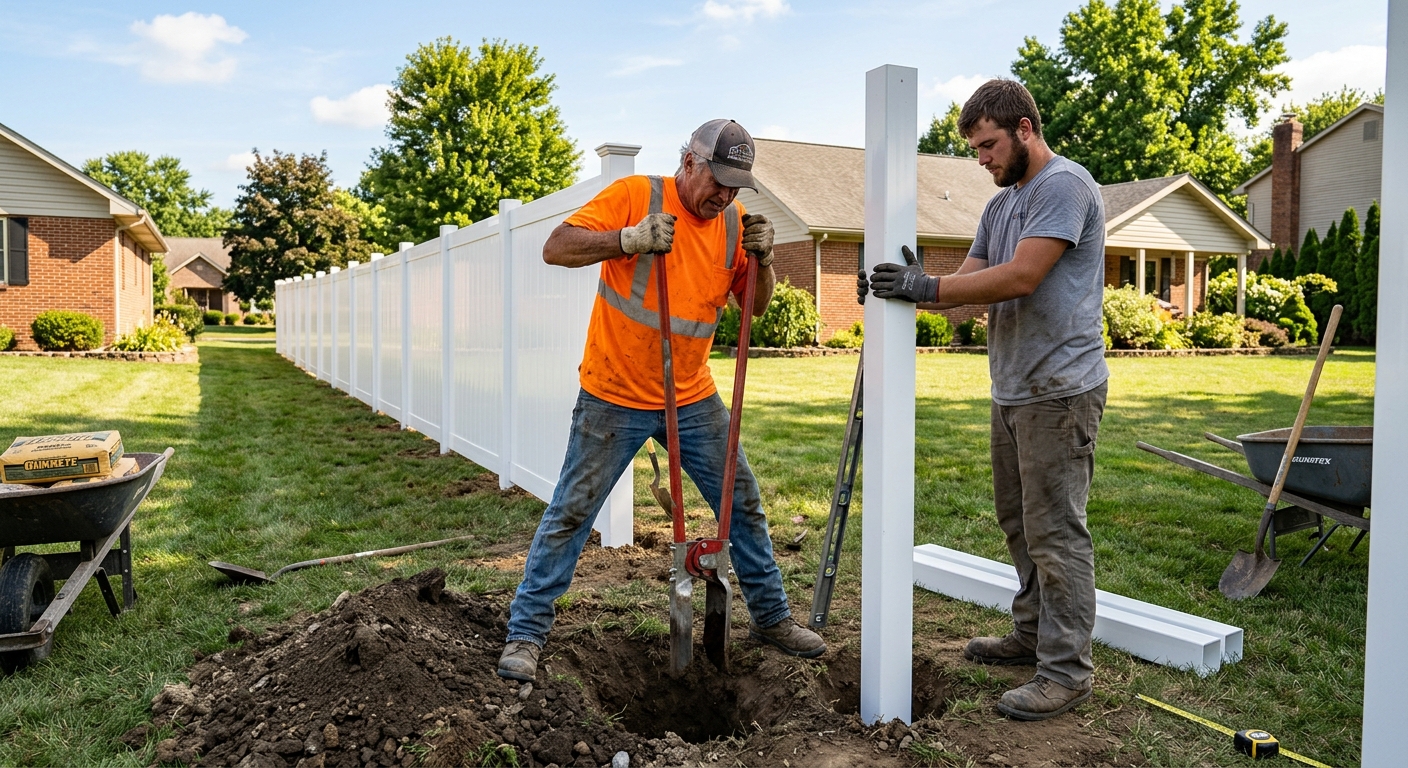
Fencing options and costs in Saanichton
Saanichton is a small community on Vancouver Island (population 1,565 as of the 2021 Census, Statistics Canada), and that matters because demand is tied closely to how many detached properties and family lots there are—each fence line is a practical part of day-to-day living. In the Saanichton area, fencing work is especially active in neighbourhoods where backyards run long along treed lots and where wind off the Strait of Georgia meets more exposed frontages, such as around Prospect Lake and the Saanichton–North Saanich corridor.
On Vancouver Island and the Coast, your fence costs are shaped less by deep freezes and more by persistent moisture, coastal wind, and the reality that posts still must be set safely below the frost line to prevent heaving and long-term leaning. Even though the frost line is relatively shallow (about 45–60 cm), contractors commonly bury posts around 75–90 cm with solid footings where soil is saturated, clay-rich, or hard to dig through. That added labour is part of why quotes can feel higher than expected when compared with inland regions.
For homeowners, the trade-off usually comes down to wind performance, corrosion resistance, and maintenance time. If you want maximum privacy, solid wood or vinyl can be a good fit, but wind exposure often means closer post spacing or heavier components. If you want the lowest upfront cost and the longest service life with minimal upkeep, chain-link is hard to beat. The comparison table below gives you realistic ranges for common material choices in Saanichton, so you can map your priorities to budget before you request itemised quotes.
| Material |
Lifespan |
Maintenance |
Privacy Rating |
Price per Linear Foot |
| Pressure-treated pine (standard wood) |
10–15 years |
Stain or seal every 2–3 years; inspect posts after heavy wet winters |
High (solid panels) |
$18 – $26 |
| Cedar (natural rot resistance) |
15–20 years |
Typically re-stain every 3 years; keep bottoms clear of standing water |
High (solid panels) |
$22 – $34 |
| Vinyl / PVC (no-maintenance) |
20–30 years |
Rinse as needed; check for panel warping in extreme cold snaps |
High (solid or semi-privacy styles) |
$24 – $40 |
| Chain-link (galvanized steel) |
20–35 years |
Occasional spray/wash; re-tighten hardware as needed |
Low–medium (open visibility) |
$12 – $18 |
| Aluminum ornamental |
25–40 years |
Wash off coastal grit; inspect for loose fittings after storms |
Low–medium (ornamental pickets) |
$20 – $36 |
| Composite / recycled |
20–30 years |
Minimal upkeep; remove mildew early in damp seasons |
Medium–high (depending on slat density) |
$28 – $45 |
Prices are estimates only and vary by project scope, site access and material selection.
What affects the price of fencing in Saanichton
In Saanichton, two quotes for what looks like the “same fence” can still land 30–50% apart on Vancouver Island and Coast. The biggest reason is that the quote isn’t just materials—it’s the labour needed to dig accurately in wet ground, set posts correctly below frost, and keep everything plumb and aligned in wind. On a small population base like Saanichton (1,565 residents, Statistics Canada, 2021 Census), contractor availability can also tighten seasonally, which influences scheduling and minimum project charges.
Even though coastal frost is relatively shallow (roughly 45–60 cm), posts still need to be set below frost depth to prevent heaving. That typically means digging deeper than you’d do in milder climates—often about 4–6 inches (10–15 cm) under the design frost depth, and in practice around 75–90 cm for typical residential fence posts. Where soil is saturated or clay-rich, expect concrete-set posts more often, because it improves stability and reduces long-term leaning. In colder Ontario and Alberta, posts often need to go 1.5–2.0 m into the ground, which is one reason those regions can look cheaper on paper only until you factor in longer posts and concrete labour—British Columbia often needs less depth, but not less care.
Wind exposure is another pricing driver. Solid privacy fences catch more wind and may require closer post spacing, heavier rails, and more bracing; open styles like chain-link or aluminum can use standard spacing with fewer reinforcement pieces. In Saanichton, you’ll also see wood rot progress faster when pressure-treated pine or cedar isn’t detailed well (air gaps at the bottom, good post flashing where appropriate, and proper stain/seal timing). For example, a 60-foot privacy run could land around $55–$85 per linear foot for wood installs in budget-to-mid projects, while vinyl/PVC frequently pushes higher—often aligning with $70–$110 per linear foot depending on height, picket density, and post/rail upgrades. Where rock pockets or slopes force stepped panels, labour rises quickly because alignment takes time.
| Price Factor |
Why It Matters |
Cost Impact |
| Fence length in linear feet |
Everything is costed per foot plus setup, posts, and fittings that scale with length |
High (primary driver) |
| Post depth required |
Frost line requirements determine how long posts must be and how deep holes must be dug |
Medium–High |
| Post setting method |
Concrete vs. gravel pack vs. driven posts changes labour, material, and disposal effort |
High when concrete is required |
| Material choice |
Vinyl, cedar, and chain-link have different supply costs and different hardware/rail needs |
High (varies by material band) |
| Gate count and type |
Drive-through and double gates add heavy frames, hinges, and alignment time |
Medium–High per gate |
| Grade and terrain |
Slope often requires stepped/raked panels and more measuring to keep the top line consistent |
Medium |
| Old fence removal and disposal |
Demolition, haul-away, and extra disposal fees can exceed the cost of install materials |
Medium–High |
| Permit fees and survey / property line locate |
Locates prevent encroachment disputes; permits can add time and administrative cost |
Low–Medium (but schedule impact) |
Permits & regulations in British Columbia
In British Columbia, fences generally must respect property lines and local setback rules, and many municipalities also have height thresholds where a building permit may be required. Practically, a fence around 2.0 m (6.5 ft) at the rear and about 1.0–1.2 m (3–4 ft) at the front or corner is often the point where permits come into play—exact rules can vary by site and location, so treat this as a common benchmark rather than a guarantee. If your proposal is near a corner lot, adjacent to a lane, or affects a sightline, it’s wise to verify early to avoid rework after posts are already set.
Before digging any post holes, arrange utility locates—this matters even on small Saanichton projects. In British Columbia, you can use BC 1 Call for underground utility markings. Also consider obtaining a survey or confirming your property pins/line locations, because fencing disputes often begin with a “perfectly installed” fence that’s actually over the line.
Shared fence ownership is governed by provincial line-fences legislation, but the easiest way to reduce conflict is to document agreement in writing if you’re building on/near a boundary.
How to verify a contractor in Saanichton: ask for (1) their applicable licence or registration information where relevant for fencing contracting in BC, (2) proof of liability insurance, and (3) their worker coverage (WSIB is common terminology in some provinces; the practical check in BC is ensuring worker compensation coverage through the appropriate scheme). Look for a current certificate of insurance, coverage dates, and that the business is the named insured. For clarity, request a clearance letter where available and confirm the policy limits are appropriate for property work and overhead risk.
Choosing the right fence material for Saanichton
Choosing a fence in Saanichton is mostly about matching the material to your tolerance for maintenance and your tolerance for wind. Vancouver Island and the Coast are mild compared to the Prairies, but they’re still wet and windy—so even “rot-resistant” materials need correct detailing, and even “no-maintenance” materials still require solid post support and good installation.
Pressure-treated pine is the budget-friendly choice, but it will need staining or sealing every 2–3 years to stay looking good and to reduce grey weathering. Cedar is often the best-looking natural option with better rot resistance, yet it still benefits from periodic maintenance—especially where sprinkler overspray or saturated soil keeps the bottom boards damp. Vinyl/PVC can be very appealing because it’s easy to care for and doesn’t need annual staining, but panels can become brittle in extreme cold snaps and can warp if rail bracing and post spacing aren’t engineered for wind. Chain-link is the lowest-cost, longest-life option, but it won’t give you privacy unless you add screening. Aluminum ornamental gives you rust resistance and a tidy look without paint maintenance, though it is typically a privacy “upgrade” only with slats or landscaping.
For post depth: even with a shallow coastal frost line (about 45–60 cm), Saanichton installs commonly bury posts around 75–90 cm and use concrete-set footings where soils are clay-rich, wet, or where stability is critical. In wind-exposed areas, privacy fences should have closer post spacing and heavier top rails so the fence doesn’t “oil-can” under gusts. Where snow load is a concern (drifts along fences and windward sides), ensure panels and pickets are securely fastened and that the gate hardware is rated for the forces.
Dollar example: if you’re choosing between wood and vinyl for a similar 6-ft privacy run, wood may land in the $55–$85 per linear foot band, while vinyl often comes in higher—commonly aligning with the $70–$110 per linear foot range. The price difference is usually justified when you want to avoid staining for a decade or more, and you’re selecting a system with proper post/rail engineering rather than a lighter “budget” vinyl build.
| Material |
Cold Tolerance |
Lifespan |
Annual Maintenance |
Best For |
Price Band |
| Pressure-treated pine |
Good (with correct installation and finishing) |
10–15 years |
Light inspection; stain/seal as needed (often 2–3 years) |
Budget privacy with acceptable upkeep |
$55 – $85 |
| Cedar |
Good (with periodic sealing and good airflow) |
15–20 years |
Re-stain/re-seal when weathered (often 3 years) |
Natural look and stronger rot resistance |
$60 – $95 |
| Vinyl / PVC |
Moderate to good; needs proper bracing in wind |
20–30 years |
Rinse and check fasteners; no routine staining |
Low-maintenance privacy |
$70 – $110 |
| Chain-link |
Excellent |
20–35 years |
Minimal; wash and tighten hardware |
Security with budget control |
$35 – $60 |
| Aluminum ornamental |
Excellent |
25–40 years |
Wash off coastal grit; inspect fittings |
Durable curbside appearance |
$80 – $140 |
| Composite / recycled |
Good (system-dependent) |
20–30 years |
Low; remove mildew early after damp seasons |
Maintenance-light privacy look |
$75 – $125 |
How to choose a fencing contractor in Saanichton
To pick the right fencing contractor in Saanichton, focus on proof—not just promises. Start with British Columbia coverage: request (1) documentation of the contractor’s applicable licence/registration for their trade scope where required, (2) liability insurance certificate showing the named insured, current policy dates, and appropriate limits for property work, and (3) worker compensation coverage appropriate for BC (homeowners should not assume coverage). Where available, ask for a clearance letter or confirmation document stating workers are covered for the term of the project. If a contractor can’t provide these promptly, that’s a major red flag.
Next, ask for 2–3 itemised written quotes. You want a breakdown that separates labour and materials (including fence panels, posts, rails, fasteners/hardware, concrete/setting material, gate frames, and any coatings), and a line item for site work like digging, disposal/haul-away, and utility locate coordination. Avoid lump-sum quotes that don’t state what’s included.
Read the scope carefully. Is permit pulling included if needed, or is it your responsibility? Who pays for utility locates—your call or the contractor’s? Will they remove and dispose of the old fence, or only take it offsite for a separate fee? Confirm your workmanship warranty length, whether it covers post settling, leaning, and material fastener failures, and whether the product/manufacturer warranty is provided under your ownership (and whether it is transferable if you sell the home). Also ask for a payment schedule: never pay more than 10–15% upfront, and hold back the remainder until the fence is completed and walkthrough items are finished. Get the start date and completion timeline in writing, including weather contingencies for wet post-hole digging in coastal conditions.
- Ask for the contractor’s BC licence/registration details and verify the scope matches fencing work.
- Request a current liability insurance certificate before work begins; check the policy expiry date.
- Confirm worker compensation coverage in writing (and request a clearance letter if available).
- Get 2–3 itemised quotes separating labour, materials, gates, and concrete/disposal.
- Ensure the quote states post depth approach (how far below frost is planned) and setting method.
- Confirm whether concrete footings are included or only added “if required.”
- Ask whether utility locates are included and who contacts BC 1 Call.
- Verify whether permit pulling is included when height/setbacks trigger it.
- Clarify gate hardware specs (hinge type, latch quality, and whether it’s rated for wind loads).
- Confirm warranty terms: workmanship duration, what failures are covered, and start date of warranty.
- Agree on payment milestones with a holdback until final grade and alignment are confirmed.
- Request a written timeline including weather delays and curing time for any concrete-set posts.
Concrete red flags I see in Saanichton: (1) “We’ll just set posts shallow to save time” with no frost-depth explanation, (2) quotes that lump everything together without listing gates, rails, concrete and disposal, (3) no certificate of insurance provided on request, (4) skipping utility locates before digging, and (5) a payment schedule asking for large upfront deposits (bigger than 10–15%).
Frequently asked questions — fencing in Saanichton
How do I prevent wood fence rot in Saanichton?
To prevent rot in Saanichton (Vancouver Island and the Coast), the key is detail: correct post depth, good drainage, and proper finishing. Even though coastal frost is shallow (often roughly 45–60 cm), contractors typically bury posts around 75–90 cm and recommend concrete-set footings where soil stays wet or clay-rich—this reduces heaving and keeps bottoms from sitting in damp ground. For wood, pressure-treated pine should be stained or sealed regularly (often every 2–3 years) to limit grey weathering and moisture absorption; cedar generally still needs periodic re-staining. Also make sure panel bottoms have airflow and aren’t touching soil or stacked mulch. If you’re replacing a failing section, don’t reuse visibly soft posts—rotted posts are what usually reappears first after a wet winter. (Statistics Canada, 2021 Census)
What is the cost per linear foot for fencing in Saanichton?
In Saanichton, typical installed price bands depend heavily on material and how much site work is required. For wood fencing, many residential projects land around $55–$85 per linear foot, while vinyl/PVC often comes in higher—commonly $70–$110 per linear foot depending on height, post spacing, and gate complexity. Chain-link usually sits lower at about $35–$60 per linear foot, and aluminum ornamental often ranges $80–$140 per linear foot because hardware and framing are more involved. Final pricing can change if you need concrete-set posts more frequently (wet, clay, or unstable soil), add stepped panels for a slope, or include old fence removal and disposal. If you’re comparing quotes, ask for the same assumptions across all bids (post depth, setting method, gate inclusions, and disposal) so you’re not comparing apples to “almost the same” fences.
Should I repair or replace my old fence in Saanichton?
Repair is usually sensible when only a few panels or pickets are damaged and the posts remain solid (no soft wood at the base, no noticeable leaning after winter). Replacement becomes the better value when rot has reached posts, rails have failed, or the fence line has shifted enough that new sections won’t align cleanly. Coastal moisture and frequent wind mean small issues can spread faster: if you replace just the slats over compromised posts, you may be paying again after another wet season. As a rule of thumb, if more than about 25–30% of the fence line has post or rail failures, full replacement often costs less over the long term. If you tell your contractor the exact sections you want addressed, ask for a written breakdown showing labour and materials for both options, then compare warranty coverage—not only the install price.
How do I handle a fence dispute with a neighbour in British Columbia?
In British Columbia, fence disputes usually come down to boundary location, shared ownership, and who is responsible for costs. Start by confirming the property line (using your survey if you have one, or arranging a property pin locate) before you build anything. If the fence is already installed, measure and document where it sits relative to pins—photos and a simple sketch help. Because coastal sites in Saanichton can have slopes and irregular lot lines, “it looks right” isn’t enough. If the fence is a boundary fence, provincial line-fences legislation can apply, but homeowners still should aim for a written agreement with the scope and cost share. For the practical steps: talk calmly, share your evidence, and request that both sides use a contractor to provide an assessment and a clear written scope. If you need to escalate, consult the appropriate local process or professional advice rather than stopping mid-project.
What fence style offers the best wind resistance in Saanichton?
In Saanichton, wind resistance is about resisting “sail” forces and preventing movement at the post base. Solid privacy fences can perform well, but they typically need heavier framing, closer post spacing, and often more robust concrete-set foundations—especially on windward sides. If you’re in a particularly exposed area, open styles like chain-link or aluminum pickets usually fare better because wind passes through the structure rather than pushing against a full panel surface. That said, chain-link still needs proper tensioning and correctly set end/corner posts so the fence doesn’t loosen over wet, gusty seasons. If privacy is non-negotiable, consider designs that are vented or use adjustable screening rather than a fully solid wall. Ask contractors to describe their bracing plan and how they’ll handle coastal gusts, not just the material name.
How much does a fence cost in Saanichton?
Your total fence cost in Saanichton depends on linear footage, fence height, material, gate quantity, and site conditions (access, slope, soil moisture and whether concrete footings are planned). As quick budgeting anchors: wood installations often fall in the $55–$85 per linear foot band, vinyl/PVC frequently lands around $70–$110 per linear foot, chain-link is commonly $35–$60 per linear foot, and aluminum ornamental is typically $80–$140 per linear foot. If you need extra work—like old fence removal and disposal, stepped panels for a sloped yard, or a double drive-through gate—the total can rise even if the material is mid-range. To get an apples-to-apples number, request itemised quotes that spell out post depth, post setting method, gate hardware, and disposal/permit assumptions. For a small 40- to 60-foot run, those line items often make the difference between a fair price and an expensive surprise.