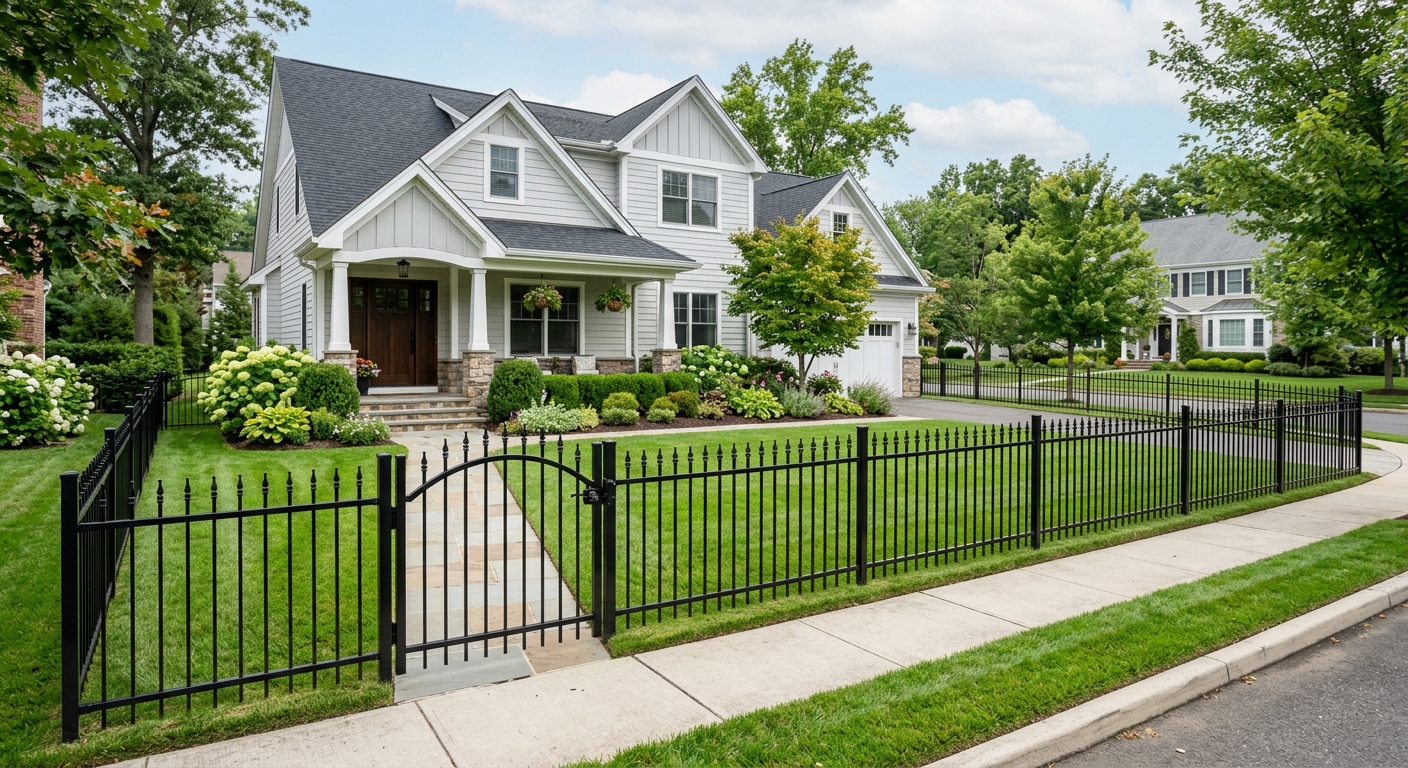
Fencing options and costs in Golden
In Golden, fence projects usually start with a simple question—how much privacy and longevity do you need—and then quickly move into the real driver: how deep posts must be set to survive Thompson–Okanagan freeze–thaw cycles. With 1,200 homeowner households in town (Statistics Canada, 2021 Census) and a housing mix where single-detached homes make up 56.5% of dwellings, demand for perimeter and backyard fences is steady because detached properties typically have larger yard lines to enclose or beautify.
Golden sits in the interior climate, where frost can be deeper than coastal BC and where wind can be noticeable on open benches and exposed lots. In practice, local crews design for frost movement by setting posts below the regional frost zone—often about 4–6 inches deeper than the design frost depth—so posts don’t heave and loosen the rails. That commonly pushes you toward concrete-set posts and longer lumber than you’d see in milder coastal microclimates. At the same time, older housing stock matters: over half of local homes were built before 1981 (Statistics Canada, 2021 Census), so many projects include replacing aging fences that have already started to twist, rot, or lean, raising labour and sometimes disposal costs.
On residential areas like Columbia Valley and parts of downtown Golden, homeowners often prioritize strong, maintenance-smart installs that can handle winter moisture and summer sun. Use the table below as a quick comparison of typical materials and what that means for your budget.
| Material |
Lifespan |
Maintenance |
Privacy Rating |
Price per Linear Foot |
| Pressure-treated pine (standard wood) |
12–18 years |
Stain/seal every 2–3 years |
Good (solid or close-board) |
$55–$85 |
| Cedar (natural rot resistance) |
18–25 years |
Ongoing stain/oil every 2–4 years |
Good to excellent (solid boards) |
$65–$95 |
| Vinyl / PVC (no-maintenance) |
20–30 years |
Wash as needed (no painting) |
Good to excellent (solid styles) |
$75–$115 |
| Chain-link (galvanized steel) |
25–35 years |
Rinse, occasional tension adjustment |
Low (security only) |
$35–$60 |
| Aluminum ornamental |
25–40 years |
Wash as needed; inspect gate hardware |
Low to medium (open pickets) |
$90–$150 |
| Composite / recycled material |
20–30 years |
Wash; minor repairs if damaged |
Good (depending on style) |
$90–$140 |
Prices are estimates only and vary by project scope, site access and material selection.
What affects the price of fencing in Golden
In Golden, two fence builds that look identical on paper can come in 30–50% apart once you factor in the Thompson–Okanagan frost depth, soil conditions, and wind exposure across specific lots. On milder coastal properties, crews can sometimes use shorter, simpler post setups, whereas in interior areas you typically design for deeper post footing so you don’t pay again for repairs after freeze–thaw movement. Labour availability can also shift seasonally; winter shutdowns and spring thaw access can compress scheduling, and that influences total quote pricing.
Frost line depth is the big one. A practical rule of thumb used by local contractors is to set posts about 4–6 inches below the design frost depth to help prevent heaving. In colder interior pockets, that often means setting posts closer to 75–90 cm or deeper below grade (and in tougher soils, deeper and larger footings). When concrete-set posts are required, you’re buying more materials and spending more auger and labour time, which pushes costs into the higher end of the wood range (roughly $55–$85) and can also narrow the savings gap versus vinyl/PVC ($75–$115) depending on your fence height and panel style.
Golden examples that raise costs include clay-heavy or poorly drained areas where holes collapse or require more gravel/concrete prep, and sloped yards near creeks or retaining areas where you need stepped panels or custom racking. Costs can lower when your yard is relatively flat, your access is good for a post-auger, and the fence line has easy-to-dig soil. Older fence removal can also swing the quote, especially if you need stump grinding-like access, hauling, and disposal beyond just “take it away.”
| Price Factor |
Why It Matters |
Cost Impact |
| Fence length in linear feet |
The number of posts, rails, and panels scales directly with length. |
Major—often the largest portion of the quote. |
| Post depth required |
Frost movement determines required hole depth and post length. |
Medium to major—can change concrete needs. |
| Post setting method |
Concrete vs. gravel pack vs. driven posts affects labour and materials. |
Medium—concrete typically adds cost. |
| Material choice |
Vinyl/PVC is higher upfront but lower lifetime work; chain-link is cheaper and fast. |
Medium—can shift between $35–$60 and $90–$150 bands. |
| Gate count and type |
Gates require stronger framing, hinges, latches and sometimes taller posts. |
Medium—double gates cost more than walk gates. |
| Grade and terrain |
Slopes require racking/stepped sections and additional labour. |
Medium—more fitting time, sometimes more posts. |
| Old fence removal and disposal |
Hauling costs and extra labour to disconnect/wrap materials. |
Small to medium—large if the fence is long or damaged. |
| Permit fees and survey / property line locate |
Verification reduces the risk of rebuilding after an encroachment dispute. |
Small to medium—varies by site complexity. |
Permits & regulations in British Columbia
In British Columbia, fences above a height threshold—typically 2.0 m (6.5 ft) at the rear and 1.0–1.2 m (3–4 ft) at the front or corner—often require a building permit. Even when a permit isn’t required, all fencing must respect property lines and the applicable municipal setback requirements. Before you dig any post hole, you must arrange utility locates through the proper call-before-you-dig system. In BC, that typically means contacting BC 1 Call so utility markings are on-site before excavation.
To avoid expensive rework, confirm your property pins (or get a professional locate/survey if pins are unclear) before installing. Shared fence ownership rules are also governed by provincial line-fences legislation, so if your fence is along a boundary, you’ll want to clarify who maintains what and how shared costs are handled before construction begins.
What generally needs a permit: taller fences over the common height thresholds (especially in front/corner areas), and projects that trigger additional reviews based on the specific location and height.
What typically does not: standard-height rear-yard fencing that falls under the usual thresholds and stays entirely within setbacks, after utility locates and property-line verification are complete.
For contractor verification in Golden, ask for: (1) your contractor’s BC licence details and registration number (check through the provincial business/professional listings where applicable), (2) proof of liability insurance with policy number and expiry date, and (3) confirmation they carry worker coverage (WSIB/WCB as applicable) for their crew. Request certificates of insurance; don’t accept “we’re covered” without paperwork.
Choosing the right fence material for Golden
Choosing the right fence material in Golden is mostly about matching your lifestyle to what Thompson–Okanagan weather does to fences: moisture, freeze–thaw movement, and winter dryness that can crack finishes. Pressure-treated pine is the budget-friendly option, but it typically needs staining or sealing every 2–3 years to keep the wood looking consistent and to reduce grey weathering. Cedar offers a naturally rot-resistant look and often ages more gracefully, though it still benefits from periodic staining or oiling to maintain colour and limit warping.
Vinyl/PVC has become popular with Golden homeowners who want “install and forget.” It won’t rot like untreated wood, and annual touch-ups aren’t usually required—just washing when winter grime builds up. The trade-off is that some vinyl styles can become brittle in extreme cold if the wrong product is chosen; that’s why proper post support and hardware spacing matter. Chain-link provides the lowest-cost, longest-lasting security barrier, but it won’t give privacy unless you add slats or screening. Aluminum is great for appearance and rust resistance, but it’s an ornamental style with limited privacy by design. For privacy-first homeowners, composite/recycled boards can be a strong option, though the budget is usually higher than standard wood.
Post depth is the same conversation regardless of material: in the interior, posts must be set below the frost line (commonly a few inches deeper than design frost depth) to reduce heaving. That often means concrete-set posts in tougher soils or where ground conditions are uncertain. Wind and snow loads matter most for wider gates and open styles—heavier posts and closer hardware spacing can be necessary on exposed lots.
If you’re comparing a privacy wood fence versus vinyl: for many typical Golden projects, wood might land around the $55–$85 per linear foot band, while vinyl is often closer to $75–$115. The extra upfront cost can be justified when you want to avoid repeated staining cycles and you expect to be in the home for a long time.
| Material |
Cold Tolerance |
Lifespan |
Annual Maintenance |
Best For |
Price Band |
| Pressure-treated pine |
Good with proper staining and correct post depth |
12–18 years |
Light: visual checks; stain/seal every 2–3 years |
Budget privacy where you’re comfortable maintaining the finish |
$55–$85 |
| Cedar |
Good; handles moisture and rot better than pine |
18–25 years |
Light: stain/oil every 2–4 years, inspect boards after winter |
Appearance-focused privacy with better natural durability |
$65–$95 |
| Vinyl / PVC |
Very good if installed with proper support and rated components |
20–30 years |
Minimal: wash as needed; check gate hardware |
Low maintenance, long-term appearance consistency |
$75–$115 |
| Chain-link |
Excellent; corrosion resistance with galvanized steel |
25–35 years |
Minimal: tighten tension periodically, inspect posts |
Security and pet containment on a tighter budget |
$35–$60 |
| Aluminum ornamental |
Excellent; no rust in wet winter cycles |
25–40 years |
Minimal: wash; inspect for loose fittings |
Attractive boundary fencing with curb appeal |
$90–$150 |
| Composite / recycled |
Good; less swelling than wood |
20–30 years |
Low: wash; occasional replacement if hit by debris |
Privacy where you want reduced finish work |
$90–$140 |
How to choose a fencing contractor in Golden
Start by verifying contractor credentials the same way you would for any exterior build. In British Columbia, ask for their licence/business registration details (so you know who you’re paying), then confirm liability insurance is active by requesting a current certificate of insurance showing your contractor as insured and listing the coverage limits. For work involving crew members on-site, ensure they carry the appropriate worker coverage (WSIB/WCB as applicable) so you’re not left exposed if a worker is injured. A reputable fence contractor will provide documentation immediately rather than after repeated follow-ups.
Next, get 2–3 itemised written quotes. I recommend you ask for a breakdown that separates labour from materials, includes post depth/setting method (concrete-set vs gravel pack), shows fence height and style, and lists gate(s) and hardware. A lump-sum quote can hide scope gaps; itemisation helps you compare like-for-like.
Read the scope carefully: does the price include permits (when required), utility locating coordination, and property line locating/survey, or is it excluded? Clarify whether old fence removal and disposal are included, and what happens with topsoil/wood waste at the end. Confirm warranty terms: a workmanship warranty should be in writing, and you should know whether it’s transferable if you sell the home. Product/manufacturer warranties can differ—hardware and materials sometimes carry longer protection than installation.
Payment schedule matters. Never pay more than about 10–15% upfront; hold back a portion until the gate operation, alignment, and final cleanup are complete. Finally, require a start date and realistic completion estimate in writing so winter weather doesn’t become an excuse for delays.
- Request proof of liability insurance and check expiry dates.
- Confirm worker coverage (WSIB/WCB as applicable) for their crew.
- Ask for licence/business registration information in BC.
- Get 2–3 itemised quotes (labour + materials, not one lump).
- Require written post depth and the setting method (concrete vs gravel).
- Confirm gate hardware and whether gates are reinforced for wind.
- Ensure scope includes utility locates coordination before digging.
- Ask whether old fence removal and disposal are included.
- Clarify cleanup standards and hauling responsibility.
- Request warranty length for workmanship and product separately.
- Confirm payment schedule and keep a holdback until completion.
- Get a written timeline and start/completion dates.
Red flags I see around Golden include: contractors who won’t provide insurance/coverage documents, quotes that don’t specify post depth or concrete vs gravel set, unclear gate hardware details (no hinge/latch spec), “per foot” pricing without showing how it’s calculated for your exact length, and pressure to pay a large deposit before even marking the fence line.
Frequently asked questions — fencing in Golden
How much does a fence cost in Golden?
In Golden, pricing depends on length, height, gate count, and how your posts must be set for interior frost movement. As a practical guide, wood installation often falls around the $55–$85 per linear foot band, while vinyl/PVC is typically closer to $75–$115 per linear foot depending on height and style. Chain-link is usually the lowest-cost security option (about $35–$60), and aluminum ornamental tends to be higher (often $90–$150) because of material and framing. Your quote may rise if you need concrete-set posts for poor or clay-like soils, if your yard is sloped and requires racking, or if old fence removal/disposal is included. If you can share approximate linear footage and whether you want privacy (solid boards) versus open style, I can help sanity-check whether a number is in-range for Golden.
How deep should fence posts be for Golden's frost?
For Golden and the Thompson–Okanagan interior climate, fence posts need to be set below the regional frost line to reduce heaving during freeze–thaw cycles. A common installation approach is to set posts about 4–6 inches deeper than the design frost depth, which in many interior valley conditions ends up around the 75–90 cm or deeper range depending on soil and exposure. If your soil is clay-heavy, drains poorly, or you’re on a more exposed bench with windy, saturated conditions, contractors often move to concrete-set posts and larger footings for better stability. The best way to confirm depth for your exact property is to have a contractor assess soil conditions at the fence line and specify post depth and setting method in writing.
Wood vs vinyl vs aluminum fence — which is best?
“Best” depends on whether you value privacy, appearance, or maintenance. Wood (pressure-treated pine or cedar) can deliver strong privacy at generally lower material cost, and Golden homeowners often choose it when they want a classic look—expect wood to require staining/sealing every 2–3 years to prevent weathering. Vinyl/PVC is typically more expensive upfront (often within the $75–$115 per linear foot band) but is popular in British Columbia because it’s low maintenance and doesn’t rot. Aluminum ornamental fencing usually costs more (often $90–$150) and provides curb-appeal with open pickets, so it’s not ideal if you need true privacy. For exposed areas, hardware spacing and post support matter for all materials—especially for gates that see wind loads.
Do I need a permit to build a fence in British Columbia?
In British Columbia, permits are often triggered by fence height and location. As a common rule of thumb, fences above about 2.0 m (rear) and about 1.0–1.2 m (front or corner) often require a building permit. Even when you don’t need a permit, fences must still respect property lines and municipal setback requirements. For Golden homeowners, I recommend verifying your exact location (front/corner versus rear yard), and ensuring you have the right property-line confirmation before digging. Also, call for utility locates before any post holes—BC 1 Call is the typical route—so you don’t damage underground services. If your fence is along a boundary, provincial shared fence and line-fence rules can affect maintenance responsibilities.
How long does a wood fence last in Golden?
A properly installed wood fence in Golden commonly lasts around 12–18 years for pressure-treated pine and about 18–25 years for cedar, assuming posts are set correctly for interior frost and you maintain the finish. The interior climate means wood sees freeze–thaw movement and winter moisture, and older homes built before 1981 (Statistics Canada, 2021 Census) often have fence lines where previous posts were set too shallow—so replacement is frequently about stability as much as appearance. If you want to maximize lifespan, choose the right post depth and setting method, use corrosion-resistant hardware, and plan for staining or sealing every 2–3 years (pine) or roughly every 2–4 years (cedar) to limit weathering. Skipping that maintenance can shorten service life even when the lumber is rot-resistant.
Who owns and maintains a shared fence?
For shared fences in British Columbia, ownership and maintenance are governed by provincial line-fences legislation. Practically, that means the boundary location and the agreement (or statutory rules where there isn’t a private agreement) determine responsibilities—who pays for repairs, replacements, and routine upkeep. If your fence sits on the property line, don’t assume “whoever built it” automatically controls maintenance forever; you should clarify whether it’s actually a shared boundary fence and discuss scope before work begins. For Golden homeowners, I suggest you confirm the boundary line with your property pins/survey locate first, then put expectations in writing with the neighbour. A good contractor can help you document what’s being replaced and where posts will be set, so both sides understand the scope and cost impacts.