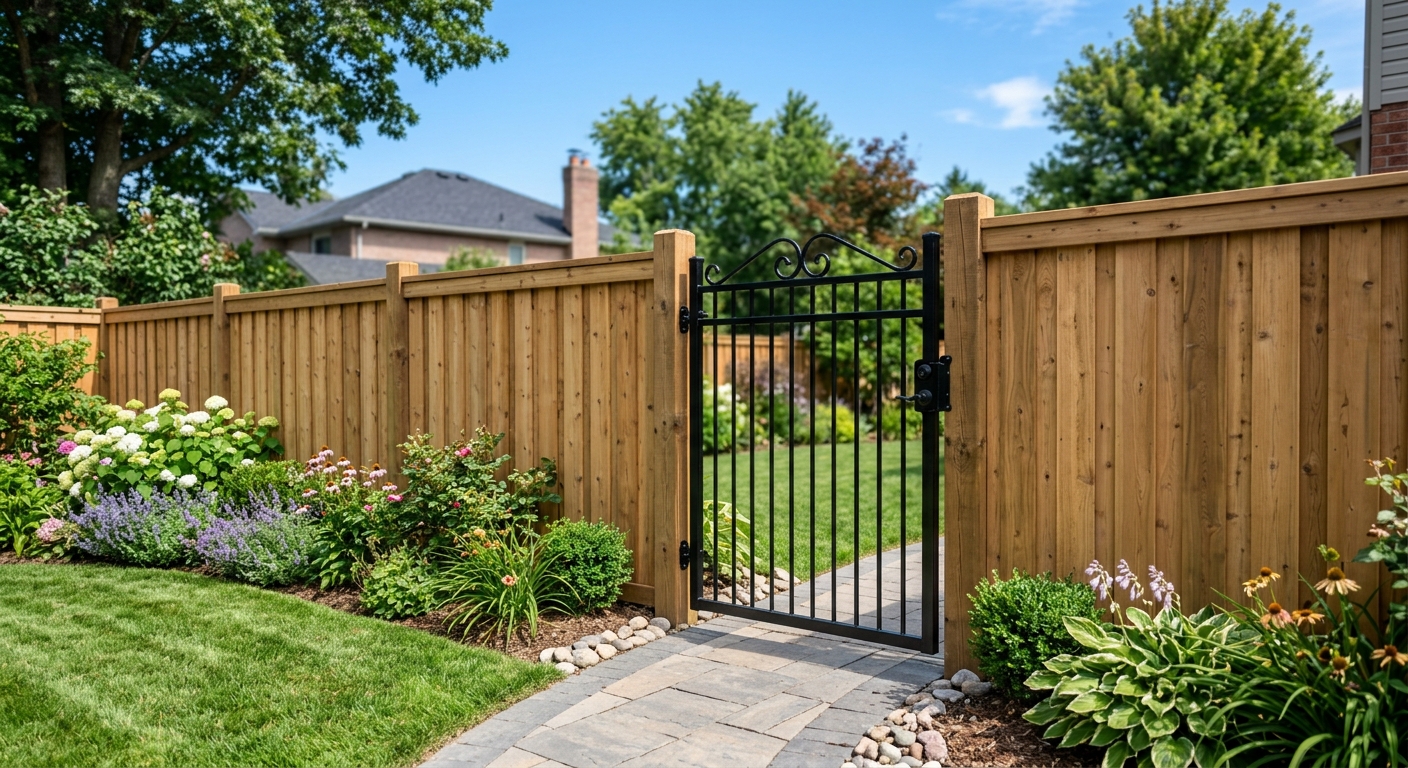
Fencing options and costs in Telkwa
Telkwa is a small, close-knit community where a well-built fence is more than “curb appeal” — it’s part of keeping properties secure and defining boundaries through long winters. With 88.4% of local households owning their homes (Statistics Canada, 2021 Census), most fence projects start with homeowners planning for the long haul. The housing stock is also heavily single-detached (88.4% of dwellings), which usually means longer runs of perimeter fencing than in multi-unit areas. That combination makes fencing demand steady, especially around well-established residential pockets such as the outskirts near the Telkwa area along Highway 16 where lots often back onto treed edges and open ditches.
In the Nechako economic region, costs are driven by frost depth, soil conditions, and exposure. Local contractors typically set posts 3–5 feet deep, often with concrete footings, to stabilize in mixed clay and rocky ground and to reduce frost heave risk. On more exposed lots, wind loads can “sail” solid privacy panels, so stronger bracing and tighter post spacing may be required. Access also matters in Telkwa: winter scheduling windows, rock during augering, and uneven terrain can add labour time compared with milder southern BC areas.
Below are common material choices and realistic price bands used by fencing crews in the Telkwa/Nechako market, so you can compare apples to apples before you request a quote.
| Material |
Lifespan |
Maintenance |
Privacy Rating |
Price per Linear Foot |
| Pressure-treated pine (standard wood) |
10–15 years |
Stain or seal every 2–3 years; inspect posts annually |
Medium–High (solid boards) |
$18–$28 |
| Cedar (natural rot resistance) |
15–25 years |
Periodic staining/sealing; tighten hardware as needed |
High (solid boards) |
$22–$36 |
| Vinyl / PVC (no-maintenance) |
20–30 years |
Rinse as needed; inspect for flex or frost-related stress |
Medium–High (solid styles) |
$24–$40 |
| Chain-link (galvanized steel) |
25–40 years |
Minimal; wash and check tension every few years |
Low (security only; add privacy slats if desired) |
$13–$22 |
| Aluminum ornamental |
25–35 years |
Occasional rinse; touch up if damaged |
Low–Medium (open pickets) |
$26–$44 |
| Composite / recycled material |
20–30 years |
Low; occasional cleaning and panel inspection |
High (board-style) |
$28–$48 |
Prices are estimates only and vary by project scope, site access and material selection.
What affects the price of fencing in Telkwa
In Telkwa, it’s common to see quotes for the “same” fence vary by roughly 30–50% once you factor in post depth, soil conditions, wind exposure, and how much labour is required to get to stable ground. Even within British Columbia, crews price differently depending on how they handle the frost requirement and whether they mobilize equipment for augering and concrete setting in mixed clay/rock. That’s particularly true in the Nechako corridor, where winters bring deep freezes and repeated thaw-freeze cycles that punish fences with shallow footings.
Frost depth is the big driver: contractors typically set posts 4–6 inches below the design frost depth to prevent heaving. In colder regions, that can translate to posts set around 1.5–2.0 m deep, which means longer posts, deeper holes, and more concrete — the material itself and the labour time both increase. If a yard requires rock breaking for augers or has drainage issues, cost can climb quickly.
Wind exposure also plays a role. More open sites around parts of the Nechako region may require tighter post spacing and heavier rails/pickets on privacy panels, which can move a project from the lower end of the $55–$85 wood range into the mid/high end, depending on bracing and panel build. Coastal-style “cheap fixes” don’t work as well here: wet conditions in other parts of BC can speed rot if wood isn’t treated properly, but Telkwa’s freeze-thaw cycles make proper footing equally important.
Concrete examples from Telkwa-area installs: (1) swapping from gravel-pack to full concrete footings for stability often adds labour hours but reduces post shifting over winter; (2) a slope yard that needs stepped panels instead of a single raked grade increases material waste and labour; (3) replacing an old fence typically adds hauling/disposal and sometimes extra posts where the previous layout differs from the new property line. With Nechako homeowners often aiming to protect long perimeter runs, the homeowner budget (median household income is $101,000 in 2020) generally supports durable installs rather than short-lived repairs.
| Price Factor |
Why It Matters |
Cost Impact |
| Fence length in linear feet |
Labour and materials scale directly with total footage |
Highest impact; drives most variations between quotes |
| Post depth required |
Frost line depth sets how long posts must be and how deep holes go |
Can add significant labour and concrete/post cost |
| Post setting method |
Concrete vs. gravel pack vs. driven posts changes stability in mixed soil |
Concrete footings typically increase cost |
| Material choice |
Wood, vinyl, chain-link, aluminum differ in build complexity and longevity |
Premium materials can shift projects toward higher bands |
| Gate count and type |
Drive-through (double) gates require stronger frames and hardware |
More labour, heavier materials, and more adjustment time |
| Grade and terrain |
Slope needs stepped panels/raked rails and more alignment work |
Increases waste and time; can add days on larger yards |
| Old fence removal and disposal |
Hauling debris and removing posts affects schedule and labour |
Often adds a meaningful cost line item |
| Permit fees and survey / property line locate |
Compliance and accurate layout prevent disputes and rework |
Can add cost and schedule time, especially if pins must be found |
Permits & regulations in British Columbia
In British Columbia, fences above a height threshold often require a building permit — commonly 2.0 m (6.5 ft) at the rear and 1.0–1.2 m (3–4 ft) at the front or corner. Regardless of permit needs, your fence must respect property lines and any municipal setback bylaws that apply to your lot. Before anyone digs a post hole, you must arrange utility locates (BC 1 Call) so crews can avoid buried gas, power, telecom, or water lines.
To reduce neighbour disputes, it’s smart to verify the line using a survey or by locating property pins before installation. In BC, shared fence ownership and maintenance responsibilities are governed by the province’s line-fences legislation, so clarify in writing whether your project is replacing an existing shared fence and how costs are expected to be split.
What typically does NOT require a permit: smaller fences under the height threshold, and standard in-kind replacement (same location/height) on established boundaries — but the “under threshold” detail is what matters. What DOES require a permit: building fences that exceed the height thresholds and any work that changes approved siting/height where bylaws apply.
For checking a contractor in Telkwa: ask for their provincial business licensing/registration details, and verify liability insurance by reviewing the certificate of insurance (COI) naming you as an additional insured if applicable. Also confirm coverage for work on site: in BC this typically means ensuring they carry the correct workers’ compensation coverage for the trades involved (certificate or clearance letter). If a contractor can’t provide current COIs and proof of coverage, treat it as a major risk.
Choosing the right fence material for Telkwa
Choosing a fence in Telkwa is mostly about matching your priorities (privacy, low maintenance, budget, and lifespan) to materials that can handle Nechako’s freeze-thaw cycles and wind exposure. For pressure-treated pine, you get the lowest upfront price, but you should plan on staining or sealing every 2–3 years to reduce grey weathering and keep water out of the boards. Cedar looks great and resists rot better in wet-dry transitions, but it still benefits from periodic maintenance to keep colour and prevent cupping. Vinyl/PVC is popular because it’s low maintenance, yet extreme cold can make panels more brittle if the post supports aren’t installed correctly and the system isn’t designed for local conditions.
Chain-link is often the longest-life “set and forget” option with the lowest capital cost, but it won’t give privacy unless you add slats or an attached privacy mesh. Aluminum ornamental offers a clean, rust-resistant look with mid-range cost, but like chain-link, it provides limited privacy. For many Telkwa homeowners, privacy is the deciding factor, and that’s where cedar or vinyl privacy styles tend to win.
Because of frost, plan for proper post depth in Nechako: posts are commonly set well below the frost penetration zone (often 3–5 feet deep), and concrete-set posts are frequently specified for stability in mixed clay/rocky soil. On exposed sites, tighter post spacing and stronger rails help the fence withstand wind and occasional snow load impacts at the panel edges.
A practical cost example: if a wood privacy fence is priced in the $55–$85 band, but upgrading to vinyl places you more in the $70–$110 band, the higher upfront cost can be justified when you want fewer maintenance days during winter/spring thaw — especially for longer perimeter runs where staining labour would add up.
| Material |
Cold Tolerance |
Lifespan |
Annual Maintenance |
Best For |
Price Band |
| Pressure-treated pine |
Good (with correct post depth and ventilation) |
10–15 years |
Low to moderate: inspection; stain/seal every 2–3 years |
Budget privacy with a maintenance plan |
$55–$85 |
| Cedar |
Good (better natural rot resistance) |
15–25 years |
Low to moderate: periodic sealing/staining; hardware checks |
Attractive privacy with longer service life |
$70–$95 |
| Vinyl / PVC |
Very good (if installed on proper supports) |
20–30 years |
Very low: rinse and visual inspection |
Low-maintenance privacy |
$70–$110 |
| Chain-link |
Excellent |
25–40 years |
Very low: tension checks and wash-down |
Security and long life with minimal upkeep |
$35–$60 |
| Aluminum ornamental |
Excellent (powder-coat protection) |
25–35 years |
Low: occasional cleaning and touch-ups |
Decorative fencing with security |
$80–$140 |
| Composite / recycled |
Good (designed for outdoor freeze-thaw) |
20–30 years |
Low: cleaning; inspect panel fasteners |
Durable privacy with reduced maintenance |
$85–$130 |
How to choose a fencing contractor in Telkwa
Choosing the right fencing contractor in Telkwa starts with proof of coverage and clear paperwork. In British Columbia, you should ask for their business registration details (and ensure the company is operating legitimately), then request a certificate of liability insurance and confirm the coverage is current and appropriate for fencing work. Also verify workers’ compensation coverage (WSIB/WCB equivalents in BC are handled through the provincial workers’ compensation system) by asking for a clearance letter or proof of account status before work begins. If a contractor can’t provide current documents, pause — fencing posts, concrete, and equipment create real site risks.
Next, get 2–3 itemised written quotes instead of a single lump sum. A good quote separates labour (excavation/augering, setting posts, alignment, railing) from materials (posts, rails, boards/panels, hardware, fasteners). Confirm whether permits, utility locates, and property line locating are included or excluded. Also ask what happens with old fence removal: hauling and disposal are often separate line items. You should receive a workmanship warranty in writing (common practice is a defined period for installation defects), plus product/manufacturer warranties for the fence components — and ask whether those warranties are transferable to you as the homeowner.
For payment, never pay more than 10–15% upfront. A solid holdback structure is typically used until the fence is complete and aligned to grade. Finally, insist on a start date and completion estimate in writing so you understand winter scheduling reality.
- Ask for current liability insurance (COI) and keep a copy for your records.
- Confirm workers’ compensation coverage with a current clearance letter/proof.
- Request two or three itemised quotes (labour + materials breakdown).
- Check that the quote specifies post depth and post setting method (concrete vs gravel pack).
- Verify material grade (board thickness, rail size, vinyl style) and hardware type.
- Confirm gate construction details (frame, hinges, latch) and how gate alignment will be handled.
- Ask whether utility locates and any permit work are included.
- Confirm if disposal/hauling of an old fence is included.
- Make sure the scope states how your contractor handles slope (stepped vs raked).
- Look for a clear timeline and an estimated completion date.
- Ensure you get a written workmanship warranty and product warranty terms.
- Pay in milestones: keep upfront to 10–15% and hold back until completion.
Red flags to watch for in Telkwa: (1) the quote doesn’t mention frost-depth post setting or concrete; (2) no itemised labour/materials breakdown (it’s lump sum only); (3) they ask for large upfront payments beyond 10–15%; (4) they can’t provide COI or proof of workers’ compensation coverage; (5) the contract is vague about slope/grade handling or how property lines are confirmed.
Frequently asked questions — fencing in Telkwa
Wood vs vinyl vs aluminum fence — which is best?
In Telkwa, “best” depends on what you value most. If you want privacy and don’t mind maintenance, cedar or pressure-treated wood can work well, but you should plan on periodic staining to keep the fence looking sharp through Nechako winters. If you want the lowest ongoing effort, vinyl/PVC tends to be a strong fit because it holds up well with routine cleaning and doesn’t rot. If you prefer a decorative boundary with security (and limited privacy), aluminum is a durable choice that won’t rust. Cost-wise, homeowners often compare wood ranges like $55–$85 versus vinyl in the $70–$110 band, and the higher vinyl cost is often justified on longer runs where maintenance labour would add up. Whichever you pick, insist on proper post depth and bracing for frost and wind.
Do I need a permit to build a fence in British Columbia?
In British Columbia, permits commonly apply when fence height exceeds local thresholds — often around 2.0 m (rear) and 1.0–1.2 m (front/corner). Even if your fence is under the threshold, your design must still respect property lines and any municipal setback rules. In Telkwa, the key practical step is to confirm the intended height and location before you order materials. Also, before any digging, arrange utility locates through BC 1 Call so you don’t hit buried services. To avoid delays, ask your contractor to clearly state whether they will handle the permit process (if needed) and include that detail in the written scope. Shared fence projects should also account for how responsibilities are handled under BC line-fences legislation.
How long does a wood fence last in Telkwa?
Wood fence lifespan in Telkwa usually comes down to footing depth, drainage, and how much maintenance you keep up with. With proper frost-safe post depth (commonly set well below frost penetration, often 3–5 feet deep) and correct concrete setting, pressure-treated pine often lasts about 10–15 years, while cedar can reach roughly 15–25 years. If boards aren’t sealed and re-stained, grey weathering and moisture penetration can shorten life — especially where snow sits longer or where air circulation is poor. Many homeowners in the Nechako area budget for periodic staining (often every 2–3 years) to protect the investment. If you’re comparing quotes, don’t just chase the lowest upfront number in the $55–$85 wood band — ask how the contractor plans to build for winter stability.
Who owns and maintains a shared fence?
Shared fence ownership and maintenance in British Columbia are addressed under line-fences legislation. In practical terms in Telkwa, that means you should clarify who the fence “belongs to” and how maintenance/costs are expected to be shared, especially if you’re replacing an older fence line that was previously agreed upon. Before work begins, confirm whether your project is a true shared replacement or only your portion, and make sure the scope reflects the exact sections being installed. A good contractor will help you document the layout and the agreed boundary. If neighbours are involved, put the understanding in writing (even a simple signed note) so there’s no disagreement about replacement scope, material selection, or future repairs.
How do I find my property line before fencing?
For Telkwa homeowners, start with your purchase documents and then verify physical markers. The most reliable approach is to obtain a survey or to locate your property pins before installing posts. If you can’t find pins, a locate/surveyor service may be needed because fencing built even a small distance off-line can trigger costly rework and neighbour disputes. Once you confirm the line, also plan for utility locates (BC 1 Call) before digging. When you get quotes, ask the contractor how they will confirm the fence location — whether they follow your survey, where they measure from, and how they handle ambiguous boundary areas. Clear documentation protects both you and the contractor during winter work when adjustments can be harder.
What's the most low-maintenance fence?
In Telkwa, the most low-maintenance options are typically vinyl/PVC or chain-link. Vinyl/PVC generally needs only periodic rinsing and a visual inspection for any frost-season panel stress or hardware movement. Chain-link is also very low maintenance (wash-down and occasional checks for tension), and it lasts a long time — often 25–40 years — but it won’t provide privacy unless you add slats or a screening option. If privacy is required with low maintenance, vinyl privacy styles often outperform chain-link for day-to-day living. In cost comparisons, many homeowners weigh wood around $55–$85 versus vinyl around $70–$110, and choose vinyl when they’d rather avoid staining every few years. Whatever you pick, ask for the same frost-safe post strategy so “low maintenance” doesn’t turn into early repairs.