Fencing options and costs in Smithers
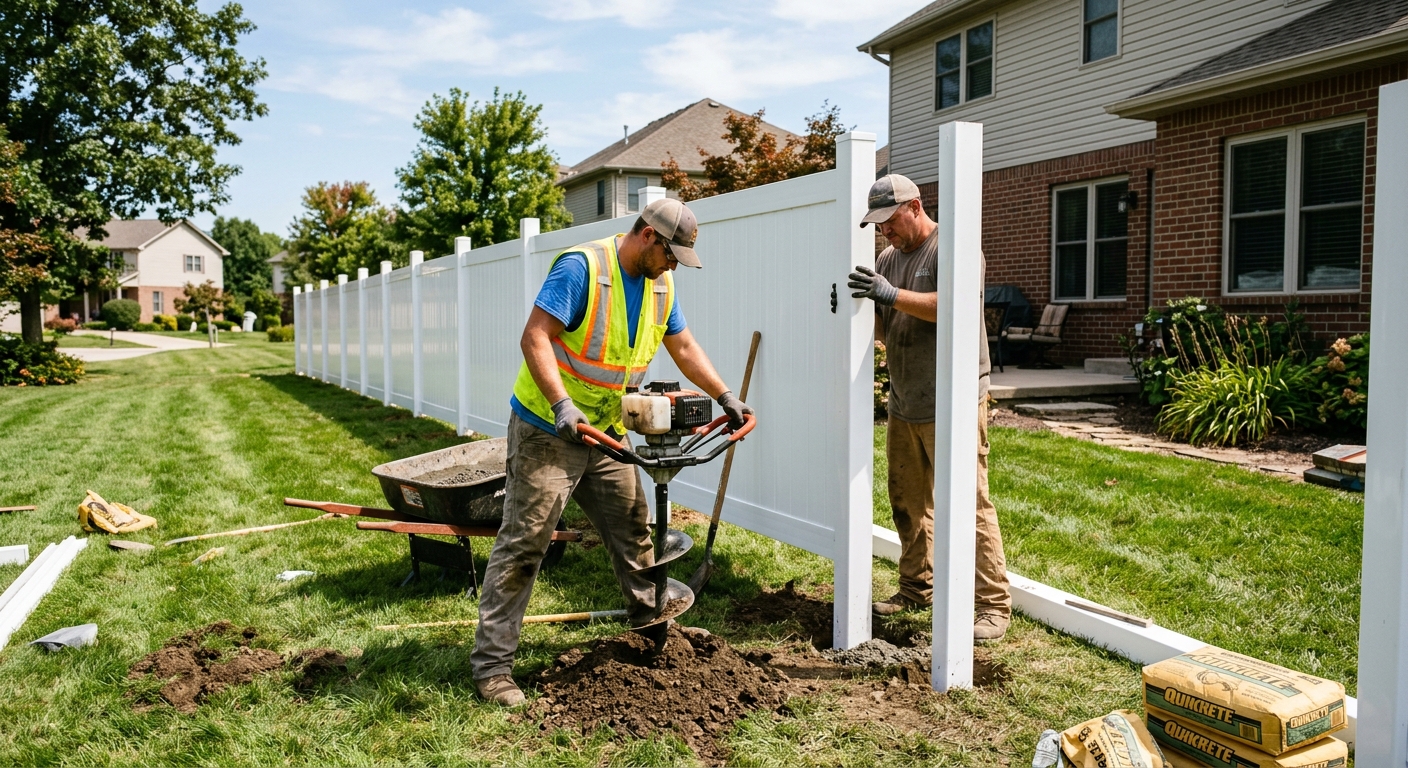
In Smithers, BC, choosing the right fencing system comes down to balancing privacy, maintenance, and—most importantly—how frost and wind behave on the site. With 70.4% of local households owning their homes (Statistics Canada, 2021 Census) and many properties being single-detached homes (62.8% of dwellings), there’s steady demand for year-round, durable fencing in neighbourhoods like the Hart Highway corridor and the broader downtown/school-area lots. Nechako’s freeze-thaw cycles also affect pricing: contractors typically set posts well below the frost zone (commonly 3–5 feet deep) to prevent heaving, which increases augering time, equipment wear, and the amount of concrete used on exposed runs.
Costs can also swing based on how “open” your yard is. Areas that feel windier—such as lots closer to valley edges and wide setbacks—often need tighter post spacing and stronger bracing. Solid privacy panels (wood or vinyl) behave like sails, so crews may price heavier posts and upgraded footings. In more sheltered backyards, you can sometimes get similar looks with lighter framing.
Because Smithers homes include a large share built before 1981 (51.6% of dwellings), you’ll also run into older foundation clearances, uneven grading, and frequent fence replacement projects—each adding labour and sometimes disposal fees. Use the comparison table below to anchor your budget before you start collecting quotes.
| Material |
Lifespan |
Maintenance |
Privacy Rating |
Price per Linear Foot |
| Pressure-treated pine (standard wood) |
10–15 years |
Stain/seal every 2–3 years |
8/10 |
$55 – $85 |
| Cedar (natural rot resistance) |
15–25 years |
Light staining or oiling every 2–4 years |
9/10 |
$70 – $110 |
| Vinyl / PVC (no-maintenance) |
20–30 years |
Occasional wash; no staining |
8–10/10 |
$70 – $110 |
| Chain-link (galvanized steel) |
20–35 years |
Rinse as needed; check tension periodically |
2–4/10 (privacy requires inserts) |
$35 – $60 |
| Aluminum ornamental |
25–40 years |
Occasional wash; inspect gates |
1–3/10 (decorative) |
$80 – $140 |
| Composite / recycled material |
20–30 years |
Low; occasional cleaning |
7–9/10 |
$80 – $130 |
Prices are estimates only and vary by project scope, site access and material selection.
What affects the price of fencing in Smithers
Even when you’re getting quotes for “the same” fence, pricing in the Nechako region can vary by 30–50% across Smithers and the broader British Columbia market. The difference usually isn’t the picket or panel—it’s the ground conditions, post depth, concrete setting, and how a crew adapts to wind-exposed corners and uneven yards. In exposed Nechako sites, solid privacy fencing acts like a sail, so contractors may reduce spacing between posts and upgrade bracing. Over time, that structural work is often the difference between a fence that stays plumb through winters and one that starts leaning after several freeze-thaw seasons.
Frost depth is the big swing factor. In Smithers, frost penetration can be around 60 inches, so year-round structures like fences need posts set significantly below the frost line—often 4–6 inches deeper than the “design frost depth” to reduce the risk of heaving. Contractors commonly auger and set posts roughly 3–5 feet deep, which raises material and labour costs (longer posts, more concrete, and slower drilling in mixed clay and rock). By contrast, in milder or more sheltered conditions, some crews can use less concrete and slightly shallower settings—though they still aim to clear frost risk.
Concrete examples: a 50-foot run of chain-link can stay closer to the $35 – $60 band when the yard is level and access is easy (less bracing, fewer custom steps). But a tall privacy fence on a sloped back property often shifts toward the $55 – $85 wood or higher privacy options because stepped rails, stronger corner posts, and full-depth concrete setting add labour. If your fence is older (common in Smithers homes built before 1981), removing posts that are already embedded and clearing old concrete can add significant disposal time.
| Price Factor |
Why It Matters |
Cost Impact |
| Fence length in linear feet |
The primary driver of materials, posts, rails and labour hours |
Often the biggest variable; impacts nearly every line item |
| Post depth required |
Frost line determines hole depth and post length to prevent heaving |
Deeper holes mean more drilling and concrete (higher cost) |
| Post setting method |
Concrete versus gravel pack versus driven posts changes stability and labour |
Concrete setting typically increases labour and material use |
| Material choice |
Vinyl, cedar, and chain-link have different framing needs and longevity |
Vinyl/cedar usually higher than chain-link; aluminum often higher than wood |
| Gate count and type |
Drive-through gates need heavier hardware and bracing |
Adds posts, hinges, latch systems, and often more concrete |
| Grade and terrain |
Slopes require stepped panels or raked rails to keep the top line even |
Increases cut time, material waste and labour |
| Old fence removal and disposal |
Removing embedded posts and hauling waste takes time |
Can meaningfully add to your final invoice |
| Permit fees and survey / property line locate |
Verification and paperwork add admin and sometimes professional locating |
Small compared with materials, but can change total by hundreds |
Permits & regulations in British Columbia
In British Columbia, fences above a height threshold—commonly around 2.0 m (6.5 ft) at the rear and about 1.0–1.2 m (3–4 ft) toward the front or corners—often require a building permit. You also must respect property lines and any municipal setback requirements that apply to your lot. Before digging post holes, you should call for utility locates (BC 1 Call) so you avoid underground service strikes. If you’re unsure where your property pins sit, order a survey or get your property line located before installation; this helps prevent encroachment disputes, which are especially common when fences have been “touched up” over the years.
For shared fence situations, line-fences rules in the province govern how responsibilities can be split when the boundary is shared. Practically, that means clarifying in writing who pays for repairs, whether replacement resets the “shared” agreement, and how costs are allocated.
To protect yourself in Smithers, verify your contractor’s legitimacy before work starts: ask for their certificate of insurance (liability coverage) and confirm coverage status. For worker coverage, check their WSBC/WCB documentation and ensure it’s current. Also request any clearance letter or proof-of-coverage suitable for your project file. If a contractor can’t provide these documents promptly, that’s a strong warning sign and you should pause.
Choosing the right fence material for Smithers
In Smithers and the Nechako region, material choice should match your priorities (privacy, low maintenance, budget, and lifespan) while also respecting the local freeze depth and wind exposure. Because posts often need to be set well below frost penetration—typically in the 3–5 foot range—your “best” material is the one that stays stable when it’s anchored properly. That’s why concrete-set posts are commonly used here: they help prevent movement during freeze-thaw, especially on mixed clay/rock and uneven ground.
Pressure-treated pine is usually the budget option, but it still needs sealing or staining every 2–3 years to avoid grey weathering and premature surface checks. Cedar offers better natural rot resistance and typically looks better longer, though it still benefits from periodic maintenance to keep colour and reduce warping on wide panels. Vinyl/PVC is the classic low-maintenance choice—wash it occasionally—but in extreme cold it can become more brittle than wood, so correct framing and post spacing matter. Chain-link is the longest-lasting budget option and can be economical up front, but it won’t provide privacy unless you add slats or privacy screening. Aluminum ornamental is strong and rust-resistant, but it’s more decorative than private and usually higher in cost—often in the $80 – $140 range depending on gate complexity.
Here’s a realistic dollar example: if you’re comparing a cedar privacy fence versus chain-link for the same length, moving from chain-link around $35 – $60 per linear foot territory to cedar privacy around $70 – $110 can be worth it when you actually use your yard and need wind-screening and visual privacy. On exposed runs, the sturdier framing and improved bracing that often come with privacy panels help reduce future maintenance, which matters for Smithers’ older housing stock and long winter seasons.
| Material |
Cold Tolerance |
Lifespan |
Annual Maintenance |
Best For |
Price Band |
| Pressure-treated pine |
Good (with proper staining) |
10–15 years |
Seasonal visual inspection; stain/seal as needed every 2–3 years |
Budget-friendly privacy |
$55 – $85 |
| Cedar |
Very good (resists rot in damp freeze-thaw) |
15–25 years |
Oiling/staining typically every 2–4 years; check for loose boards |
Premium look with realistic upkeep |
$70 – $110 |
| Vinyl / PVC |
Good (needs correct spacing and hardware) |
20–30 years |
Minimal—wash and inspect fasteners annually |
Low-maintenance privacy |
$70 – $110 |
| Chain-link |
Excellent (galvanized steel) |
20–35 years |
Low—routinely check tension and gate alignment |
Security with airflow |
$35 – $60 |
| Aluminum ornamental |
Excellent (no rust) |
25–40 years |
Low—rinse/clean; inspect gates |
Decorative boundaries |
$80 – $140 |
| Composite / recycled |
Good (depends on product grade) |
20–30 years |
Low—cleaning plus annual inspection |
Modern privacy with less rot risk |
$80 – $130 |
How to choose a fencing contractor in Smithers
When you hire a fence contractor in Smithers, verifying British Columbia coverage is as important as comparing the “per foot” numbers. Start by asking for their current certificate of insurance (liability). It should list coverage amounts and your jobsite address or owner details where applicable. Next, confirm WSBC/WCB coverage: request proof-of-coverage and check that the documents are current for the period when the crew will be working. Many reputable contractors can provide a clearance letter upon request, and they’ll have it ready without arguing.
Then get 2–3 itemised written quotes—ask for a breakdown that includes labour, post installation method, hardware, gates, and material grades (and whether they’re using concrete footings). Avoid a simple lump sum that doesn’t explain what’s included. A good quote will specify if the contractor is pulling permits (where required), performing a property line locate recommendation, and handling disposal of old materials. If those items are excluded, you’ll see the cost later in change orders.
Warranty matters here: confirm workmanship warranty length (for example, post stability, gate alignment, and panel straightness after freeze-thaw), and also the manufacturer warranty on materials. Ask whether the manufacturer warranty is transferable to your household owner—this matters when the contractor is no longer available.
For payment schedule, never pay more than 10–15% upfront. Hold back the balance until the job is complete and you’ve reviewed gate operation, line posts, and final cleanup. Get the start date and estimated completion timeline in writing, along with any weather-dependent assumptions due to winter construction limits in Northern BC.
- Ask for proof of liability insurance and verify dates and coverage amounts.
- Request current WSBC/WCB proof-of-coverage (and a clearance letter if available).
- Confirm who pulls permits (if your height/location triggers a permit) and whether the fee is included.
- Insist on an itemised quote: posts, rails, fasteners, concrete, gates, and disposal.
- Ask what post depth and setting method they use to manage frost heave.
- Verify hardware quality for gates: hinges, latches, and bracing are where failures start.
- Check if they’ll handle sloped yards with stepped panels or raked rails.
- Confirm line locating plan (survey pin locate recommendation and how encroachment risk is addressed).
- Request product/manufacturer specs for vinyl/cedar boards or chain-link gauge.
- Clarify disposal: will they haul away old fence materials or leave it for you?
- Review warranty terms in writing, including who honours workmanship vs product warranties.
- Set payment milestones: keep a holdback until cleanup and punch-list items are finished.
Red flags I commonly see in Smithers include: (1) contractors who won’t provide insurance/coverage documents on request, (2) quotes that don’t specify post depth or setting method for frost conditions, (3) “cheap” gate pricing that omits bracing and proper hardware, (4) no written scope for permit/disposal responsibilities, and (5) requesting large upfront payments (beyond 10–15%) without a detailed contract and timeline.
Frequently asked questions — fencing in Smithers
Who owns and maintains a shared fence?
In British Columbia, shared fence ownership and maintenance responsibilities are governed by provincial line-fences legislation. Typically, the fence belongs to (or is maintained by) the adjacent parties based on the shared boundary agreement and local interpretation of who benefits from the fence. In Smithers, the practical step is to clarify the boundary and the fence’s function (privacy vs security) before you start discussing repairs or replacement. If your fence is old—common in Nechako where many homes date back decades—ask your neighbour to agree in writing on scope, who supplies materials, and how costs will be split. If only one side upgrades, note how that affects future “shared” replacement costs.
How do I find my property line before fencing?
Your goal in Smithers is to avoid building past the boundary and triggering a dispute. Start by locating your property pins and comparing them to any recent survey documents you may have received when you purchased the home. If you’re unsure, hire a surveyor or request a professional property line locate before post holes get dug—especially because frost-depth excavation and fence re-alignment can’t be easily “undone.” Also, call for utility locates (BC 1 Call) before digging. Note that many older neighbourhood lots have had fences moved or repaired over the years; matching today’s fence line to original pins prevents costly rework and potential removal.
What's the most low-maintenance fence?
For many homeowners in Smithers, vinyl/PVC is the most low-maintenance option because it doesn’t require staining and typically needs only periodic washing and fastener checks. Cedar is low-effort compared with pressure-treated pine, but cedar still usually needs periodic staining/oiling to look its best and reduce weathering. Chain-link also stays in good shape with minimal upkeep; however, it won’t give privacy on its own. If you want a “set it and forget it” privacy look, vinyl often makes sense, while budgeting is important—local installers commonly price vinyl privacy work around the $70 – $110 range depending on height, gates, and how much concrete setting is required for the frost line.
How tall can my fence be in Smithers?
Fence height limits depend on whether it’s in the rear versus the front/corner area, and whether your fence triggers a permit requirement. In British Columbia, fences above roughly 2.0 m (6.5 ft) at the rear and about 1.0–1.2 m (3–4 ft) at the front or corners often require a building permit. Smithers homeowners should confirm their exact location (front, side corner, or rear) before ordering materials. A good contractor will ask for a site map, then advise whether the project needs a permit and how setbacks affect your layout. If you’re replacing an older tall fence, getting the height and placement confirmed early helps avoid delays and redesign costs.
Should fence posts be set in concrete here?
Often, yes in Smithers—especially for year-round fences—because frost penetration is significant and frost heave is a real risk if posts are too shallow. Contractors commonly set posts 3–5 feet deep with concrete footings so the base sits below the frost zone and remains stable through freezing cycles. The rule of thumb used in northern BC planning is that post depth should be well below design frost depth (often 4–6 inches deeper than the design value) to reduce movement. That doesn’t mean gravel-pack and other methods never work, but if you want a long-lasting privacy fence through harsh winters, concrete-set posts are the most reliable approach. It’s also why heavier privacy panels can cost more: more concrete and longer holes add labour.
What's the best fence for privacy?
For privacy in Smithers, the best results usually come from solid privacy panels—wood (pressure-treated pine or cedar), vinyl/PVC, or composite—installed with strong corner posts and appropriate spacing for wind. Because privacy fences act like a sail in gusty spots, contractors typically brace more heavily and may use concrete setting to keep the structure plumb after freeze-thaw. Vinyl and cedar commonly deliver the most stable, consistent look over time. If you’re comparing budgets, pressure-treated pine privacy is often closer to the $55 – $85 band, while vinyl privacy commonly lands around $70 – $110 depending on height, length, and gate work. Choose cedar if you want better appearance and rot resistance with reasonable maintenance; choose vinyl if you want lower upkeep and long-term performance.