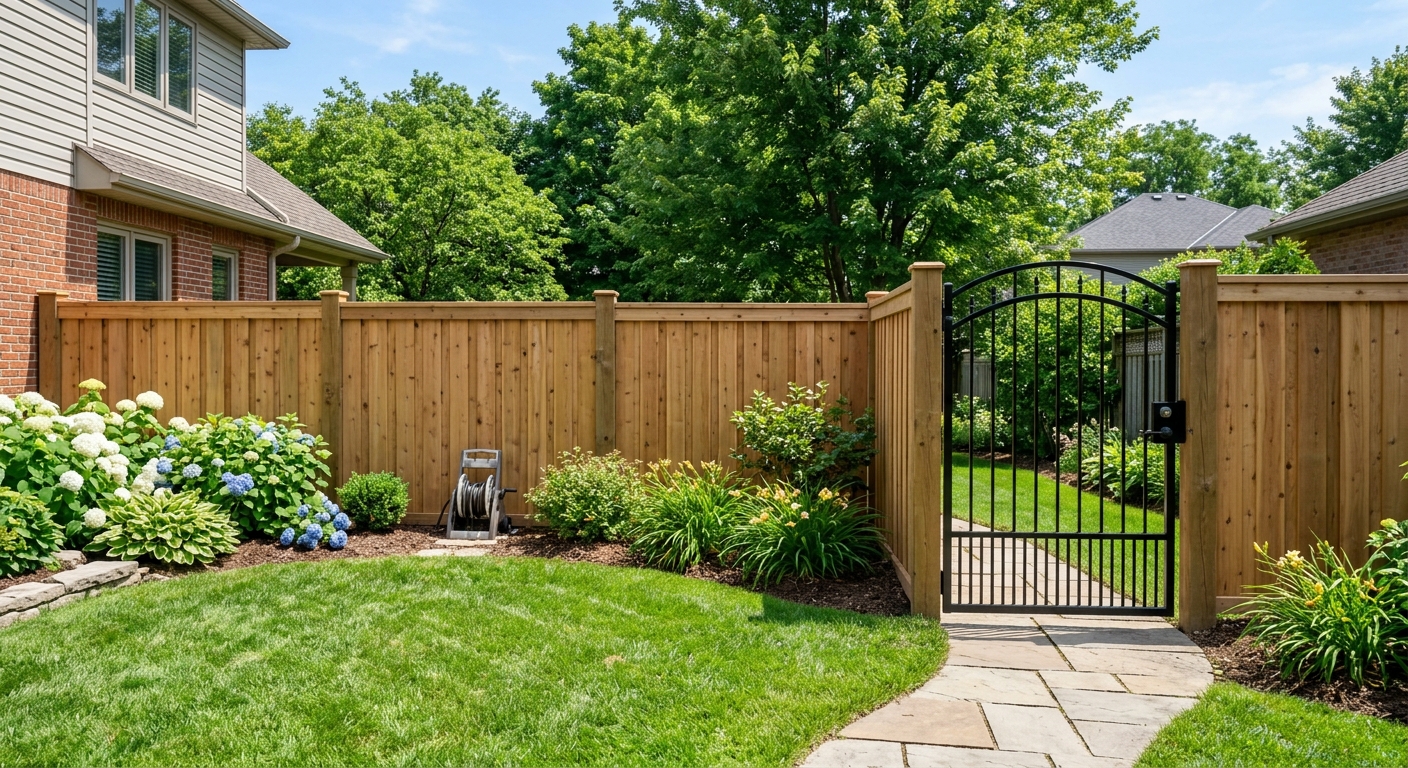
Fencing options and costs in Saanich
Saanich has a steady demand for fencing because so much of the local housing stock is detached—single-detached houses make up 46.6% of dwellings, and most households are owner-occupied (69.2% of households own) according to the 2021 Census (Statistics Canada, 2021 Census). In practice, that means many homeowners are maintaining property boundaries, replacing older boards, or upgrading to privacy fencing as yards get re-landscaped.
On Vancouver Island and the Coast, fencing costs are shaped less by “deep Prairie freezes” and more by a different mix: frequent wind, wet winters, and coastal salt air. The frost line is shallow (often cited around 45–60 cm), but posts still need to be buried below frost to prevent long-term heaving and fence leaning. That’s why, even when the design depth sounds modest, many residential projects still use concrete-set posts at about 75–90 cm for typical fence runs, especially where soils are clay-rich, saturated, or disturbed.
Access also matters in Saanich. Many properties near Uptown/Becher Bay corridors or in hillside pockets need careful line alignment, equipment staging, and disposal handling, which increases labour time. Contractors are busiest in spring and early summer, so scheduling can affect quote turnaround and crew availability.
To compare realistic expectations, use the ranges below as “installed” budget guidance for a typical residential run (assuming standard post spacing and normal gate counts).
| Material |
Lifespan |
Maintenance |
Privacy Rating |
Price per Linear Foot |
Price Range |
| Pressure-treated pine (standard wood) |
10–15 years |
Stain/seal every 2–3 years (greying control) |
Medium–High |
$55–$85 |
$4,000–$6,500 |
| Cedar (natural rot resistance) |
15–25 years |
Light staining/oiling every 2–4 years |
High |
$70–$110 |
$5,000–$8,000 |
| Vinyl / PVC (no-maintenance) |
20–30 years |
Rinse as needed; occasional hardware checks |
High |
$70–$110 |
$5,500–$9,000 |
| Chain-link (galvanized steel) |
25–40 years |
Minimal; replace damaged sections |
Low–Medium |
$35–$60 |
$2,800–$4,800 |
| Aluminum ornamental |
20–35 years |
Rinse occasionally; repaint only if required |
Low–Medium |
$80–$140 |
$6,000–$11,000 |
| Composite / recycled material |
20–30 years |
Low; soap-and-water cleaning |
High |
$80–$130 |
$6,000–$10,500 |
Prices are estimates only and vary by project scope, site access and material selection.
What affects the price of fencing in Saanich
In Saanich, two contractors can quote the “same fence height” and still be 30–50% apart once you factor in how they handle posts, wind, access, and what’s included. Vancouver Island and the Coast also has its own cost rhythm: labour schedules fill early in spring, and jobs that require extra digging, line locating, rock pocket removal, or careful alignment around mature plantings take longer than flat-yard estimates.
Post depth is one of the biggest drivers. Even though coastal BC often has a shallow frost line (roughly 45–60 cm), we typically set residential posts below frost depth to prevent heaving. In practice, that often means burying posts around 75–90 cm, and using concrete-set footings where soils are wet or clay-rich. In colder Ontario/Alberta regions, posts often go 1.5–2.0 m into the ground, but the same principle applies here: deeper, more reliable setting still costs more in materials (longer posts) and labour (more excavation, disposal, and alignment time).
Wind exposure also changes design choices. Solid privacy fences catch wind like a sail, so they can require closer post spacing, heavier rails, or vented/board layouts. Open styles like chain-link tolerate the exposure better with standard spacing, which aligns with the lower chain-link price band of $35–$60 per linear foot. Material rot resistance matters in Saanich’s wet winters—without proper treatment and good post basing, pressure-treated wood can weather faster, pushing homeowners toward cedar or vinyl options in the $70–$110 band when they want longer intervals between maintenance.
Concrete examples from Saanich: (1) replacing an older fence on a sloped lot in Cadboro Bay usually adds time for stepped rails and re-leveling every section; (2) removing a fence adjacent to a driveway or rockier shoreline beds often increases disposal and jackhammer time; (3) a gate with latching for a double vehicle opening adds hardware and setting complexity, even if the total fence length stays the same. With older homes built before 1981 (56.3% of dwellings), it’s common to find outdated hardware and nonstandard posts that cost more to remove cleanly and replace correctly (Statistics Canada, 2021 Census).
| Price Factor |
Why It Matters |
Cost Impact |
| Fence length in linear feet |
Most materials and labour scale directly with linear footage |
High (+0–100%) |
| Post depth required |
Frost protection drives hole depth and post length |
High (+5–25%) |
| Post setting method |
Concrete-set posts cost more than gravel pack or driven posts |
Medium–High (+5–30%) |
| Material choice |
Vinyl/metal systems cost more upfront; chain-link is often lowest cost |
High (switching can add $15–$60/ft) |
| Gate count and type |
Double-drive gates need heavier frames, more hardware, and tighter alignment |
Medium (+10–40%) |
| Grade and terrain |
Slopes require stepped panels/raked rails and more fitting |
Medium (+5–25%) |
| Old fence removal and disposal |
Hauling off old boards, posts, and concrete can be labour-intensive |
Medium (+5–20%) |
| Permit fees and survey / property line locate |
Required documentation prevents encroachment and protects both parties |
Low–Medium (+0–10%) |
Permits & regulations in British Columbia
In British Columbia, fence requirements can depend on height and location. In general, fences above a height threshold—commonly around 2.0 m (6.5 ft) at the rear and about 1.0–1.2 m (3–4 ft) at the front or corner—often trigger a building permit requirement. Regardless of permit needs, all fences must be placed within your property lines and comply with municipal setback bylaws.
Before digging any post holes, homeowners should arrange utility locates through the appropriate service (BC 1 Call) to prevent damage to buried services. If you’re unsure where your pins are, obtain a survey or at least a formal property line locate before installing. This reduces the risk of encroaching and eliminates a lot of “whose fence is it?” disputes later.
On shared boundaries, line-fences rules in British Columbia guide how neighbours handle shared fences, maintenance, and cost sharing. Practically, if you’re replacing an existing shared fence, confirm whether it was agreed as a shared structure and document the arrangement in writing.
To verify your contractor in Saanich, ask for: (1) a clear licence record from the contractor-registry platform, if applicable to their trade; (2) liability insurance—request the certificate of insurance and confirm it covers fencing installation work at your address; (3) WSIB/WCB coverage (the specific coverage type depends on the contractor’s structure) and request proof. If they can’t provide current documentation quickly, that’s a red flag.
Choosing the right fence material for Saanich
The right material in Saanich is usually a trade-off between privacy, low maintenance, and upfront cost—especially with frequent wind and wet coastal weather. Pressure-treated pine is typically the budget-friendly approach, but it needs staining or sealing every 2–3 years to prevent rapid grey weathering and to keep boards looking clean. Cedar offers better natural rot resistance and a more attractive finish, though it still benefits from periodic staining in our damp, windy winters.
Vinyl/PVC is popular with homeowners who want “set it and forget it.” It’s low maintenance and can last 20–30 years, but extreme cold snaps can make some vinyl components brittle—proper installation and correct hardware matter. Chain-link is the lowest cost path and is very durable in salty, wet air when galvanized, but it provides little privacy unless you add slats or an infill screen. Aluminum ornamental fences resist rust and suit front-yard aesthetics; however, they’re open by design, so privacy is typically medium at best.
For post depth, Vancouver Island’s shallow coastal frost line still means posts should be buried below frost depth. Whether concrete is “mandatory” depends on soil and fence weight, but concrete-set posts are commonly used where soils are clay-rich, saturated, or where gates and heavier panels create higher stress at ground level. With wind off the Strait of Georgia and Juan de Fuca Strait, solid privacy fences often require stronger framing and sometimes closer post spacing, which can justify the vinyl/cedar cost band ($70–$110 per linear foot) compared with basic wood when you want fewer callbacks.
Here’s a simple dollar example: if you’re comparing a basic pressure-treated wood privacy run versus vinyl, the price spread is often roughly $15–$35 per linear foot based on local bands. On a 30-linear-foot section, that can be an extra $450–$1,050 upfront—often worth it when you want minimal maintenance rather than re-staining every few years.
| Material |
Cold Tolerance |
Lifespan |
Annual Maintenance |
Best For |
Price Band |
| Pressure-treated pine |
Good with proper installation and ventilation |
10–15 years |
$50–$300 (stain/seal planning) |
Budget privacy with willingness to maintain |
$55–$85 |
| Cedar |
Good; needs care around wet ground contact |
15–25 years |
$80–$400 (stain/oil as needed) |
Natural look, rot resistance, attractive privacy |
$70–$110 |
| Vinyl / PVC |
Very good; avoid flexing in cold snaps |
20–30 years |
$0–$75 (rinse/inspection) |
Low maintenance and consistent appearance |
$70–$110 |
| Chain-link |
Excellent (metal and coatings) |
25–40 years |
$0–$100 (occasional hardware checks) |
Security with minimal cost; add privacy screens if needed |
$35–$60 |
| Aluminum ornamental |
Excellent; powder-coat holds up well |
20–35 years |
$0–$150 (wash and spot-touch-ups if required) |
Front-yard curb appeal and rust resistance |
$80–$140 |
| Composite / recycled |
Good; follows manufacturer’s temperature guidelines |
20–30 years |
$0–$100 (cleaning) |
Low maintenance privacy with modern materials |
$80–$130 |
How to choose a fencing contractor in Saanich
When you hire a fencing contractor in Saanich, verify three essentials first: (1) British Columbia licensing/registration for the type of work they perform; (2) liability insurance; and (3) WSIB/WCB coverage (ask for proof of coverage that matches the contractor’s workforce situation). To check: look up the contractor online for their registration/clearance status, then request a certificate of insurance showing your project address and coverage limits. For WCB/WSIB, ask for current clearance letters or proof of coverage; a reputable fencing crew should provide these without pushback.
Next, get 2–3 itemised written quotes. You want labour and materials broken out (posts/rails/fittings, concrete or gravel, gate materials, and finishing boards). A lump-sum-only quote is harder to compare and can hide surprises like “disposal not included.” Ensure the scope spells out exclusions: tree trimming, rock removal, concrete removal, concrete formwork, and whether they handle old fence pickup and hauling.
Warranty matters for both workmanship and products. Ask how long they guarantee installation (often a multi-year workmanship warranty) and whether the manufacturer warranty applies to materials like vinyl pickets, aluminum coatings, or composite boards. Confirm whether the warranty is transferable to a new homeowner.
For payment, never front-load the majority. A common safe approach is keeping upfront payments around 10–15%, then paying progress draws tied to milestones (post setting, rails complete, final boards, and gate adjustments). For timing, request a start date and a realistic completion estimate in writing, including weather contingencies for digging and concrete setting.
- Ask for the exact fence height, panel type, and post spacing in writing.
- Confirm post depth approach for coastal frost protection (typically below frost depth, often around 75–90 cm for residential runs).
- Require a site plan or marked layout method (string line, offsets, gate locations).
- Request a separate line item for concrete vs gravel pack where applicable.
- Confirm disposal/haul-away is included if old fence removal is part of the scope.
- Get gate hardware details (hinge type, latch type, hinges number, post reinforcement).
- Verify who pulls any needed permits and what “permit included” means.
- Request product cut sheets or brand names for vinyl/aluminum/treated lumber.
- Ask how they handle sloped yards (stepped panels vs raked boards) and who verifies grading lines.
- Clarify what they do about buried obstacles (rocks, roots, old concrete footings).
- Confirm warranty length for workmanship and product, including exclusions.
- Use a payment schedule tied to inspection milestones, not only “materials delivered.”
Red flags I see in Saanich include: vague scopes that don’t specify post depth or post setting method, inability to provide current insurance/coverage documentation, quoting “one price” without showing linear-foot pricing and gate line items, demanding large upfront payments, and skipping utility locates before digging.
Frequently asked questions — fencing in Saanich
How do I handle a fence dispute with a neighbour in British Columbia?
Start by keeping it calm and factual. In British Columbia, many disputes come down to where the boundary truly is and whether the fence is on one party’s property or shared. If you’re unsure, arrange a property line locate or survey and compare it to where the existing posts sit. For a shared fence, BC line-fences rules influence how costs and responsibilities are handled, so don’t assume it’s automatically “whoever installed it” owns it. Document everything: photos of the fence, communications, and any evidence of prior agreements. If the neighbour is uncooperative, a mediated approach or formal claim process may be needed—especially if work requires permits or if encroachment is suspected.
What fence style offers the best wind resistance in Saanich?
In Saanich, wind off the Strait of Georgia and coastal gusts push solid panels to behave like sails. That’s why a fully solid privacy fence can need closer post spacing, stronger rails, and often concrete-set posts where soils are wet. If you want better wind performance with fewer structural upgrades, consider a vented design (lattice with openings, spaced pickets, or a fence layout that reduces surface area). Chain-link is inherently more wind-permeable and usually performs well under coastal exposure, though it doesn’t provide privacy unless you add slats or screening. The “best” answer depends on your yard: if you’re replacing an older fence on a windy corner lot or hillside, choose a design that vents and has appropriately deep, well-set posts for long-term alignment.
How much does a fence cost in Saanich?
For fencing in Saanich, costs typically follow local market price bands based on material. As a quick reference, chain-link often lands around $35–$60 per linear foot, while wood and cedar privacy commonly fall in the $55–$110 range depending on how it’s built and maintained. Vinyl/PVC also commonly fits in the $70–$110 band for installed projects, especially when you need good post setting and solid framing for wind exposure. If you’re budgeting, a smaller backyard run might land in the low thousands, while a longer privacy run with gates often moves into the several-thousand range. Final pricing still depends on linear footage, gate count, post depth/concrete setting, removal and disposal, and access constraints around the property.
How deep should fence posts be for Saanich's frost?
Even with coastal BC’s relatively shallow frost line (often discussed around 45–60 cm), posts should be set below frost depth to prevent heaving and long-term leaning. In Saanich practice, that typically means burying typical residential fence posts about 75–90 cm, with concrete footings commonly used when soils are disturbed, clay-rich, or saturated. Gates and heavier privacy panels are usually even more sensitive to settlement, so they often benefit from more robust setting (concrete and reinforced posts). The best depth for your specific yard depends on frost protection requirements, soil conditions, and whether the fence is on a slope. A good contractor will describe their post-depth and setting method in the quote—don’t accept “we’ll install posts” without the details.
Wood vs vinyl vs aluminum fence — which is best?
“Best” depends on what you value most. Wood (pressure-treated pine or cedar) can provide strong privacy and a natural look, but wood requires periodic maintenance to keep boards from weathering—pressure-treated usually needs staining/sealing every 2–3 years, while cedar typically needs maintenance every few years depending on exposure. Vinyl/PVC is a popular low-maintenance choice in British Columbia and can be a good fit for coastal wet weather; it’s often installed in the $70–$110 band per linear foot and generally needs minimal upkeep beyond rinsing and inspections. Aluminum is excellent for rust resistance and appearance, usually in the $80–$140 band, but it’s more open for privacy. If you need full privacy in Saanich wind, wood or vinyl with vented/robust framing often wins; if you want curb appeal and durability with less privacy, aluminum is strong.
Do I need a permit to build a fence in British Columbia?
In British Columbia, many fences don’t require permits, but height and location can trigger requirements. As a general guideline used across BC municipalities, fences above about 2.0 m (6.5 ft) at the rear and around 1.0–1.2 m (3–4 ft) at the front or corner often require a building permit. Even when a permit isn’t required, you still must respect property lines and municipal setback bylaws. Before you dig, make sure you’ve completed utility locates through BC 1 Call to avoid buried-service damage. For contractor selection in Saanich, insist that the quote states whether permits are included or not, and confirm who is responsible for applications. If your contractor can’t clarify the permit question for your height and location, get that in writing before signing.