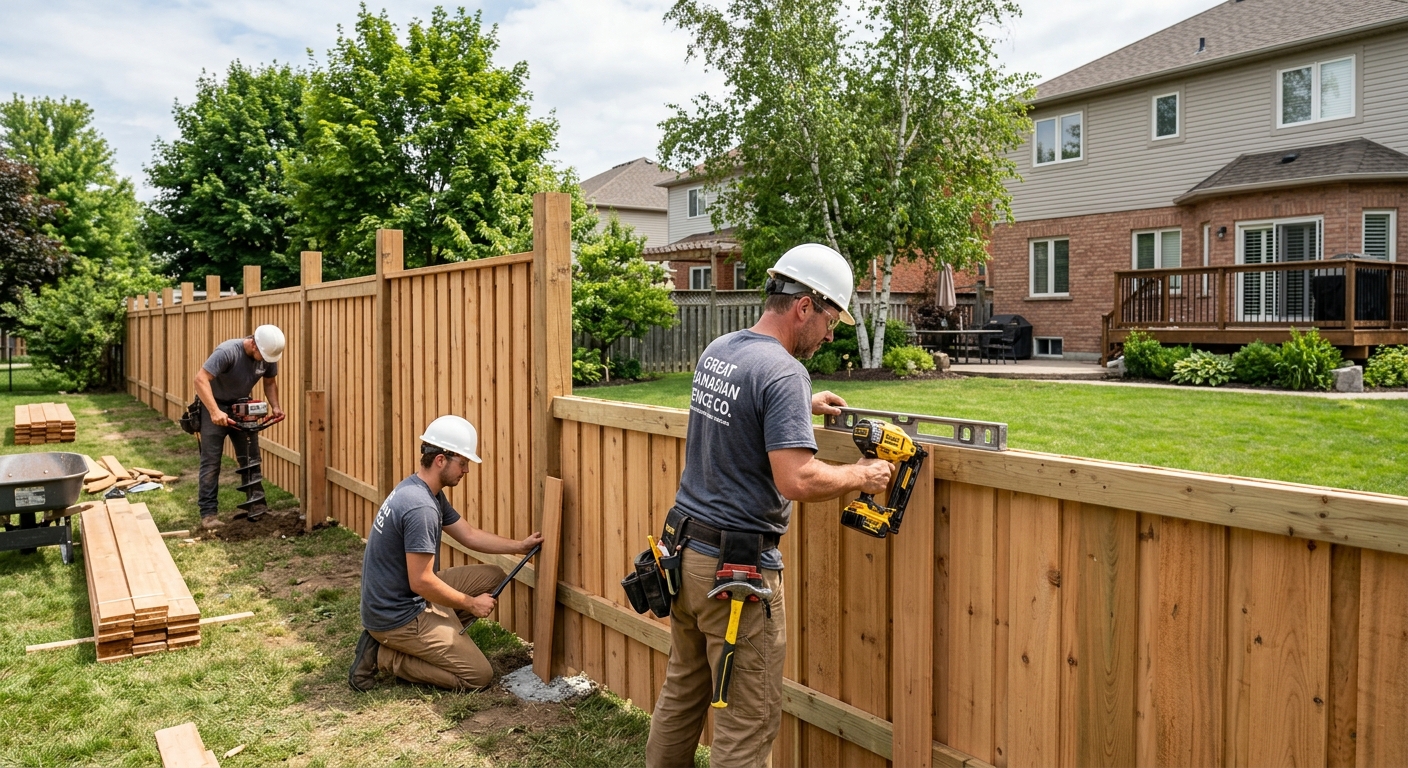
Fencing options and costs in South Surrey
South Surrey is a popular place to install or upgrade fencing—whether you’re enclosing backyards for kids and pets or improving privacy along busy side lots. With a population of 77,170 (Statistics Canada, 2021 Census), there’s steady demand across the Lower Mainland–Southwest, and each detached property is essentially another opportunity for a new fence line. The big cost drivers here are less about “choice of material” and more about site conditions: wet Fraser Valley soils, exposure to coastal winds, and how easily a crew can access your yard from the street.
In neighbourhoods like Semiahmoo, fences are especially in demand because many lots have side yard exposure and frequent backyard renovations. Costs also reflect that Lower Mainland–Southwest installs often require deeper post work than homeowners expect—contractors still set posts below frost heave risk, and they’re more likely to use concrete for corner posts, gate posts, and privacy panel sections. Availability can also affect pricing: higher-season scheduling (late spring through early fall) can raise labour rates slightly, while winter jobs may price more conservatively but can be slower due to weather and soil saturation.
Use the comparison below to sanity-check quotes. Once you align the material to your goals (privacy, maintenance level, lifespan), the rest of the estimate usually comes down to fence length, posts, gates, and how much preparation the site needs—then you can compare like-for-like across bidders.
| Material |
Lifespan |
Maintenance |
Privacy Rating |
Price per Linear Foot |
| Pressure-treated pine (standard wood) |
10–20 years |
Stain/seal every 2–3 years; annual inspection for loose pickets |
6/10 (best with solid-board or tight spacing) |
$14–$24 |
| Cedar (natural rot resistance) |
15–30 years |
Light prep and stain every 2–4 years (or allow greying and re-seal as needed) |
8/10 (good privacy with close spacing) |
$18–$32 |
| Vinyl / PVC (no-maintenance) |
20–35 years |
Rinse as needed; inspect for warping/cracks after freeze-thaw extremes |
9/10 (solid or picket designs block more view) |
$20–$38 |
| Chain-link (galvanized steel) |
20–40 years |
Occasional tension and hardware checks; corrosion resistant with proper coating |
2/10 (privacy only with screening/privacy slats) |
$9–$18 |
| Aluminum ornamental |
25–50 years |
Hose down yearly; touch-ups only if damaged |
4/10 (ornamental panels are intentionally open) |
$22–$44 |
| Composite / recycled |
20–35 years |
Low maintenance; occasional cleaning and hardware checks |
8/10 (often sold as solid privacy systems) |
$22–$42 |
Prices are estimates only and vary by project scope, site access and material selection.
What affects the price of fencing in South Surrey
In the Lower Mainland–Southwest, two homeowners can receive quotes that differ by 30–50% for what looks like the “same” fence—because the contractor’s real workload is driven by ground conditions, post installation method, and how many special sections your yard needs. Even within British Columbia, pricing tightens or loosens depending on crew availability, material sourcing, and how a site demands extra labour (soil, slope, and access) before the first post goes in.
Frost risk is one reason the same style can cost more in wetter coastal regions than in drier areas: posts still need to be set below frost heave risk, commonly around 4–6 inches below the design frost depth to limit movement. In much colder regions of Canada, posts may need to go about 1.5–2.0 m into the ground, which is why you’ll see deeper embedment and more concrete there. In South Surrey specifically, the frost profile is typically shallower than the Prairies, but contractors still often dig deeper than bare minimum and use concrete for key structural points—especially corner posts, gate posts, and privacy panel runs. Wind exposure also matters: even though the conditions aren’t Prairie-severe, coastal gusts still push crews toward stronger posts, tighter spacing, and more rigid panel designs for solid wood and vinyl privacy fences.
Concrete examples from South Surrey: (1) wet Fraser Valley soil can require deeper holes and more concrete to stabilize posts, raising both material and labour; (2) sloped lots in areas around Semiahmoo/Grandview can require stepped installs and more custom racking, which increases carpentry time; and (3) dense vegetation and narrow side access on older properties can mean longer carry distances and more labour hours before installation.
As a result, you’ll often see budget-friendly chain-link start from the lower band (around $30–$55 installed), while privacy-focused options such as vinyl commonly land closer to the $75–$130 installed range—especially when concrete-setting and a gate add complexity.
| Price Factor |
Why It Matters |
Cost Impact |
| Fence length in linear feet — the primary cost driver |
More linear feet means more posts, rails, pickets/panels, and fastening |
Often the biggest single driver (commonly 40–70% of total project cost) |
| Post depth required — frost line determines post length and hole depth |
Deeper holes increase excavation time and required materials |
Typically adds noticeable cost; deeper install can raise labour and concrete use |
| Post setting method — concrete vs. gravel pack vs. driven posts |
Concrete increases stability for gates/corner posts but adds material weight and labour |
Concrete-setting can increase cost by a material-and-labour premium |
| Material choice — vinyl vs. cedar vs. chain-link |
Material price and system structure (rails, brackets, reinforcement) varies by type |
Chain-link is lowest; vinyl/PVC and cedar privacy typically cost more |
| Gate count and type — walk-through vs. drive-through (double) |
Gates require reinforced framing, hinges, latches, and sometimes deeper-set posts |
Each additional gate can add a significant lump of hardware and labour |
| Grade and terrain — sloped yards require stepped or raked panels |
Stepping/racking increases cutting time and may require special panel sizes |
Can add a measurable surcharge on uneven properties |
| Old fence removal and disposal |
Hauling debris and separating materials increases labour and dump fees |
Removal/disposal can materially increase the quote even if the new fence is simple |
| Permit fees and survey / property line locate |
Administrative time and locating work prevents boundary errors |
Varies by scope; can add fixed costs on privacy-height or larger projects |
Permits & regulations in British Columbia
In British Columbia, fencing requirements can change based on location and height. As a practical rule of thumb for residential lots, fences that exceed a typical height threshold—often around 2.0 m (6.5 ft) at the rear and about 1.0–1.2 m (3–4 ft) near the front or at corners—may require a building permit. Regardless of height, all fencing must respect property lines and your municipal setback bylaws.
Before digging any post holes, you must arrange for utility locates. In BC this is commonly done through BC 1 Call so you don’t damage buried services. Also, get a survey or a property-line locate before install, especially if you have an older fence line, landscaping that obscures pins, or a boundary dispute history.
Shared fence ownership and responsibilities are handled through provincial line-fences legislation (how costs and maintenance responsibilities are allocated between neighbouring properties). For homeowners, the safest approach is to document your agreed boundary, fence height, and maintenance plan in writing.
Licensing and coverage: ask your contractor for (1) proof they’re properly licensed for fence-related work where applicable, (2) a certificate of liability insurance naming you as an additional insured if offered, and (3) current clearance showing workplace coverage where required for workers. To verify, check the contractor licensing registry online, review the certificate expiry dates, and confirm any clearance letter status before work starts.
Choosing the right fence material for South Surrey
Choosing the right fence material in South Surrey is about matching your priorities (privacy, low maintenance, budget, and lifespan) to the region’s mild but wet conditions and coastal wind exposure. Pressure-treated pine is the budget-friendly starting point, but it needs staining or sealing every 2–3 years to reduce grey weathering and protect the wood surface. Cedar looks better longer and has natural rot resistance, yet it still benefits from periodic maintenance to keep it stable and attractive. Vinyl/PVC is the easiest to live with because it doesn’t need staining, but extreme freeze-thaw can cause brittleness or cracking if the system isn’t installed correctly (for example, with proper temperature allowances and reinforced posts). Chain-link is the lowest cost and longest practical life, but it won’t give privacy unless you add slats or screening. Aluminum ornamental is rust-resistant and very durable, though it’s intentionally open—so it’s usually a curb-appeal choice more than a privacy solution.
For Lower Mainland–Southwest installs, post depth is still a key conversation. Even with shallower frost than inland Canada, contractors commonly set posts deep enough to prevent heaving and stabilize in wet soil—often requiring concrete for structural points rather than gravel-only methods. Wind and snow load aren’t “Prairie-level,” but coastal gusts do matter: solid privacy panels (wood/vinyl/composite) generally require sturdier posts and more careful bracing than open styles like chain-link or ornamental aluminum.
A practical budget example: if a chain-link fence fits your goal for security only, installed pricing can fall near $30–$55 per typical fencing band. Upgrading to a vinyl privacy fence for the same length often moves you toward the $75–$130 band, and that difference is usually justified when you need view blocking, stronger panel systems, and gate hardware.
| Material |
Cold Tolerance |
Lifespan |
Annual Maintenance |
Best For |
Price Band |
| Pressure-treated pine |
Good (with proper sealing and correct fasteners) |
10–20 years |
Low but recurring: inspect hardware; typically 1 maintenance cycle every 2–3 years |
Value-focused privacy and fencing continuity |
$55–$95 |
| Cedar |
Good (stable in coastal conditions with maintenance) |
15–30 years |
Moderate: periodic staining/sealing and spot checks |
Attractive, long-lasting wood privacy |
$65–$110 |
| Vinyl / PVC |
Moderate to good (better with reinforced posts and correct installation) |
20–35 years |
Very low: rinse and check for panel alignment after winter |
Low maintenance privacy with a clean look |
$75–$130 |
| Chain-link |
Good (galvanized coatings resist normal cold swings) |
20–40 years |
Low: check tension and posts; occasional hardware tightening |
Security, pet containment, and visibility boundaries |
$30–$55 |
| Aluminum ornamental |
Good (powder-coated systems resist corrosion) |
25–50 years |
Low: wash down and spot-check paint chips |
Curb appeal with durable, rust-resistant boundaries |
$90–$170 |
| Composite / recycled |
Good (designed for freeze-thaw durability when installed correctly) |
20–35 years |
Low: rinse and check fasteners periodically |
Privacy panels that look wood-like without frequent staining |
$85–$160 |
How to choose a fencing contractor in South Surrey
When you’re hiring a fencing contractor in South Surrey, verify both credentials and how they build, not just the price. First, ask for proof of proper British Columbia licensing (where applicable to their work category), a current certificate of liability insurance, and workplace coverage for their workers (commonly handled through WSIB/WCB-type coverage depending on the structure of the contractor’s workforce). To check: (1) look up the contractor on the relevant online licensing registry, (2) review the insurance certificate expiry dates and ensure the policy covers fencing installation activities, and (3) request a clearance letter/status document and confirm it’s current before work starts.
Next, get 2–3 itemised written quotes. You want labour and materials broken out—posts, rails, panel/picket components, concrete quantities, gate frames, hardware, and any removal/disposal charges. Make sure the quote spells out what’s excluded: for example, tree/roots removal, rock excavation, permit pulls (if required), survey/locate costs, and any repairs to existing landscaping.
Warranty is equally important. Ask for (1) a workmanship warranty (how many years and what it covers), (2) the product/manufacturer warranty details, and (3) whether it transfers to you if you sell the property. Payment should be controlled: never pay more than 10–15% upfront, and consider holding back a portion until the fence line is complete, gates operate correctly, and cleanup is finished. Finally, require a start date and completion estimate in writing so weather-driven delays are documented.
- Confirm licensing and coverage before signing—don’t accept “we’ll get it later.”
- Request an itemised estimate (labour, materials, concrete, hardware, gates).
- Verify disposal is included or priced separately (dump fees add up in wet-season conditions).
- Ask how they handle post holes in wet Fraser Valley soil (equipment, depth, concrete use).
- Confirm gate reinforcement and whether corner posts are concrete-set.
- Check whether they locate property pins and how they confirm your boundary line.
- Get the exact fence height and privacy panel design in writing (not “approx.”).
- Review the warranty length for workmanship and product components.
- Clarify scheduling and the process for winter/rain delays.
- Require a written start date and completion window.
- Limit upfront payment to 10–15% and use a holdback at the end.
- Ensure cleanup and final site grading/soil reinstatement are included.
In South Surrey, four common red flags are: vague lump-sum pricing without a breakdown, avoiding a written scope (especially for gates and removals), refusing to provide insurance/licensing proof on request, and offering unusually low quotes that rely on minimal embedment or no structural reinforcement for corner/gate posts.
Frequently asked questions — fencing in South Surrey
How do I handle a fence dispute with a neighbour in British Columbia?
Start by staying factual and boundary-focused. In British Columbia, disputes usually revolve around property line location, fence height, and responsibilities for shared fencing. First, confirm your boundary with a survey or property-pin locate rather than relying on an older fence line that may be off. Then talk about the specific issues in writing: the exact fence location, requested height, and any maintenance or replacement responsibilities. If your fence affects access or drainage, document photos and dates. If you can’t reach agreement, consider mediation or legal advice—because the “right” outcome depends on the province’s line-fences rules and how your neighbours’ responsibilities are defined. In South Surrey, this matters a lot when yards are sloped or when older fences have shifted in wet soil and require realignment.
What fence style offers the best wind resistance in South Surrey?
In South Surrey’s Lower Mainland–Southwest conditions, wind is the main reason to avoid overly flimsy panel systems. For strong wind performance, solid privacy fences (wood, vinyl/PVC, or composite) built with well-spaced, correctly embedded posts and proper bracing tend to hold up better than lightweight “thin” panels. Chain-link can also be durable, but it offers less resistance to gusts because it’s open—though the posts and tension system can last a long time. Aluminum ornamental is strong and rust-resistant, but it’s still an open style, so gusts pass through. The key is not just the material: ask the contractor what post depth they use, whether corner and gate posts are concrete-set, and how they handle raked/stepped sections on sloped yards. That’s where many wind-related failures originate.
How much does a fence cost in South Surrey?
Pricing in South Surrey generally tracks installed material bands. For a typical residential install, chain-link often falls around $30–$55 installed, while wood usually comes in around $55–$95 installed depending on finish quality, panel style, and gate complexity. Vinyl/PVC is commonly higher—around $75–$130 installed—because the system needs more structural attention (strong posts, appropriate panel support) and the material cost is greater. Aluminum ornamental is often the top of the range, roughly $90–$170 installed. Your final number depends heavily on fence length, number of gates, soil/wetness (wet holes mean more labour and sometimes more concrete), and access for removing old fencing.
How deep should fence posts be for South Surrey's frost?
For South Surrey, the practical goal is to set posts below the frost heave risk to prevent movement during freeze-thaw cycles. While the coastal frost profile is generally shallower than inland Canada, contractors commonly set posts deeper than a “minimum-only” approach—often around 4–6 inches below the design frost depth. In practical field terms, many installs end up with deeper embedment than homeowners expect, particularly in wetter Fraser Valley soil where post stabilization is critical. Corner posts, gate posts, and heavy privacy runs often get concrete setting for added stability. Ask your contractor to state the intended embedment depth and the setting method (concrete vs. gravel pack) for your specific soil conditions and fence height.
Wood vs vinyl vs aluminum fence — which is best?
“Best” depends on what you value most. Wood (pressure-treated pine or cedar) offers a classic look and can fit a wide budget, typically landing in the $55–$95 installed range, but it usually needs maintenance (staining or sealing every couple of years to slow weathering and protect the surface). Vinyl/PVC is a top choice for low maintenance and privacy—often $75–$130 installed—though it can be more expensive upfront and must be installed with correct reinforcement and attention to freeze-thaw behaviour. Aluminum (ornamental) is usually the most durable against corrosion and needs minimal upkeep, but it’s typically more open and can cost more (often $90–$170 installed). If you need privacy from neighbours in South Surrey, vinyl or wood privacy panels usually outperform open ornamental aluminum.
Do I need a permit to build a fence in British Columbia?
Often, a permit is required when a fence exceeds a common height threshold—frequently around 2.0 m (6.5 ft) at the rear and 1.0–1.2 m (3–4 ft) near the front or at corners—but the exact trigger can vary by municipality and location. In all cases, your fence must comply with property line requirements and municipal setback bylaws. Before you dig, you also need utility locates through BC 1 Call. For South Surrey homeowners, the safest approach is to check your specific rules with your local municipality before ordering materials, especially if you’re planning a tall privacy fence, a new gate, or a fence that changes the boundary line. If a permit is required, your contractor may include the permit paperwork in the scope—but don’t assume it’s automatic; confirm it in the written quote.