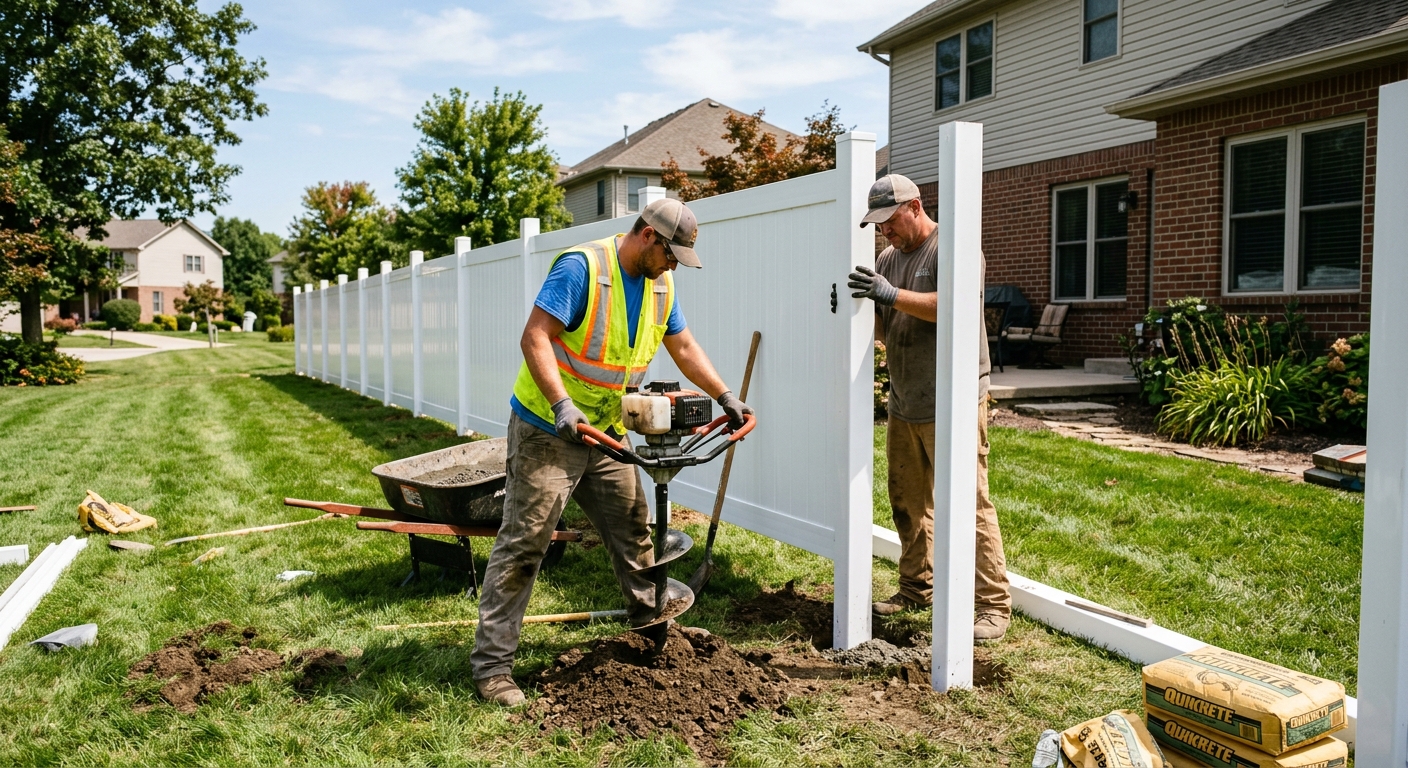
Fencing options and costs in East Newton South
East Newton South homeowners are often comparing fencing options because the neighbourhood sits in a busy slice of the Lower Mainland—Southwest, and fencing demand closely follows local housing activity. With a population of 7,881 (Statistics Canada, 2021 Census), the area supports steady residential contracting, and each single-detached and townhouse lot is a potential project. For many properties, a new fence is also part of yard upgrades that keep privacy, pet containment and curb appeal in balance—especially along busier streets and near school routes where homeowners want a cleaner look.
Cost in this region is shaped by mild but not trivial frost and wind. Even though BC’s coastal frost depth is often shallower than interior provinces, contractors still typically set posts below design frost to reduce heaving risk, and Fraser Valley–type soils can be wetter, meaning deeper holes, more concrete at key locations, and more time per install. In East Newton South—particularly around the Newton neighbourhood edges near commercial pockets—crews are in demand for privacy fencing and gates for backyards and side yards, which can affect lead times and pricing.
Below is a practical comparison of common fence types for East Newton South, including typical lifespan, maintenance expectations and realistic price bands before we break down what drives your quote.
| Material |
Lifespan |
Maintenance |
Privacy Rating |
Price per Linear Foot |
| Pressure-treated pine (standard wood) |
10–15 years |
Stain/seal every 2–3 years for best appearance |
High (solid panels) |
$55–$95 |
| Cedar (natural rot resistance) |
15–25 years |
Light maintenance; stain/oil 2–4 years |
High (solid boards) |
$75–$120 |
| Vinyl / PVC (no-maintenance) |
20–30 years |
Rinse as needed; avoid impact damage |
High (privacy styles) |
$75–$130 |
| Chain-link (galvanized steel) |
20–30+ years |
Occasional rinse; tighten or replace damaged links |
Low to medium (add privacy slats if desired) |
$30–$55 |
| Aluminum ornamental |
25–40 years |
Wash periodically; no rust |
Low (open pickets) |
$90–$170 |
| Composite / recycled material |
20–30 years |
Minimal; occasional cleaning |
Medium to high (solid infill options) |
$95–$150 |
Prices are estimates only and vary by project scope, site access and material selection.
What affects the price of fencing in East Newton South
In East Newton South, two quotes for the same fence can differ by 30–50% because Lower Mainland–Southwest pricing is sensitive to site conditions, crew time and what materials must be used to perform in BC’s wet winters and occasional cold snaps. When you compare contractors across the province, the labour rates, material purchasing costs and installation techniques can shift—especially where soil is wetter or access is tight. That’s why a “standard” fence on paper becomes a different build when posts need deeper embedment and when gate hardware, corners and privacy panel bracing are involved.
Frost is the big structural driver. Even though BC coastal frost is typically less severe than Ontario and Alberta, published guidance and industry practice still push contractors to place posts roughly 4–6 inches (about 10–15 cm) below the design frost depth; in practice, that often means deeper holes in East Newton South than people expect. Where Ontario and Alberta regions may require around 1.5–2.0 m embedment, BC crews often land a bit shallower, but they still frequently go deeper than the bare minimum and choose concrete setting for privacy panels, corner posts and gate posts. Wind exposure also matters: the Lower Mainland gets gusty days, and open yard setups can lead to stricter post spacing and heavier panel designs to keep the fence from racking.
Concrete examples from local projects: (1) In wetter spots or low-lying yards, a contractor may switch from gravel pack to concrete because the hole bottom can hold water and compromise post stability, adding both material and time. (2) If your fence line crosses a slope, crews may step the panels; extra layout time and longer rails can add a noticeable labour premium. (3) If you’re replacing an older fence set in poor soil, removal and disposal can become a line item that’s easy to underestimate—especially when boards are rotten or posts are encased in old concrete. For budgeting, it helps to think in bands: chain-link might land in the $30–$55 range, while cedar or vinyl privacy fencing typically climbs toward the $75–$130 band depending on panel type and height.
| Price Factor |
Why It Matters |
Cost Impact |
| Fence length in linear feet |
The more runs you build, the more posts, rails and materials you need |
Largest driver; small changes add up fast |
| Post depth required |
Frost and soil conditions dictate hole depth and post length |
More depth means deeper excavation and longer lumber/posts |
| Post setting method |
Concrete provides better anchoring in wet or unstable soils |
Concrete often increases both material and labour time |
| Material choice |
Vinyl, cedar and chain-link have different structural requirements and buy cost |
Can move you between bands (e.g., chain-link $30–$55 vs vinyl $75–$130) |
| Gate count and type |
Gates need heavier framing, hinges and latch hardware |
Extra corners/bracing and hardware premiums |
| Grade and terrain |
Slope requires stepping, raking or custom panel layouts |
More layout labour; sometimes more rails/posts |
| Old fence removal and disposal |
Demolition and hauling aren’t “free” time on site |
Often a significant add-on if posts are concrete-set |
| Permit fees and survey / property line locate |
Upfront paperwork protects against encroachment and rework |
May add administrative costs and scheduling steps |
Permits & regulations in British Columbia
In British Columbia, fences over a height threshold typically require a building permit. In most practical residential situations, think of around 2.0 m (6.5 ft) at the rear and about 1.0–1.2 m (3–4 ft) at the front or corner as the range where permits become more likely. Exact thresholds can vary by location and frontage conditions, so your contractor should confirm the requirement with the local municipality before starting. Regardless of permit requirements, fences must stay within property lines and respect municipal setback bylaws, which is where surveys matter.
Before digging any post holes, you should also call for utility locates using the provincial one-call system for BC (BC 1 Call). Even in established East Newton South yards, buried services and private conduits can exist near fence lines, so locates reduce the risk of damage and delays.
To verify a fencing contractor in BC, ask for three things in writing: (1) their contractor licence details as posted in the public registry, (2) a current certificate of insurance showing liability coverage appropriate to the job scope, and (3) proof of coverage for work performed (commonly discussed as WCB/insurance clearance or equivalent coverage documentation depending on the contractor’s status). When you request their documentation, also ask for the certificate’s effective dates and confirm the company named matches the quote and the invoices.
Step-by-step for East Newton South homeowners: confirm whether your proposed height triggers a permit, request a copy of their insurance and coverage documentation, verify licence details in the BC registry, and get a survey/property line locate if there’s any chance of encroachment—especially when replacing an older, possibly misplaced fence.
Choosing the right fence material for East Newton South
The right fence material in East Newton South depends on how you balance privacy, maintenance comfort, and how long you want the fence to look “good” before repairs. In the Lower Mainland–Southwest, you’re dealing with a mild coastal climate but with wet weather that can accelerate rot if the wood isn’t built and treated correctly. That’s why pressure-treated pine can be a budget win, but it typically needs staining or sealing every 2–3 years to reduce grey weathering and moisture issues. Cedar looks better sooner and naturally resists rot, but it still benefits from periodic oil or stain to keep colour and reduce splitting.
Vinyl/PVC is popular for low maintenance—especially where homeowners want privacy without yearly upkeep—but in occasional cold snaps vinyl can become more brittle. It’s usually fine for East Newton South when installed with proper hardware and spacing, yet it’s not the cheapest option up front. Chain-link is the lowest initial cost and often the longest-life for basic containment, but it provides limited privacy unless you add slats or choose a privacy mesh. Aluminum ornamental offers rust resistance and a clean look, but it’s most appropriate when you’re prioritizing appearance over full privacy.
Post depth matters. Even with coastal frost being less severe than interior regions, crews still set posts below the design frost line and commonly go deeper than a bare minimum to limit heaving. That’s often where concrete setting becomes a practical choice for privacy panels, corners and gate posts—particularly in wetter soils. For a wind-and-snow-resistant build, heavier bracing at corners and careful rail sizing help keep panels straight.
As a budgeting example: if you’re choosing between wood and vinyl privacy, it’s not unusual to see a cedar/treated wood install in the $55–$95 range for wood options versus vinyl commonly closer to $75–$130 depending on height and gate complexity. If you dislike maintenance and expect to keep the home for years, that difference can be justified; if you’re flexible on upkeep, wood can deliver strong value.
| Material |
Cold Tolerance |
Lifespan |
Annual Maintenance |
Best For |
Price Band |
| Pressure-treated pine |
Good in typical BC winter temps; protect at cut ends |
10–15 years |
Stain/seal every 2–3 years (spring plan) |
Budget privacy where you’re okay with periodic upkeep |
$55–$95 |
| Cedar |
Good; best results with proper fastening and airflow |
15–25 years |
Light re-oiling/staining every 2–4 years |
Natural look with improved rot resistance |
$75–$120 |
| Vinyl / PVC |
Very good overall; avoid impact damage in cold |
20–30 years |
Minimal—rinse/spot clean as needed |
Low maintenance privacy with long service life |
$75–$130 |
| Chain-link |
Good; galvanized resists winter corrosion |
20–30+ years |
Occasional rinse and tension/repair checks |
Containment and security on the lowest budget |
$30–$55 |
| Aluminum ornamental |
Good; won’t rust like some steel-based fences |
25–40 years |
Wash occasionally; inspect for loose fittings |
Front-yard appearance with durability |
$90–$170 |
| Composite / recycled material |
Good; performs well with proper post/rail support |
20–30 years |
Minimal—cleaning rather than staining |
Low-maintenance solid privacy panels |
$95–$150 |
How to choose a fencing contractor in East Newton South
Choosing the right fencing contractor in East Newton South starts with verification. In British Columbia, you want a contractor who can show their current licence details, provide a certificate of liability insurance, and document their coverage for workers (commonly referenced through WCB/worker coverage clearance). To check each: (1) look up the business/living licence details in the BC online registry (don’t rely on a screenshot from an email), (2) review the certificate of insurance and ensure the insured party name matches the quote, and (3) ask for proof of coverage status for the crew who will be on site.
Next, request 2–3 itemised written quotes—broken into labour + materials, not a single lump sum. A fair quote lists post type and size, rail and picket/board spacing, concrete or gravel setting method, and hardware (hinges/latches) including which gate style you’re getting. Read the exclusions carefully: is permit pulling included if needed? Is old fence removal and disposal included, or is it priced separately? Confirm if site cleanup is part of the scope and whether haul-away goes to a landfill or recycling facility.
Warranty matters. Ask for the workmanship warranty length (how long the contractor covers install defects) and the manufacturer warranty for the product (boards, rails, and in the case of vinyl, structural components). Also ask whether warranties are transferable to future owners—this can matter for resale. On payment schedule, never sign up for an upfront payment beyond about 10–15%: hold the balance until the fence is complete and you’ve had a chance to inspect alignment, tension, and gate operation. Finally, get the start date and completion estimate in writing so you can plan around weather and access.
- Ask for licence details and verify them in the BC registry before scheduling
- Confirm liability insurance with correct company name and active dates
- Request proof of worker coverage status (WCB/clearance or equivalent)
- Get 2–3 quotes with a labour/material breakdown, including gates and corners
- Ensure the quote specifies post spacing, post diameter/material, and rail sizing
- Confirm post setting method: concrete vs gravel pack (especially for wet soils)
- Ask whether the quote includes permits and utility locates
- Clarify whether old fence removal and disposal are included
- Verify if the contractor provides a workmanship warranty and what “defect” means
- Check that gate hardware is listed (hinges, latch type, and frame reinforcement)
- Limit upfront payment to 10–15% and request a completion holdback
- Get start date, project timeline and cleanup responsibilities in writing
Red flags I see in East Newton South include: quotes that don’t say how posts are set (concrete vs gravel) while still pricing “the cheapest wood”; refusing to provide insurance or coverage documentation; missing details on gate construction (which is where sagging and misalignment usually start); starting without confirming property line or the need for a permit when heights are over typical thresholds; and promises of “no maintenance” for wood or “lifetime” for improper installation methods.
Frequently asked questions — fencing in East Newton South
How deep should fence posts be for East Newton South's frost?
For East Newton South, contractors typically set posts below the design frost depth to reduce heaving risk. In Lower Mainland–Southwest conditions, coastal frost is often less severe than Ontario and Alberta, but in real builds we still generally place posts deep enough that seasonal movement can’t lift the fence. A common practice is to set posts roughly 4–6 inches (about 10–15 cm) below the design frost depth, and in wetter Fraser Valley soils that usually means digging deeper and using concrete at key points like corners and gate posts. If you want a simple budgeting check, ask your contractor to specify the embedment depth in the quote (in inches/metres) and to explain whether they’re using concrete or gravel pack—those choices directly affect stability.
Wood vs vinyl vs aluminum fence — which is best?
“Best” depends on your priorities in British Columbia. Wood (pressure-treated pine or cedar) is often a mid-range choice and can look excellent with proper staining; pressure-treated pine commonly falls in the $55–$95 band, while cedar often lands higher in the $75–$120 range. Vinyl/PVC is the low-maintenance privacy option for many East Newton South homeowners, typically around $75–$130 depending on height and gate work. Aluminum is durable and rust-resistant but usually costs more and is typically chosen for ornamental look (and it’s often not a full privacy solution), commonly $90–$170. If you don’t want to maintain finishes every few years, vinyl or cedar may be worth the upfront difference; if you want the lowest cost while still building secure containment, consider chain-link in the $30–$55 band and add privacy slats if needed.
Do I need a permit to build a fence in British Columbia?
In BC, many fences above height thresholds may require a building permit—commonly around 2.0 m (6.5 ft) at the rear and about 1.0–1.2 m (3–4 ft) at the front or corner. The exact trigger can depend on location and frontage, so it’s smart for homeowners in East Newton South to confirm based on where the fence sits (front/corner vs rear) and the planned height. Even when a permit isn’t required, you still need to respect property lines and municipal setback bylaws. Also remember to call for utility locates before post-hole digging and to consider a survey/property line locate if you’re replacing an older fence that may not match the pins.
How long does a wood fence last in East Newton South?
In East Newton South’s Lower Mainland–Southwest climate, a well-built wood fence often lasts about 10–15 years for pressure-treated pine and roughly 15–25 years for cedar, assuming correct post setting and routine maintenance. Wet conditions and coastal humidity accelerate wear if cut ends and fasteners aren’t handled properly. Maintenance is a big piece: pressure-treated pine typically needs staining or sealing every 2–3 years to avoid grey weathering and to slow surface degradation. Cedar also benefits from periodic oil or stain every 2–4 years, even though it resists rot better. If you want longer life, ask contractors how they set posts (especially corners and gates) and whether they’re planning for drainage and airflow.
Who owns and maintains a shared fence?
Shared fence ownership and responsibilities are governed by BC line-fences principles, and the practical answer depends on where the fence sits relative to the property boundary and how your agreement (written or established custom) defines maintenance duties. In most homeowner disputes, the first step is confirming the boundary line and whether the fence is on your property, on the neighbour’s property, or directly on the shared line. If it’s a shared fence, repairs and replacements are usually split based on the agreement or the applicable rules for shared maintenance. For East Newton South, I recommend starting with a property line locate (or survey if needed) before ordering replacement materials, because even a fence “looking” centered can be off by inches to feet and create boundary disputes.
How do I find my property line before fencing?
Before installing a fence in British Columbia, the safest approach is to locate your property pins or obtain a survey that clearly shows boundary lines. For East Newton South homeowners, this matters because replacing an older fence—sometimes installed years ago—can reveal that the fence isn’t exactly where it should be. The step-by-step process is: (1) check your title documents or prior survey paperwork, (2) locate property pins if available and in good condition, and (3) hire a surveyor or request a professional property locate if pins are missing or uncertain. Then ensure your contractor marks the fence layout based on that locate. This helps avoid encroachment disputes and prevents costly rework after the fact.