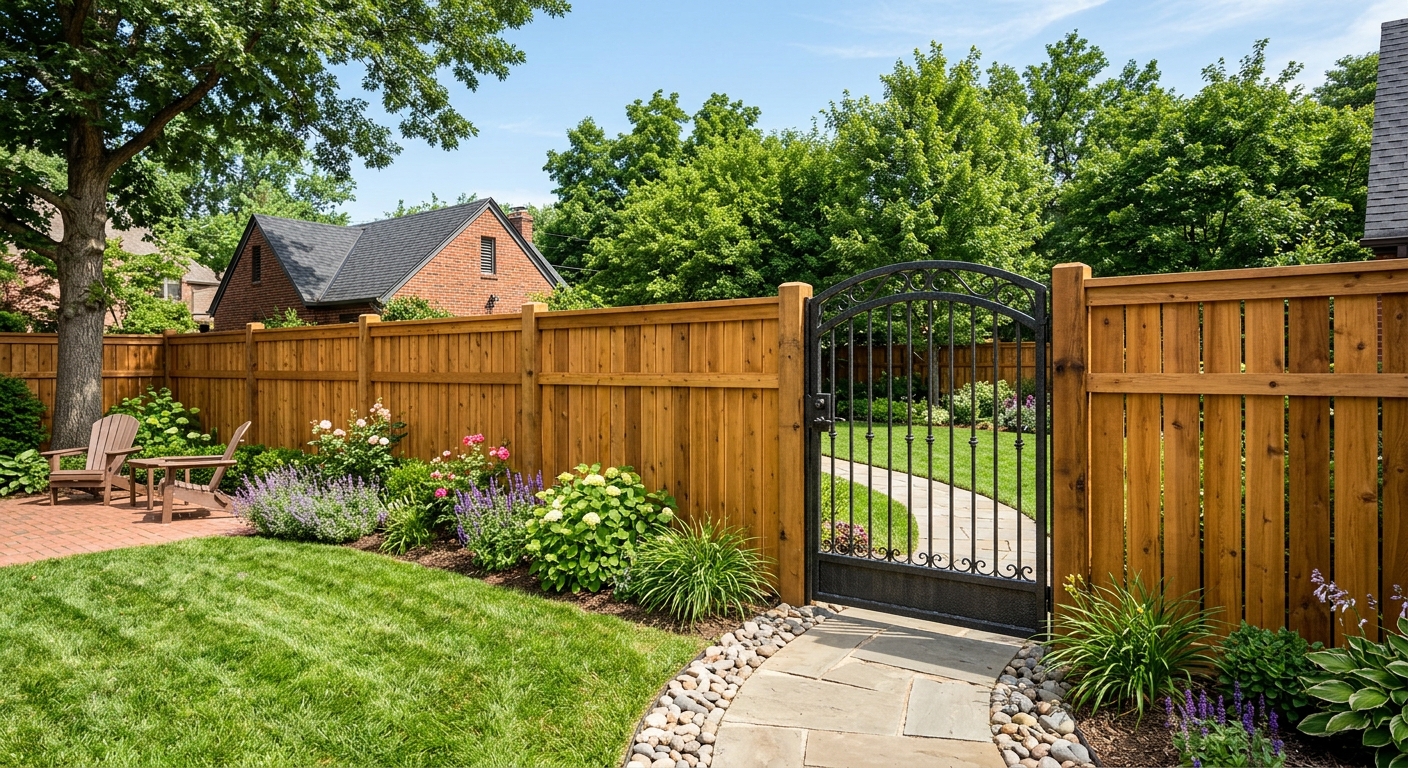
Fencing options and costs in Prince George
In Prince George, British Columbia, the right fence choice is usually a trade-off between privacy, maintenance time, and how well the fence holds up through northern freeze–thaw cycles. With 68.2% of households owning homes (Statistics Canada, 2021 Census) and 58.1% of dwellings being single-detached, there’s steady year-round demand for boundary fencing, side-yard upgrades, and back-lot privacy—especially as homeowners rework older yards. About 61.7% of homes were built before 1981 (Statistics Canada, 2021 Census), so many projects are replacements of aging boards, leaning rail systems, or fences that never had proper concrete-set footings.
Cariboo conditions are what most strongly shape Prince George fencing costs. Contractors typically set posts at least 3 feet (about 0.9 m) below grade to reduce frost heaving risk, and many add extra depth (often around 15 cm beyond frost considerations) when soil is clay-heavy or drainage is poor. That means more excavation time, longer posts, and more concrete in the budget than you’d see on milder sites. Wind can also matter—while Prince George streets can be sheltered, lots near the highway corridor and open areas tend to get gustier exposure, pushing crews toward heavier posts and more rigid panel styles.
You’ll see particularly high scheduling demand around Hart Highlands and the Westwood area, where lots are larger and privacy fencing is a common homeowner priority. Use the options below as a baseline for planning, and then match the material to your site conditions in the quote comparison table.
| Material |
Lifespan |
Maintenance |
Privacy Rating |
Price per Linear Foot |
| Pressure-treated pine (standard wood) |
12–18 years |
Stain/seal every 2–3 years to slow grey weathering |
Good (solid panels) |
$45–$80 |
| Cedar (natural rot resistance) |
18–25 years |
Light staining every 2–3 years; inspect fasteners annually |
Very good (solid board) |
$65–$95 |
| Vinyl / PVC (no-maintenance) |
20–30 years |
Rinse annually; occasional panel alignment checks |
Very good (privacy style panels) |
$65–$110 |
| Chain-link (galvanized steel) |
25–40 years |
Minimal; keep tension and clear debris |
Low (security only) |
$35–$65 |
| Aluminum ornamental |
25–35 years |
Occasional wash; check gate latches |
Low to medium (open pickets) |
$70–$130 |
| Composite / recycled material |
25–35 years |
Low (rinse); avoid impact damage near snowbanks |
Good to very good (solid styles) |
$85–$135 |
Prices are estimates only and vary by project scope, site access and material selection.
What affects the price of fencing in Prince George
In Prince George, two quotes for what looks like the same fence can land 30–50% apart because the hidden drivers are excavation depth, footing method, and how robust the installer makes the frame for Cariboo exposure. In practice, crews price for the worst likely conditions: heavier posts, tighter bracing, and concrete-set footings when soils are clayey or when the yard drains poorly. Where older homes (many built before 1981) are being retrofitted, you may also find buried obstructions or remnants of the previous fence that add labour for removal and disposal.
Frost depth is the biggest reason pricing diverges. Even though BC’s coastal frost is shallower, interior/northern zones around Prince George generally push installers toward deeper post holes—often roughly 4–6 inches below the design frost depth—so posts don’t heave during freeze–thaw cycles. In contrast to some southern regions, the need for deeper holes in colder pockets typically increases material cost (longer posts) and labour (more digging, more concrete). Wind exposure then becomes a secondary pricing lever. On more open lots, contractors may use heavier posts and slightly tighter panel spacing; that’s especially noticeable with vinyl/PVC privacy fences (typically in the $65–$110 band per linear foot) where the frame must stay rigid in gusts.
Concrete examples I see locally: (1) a flat yard with sandy soil may allow a gravel-pack approach for certain styles, while a clay yard often triggers full concrete-set footings, increasing excavation time and concrete volume; (2) a fence that requires multiple gate openings (drive gate plus side gate) adds bracing and hardware; (3) removing an old fence that’s embedded in older footings can add disposal and stump/anchor pull-outs. If you’re comparing a chain-link perimeter (often $35–$65) to a solid privacy fence, the cost difference can be justified quickly by both privacy framing and the deeper, sturdier post build needed for stability in Prince George’s winter cycles.
| Price Factor |
Why It Matters |
Cost Impact |
| Fence length in linear feet |
Every foot adds posts, rails, fasteners and labour |
Typically the largest driver (cost scales linearly) |
| Post depth required |
Frost line governs hole depth to prevent heaving |
Deeper holes increase excavation and concrete costs |
| Post setting method |
Concrete vs gravel pack vs driven posts changes stability |
Concrete-set posts usually cost more but reduce movement risk |
| Material choice |
Vinyl, cedar, and chain-link have different frames and hardware |
Vinyl often higher upfront; chain-link lowest |
| Gate count and type |
Drive gates need stronger posts, hinges and latches |
Each gate adds materials and rework/adjustment time |
| Grade and terrain |
Sloped yards require stepped or raked panels |
More cutting, layout time, and specialty rail adjustments |
| Old fence removal and disposal |
Anchors, buried posts and debris removal adds labour |
Can add a meaningful surcharge depending on how deep it’s set |
| Permit fees and survey / property line locate |
Legal line verification and required approvals affect schedule |
Small to moderate cost; can add waiting time for inspections/locates |
Permits & regulations in British Columbia
In British Columbia, fencing may require a building permit when it exceeds common height thresholds (often around 2.0 m for the rear yard and roughly 1.0–1.2 m near the front yard or corner, depending on municipal rules). Regardless of permit needs, your fence must respect property lines and local setback bylaws. The safest approach in Prince George is to confirm requirements with the City before you order materials, especially if you’re planning a tall privacy fence, a fence spanning a corner lot, or any structure that could affect sightlines.
Before digging any post hole, call for utility locates through the appropriate provincial one-call service (BC 1 Call in British Columbia). Also obtain a survey or property-pin locate before installation so you can avoid encroachment disputes—fence disputes are common when older boundaries weren’t clearly marked. If you’re building along a shared boundary, line-fences rules in the province govern shared fence ownership and cost responsibilities.
What typically DOES require a permit: fences over common height thresholds (especially taller privacy fences), and any special structures that may be treated as substantial buildings by the municipality. What typically does NOT require a permit: standard-height backyard fences that remain within municipal limits, provided they stay within the property line and don’t alter drainage/safety features.
To verify a contractor in Prince George, ask for: (1) their BC licence/registration details (check the appropriate online registry or confirm the number shown on their invoices); (2) certificate of insurance showing general liability and proper job coverage; and (3) proof of coverage for workers—WSIB/WCB style coverage for worksite employees. Clearance letters, coverage certificates, and the certificate’s job/location details should match your project scope. If anything can’t be provided, treat it as a refusal to confirm risk management.
Choosing the right fence material for Prince George
Choosing the right material in Prince George is about matching your priorities to Cariboo cold, wet conditions, and winter impacts like snowbanks and freeze–thaw stress. Pressure-treated pine is the budget-friendly route, but you’ll want a staining/sealing plan every 2–3 years to avoid rapid grey weathering. Cedar costs more initially, yet it typically handles rot better and looks stronger over time—still, cedar benefits from periodic staining and fastener checks. Vinyl/PVC is the low-maintenance favourite for many homeowners because it doesn’t need sealing, but in extreme cold it can become brittle; good installation (proper post depth and solid framing) matters to prevent movement-related cracking. Chain-link is usually the lowest-cost option and performs well for longevity, but it won’t deliver privacy unless you add privacy slats, vines, or screening. Aluminum ornamental is a mid-to-higher cost option with excellent rust resistance and curb appeal; however, it generally doesn’t offer privacy.
Post depth matters across materials. In Cariboo, crews commonly set posts at least 3 feet (about 0.9 m) below grade, and many go deeper as needed so posts sit below the frost-affected zone and avoid heaving. Concrete-set footings are often recommended or required when the soil is clay or drainage is poor—this can be the difference between a fence that stays square for decades and one that leans after a couple of winters. Wind and snow load considerations also push stronger framing: open yards may need heavier posts and tighter spacing, which can slightly increase the cost even for vinyl privacy.
A practical dollar example: if pressure-treated pine lands around the $45–$80 band, but cedar comes in closer to $65–$95 per linear foot, the higher spend can be justified if you want better long-term appearance with less worry about rot near damp ground areas. If your main goal is privacy without frequent upkeep, vinyl privacy fences (often $65–$110) can also be worth it—provided the contractor sets deeper concrete-set posts appropriate for Prince George frost behaviour.
| Material |
Cold Tolerance |
Lifespan |
Annual Maintenance |
Best For |
Price Band |
| Pressure-treated pine |
Good with proper post depth and staining |
12–18 years |
Low to moderate (inspect; stain every 2–3 years) |
Budget privacy and short-to-mid term upgrades |
$45–$80 |
| Cedar |
Very good; resists moisture-related rot |
18–25 years |
Low to moderate (stain every 2–3 years; tighten hardware) |
Appearance-focused homeowners who want longer service life |
$65–$95 |
| Vinyl / PVC |
Good when installed rigidly; avoid gaps at posts |
20–30 years |
Very low (rinse; check alignment after storms) |
Low-maintenance privacy in freeze–thaw climates |
$65–$110 |
| Chain-link |
Excellent; steel frame handles cold well |
25–40 years |
Very low (check tension; clear vegetation) |
Security perimeter and long-lasting boundaries |
$35–$65 |
| Aluminum ornamental |
Excellent; doesn’t rust like steel |
25–35 years |
Low (wash; check gates and latches) |
Front curb appeal and durability with open views |
$70–$130 |
| Composite / recycled |
Good; performs well if protected from impact |
25–35 years |
Low (rinse; inspect for impact damage) |
Privacy style with minimal upkeep |
$85–$135 |
How to choose a fencing contractor in Prince George
Choosing a contractor in Prince George starts with verifying they can legally and financially stand behind the work. In British Columbia, ask for their business registration/licence details (and verify using the relevant online registry or the number they provide), then request a certificate of insurance that shows general liability appropriate to your job. For worker coverage, confirm WSIB/WCB-type coverage for employees and ask for the clearance letter or coverage certificate details—don’t accept screenshots without matchable policy information. If they’re hesitant to provide documents up front, that’s a warning sign for risk and accountability.
Next, get 2–3 itemised written quotes instead of a single lump sum. A good fencing quote should break down labour, materials, post setting method (concrete vs gravel pack), rail spacing, gate hardware, and removal/disposal of the old fence. Confirm what’s excluded: is permit pulling included if required, is utility locating included, and who handles any survey/property line locate if boundaries are unclear? Warranty terms should be stated clearly: workmanship warranty length, the product/manufacturer warranty, and whether the warranty is transferable to future homeowners. Ask for the start date and a completion estimate in writing; fencing is weather-sensitive, so timelines should reflect realistic frost-safe installation planning.
Payment schedule matters in this trade. Never pay more than about 10–15% upfront; hold back a portion until the job is substantially complete and you’ve confirmed alignment, gate operation, and post stability. For snow-heavy seasons in the north, I recommend verifying that the contractor plans for winter protection and clean site access—especially around driveways and walkways.
- Provides licence/registration information and verifies it upon request.
- Supplies current certificate of insurance before work starts.
- Confirms worker coverage (WSIB/WCB-type) for employees with clearance letters/certificates.
- Quotes are itemised: labour, materials, posts, rails, hardware, and setting method.
- Includes whether concrete-set footings are required for your soil and frost zone.
- Specifies post spacing, panel/rack layout for slopes, and gate type.
- States what’s included in old fence removal and disposal (hauling/dumping fees).
- Clarifies permit responsibility (who applies, who pays) if the fence exceeds thresholds.
- Documents the utility locate call and any scheduling for locates before digging.
- Provides a written workmanship warranty and states duration and coverage.
- Uses a fair payment schedule (10–15% max upfront; holdback at completion).
- Includes an installation timeline with a realistic start and finish date.
Common red flags in Prince George: (1) a quote that skips post depth and footing method details; (2) refusal to provide insurance/coverage documents; (3) “cash only” payments or pressure for large upfront deposits; (4) vague warranty language that doesn’t separate workmanship vs material coverage; and (5) no written scope for removal, grading, or gate hardware adjustments.
Frequently asked questions — fencing in Prince George
What fence style offers the best wind resistance in Prince George?
In Prince George, the most wind-resilient residential styles are typically solid or semi-solid fences built with rigid bracing—especially when posts are set below the frost-affected zone. For windy, more exposed lots (common near highway corridors and open yards), I generally recommend heavier post sizing, tighter spacing, and diagonal bracing where appropriate. Vinyl privacy can perform well if it’s framed properly, but low-rigidity styles that only rely on thin rails can loosen after freeze–thaw and gust loading. Chain-link is strong against impact and handles wind by letting it pass through, so it often survives storms well, but it won’t provide privacy. If you want the best balance of wind stability and privacy, a well-built solid panel fence with properly concrete-set footings is the safest choice in British Columbia’s northern climate.
How much does a fence cost in Prince George?
Fence pricing in Prince George usually starts with your material and linear footage, then rises with post depth, footing method, gates, and removal of an old fence. For planning, regional installation bands typically place wood around $45–$80 per linear foot, chain-link around $35–$65, vinyl/PVC around $65–$110, and aluminum/metal around $70–$130. Your final number can move up or down depending on soil conditions (clay vs sandy), access for digging equipment, and how many corners and gates you have. Because Cariboo winters drive deeper post-setting for frost stability, two “same-looking” jobs can still diverge by 30–50% when one yard needs more concrete-set footings and another does not.
How deep should fence posts be for Prince George's frost?
For Prince George and the broader Cariboo region, posts are commonly set at least 3 feet (about 0.9 m) below grade to reduce heaving from freeze–thaw cycles. Many contractors set additional depth—often around 15 cm beyond frost considerations—when the soil is clay-heavy, drainage is poor, or the fence needs extra rigidity for wind exposure. Exact depth depends on your site’s frost conditions and soil, so the safest approach is to have your contractor confirm post depth and footing method in the written scope before you sign. A good quote will explicitly state whether they’re using concrete-set footings and what post length they’re installing. This detail is what keeps fences straight through winter.
Wood vs vinyl vs aluminum fence — which is best?
There isn’t one “best” across all Prince George homes—it depends on how much maintenance you want and whether you need privacy. Wood (pressure-treated pine) is usually the most budget-friendly, commonly around $45–$80 per linear foot, but it typically needs staining/sealing every 2–3 years to limit grey weathering and keep fasteners in good shape. Cedar offers a nicer appearance and better natural rot resistance, but still benefits from maintenance. Vinyl/PVC is often chosen for low upkeep and privacy, commonly around $65–$110; it must be installed rigidly with proper post depth for cold performance. Aluminum is durable and won’t rust, but it’s usually ornamental and provides less privacy; pricing often falls within $70–$130. If privacy is your top goal, vinyl or wood privacy panels are generally the most effective.
Do I need a permit to build a fence in British Columbia?
In British Columbia, permits may be required when a fence exceeds common height thresholds—often around 2.0 m for rear yard fences and roughly 1.0–1.2 m for front yard/corner situations—depending on the municipality’s rules. Even when a permit isn’t needed, your fence must still respect property lines and municipal setback bylaws. In Prince George, I recommend confirming requirements with the City before ordering materials. You should also plan for utility locates before digging post holes (BC 1 Call), and many homeowners choose to get a survey or locate property pins to prevent encroachment disputes. If your fence runs along or near a shared boundary, line-fences legislation in the province can affect who pays for what.
How long does a wood fence last in Prince George?
A well-built wood fence in Prince George typically lasts about 12–18 years for standard pressure-treated pine and longer for cedar, often around 18–25 years, assuming proper post depth, secure post setting, and periodic maintenance. The main durability risks here are freeze–thaw heaving (solved by correct post depth and appropriate footings) and moisture-driven wear at ground level (mitigated by sealing/staining and good drainage). Because many Prince George homes are older (a large share were built before 1981), replacements often start because the previous fence was installed with insufficient footings or minimal protection near the base. If you keep up with staining every 2–3 years, use quality fasteners, and inspect after major winter storms, you’ll generally get the higher end of the lifespan range.