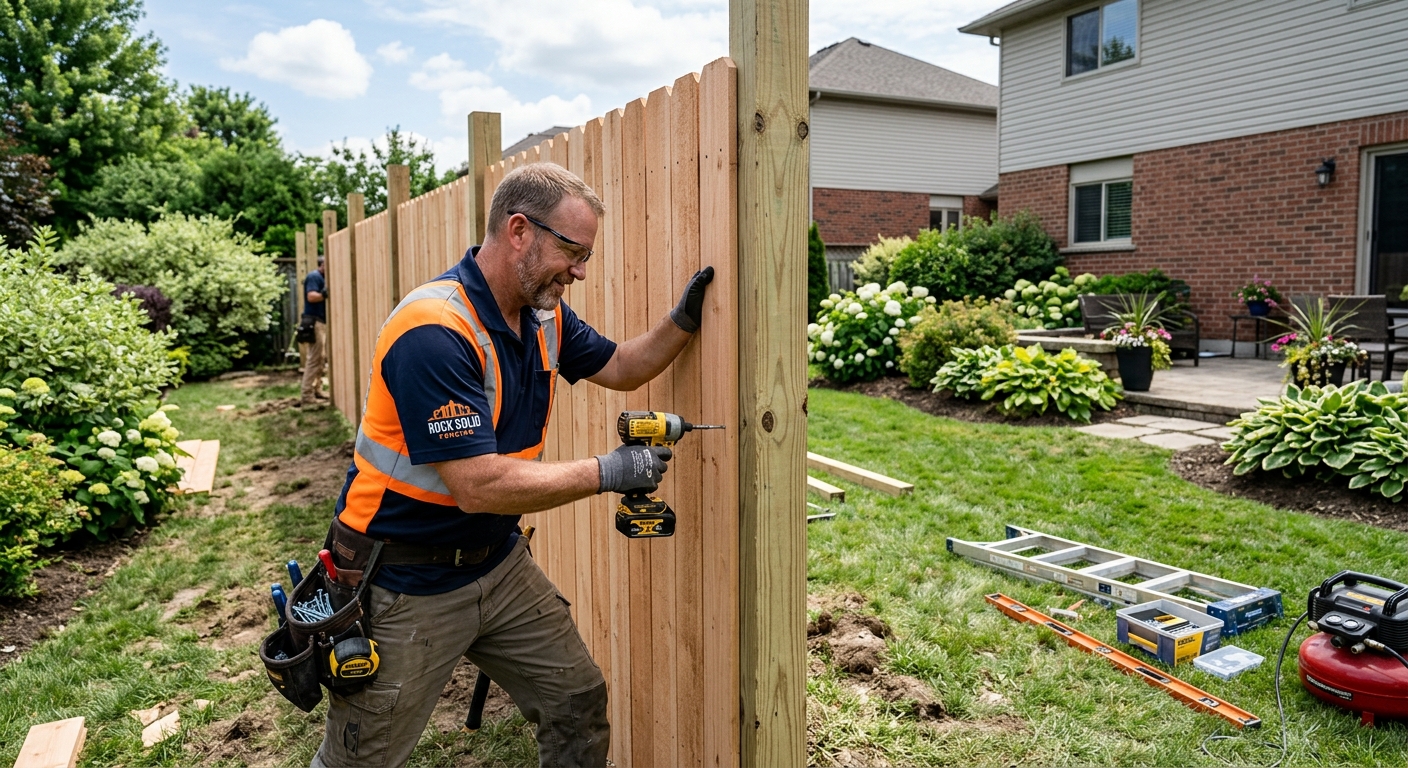
Fencing options and costs in Central Coquitlam
Central Coquitlam has a mix of townhouse yards and detached homes, and that detached home ownership concentration is what most directly drives local fencing demand. In 2021, the population in the area was 15,480 residents (Statistics Canada, 2021 Census), which is a meaningful customer base for backyard privacy, pet containment, and boundary upgrades. If you’re in or near Harbour Place or the Plateau/Westwood areas, you’ll often see crews busy with replace-and-extend fence projects as properties refresh landscaping.
In the Lower Mainland–Southwest, costs are shaped by “mild but not trivial” frost and regular wind off open stretches, plus consistently wet soils typical of the Fraser Valley. Even though coastal BC is not as harsh as Ontario or the Prairies, posts still need to be set below the local frost influence to limit heaving. Contractors also commonly use deeper holes and concrete for corner posts, privacy panels, and gate hardware—because those are the first failure points in wet, freeze–thaw conditions. That means two similar fences can differ materially: site access, slope, and soil saturation often decide whether crews spend an extra half-day digging and setting.
Typical Central Coquitlam installed pricing aligns with the regional bands: chain-link tends to be the lowest-cost approach, wood is mid-range, and vinyl/PVC or aluminum often cost more because of material pricing and structural requirements. Use the table below to compare lifespan, privacy, and realistic installed pricing per linear foot—then we’ll break down why quotes can swing and how to pick the right option for your yard.
| Material |
Lifespan |
Maintenance |
Privacy Rating |
Price per Linear Foot |
| Pressure-treated pine (standard wood) |
10–15 years |
Stain/seal every 2–3 years |
High (solid privacy panels) |
$55–$95 |
| Cedar (natural rot resistance) |
15–25 years |
Light maintenance every 2–4 years (weathering still occurs) |
High (solid privacy panels) |
$70–$110 |
| Vinyl / PVC (no-maintenance) |
20–30 years |
Wash only; inspect posts/gates |
High (solid infill) |
$75–$130 |
| Chain-link (galvanized steel) |
20–35 years |
Occasional rinse; check tension |
Low–Medium (depends on slats/height) |
$30–$55 |
| Aluminum ornamental |
25–40 years |
Occasional wash; tighten fittings |
Low–Medium (open pickets) |
$90–$170 |
| Composite / recycled material |
20–30 years |
Wash only; inspect hardware |
Medium–High (solid styles) |
$95–$160 |
Prices are estimates only and vary by project scope, site access and material selection.
What affects the price of fencing in Central Coquitlam
Fence quotes for the “same” height and length can differ by 30–50% across the Lower Mainland–Southwest simply because site conditions change how much labour and foundation work is required. In Central Coquitlam and nearby communities, even mild winter cycles can still create frost movement in wetter soils; that’s why crews often set posts deeper and use concrete selectively. On top of that, material pricing and availability can vary week to week, especially for cedar and vinyl systems with specific rail and post components.
Post depth is one of the biggest drivers. Published Canadian guidance often targets minimum embedment around 3 feet in many regions, while local practice in coastal BC is sometimes shallower than inland areas—but contractors still typically set below the practical frost influence (often 4–6 inches below the design frost depth) to reduce heaving. In colder Ontario and Alberta, that can mean deeper installs around 1.5–2.0 m with more material and concrete labour; in Central Coquitlam you still pay for deeper holes than a “surface set” because wet ground makes excavating messier and concrete cures are slower when conditions are damp.
Wind exposure also affects design. While the Prairies push heavier bracing and tighter spacing, Lower Mainland–Southwest winds still matter: open yards and hillier lots near the Trans-Canada corridor or slope-side properties need sturdier corner posts and more frequent support rails. Meanwhile, coastal BC’s wet climate accelerates wood rot unless the right preservative treatment and sealing schedule are followed.
Concrete examples from Central Coquitlam: (1) replacing an older wood fence with multiple sections of rotten bottom rails usually costs more because of removal and re-setting posts; (2) installing privacy panels on a soft, muddy site often requires extra time for trenching and concrete setting. As a result, a chain-link upgrade may land near $30–$55 per linear foot installed, while a vinyl privacy fence can realistically sit closer to $75–$130, especially when gate hardware and concrete-set posts are included.
| Price Factor |
Why It Matters |
Cost Impact |
| Fence length in linear feet |
Most labour and material quantities scale directly with linear footage. |
Major |
| Post depth required |
Frost influence in BC still means deeper holes than a superficial set to limit heaving. |
Major |
| Post setting method |
Concrete-set posts cost more in materials and labour than gravel pack or driven options. |
High |
| Material choice |
Vinyl/PVC and cedar systems have higher material and structural costs than chain-link. |
High |
| Gate count and type |
Double drive gates require heavier frames, hinges, latches and stronger bracing. |
Medium–High |
| Grade and terrain |
Slopes need stepped, raked, or redesigned rails/panels and extra fitting time. |
Medium–High |
| Old fence removal and disposal |
Hauling, dump fees, and handling damaged rails/posts increase labour. |
Medium |
| Permit fees and survey / property line locate |
Boundary verification and any applicable permit add administrative time and potential survey cost. |
Low–Medium |
Permits & regulations in British Columbia
In British Columbia, fence height rules commonly trigger building permit requirements above typical thresholds—often around 2.0 m (6.5 ft) for rear yards and about 1.0–1.2 m (3–4 ft) for front yards or corner-side areas. Even when you’re not required to apply for a permit, your fence still needs to respect property lines and municipal setback/bylaw requirements. If you’re planning a solid privacy fence in Central Coquitlam near busier corners or lane edges, the permitting question matters early because it can affect your location on the lot and what you can install.
Before you dig any post holes, call for utility locates (BC 1 Call) so crews don’t hit buried services. Next, obtain a survey or locate your property pins before installing—this helps avoid encroachment disputes, especially where older boundary fences were set informally. Fence ownership and shared boundary rules are governed by provincial line-fences legislation, so if you’re replacing or upgrading a shared fence, it’s worth understanding how cost sharing generally works.
What typically DOES require a permit: fences above the common height thresholds (especially in front/side areas), and any situation where your installation must meet stricter municipal requirements. What typically does NOT: like-for-like repairs that don’t change height or location, and most routine replacement of an existing fence within the permitted height limits (still confirm with your municipality). Finally, verify your contractor in writing: check for a valid BC business licence where applicable, request a certificate of liability insurance, and confirm they carry coverage through the proper workers’ compensation system (and whether any subcontractors are covered). When you receive the clearance letter or coverage proof, keep a copy with your contract paperwork.
Choosing the right fence material for Central Coquitlam
Choosing a fence in Central Coquitlam is mostly about matching material performance to wet coastal conditions, wind, and your tolerance for upkeep. Pressure-treated pine is the budget-friendly route, but it needs staining or sealing every 2–3 years to reduce grey weathering and help slow down moisture-driven decay at the rails and post bases. Cedar looks great and naturally resists rot better than many budget woods, but it still benefits from maintenance—especially on the fence’s lower 12–18 inches where splashes and lingering damp are common.
Vinyl/PVC is the low-maintenance option: wash it occasionally and inspect gate latches and post alignment after heavy weather. The trade-off is higher upfront cost, and extreme cold can make some plastics more brittle than people expect—however, Central Coquitlam’s “mild frost” profile generally makes vinyl a good long-term choice when posts are set properly and panels are braced. Chain-link is typically the longest-lasting low-cost material with minimal maintenance, but it’s poor for privacy unless you add slats or a privacy screen. Aluminum ornamental provides excellent rust resistance and a neat appearance, though it’s usually not a full privacy solution because the pickets are open.
Post depth still matters. Even in coastal BC, crews commonly set posts deeper than the absolute minimum to reduce heaving; concrete setting is often used for corner posts, privacy panels, and gate posts because those take the highest loads in wind and during latch operation. If you expect gusty afternoons or snow accumulation against a fence line, stronger bracing and tighter support rails typically protect the system longer.
Example: if a cedar privacy fence is priced roughly near $70–$110 per linear foot installed while pressure-treated pine lands around $55–$95, that additional cost is usually justified when you want fewer future repairs and a better appearance through Central Coquitlam’s wet summers and winter damp. If you’re budgeting tightly for now, pine can still perform well—just plan your staining cycle.
| Material |
Cold Tolerance |
Lifespan |
Annual Maintenance |
Best For |
Price Band |
| Pressure-treated pine |
Good (with proper post depth and sealing) |
10–15 years |
Low–moderate (stain/seal every 2–3 years) |
Budget privacy with a willingness to maintain |
$55–$95 |
| Cedar |
Good (better moisture resistance) |
15–25 years |
Low–moderate (light stain/brighten as needed) |
Appearance + rot resistance in wet conditions |
$70–$110 |
| Vinyl / PVC |
Moderate (handles coastal BC well; avoid flexing) |
20–30 years |
Very low (wash/inspect) |
Low-maintenance privacy |
$75–$130 |
| Chain-link |
Excellent |
20–35 years |
Very low (check tension, rinse) |
Pet containment and security on a budget |
$30–$55 |
| Aluminum ornamental |
Excellent |
25–40 years |
Very low (wash/inspect hardware) |
Attractive curb-side fencing with durability |
$90–$170 |
| Composite / recycled |
Good (system-dependent) |
20–30 years |
Very low (wash/inspect) |
Consistent look with minimal upkeep |
$95–$160 |
How to choose a fencing contractor in Central Coquitlam
Start by verifying the contractor’s credentials—because fence failures in wet coastal conditions are often installation-related (post depth, concrete curing, and bracing), not just product choice. In British Columbia, ask for their liability insurance certificate (it should name you or include your project as an interested party if possible), confirm they have appropriate workers’ compensation coverage (WSIB/WCB coverage proof—request the clearance letter or active account proof), and ensure any subcontractors carry their own coverage. For licensing, check their business information through the appropriate online resources and confirm they operate as a legitimate BC contractor; you should be able to find the firm’s registration details and confirm contact information matches the quote.
Then get 2–3 itemised written quotes rather than lump sums. A proper fencing quote should break down labour and materials: posts and rails, infill type, gate frames/hardware, concrete and setting method, reinforcement at corners, removal/disposal, and any allowance for slope fitting. Review what’s excluded—common exclusions include permit fees, utility locate costs, survey locate, and hauling/disposal. Ask whether the quote includes BC 1 Call locates, and whether permit applications (if applicable) are included.
Warranty matters. Ask for the workmanship warranty length and whether it covers post movement, sagging panels, and gate hardware alignment. Also confirm the manufacturer warranty for materials (vinyl, aluminum components, and composite systems) and whether it’s transferable to future owners.
Payment schedule should be controlled: never pay more than about 10–15% upfront, and use a holdback until the job is complete and cleaned up. Finally, require a written timeline with a start date and completion estimate—Central Coquitlam projects can be weather-dependent, but a booked crew should still provide a realistic window.
- Request a certificate of liability insurance before signing.
- Request proof of workers’ compensation coverage/clearance letter.
- Confirm who pulls utility locates (BC 1 Call) and when.
- Ask for itemised labour vs. materials (not one blended number).
- Confirm post setting method: concrete vs. gravel pack vs. driven posts.
- Ask how posts are braced at corners and gate openings.
- Verify whether disposal and dump fees are included.
- Check slope handling method: stepped or raked panels.
- Confirm gate hardware type (self-latch, hinges, latch brand/grade).
- Ask for warranty details in writing: workmanship vs. manufacturer.
- Use a controlled payment schedule (10–15% max deposit; holdback).
- Get a written start date and completion estimate.
Red flags in Central Coquitlam include: a contractor who won’t provide insurance/coverage proof, pricing that’s only “per foot” with no itemisation for gates and corner posts, vague wording about post embedment depth or concrete setting, no stated warranty on workmanship, or insisting on a large upfront deposit and refusing to use a completion holdback.
Frequently asked questions — fencing in Central Coquitlam
What's the best fence for privacy?
For privacy in Central Coquitlam, a solid privacy fence with close spacing is usually the best answer. The most common options are wood (pressure-treated pine or cedar) with solid panel designs, or vinyl/PVC privacy styles where the infill blocks sight lines. In the Lower Mainland–Southwest climate, the key is not only the material, but also the installation: posts should be set below the frost influence to limit heaving, and corner and gate posts should be reinforced because wind and gate loads stress the frame. If you want a budget direction, pressure-treated pine privacy is often priced around $55–$95 per linear foot installed; for a low-maintenance long-term privacy upgrade, vinyl is commonly closer to $75–$130.
How do I compare fencing quotes?
When comparing quotes in British Columbia, treat them like apples-to-apples scopes—not just price. Ask each contractor to itemise: fence length in linear feet, post count and post depth/set method, rail style, panel type, gate count (and whether the gate is single or double), reinforcement at corners, and whether disposal/removal is included. In the Lower Mainland–Southwest, also verify what they plan for wet-soil conditions: concrete-set posts in key locations can be a cost add, but it’s often necessary for stability. A quote that looks lower may skip concrete, use fewer posts, or omit gate hardware quality. If one contractor prices a “privacy fence” but doesn’t specify solid panels and post spacing, request clarification before signing.
How long does fence installation take in Central Coquitlam?
Install time in Central Coquitlam depends on length, access, slope, and how much removal is required. A straightforward chain-link run can go faster, while wood or vinyl privacy fencing typically takes longer because of heavier panels, more precise alignment, and gate framing. Wet soils can also slow down post-hole excavation and concrete setting, and BC’s seasonal damp can push timelines slightly if crews hit saturated ground. As a general expectation, smaller backyard projects (short runs plus one gate) may take a crew about 1–2 working days, while longer privacy fence replacements with multiple gates and disposal can stretch to several days. The best way to get a realistic timeframe is to ask for a written start date, completion estimate, and a step-by-step schedule included in the contract.
Can I install a fence on a slope in Central Coquitlam?
Yes, you can install a fence on a slope in Central Coquitlam, but it must be designed correctly. The common approaches are stepped panels (each section follows the grade in small increments) or raked panels (rails follow the slope at an even gradient). Privacy fences often look best with stepped layouts where spacing can remain consistent, and raked designs must account for how wind and snow loads act on the panel surface. Contractors should also confirm grade and post lengths so the fence stays plumb and doesn’t pull away after wet/frost cycles. If your slope changes height sharply near a property line, the quote should include extra labour for fitting, cutting, and adjusting rails—because this is where “cheap per-foot pricing” sometimes breaks down.
What is the most weather-resistant fence for Central Coquitlam's climate?
In Central Coquitlam’s wet coastal climate, the most consistently weather-resistant choices are usually vinyl/PVC and aluminum, assuming proper installation and post setting. Vinyl/PVC resists rot and doesn’t need regular staining, which helps in damp conditions where wood can stay moisture-prone at the base. Aluminum ornamental resists rust very well and generally holds up through coastal humidity. For strong privacy, vinyl privacy panels are popular because they maintain appearance without the maintenance cycle that wood requires. The trade-off is cost: vinyl often falls in the $75–$130 range per linear foot installed, while wood options like pressure-treated pine commonly start around $55–$95. Chain-link is also very durable, but it won’t give privacy without slats or screens.
How do I prevent wood fence rot in Central Coquitlam?
Preventing wood rot in Central Coquitlam comes down to three things: the wood itself, the post embedment, and maintenance at the vulnerable base area. First, use quality pressure-treated wood or cedar and ensure the fence is installed with proper post depth—contractors typically set posts below the frost influence to reduce heaving. Second, use concrete strategically for corner posts, gate posts, and privacy panel posts where movement is most likely; this reduces water-related loosening at the base. Third, maintenance matters: plan to stain/seal pressure-treated pine every 2–3 years, and keep coatings intact around rails and the lower fence line where splashback and trapped moisture occur. If your contractor offers a plan for staining timing and includes key details in the scope, you’ll usually get better long-term performance for the $55–$95 wood budget range.