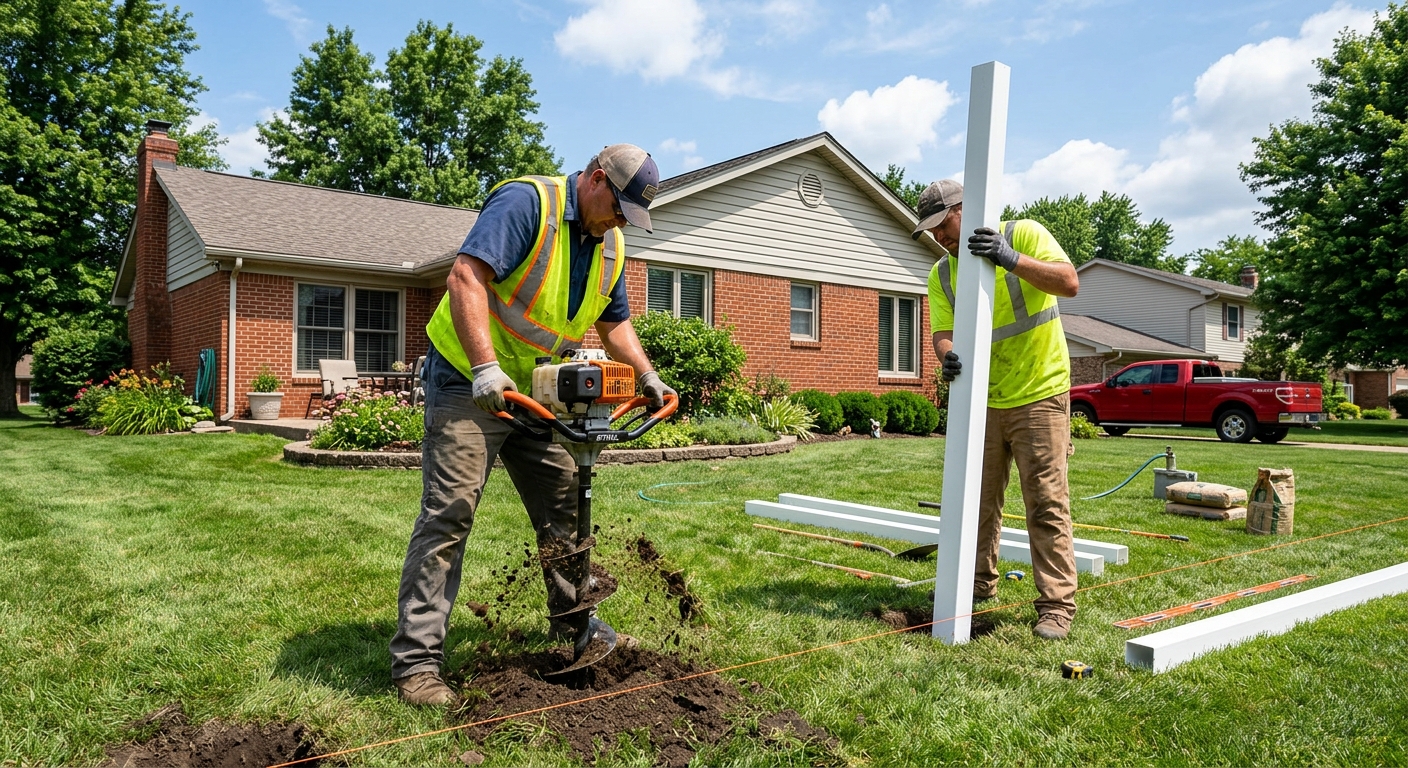
Fencing options and costs in Lake Country
In Lake Country, your fencing choice usually starts with how much privacy you want and how much maintenance you’re willing to budget for. With 15,817 residents and 4,870 homeowner households (78.5% of households own), demand is steady—each owner-occupied property is a potential fencing project, whether it’s replacing aging boundary fences or upgrading backyard privacy along cul-de-sacs and corner lots. The housing mix also matters: single-detached homes make up 65.6% of dwellings, so contractors typically see more long runs of fencing and more gate work than in denser multi-family areas.
Thompson–Okanagan pricing is shaped by frost depth, soil conditions, and wind exposure on lots that sit higher or closer to open benches. Interior valleys like Lake Country can require deeper, more substantial footings than coastal areas, because freeze–thaw cycles can heave posts if they’re set too shallow. That’s why you’ll often see concrete-set posts or deeper auger holes in heavier soils and wetter ground pockets, even when the fence material is “standard” wood.
In practice, you’ll notice especially frequent installs around the North Glenmore / Okanagan Landing-adjacent feel of the community—particularly where lots back onto treed edges and neighbours want consistent privacy. Once you decide on material, the next step is comparing lifespans, maintenance, and typical installed pricing; use the table below to frame your quote and expectations.
| Material |
Lifespan |
Maintenance |
Privacy Rating |
Price per Linear Foot |
| Pressure-treated pine (standard wood) |
10–18 years |
Stain or seal every 2–3 years; inspect posts and rails annually |
High (solid/close board) |
$55–$85 |
| Cedar (natural rot resistance) |
15–25 years |
Seal or stain every 2–4 years; periodic cleaning to prevent mould staining |
High (solid/close board) |
$65–$105 |
| Vinyl / PVC (no-maintenance) |
20–30 years |
Rinse as needed; no staining or painting |
Medium to High (panel style dependent) |
$75–$115 |
| Chain-link (galvanized steel) |
20–35 years |
Occasional wash; tighten hardware if needed after storms |
Low (security only) |
$35–$60 |
| Aluminum ornamental |
25–40 years |
Minimal; rinse and inspect gates/splines after winter |
Low to Medium (open pickets) |
$90–$150 |
| Composite / recycled material |
20–30 years |
Low; occasional wash; avoid abrasive cleaners |
Medium to High (panel options) |
$85–$135 |
Prices are estimates only and vary by project scope, site access and material selection.
What affects the price of fencing in Lake Country
Fence quotes for the “same” job can differ by 30–50% across Thompson–Okanagan and other parts of British Columbia because the big cost variables aren’t just the fence material—they’re the site conditions and installation method. In many BC markets, a mild coastal climate can reduce rot risk, and frost depth is shallower, so contractors can sometimes set posts with less excavation and shorter hardware. In contrast, interior systems around Lake Country may require deeper installation to manage freeze–thaw, plus more labour where soils are clay-like or poorly drained.
Frost line depth is the most important driver. Local practice is to set posts about 4–6 inches below the design frost depth so posts don’t heave during winter cycles. In colder interior pockets, that often means deeper holes and longer posts, and when frost risk is higher, concrete-set posts are common. Concrete and auger time raise the total, which is why two similar-length fences can land far apart even if materials are identical.
Wind exposure also matters. More exposed lots may need tighter post spacing, heavier rails, and bracing to prevent fence racking. Meanwhile, coastal BC’s wet climate accelerates wood rot if you don’t treat properly—so wood costs can spike there for labour and maintenance. In Lake Country specifically, an older backyard fence (common on homes built before 1981, which make up 28.3% of the housing stock) often brings removal and post replacement work, adding disposal and labour to the estimate.
To anchor expectations: a wood installation might land in the $55–$85 band per linear foot, while vinyl commonly comes in closer to $75–$115 depending on panel style and post depth. If your soil requires concrete-set posts and your yard has steep grade requiring stepped sections, even a “budget” chain-link run can cost more than you’d expect—though chain-link usually stays among the lowest total materials cost, often in the $35–$60 range.
| Price Factor |
Why It Matters |
Cost Impact |
| Fence length in linear feet |
Labour, posts, rails, and panels scale directly with length |
Highest overall driver; linear pricing increases quickly with longer runs |
| Post depth required |
Frost depth determines hole depth and post length to prevent heaving |
Deep holes and longer posts add labour and materials; may increase by a meaningful margin |
| Post setting method |
Concrete-set posts require auger time and concrete volume versus gravel pack |
Concrete typically increases cost and schedule versus gravel packing or driven posts |
| Material choice |
Vinyl and cedar have different hardware needs, panel weight, and pricing |
Switching materials can move you between major bands (e.g., wood vs. vinyl) |
| Gate count and type |
Double drive gates and larger walk gates require stronger frames and hinges |
Gates add hardware, reinforcement, and more precise alignment |
| Grade and terrain |
Slopes require stepping or raked panels, plus extra layout time |
Can increase labour and material cutting/fit-up; reduces “standard run” efficiencies |
| Old fence removal and disposal |
Debris handling, hauling, and replacement of damaged boundary elements |
Often adds a separate line item; cost depends on access and volume |
| Permit fees and survey / property line locate |
Some fence heights and configurations may require a permit; property verification prevents rework |
May add direct fees and/or professional locate costs |
Permits & regulations in British Columbia
In British Columbia, fence permitting can depend on height and location. In many BC municipalities, fences above a height threshold—commonly around 2.0 m (about 6.5 ft) at the rear and roughly 1.0–1.2 m (about 3–4 ft) at the front or corner—often require a building permit. Even when a permit isn’t needed, all fences must respect property lines and any municipal setback bylaws that apply to your lot.
Before you dig any post hole, call for utility locates. Use the appropriate provincial call service (commonly BC 1 Call) so the crew can avoid buried lines. Also, don’t rely on old fence lines if stakes or pins are missing—get a survey or locate your property pins so the contractor doesn’t accidentally build on a neighbour’s land. Shared fence ownership is governed by provincial line-fences legislation, so clarifying who maintains what (and where) can save you from disputes later.
Step-by-step: (1) Ask your contractor if your intended height/location triggers a permit, then confirm whether they include permit coordination in the quote; (2) request their business licence details (where applicable) and ask for a clear certificate of insurance showing liability coverage; (3) verify worker coverage as required in BC—your contractor should be able to provide evidence of coverage and clearance documents; (4) keep copies of everything in writing so you can compare bids and hold the scope consistent.
Choosing the right fence material for Lake Country
Choosing a fence in Lake Country is mostly about matching the material to your priorities—privacy, low maintenance, budget, and how long you want it to last through Thompson–Okanagan winters. In this interior BC climate, the freeze–thaw cycle is a real consideration. That means post depth and installation method matter as much as boards or panels. When posts aren’t set below the local frost impact zone, you can see movement and faster rail failures. For many Lake Country lots, that results in deeper holes and, in heavier soils or wetter areas, concrete-set posts to reduce frost heaving risk.
Pressure-treated pine is often the budget pick for homeowners who want a solid-looking fence without vinyl-level pricing. The trade-off is maintenance: plan on staining or sealing roughly every 2–3 years to reduce grey weathering and keep the wood protected. Cedar costs more, but it generally resists rot better and holds up well visually; you still need periodic sealing, just typically less aggressively than with some pine. Vinyl/PVC is low maintenance and popular for busy households, but in extreme cold it can become more brittle than wood—good installation, proper expansion considerations, and quality profiles matter. Chain-link is the lowest visual privacy choice, but it’s also one of the most durable and often one of the most cost-effective ways to secure a yard (and kids/pets) for the long haul. Aluminum ornamental gives a clean, rust-resistant look with minimal maintenance, usually with privacy limited by open pickets.
Example budgeting: if you have a fence run that’s priced at around the wood band ($55–$85 per linear foot) versus vinyl ($75–$115), the difference can be justified when you want to skip staining for years and prefer “set it and forget it.” On the other hand, if you’re comfortable with annual inspections and staining, cedar or pressure-treated pine can deliver better value per dollar.
| Material |
Cold Tolerance |
Lifespan |
Annual Maintenance |
Best For |
Price Band |
| Pressure-treated pine |
Good when posts are deep-set below frost impact zone |
10–18 years |
Low to moderate (inspect + light cleaning; stain/seal every 2–3 years) |
Lower upfront cost and solid privacy with planned upkeep |
$55–$85 |
| Cedar |
Good; performs well in damp spells and shoulder-season moisture |
15–25 years |
Low to moderate (seal/stain every 2–4 years) |
Premium look with better rot resistance than pine |
$65–$105 |
| Vinyl / PVC |
Good with correct installation; tolerates interior winters |
20–30 years |
Very low (rinse; check hardware after heavy snow/wind) |
Low maintenance and consistent appearance |
$75–$115 |
| Chain-link |
Very good; metal doesn’t rot |
20–35 years |
Very low (tighten posts/fixtures after storms if needed) |
Security and pet containment with minimal upkeep |
$35–$60 |
| Aluminum ornamental |
Excellent (rust-resistant design) |
25–40 years |
Very low (occasional rinse) |
Front yard curb appeal with durable, rust-free fencing |
$90–$150 |
| Composite / recycled |
Good; stable boards with proper spacing |
20–30 years |
Low (wash when dusty; inspect fasteners) |
Long life with reduced maintenance effort |
$85–$135 |
How to choose a fencing contractor in Lake Country
When you’re hiring a fencing contractor in Lake Country, verify credentials first—then compare the scope. In British Columbia, reputable fence builders should carry liability insurance and provide evidence of worker coverage as required for their trade activities. To check: (1) ask for their certificate of insurance and ensure the policy is current and names your project site where applicable; (2) request proof related to worker coverage/clearance (they should be able to supply documents on request, not just “we’re covered”); (3) confirm any applicable business registration and that their crew shows up with the right equipment for excavation and post-setting.
Next, get 2–3 itemised written quotes. The bid should separate labour, materials, and any extras (like concrete, auger depth, hardware upgrades, and gate frames). Avoid lump-sum quotes with no breakdown—fencing can look simple until you hit frost-safe post depth, steep grade, or demolition. Pay attention to exclusions: is old fence removal included? Is disposal included? Are utility locates covered by the contractor’s process or by you?
Warranty matters. Look for a workmanship warranty for installation (not just a product warranty), and ask whether it covers settlement, post movement, and hardware failures caused by improper setting. Also confirm whether manufacturer warranties transfer if you sell the home—many homeowners want that peace of mind for future value.
For payment schedule, never pay more than 10–15% upfront. Use a holdback until the job is complete, especially for gates, alignment, and final grading cleanup. Request a start date and completion estimate in writing so you can plan around seasonal conditions.
- Ask for a written scope that states post depth method (e.g., concrete-set where needed).
- Confirm the material spec (cedar vs. “cedar tone”; vinyl profile thickness; chain-link gauge).
- Require an itemised quote: labour, posts/rails, panels, concrete, hardware, and gates.
- Check if disposal/hauling of old fencing is included or quoted separately.
- Ask how they handle steep grade: stepped vs. raked layout with clear photo examples.
- Confirm gate hardware and locking type (and whether it’s included in the base price).
- Request proof of liability insurance (certificate) before any work starts.
- Request evidence of worker coverage/clearance documents—don’t accept verbal assurances.
- Find out whether permit pull/permit coordination is included for your height/location.
- Verify cleanup standards: removal of debris, restoring disturbed landscaping/edges.
- Get the workmanship warranty in writing with duration and what it covers.
- Set a payment schedule with a holdback until final inspection and gate alignment.
Red flags to watch in Lake Country: vague quotes with no post depth or setting method details; contractors who won’t provide a certificate of liability insurance; refusal to itemise gates/hardware (common when drive gates are involved); asking for large upfront payments (beyond 10–15%); and crews that start digging before utility locates are completed or without confirming property line stakes.
Frequently asked questions — fencing in Lake Country
How deep should fence posts be for Lake Country's frost?
In Lake Country and the wider Thompson–Okanagan interior, post depth is driven by frost depth and local soil drainage. A practical rule we follow in cold-interior style installations is setting posts roughly 4–6 inches below the design frost impact zone so freeze–thaw cycles don’t heave the post and loosen rails. In many interior lots, that can mean deeper holes than you’d see in milder coastal regions, and it’s common to use concrete-set posts where soils are heavier or stay wetter. If you’re comparing bids, ask each contractor to specify post depth and whether they use concrete or a gravel pack for your yard conditions. This is one reason two quotes that both fall in the wood band (for example, $55–$85 per linear foot) can still end up different when post depth is handled differently.
Wood vs vinyl vs aluminum fence — which is best?
“Best” depends on your priorities. Wood (pressure-treated pine or cedar) often gives strong privacy and can land around the wood pricing band (commonly $55–$85 for standard installed wood), but it requires periodic maintenance—staining or sealing every 2–3 years for pine is typical. Vinyl/PVC is usually the winner for low effort: it’s commonly priced closer to $75–$115 and you generally rinse, not stain. Aluminum ornamental is durable and rust-resistant, usually priced higher (often $90–$150) and is more of a curb-appeal solution because it’s typically open pickets, so privacy is limited. In Lake Country’s winter conditions, all three can perform well when posts are set properly below frost impact zone, but vinyl and aluminum often win for homeowners who want minimal seasonal upkeep.
Do I need a permit to build a fence in British Columbia?
In British Columbia, many fences do not require a permit, but taller fences often do—commonly around 2.0 m (rear) and roughly 1.0–1.2 m (front or corner), depending on the municipality and the exact placement. Even when a permit isn’t required, the fence must respect property lines and any local setback rules. In Lake Country, the safest approach is to confirm the planned height and location before you schedule digging. Also, call for utility locates before any post-hole digging. Ask your contractor whether they handle permit coordination (if needed) and whether the quote includes the permit step or leaves it as an owner responsibility.
How long does a wood fence last in Lake Country?
A properly installed wood fence in Lake Country typically lasts around 10–18 years for pressure-treated pine and about 15–25 years for cedar, depending on maintenance and how the fence was set below frost impact zone. The biggest early-failure causes are posts installed too shallow (leading to movement from freeze–thaw) and neglected coatings that let moisture get in. Because a meaningful share of Lake Country housing stock is older (28.3% built before 1981), we often see fence replacements where previous posts were not set for interior freeze–thaw realities. If you keep up with staining/sealing (pine often every 2–3 years) and replace any loosened hardware promptly, the lifespan is noticeably better. When comparing bids in the wood band ($55–$85), make sure they’re not cutting corners on post depth or hardware quality.
Who owns and maintains a shared fence?
Shared fence ownership and maintenance in British Columbia are governed by provincial line-fences legislation rather than a one-size-fits-all “neighbour rule.” In plain terms, if the fence is truly on or relates to the shared boundary, ownership and repair responsibilities can be shared, and disagreements often come down to where the fence sits relative to the property line and what you can prove about the original build. In Lake Country, before you replace an older shared fence, confirm the property line (or get a locate/survey) and discuss responsibilities in writing with the neighbour—especially for costs like posts set below frost impact zone, new rails, and gate framing. This helps avoid the common situation where one side wants to upgrade to higher privacy panels while the other expects like-for-like replacement.
How do I find my property line before fencing?
Before fencing in Lake Country, find your property line by locating your boundary pins or arranging a survey where pins are missing, damaged, or uncertain. Relying on old fencing alone can be risky, especially when fences were installed long ago. Start by checking your property documentation and then ask for a property pin locate or a surveyor’s locate if you can’t clearly identify corner markers. For best results, do this before you finalize the fence layout and post locations. It also helps you avoid encroachment disputes and repeated rework, which can quickly erase savings. While you’re planning, remember that post holes require utility locates first—so coordinate line locating, permits (if required), and utility marking before excavation begins.