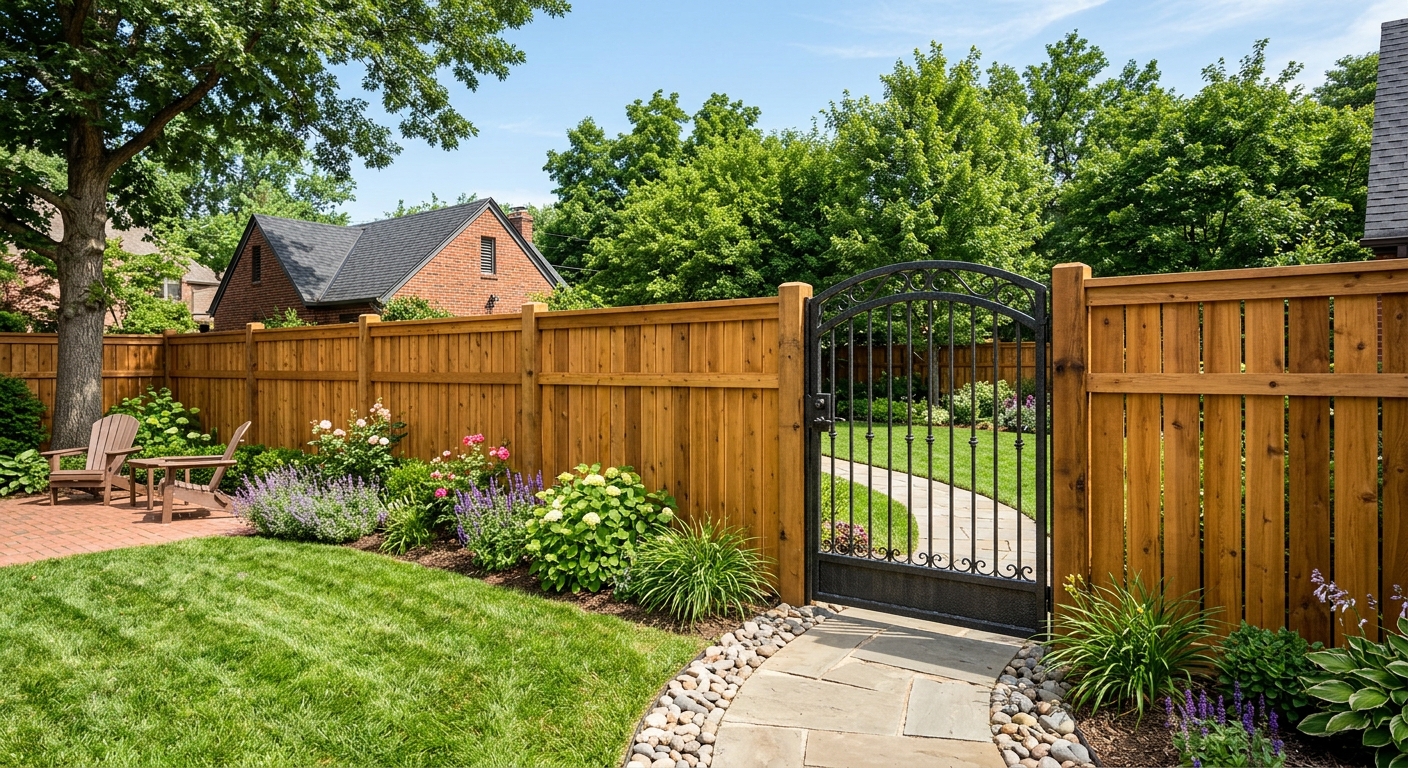
Fencing options and costs in Oak Bay
Oak Bay homeowners typically have a wide range of fencing goals—privacy for back gardens, wind protection for side yards, and curb appeal along the front. With 5,820 homeowner households in the community (Statistics Canada, 2021 Census), and 63.0% of dwellings being single-detached homes, fencing demand tends to track with detached property coverage: many lots have multiple fence lines (front hedges, side boundaries, and rear privacy). That mix also means you’ll see contractors busy around residential neighbourhoods with older homes—83.2% of housing in the area was built before 1981 (Statistics Canada, 2021 Census)—because more mature lots often have established fence locations, mature landscaping, and occasional section replacements.
On Vancouver Island and the Coast, pricing reflects moderate coastal frost and frequent wind exposure. Frost depth is relatively shallow (about 45–60 cm), but effective fence performance still depends on posts being set below the design frost line to prevent heaving and long-term leaning; in practice that often means burying posts around 75–90 cm, with concrete footings when soils are wet, disturbed, or clay-rich. Wind off the Strait of Georgia and Juan de Fuca Strait also influences design: solid privacy panels can act like sails, so we often plan closer post spacing, sturdier posts, or vented designs. Access constraints around Oak Bay—rock pockets, slopes, and narrow driveways near older homes—can add labour for careful line-setting and disposal.
Below is a practical pricing comparison you can use when reviewing quotes, especially for common back-yard privacy installs near neighbourhoods like South Oak Bay, where wind exposure and established lot lines show up in almost every site visit. Use this table as a baseline, then we’ll show you what can swing a project up or down.
| Material |
Lifespan |
Maintenance |
Privacy Rating |
Price per Linear Foot |
| Pressure-treated pine (standard wood) |
12–18 years |
Stain/seal every 2–3 years; inspect posts after wet winters |
High (solid panels) |
$20 – $34 |
| Cedar (natural rot resistance) |
18–25 years |
Re-stain every 2–4 years; periodic fastener checks |
High (solid panels) |
$26 – $44 |
| Vinyl / PVC (no-maintenance) |
20–30 years |
Rinse as needed; check for panel warping after extreme cold |
High (solid privacy styles) |
$28 – $48 |
| Chain-link (galvanized steel) |
25–35 years |
Occasional cleaning; inspect tension/bottom rail after storms |
Low–Medium (open mesh) |
$16 – $24 |
| Aluminum ornamental |
25–40 years |
Wash annually or as needed; inspect latch hardware |
Low–Medium (decorative pickets) |
$32 – $60 |
| Composite / recycled material |
20–30 years |
Minimal—wash and check trims; fasteners as recommended |
High (solid/composite boards) |
$30 – $55 |
Prices are estimates only and vary by project scope, site access and material selection.
What affects the price of fencing in Oak Bay
In Oak Bay (and across Vancouver Island and the Coast), it’s common to see quotes for the “same” fence swing by 30–50% once you account for wind loading, post depth, site conditions, and what’s included in labour. Even though the frost line here is shallower than in Ontario or Alberta (often about 45–60 cm), frost still moves soil. That means posts generally must be set deeper than the nominal line—commonly 4–6 inches below the design frost depth—to reduce heaving and later leaning. In colder inland regions farther east, the same principle pushes post depth much deeper (roughly 1.5–2.0 m), which is why labour and material costs can jump there; in Oak Bay the depth requirement is less dramatic, but proper coastal installation still adds time and often concrete setting where soils are wet or disturbed.
Wind is the other big driver. On the Prairies, contractors often compensate for higher exposure with tighter post spacing and heavier panels; while coastal BC is milder, wind off the water is frequent and gusty, so a solid privacy fence can still require closer post spacing, reinforced rails, or vented pickets. Meanwhile, coastal moisture accelerates wood rot if you skip good treatment and proper sealing—so “cheap wood” can become expensive if maintenance isn’t realistic.
In Oak Bay, two practical examples we see often: (1) a 40-foot rear privacy run on clay-rich, saturated soil usually costs more because we add concrete footings and slower alignment work; (2) a short front ornamental run with clear access may land closer to the lower end of aluminum/metal pricing, while a sloped backyard requiring stepped panels adds layout labour. If your quote is near the wood band of $55 – $85 for installation, ask whether it includes the post-depth standard and concrete where needed; if it doesn’t, a “mid-range” vinyl job can compete in real cost due to reduced call-backs and maintenance. Vinyl/PVC materials typically sit in the $70 – $110 installation band once you add proper post settings and disposal.
| Price Factor |
Why It Matters |
Cost Impact |
| Fence length in linear feet |
Labour and materials scale directly with total footage. |
Major (often 40–70% of the budget) |
| Post depth required |
Determines post length and hole excavation depth to resist heaving. |
Medium–major; can add significant labour and concrete |
| Post setting method |
Concrete vs gravel pack vs driven posts affects stability and time. |
Medium; concrete and clean-up increase costs |
| Material choice |
Durability and corrosion resistance differ in coastal moisture/salinity. |
Medium–major; vinyl/cedar/aluminum cost more than chain-link |
| Gate count and type |
Gates need heavier hardware, posts, and bracing. |
Major; a double drive gate often costs close to a full fence section |
| Grade and terrain |
Slopes require stepped or raked panels and more measuring/layout. |
Medium; adds labour and sometimes custom cutting |
| Old fence removal and disposal |
Extra labour, hauling, and tipping fees. |
Medium; disposal can be a meaningful line item |
| Permit fees and survey / property line locate |
Required steps add administrative time and professional locating costs. |
Low–medium; can still affect the timeline and total price |
Permits & regulations in British Columbia
In British Columbia, many fencing projects require a building permit when fences are above typical height thresholds—often around 2.0 m at the rear and 1.0–1.2 m at the front or corner—though exact thresholds can vary by context (and your municipal bylaws). Even when a permit isn’t required, you must keep the fence within property lines and respect municipal setback rules for your specific location in Oak Bay. Before you dig any post holes, call for utility locates through BC 1 Call so underground services are marked. Also, get a survey or at least a proper locate of your property pins before installing; this prevents encroachment disputes, especially where older lots have less modern boundary documentation.
For shared fencing, shared fence ownership and maintenance responsibilities are handled under provincial line-fences legislation, so it’s important to clarify who maintains which side of a boundary fence and how future repairs are handled.
What typically DOES require a permit: taller fences above common height thresholds, or cases where the fence materially affects a required boundary setback or other regulated criteria. What typically does NOT: most standard-height residential fences on private property, when installed within the permitted height limits and setbacks.
To verify your Oak Bay contractor, request their business details and check: (1) a clear insurance certificate of liability (ask for the expiry date and coverage amount); (2) confirmation of worker coverage (commonly WSIB/WCB clearance for the trade, depending on the contractor’s registration); and (3) that any required trade licensing is valid. Ask where to find these on their documentation, and keep copies for your records.
Choosing the right fence material for Oak Bay
The right fence material in Oak Bay depends on what you value most: privacy, low maintenance, budget control, and lifespan in a wet coastal climate. Pressure-treated pine is usually the lowest upfront option, but it needs staining or sealing every 2–3 years to limit grey weathering and protect against rot. Cedar looks great and naturally resists rot better than standard wood, but it still benefits from periodic re-staining and correct installation details (treated posts, proper drainage, good airflow). Vinyl/PVC is popular for its “set it and forget it” appeal—generally no annual staining—but in extreme cold snaps you can see panel brittleness if low-quality material is used, so it’s worth choosing reputable components and correct hardware. Chain-link is the most budget-friendly and long-lasting (galvanized), yet it offers limited privacy. Aluminum ornamental is mid-range in cost, attractive, and won’t rust like untreated metals, though it won’t give you the solid privacy many Oak Bay homeowners want.
Post depth matters across all materials. On Vancouver Island and the Coast, frost is shallow but still active enough that posts usually go below effective frost depth; in practice we often bury posts around 75–90 cm and use concrete-set footings when soils are wet, disturbed, or clay-heavy. For solid styles that catch wind—especially privacy fences—rails and post spacing need to be sized for gust loads so panels don’t rack. Also consider snow and wind pressures: even though snow totals aren’t like the Prairies, wet, clinging snow and coastal gusts can stress horizontal rails and gate hardware.
To illustrate when a price difference is justified: if a wood privacy fence lands around the mid wood band (installation often roughly $55 – $85), cedar or vinyl may add more upfront—especially once you include concrete setting and solid rails. But for homeowners planning to stay for 15–20 years, cedar or vinyl’s longer service life and reduced maintenance can narrow the real lifecycle gap, particularly where damp conditions shorten untreated or poorly sealed wood performance.
| Material |
Cold Tolerance |
Lifespan |
Annual Maintenance |
Best For |
Price Band |
| Pressure-treated pine |
Good (with proper seal/stain) |
12–18 years |
Low to moderate (plan 2–3 year sealing schedule) |
Budget privacy with routine upkeep |
$55 – $85 |
| Cedar |
Good (natural rot resistance) |
18–25 years |
Low to moderate (re-stain/refresh every 2–4 years) |
Natural look + better rot resistance |
$65 – $100 |
| Vinyl / PVC |
Good (choose quality for cold snaps) |
20–30 years |
Very low (wash/rinse as needed) |
Low-maintenance privacy in coastal conditions |
$70 – $110 |
| Chain-link |
Excellent (galvanized hardware) |
25–35 years |
Very low (occasional inspection/cleaning) |
Security on a budget, pet containment |
$35 – $60 |
| Aluminum ornamental |
Excellent |
25–40 years |
Very low (wash + hardware checks) |
Front-yard curb appeal and durability |
$80 – $140 |
| Composite / recycled |
Very good (quality varies) |
20–30 years |
Low (wash and occasional checks) |
Privacy with minimal maintenance |
$75 – $125 |
How to choose a fencing contractor in Oak Bay
Start by confirming your Oak Bay fencing contractor is properly covered and accountable. Ask for (1) proof of liability insurance: you want a current certificate of insurance naming you as an additional insured where possible, plus the coverage limits and expiry date; (2) proof of worker coverage/clearance (commonly WSIB/WCB coverage depending on registration); and (3) licence/trade eligibility if applicable for the scope. Don’t rely on “we’re insured” emails—request documents and verify dates before work begins. If a contractor won’t provide documentation promptly, that’s a serious red flag.
Next, get 2–3 itemised written quotes (not just a lump sum). The best fence estimates break out labour, post installation method (concrete vs gravel pack), gate hardware, rail/bracing upgrades for wind, and allowance for disposal. Check what’s excluded: old fence removal, disposal fees, permit support, survey/property line locate, and any trimming required for access or to deal with existing landscaping.
Warranty matters too. Ask for the workmanship warranty length and whether it’s transferable if you sell your home. Separate the product/manufacturer warranty from workmanship—materials warranties don’t replace installation coverage. For payment schedule, never pay more than about 10–15% upfront; keep a holdback until completion and final adjustments (including line, plumb, and gate swing). Finally, get a start date and completion estimate in writing, and confirm the expected delivery timeline for vinyl/aluminum components.
- Request liability insurance certificate with expiry date
- Ask for workers’ coverage/clearance documentation
- Confirm the fence design includes post depth for coastal frost conditions
- Get itemised pricing: labour, materials, posts, rails, and gates
- Verify whether disposal of removed fencing is included
- Confirm utility locate is arranged before digging
- Ask how they handle slopes (stepped vs raked panels) and who measures it
- Check gate hardware for wind and latching reliability
- Make sure the quote specifies exact materials (grade, thickness, coating/finish)
- Confirm warranty terms: workmanship vs product warranty
- Use a contract with a clear start date and completion timeline
- Keep holdback until final inspection and adjustment
In Oak Bay, watch for red flags like: missing insurance documents or outdated coverage, quotes that don’t specify post-setting method, “lowest price” estimates that omit gate bracing and wind-rated rails, no clarity on disposal/haul-away, and pressure to pay large deposits before any measurements or material selection are confirmed.
Frequently asked questions — fencing in Oak Bay
Do I need a permit to build a fence in British Columbia?
In British Columbia, many fences require a building permit when they exceed common height thresholds—often around 2.0 m at the rear and about 1.0–1.2 m near the front or corners—however your specific location and context can affect the exact requirement. Regardless of permit needs, you still must follow property line rules and municipal setback bylaws. For an Oak Bay project, we recommend you confirm height and setback before ordering materials, especially for privacy fences along boundaries where you’re more likely to hit the threshold.
Also plan for the practical side: before digging post holes, arrange utility locates (BC 1 Call) and consider a survey/locate of your property pins to avoid encroachment. If your contractor bundles permit support into the estimate, make sure it’s stated clearly—permit steps aren’t always included automatically.
How long does a wood fence last in Oak Bay?
Wood lifespan in Oak Bay depends heavily on the material and maintenance schedule, not just the species. Pressure-treated pine is often the most budget-friendly but typically lasts about 12–18 years when properly installed and maintained; cedar generally lasts longer, often 18–25 years, because it resists rot better in damp coastal conditions. The wet winters and persistent moisture on Vancouver Island and the Coast can accelerate failure if the wood isn’t sealed, the posts aren’t protected, or ventilation is poor.
Maintenance is the big lever: cedar still benefits from re-staining every few years, while treated pine generally needs sealing roughly every 2–3 years to limit weathering and rot risk. If you’re comparing quotes and one option is near the wood installation band of $55 – $85, ask whether the estimate assumes regular staining and includes concrete-set footings where soils are wet or clay-rich. That’s where many “cheap” wood installs end up costing more later.
Who owns and maintains a shared fence?
For a shared fence (a boundary fence used by two properties), ownership and maintenance are generally governed by provincial line-fences legislation, rather than a simple “whoever built it first” rule. In plain terms for Oak Bay homeowners, you and your neighbour may both have responsibilities related to repair, replacement, and maintenance, depending on how the fence is classified along the boundary and what agreements were made.
Before replacing anything, confirm whether the fence is truly on the boundary and clarify which side is maintained. Practical step: talk to your neighbour early, and document the scope and materials you’re proposing. If the work involves upgrades that one side wants more than the other (for example, switching from chain-link to a solid privacy fence), that can change how costs are shared under the legislation. A good contractor will help you document existing conditions and specify exactly what’s being replaced.
How do I find my property line before fencing?
The safest way is to confirm the property pins with a survey or a professional property-line locate before you install fence posts. In Oak Bay, older lots can have boundary documentation that’s less straightforward than newer developments, and a small offset can lead to disputes—especially when you’re installing gates or solid privacy panels close to mature trees and hedges.
Start by locating any markers/pins on the ground (often at corners), then verify with a locate/survey report rather than guess from landscaping. Ask your contractor to reference those verified lines in their layout plan. Also remember: fencing must respect municipal setback bylaws even if you’re within the legal boundary. Before digging, utility locates are still necessary even if you think the fence line is “where everything has always been.”
What's the most low-maintenance fence?
For low maintenance in Oak Bay, vinyl/PVC and aluminum are usually the easiest year after year. Vinyl/PVC typically doesn’t need staining—just periodic rinsing—and modern hardware is designed for coastal exposure. Aluminum ornamental is also corrosion-resistant and generally only needs washing and occasional checks of hinges and latches.
In contrast, wood (pressure-treated pine or cedar) usually requires a maintenance cycle—staining or sealing every couple of years for treated pine and every few years for cedar—to prevent weathering and rot in wet conditions. Chain-link is low maintenance in terms of materials, but it doesn’t provide privacy, so homeowners often pair it with landscaping or choose a different style if privacy is a priority. If you’re working within typical Oak Bay pricing, compare your options honestly: vinyl installation often sits around $70 – $110, while wood may start closer to $55 – $85. The “cheaper now” option can lose value if maintenance is neglected.
How tall can my fence be in Oak Bay?
In British Columbia, fence height rules are commonly tied to permit thresholds and municipal bylaws, and Oak Bay homeowners should treat “height” as a two-part question: how tall you can go and whether it triggers a permit. As a general guideline referenced across BC municipalities, fences often require extra consideration when they’re around 2.0 m at the rear and about 1.0–1.2 m near the front or corner. Your exact allowance depends on where the fence sits relative to the street and your boundary context.
Because Oak Bay is built up with older housing lots, it’s especially important to confirm both height and setbacks before ordering materials—taller privacy fences can also catch more wind, which may require heavier rails and tighter post spacing. If you’re planning a solid fence, ask your contractor how the design changes at your target height so the fence stays straight through coastal storms.