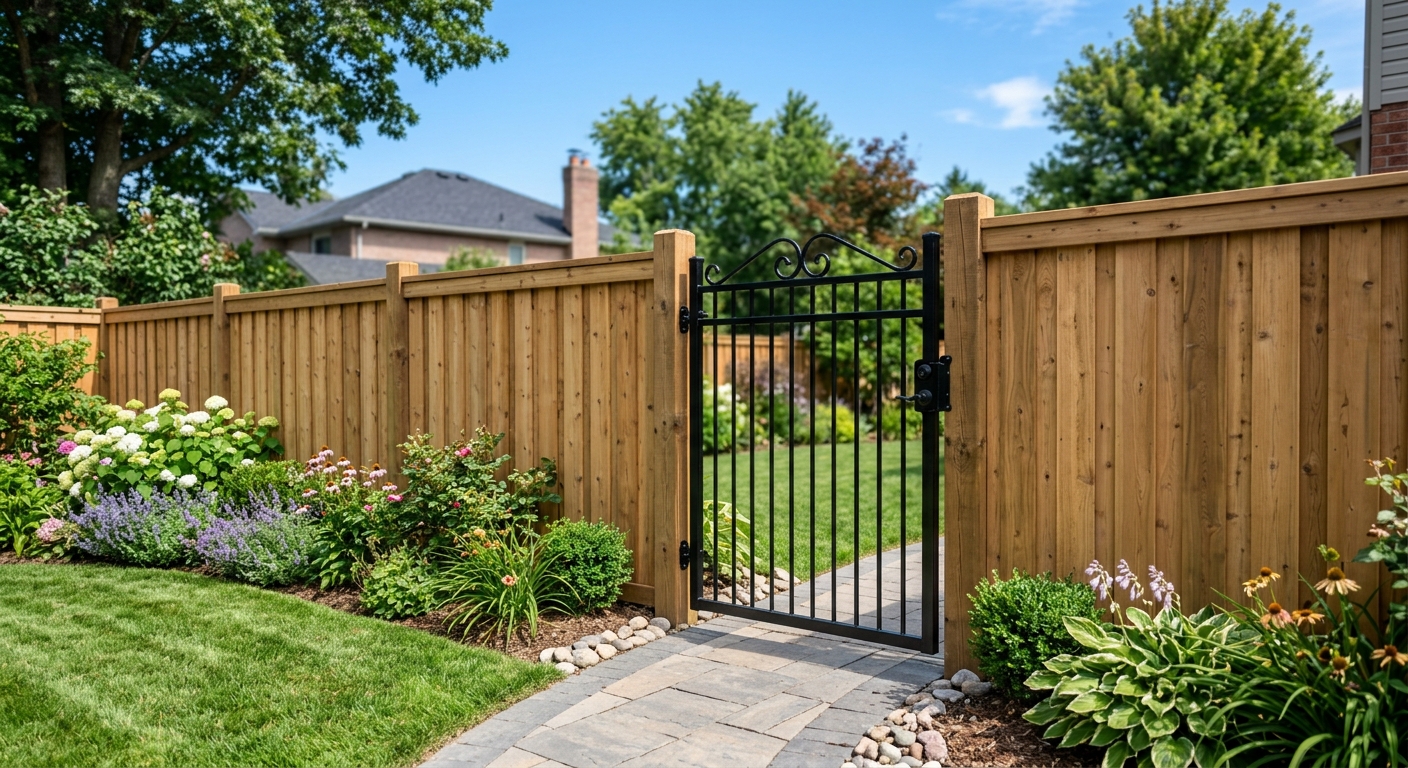
Fencing options and costs in Strathcona
In Strathcona, choosing a fence starts with matching your yard priorities to the materials that perform best in the Lower Mainland–Southwest climate. With a population of 12,585 (Statistics Canada, 2021 Census), the neighbourhoods around Strathcona consistently see steady residential turnover and ongoing back-yard upgrades. In many Lower Mainland areas, each single-detached and semi-detached property can create demand for replacement panels, gate hardware, and fence line repairs—so even small changes can shift contractor availability and lead times.
Lower Mainland–Southwest pricing is shaped by mild but not trivial frost and wind conditions. Posts still need to be set below the design frost depth to limit heaving, and wetter Fraser Valley–style soils (even in pockets of the City) often mean deeper holes, more concrete, and more labour than a dry-site install. At the same time, the mix of older housing stock and new infill can change access: tight gates, mature landscaping, and sloped yards around areas like East Strathcona and the broader Strathcona corridor often require more measuring, careful layout, and sometimes step-racked rails.
That’s why the same 6 ft (about 1.8 m) privacy run might land differently depending on site access, number of corners, soil condition, and whether you’re upgrading posts and gates or only refreshing panels. Use the table below as a practical baseline for what homeowners typically budget in Strathcona, then fine-tune it with a site visit and a proper measurement walk.
| Material |
Lifespan |
Maintenance |
Privacy Rating |
Price per Linear Foot |
| Pressure-treated pine (standard wood) |
10–15 years |
Stain/seal every 2–3 years; fastener checks |
Good (solid/board-on-board) |
$55–$95 |
| Cedar (natural rot resistance) |
15–25 years |
Still needs stain/oil every 3–4 years |
Very Good (boarded or semi-solid) |
$75–$115 |
| Vinyl / PVC (no-maintenance) |
20–30 years |
Rinse occasionally; inspect gates in winter |
Good to Very Good (solid panels) |
$75–$130 |
| Chain-link (galvanized steel) |
25–40 years |
Minimal; occasional tension/repair |
Low (visibility-through) |
$30–$55 |
| Aluminum ornamental |
25–40 years |
Low; wash and tighten hardware as needed |
Low to Moderate |
$90–$170 |
| Composite / recycled material |
20–30 years |
Low; clean and check for warping at posts |
Very Good (solid boards) |
$80–$140 |
Prices are estimates only and vary by project scope, site access and material selection.
What affects the price of fencing in Strathcona
In Strathcona and across the Lower Mainland–Southwest, the same “size” of fence can come in 30–50% apart from one quote to the next. The main reasons are foundation and build details: deeper post embedment, extra labour for corners and gates, and the reality that wetter soils require more time and concrete. Contractors also price for access and risk—if the crew has to work around mature shrubs, steep slopes, or narrow side yards, production slows and the job costs more.
For Lower Mainland–Southwest installs, frost and wind still matter. Even though BC is milder than much of Canada, published guidance commonly lands around minimum post embedment of about 3 ft in many areas, and contractors often go deeper than that. In practical terms, crews typically set posts about 4–6 in (100–150 mm) below the design frost depth to reduce heaving risk—meaning longer posts and deeper holes. Concrete setting is common for privacy panels, corner posts, and gate posts because those locations see higher leverage and wind loading.
Wetter ground can raise your cost in a few concrete ways. First, you may need wider holes (or additional concrete) because soil walls can soften. Second, drainage and soft subgrade can force a higher labour time to level rails. Third, if the fence line is near downspouts or low spots, post settlement can show up sooner, and contractors often build in extra measures (like better base prep). On the flip side, a clean, level yard with straightforward access often keeps pricing closer to the wood mid-range (for example, the $55–$95 band) or vinyl band (commonly $75–$130).
Finally, age and layout drive scope. Many older Strathcona homes have narrower right-of-ways, so crews spend more time verifying lines and adjusting the layout. If your existing fence is failing at posts (not just rails), you’re effectively rebuilding the structural system—often pushing your total toward the higher end of your selected material band.
| Price Factor |
Why It Matters |
Cost Impact |
| Fence length in linear feet |
Labour and materials scale directly with run length |
High |
| Post depth required |
Frost depth determines post length and hole depth |
Medium to High |
| Post setting method |
Concrete vs. gravel pack vs. driven posts changes labour and material |
Medium to High |
| Material choice |
Vinyl vs. cedar vs. chain-link changes structural requirements and cost |
High |
| Gate count and type |
Drive-through and double gates need stronger framing and hardware |
Medium to High |
| Grade and terrain |
Slopes require stepped or raked panels and extra layout time |
Medium |
| Old fence removal and disposal |
Demo, hauling, and recycling/disposal add labour and fees |
Medium |
| Permit fees and survey / property line locate |
Formal locate reduces encroachment risk; some heights require permits |
Low to Medium |
Permits & regulations in British Columbia
In British Columbia, permits can be required depending on height and where the fence is located on the property. As a practical rule used by many homeowners in the region, fences above a threshold—typically around 2.0 m (6.5 ft) at the rear and 1.0–1.2 m (3–4 ft) at the front or corner—often trigger a building permit review. Even when a permit isn’t needed, all fences must respect the property line and municipal setback bylaws.
Before any post hole digging, you should call for utility locates. In BC, homeowners and contractors use BC 1 Call so buried services are marked. Also, get a survey or locate your property pins before you install: in dense Strathcona neighbourhoods, small line shifts can turn into disputes when neighbouring owners disagree on the historical boundary.
Shared fence ownership is typically handled under provincial line-fences principles. If a fence is on or near a boundary, shared maintenance responsibilities and cost-sharing can apply—so document agreements early rather than relying on verbal understandings.
To verify a contractor, ask for (1) their British Columbia licence details (confirm on the appropriate provincial registry if they do regulated trade work), (2) a current certificate of liability insurance naming you as the certificate holder where applicable, and (3) WSBC/WCB coverage proof (not just a “we have coverage” statement). A real clearance letter and policy details are the difference between a safe install and a frustrating claim.
Choosing the right fence material for Strathcona
In Strathcona, the “best” fence material depends on what you want to solve: privacy, low maintenance, upfront budget, or long-term durability. Lower Mainland–Southwest conditions are typically mild but wet, with coastal-style moisture that can accelerate wood rot if products aren’t properly treated and detailed. That means post embedment, hardware selection, and regular coatings matter as much as the material label.
Pressure-treated pine is usually the most budget-friendly approach, but it typically needs staining or sealing every 2–3 years to reduce grey weathering and surface breakdown. Cedar is a popular step up because of its natural rot resistance and appearance; many homeowners find it holds up better visually, but it still benefits from re-staining about every 3–4 years. Vinyl/PVC offers low maintenance and a clean look, but extreme cold snaps can make some components brittle—so you still want proper post anchoring and correct expansion gaps. Chain-link is the lowest-cost install with the longest life, but it doesn’t provide privacy unless you add slats or screening. Aluminum ornamental is rust-resistant and mid-range in cost, but it’s designed for appearance and visibility more than full backyard privacy. Composite/recycled materials can deliver strong privacy panel performance with low maintenance, though they often carry higher upfront pricing.
Post depth is a key decision locally: even with BC’s shallower coastal frost than the prairies, crews commonly still set posts below the frost zone to reduce heaving. Concrete-setting is often used for corner and gate posts and sometimes for privacy panels where wind loading is higher.
If you’re debating wood versus vinyl, a typical example in Strathcona is upgrading from a mid-range wood privacy run at roughly the $55–$95 band to vinyl/PVC closer to $75–$130. The difference is often justified if you want fewer maintenance trips and a steadier appearance through wet winters and spring growth.
| Material |
Cold Tolerance |
Lifespan |
Annual Maintenance |
Best For |
Price Band |
| Pressure-treated pine |
Good (with correct staining and detailing) |
10–15 years |
Low to moderate (2–3 year coating cycle) |
Value-focused privacy and repairs |
$55–$95 |
| Cedar |
Good (surface protection still recommended) |
15–25 years |
Low to moderate (stain/oil every 3–4 years) |
Natural look with better rot resistance |
$75–$115 |
| Vinyl / PVC |
Good (avoid thin sections in very cold) |
20–30 years |
Very low (rinse and hardware checks) |
Low-maintenance privacy |
$75–$130 |
| Chain-link |
Excellent |
25–40 years |
Very low |
Security and long-term economy |
$30–$55 |
| Aluminum ornamental |
Very good (powder-coated) |
25–40 years |
Very low |
Attractive perimeter with visibility |
$90–$170 |
| Composite / recycled |
Good (proper post support reduces stress) |
20–30 years |
Low |
Privacy with reduced upkeep |
$80–$140 |
How to choose a fencing contractor in Strathcona
Choosing the right fence contractor in Strathcona is mostly about proof: proof they can build to standard, proof they’re insured, and proof they’ve priced your specific site correctly. Start by verifying British Columbia licence details (when applicable), then confirm liability insurance—ask for a certificate of insurance and check policy expiry dates and coverage limits. For worker protection, verify WSBC/WCB coverage for their crew; you should be able to see proof of coverage (and a clearance letter where provided) rather than a vague statement.
Next, get 2–3 itemised written quotes. Ask for a breakdown that separates labour, materials, post depth/embedment approach, gate hardware, and any permit/support work. Avoid “lump sum” only pricing if you can—what you don’t see can become an add-on later.
Read scope carefully: confirm whether permit pull is included (when required), whether old fence removal and disposal is included, and whether your quote includes property line locate/survey or only “based on owner-provided pins.” If you’re replacing a failing fence, ask whether they plan to reuse posts or rebuild everything; that decision alone changes durability.
For warranty, separate workmanship from product warranty. Ask the length of the workmanship warranty and whether it’s transferable if you sell your home. Confirm the manufacturer warranty applies to the specific fence components quoted.
Finally, payment terms matter. Never pay more than 10–15% upfront, and use a holdback until the job is complete and you’ve accepted final grading and gate operation. Get a start date and completion estimate in writing so weather delays and material lead times are managed transparently.
- Request proof of WSBC/WCB coverage and verify coverage dates.
- Ask for liability insurance certificate (and confirm it covers fencing operations).
- Verify applicable British Columbia licensing/registration if the contractor performs regulated work.
- Get itemised quotes: posts, rails, pickets/panels, concrete, hardware, labour, gates.
- Confirm post depth/embedment method in the written scope (not just “installed properly”).
- Clarify whether corners, line posts, and gate posts are treated as structural points.
- Ask if permit pull is included when height thresholds apply.
- Confirm utility locate and whether they coordinate BC 1 Call before digging.
- Verify whether old fence removal/disposal is included and how debris is handled.
- Ensure the contract states the warranty: workmanship length and product warranty term.
- Discuss payment schedule: small deposit, then staged payments with a holdback.
- Get a written timeline with start/completion and a weather/material delay plan.
Red flags I see sometimes in Strathcona include: (1) no itemised quote and refusal to list post depth or concrete use, (2) asking for a large upfront payment beyond 10–15%, (3) vague warranty language like “guaranteed” without durations, (4) no proof of WSBC/WCB or insurance, and (5) claiming they’ll “figure out the property line later” instead of verifying pins/survey before digging.
Frequently asked questions — fencing in Strathcona
Who owns and maintains a shared fence?
In British Columbia, shared fence ownership and responsibilities are commonly handled under the provincial line-fences framework. In plain terms, if a fence is on or near a boundary and both neighbours benefit, maintenance and cost-sharing can apply—but it depends on how the fence was built, its location relative to the property line, and any agreements made when it was installed. For a Strathcona homeowner, the safest approach is to confirm your boundary line (pins/survey), then review who is responsible for repairs to sections like posts, rails, and especially gate hardware. If you’re planning a replacement, ask the contractor to document the scope by fence section so you can clearly allocate what’s shared versus what’s on one property.
How do I find my property line before fencing?
Before installing anything in Strathcona, you should verify the property line rather than relying on old stakes, neighbour memory, or visible fence “tradition.” The practical method is to obtain a survey or locate your property pins—this is especially important when fences were originally built years ago and may have drifted. If you don’t have current survey documentation, ask for a locate service or confirm pin positions through an appropriate professional surveyor. Also, call for utility locates before digging so marked services don’t get disturbed (BC 1 Call). Taking these steps early can save you from encroachment disputes and rework, which is one reason quotes can change across the Lower Mainland–Southwest.
What's the most low-maintenance fence?
For low maintenance in British Columbia, vinyl/PVC is usually the top pick because it doesn’t need staining and typically only needs occasional rinsing and hardware checks. If privacy is your goal, you’ll still want well-anchored posts—especially at corners and gates—so the system stays square after spring thaw and winter wind events. Many homeowners in Strathcona choose vinyl when they want a stable look without annual upkeep. As a budgeting reference, vinyl/PVC installs often land in the $75–$130 band depending on height, gate count, and site access. If you want a lower-cost alternative, chain-link is very low maintenance (often $30–$55), but it offers visibility unless you add slats or screening.
How tall can my fence be in Strathcona?
Fence height rules in BC are tied to where the fence sits (front/corner versus rear) and can trigger permits. A commonly used threshold is that fences above about 2.0 m (6.5 ft) at the rear and roughly 1.0–1.2 m (3–4 ft) at the front or corner often require a building permit. Even when your height seems reasonable, you still must respect municipal setback bylaws and property line placement. In Strathcona, where lots can be relatively close and access may be limited, permits also affect scheduling because paperwork and review take time. If you’re aiming for a solid privacy fence, tell your contractor the intended height and location on the lot; a good quote will note whether permits are anticipated and who is pulling them.
Should fence posts be set in concrete here?
In the Lower Mainland–Southwest, many contractors still set posts in concrete for key structural points—corner posts, gate posts, and often privacy fence runs—because wind loads and wet soils can magnify movement. While BC may have shallower frost than inland regions, published guidance and common practice still support burying posts below the effective frost zone to reduce heaving (often meaning deeper holes than “minimum” estimates). For Strathcona projects, concrete setting is typically used when soil is wetter/softer or when you’re installing heavier panel styles (solid wood boards, vinyl privacy panels, or framed gates). That said, a lighter chain-link perimeter on stable, well-draining soil might use different post setting approaches. The best answer comes from your soil and layout—ask your contractor to specify the post-depth and setting method in the written scope.
What's the best fence for privacy?
If you want real privacy in Strathcona, the best options are solid panel fences like vinyl/PVC privacy, cedar or pressure-treated wood board-on-board, or composite privacy systems. These give the privacy rating most homeowners expect because they block sightlines rather than letting light and visibility through. Vinyl privacy typically lands around $75–$130, while wood installs often fall closer to $55–$95 depending on height, style, and number of gates. Privacy performance also depends on the construction details: correct post anchoring below frost influence, proper tension/spacing, and careful gate hardware so the fence doesn’t develop gaps over time. In BC’s wet climate, choose materials and finishes that handle moisture well, and ensure drainage and grading don’t force water to sit against posts.