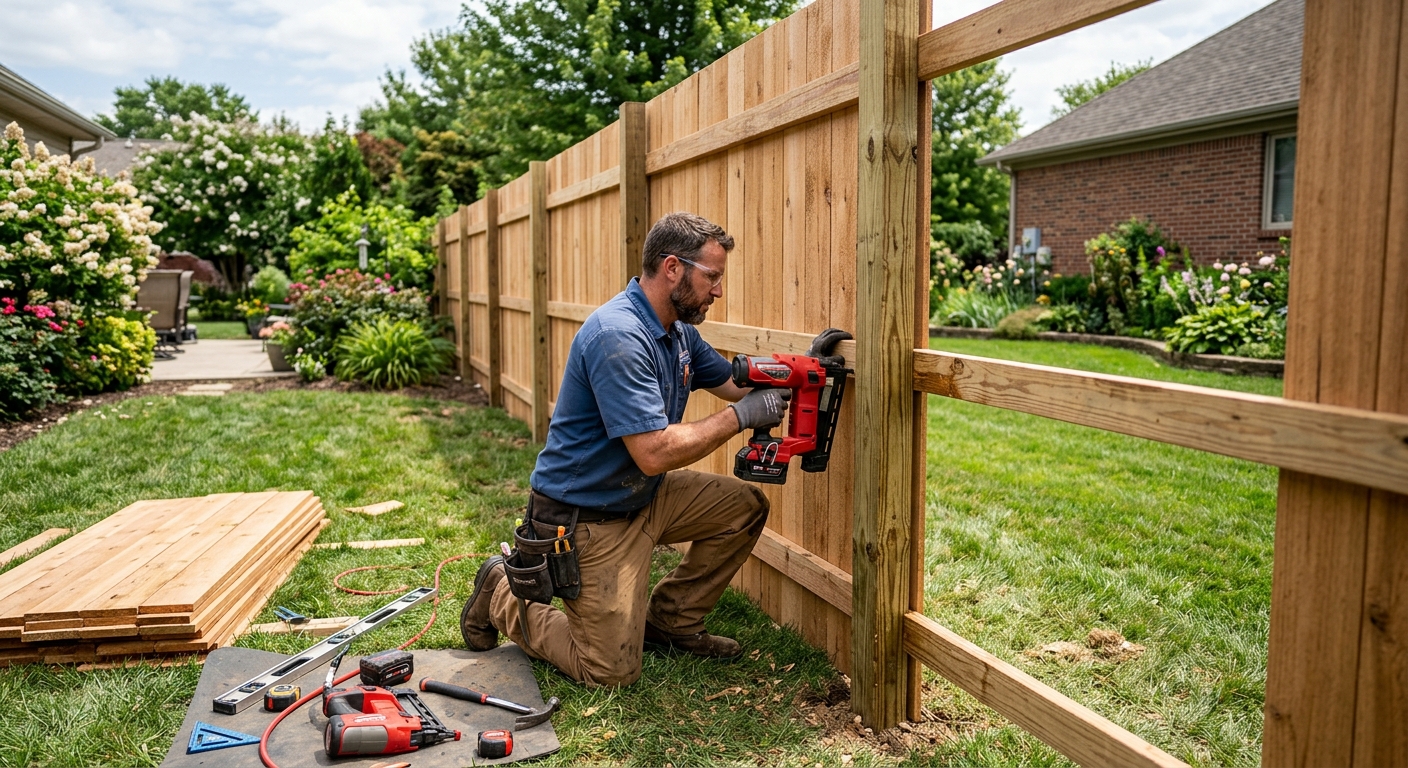
Fencing options and costs in Jubilee
In Jubilee, BC, the right fence is part boundary, part curb appeal—and it’s also one of the biggest day-to-day decisions for homeowners because many local properties are built as separate single-family lots. With a population of 5,290 (Statistics Canada, 2021 Census), demand is concentrated in neighbourhoods with steady owner-occupancy and regular turn-over, where new families and renovations often trigger upgrades to privacy panels, gates and replacement runs. The Lower Mainland–Southwest market also has a distinct advantage for contractors (more crews and more material choices), but it comes with real cost pressures: mild but not trivial frost and wind, wetter Fraser Valley-style soils, and a coastal climate that can accelerate rot if the wrong wood products or installation practices are used.
In this area, posts still need to be set below frost depth to limit heaving—often meaning deeper holes and more concrete for privacy fences, corner posts and gates. That’s why two “same-size” fences can land far apart when one yard has slope, heavy wind exposure, or saturated soil that requires deeper embedment. If you’re planning work around active streets and busier lanes in Jubilee, access constraints (driveways, landscaping, and turning radius for trucks) can also increase labour.
For many homeowners near the more established residential pockets around the core Jubilee area, privacy fencing tends to sell quickly because yards are used year-round. Let’s compare common materials side-by-side so you can translate your priorities into a realistic budget, then use the factors below to refine your quote.
| Material |
Lifespan |
Maintenance |
Privacy Rating |
Price per Linear Foot |
| Pressure-treated pine (standard wood) |
10–15 years |
Stain or seal every 2–3 years |
Medium–High (solid boards) |
$55–$85 |
| Cedar (natural rot resistance) |
15–25 years |
Light staining or sealing every 3–5 years |
High (solid pickets/panels) |
$70–$95 |
| Vinyl / PVC (no-maintenance) |
20–30 years |
Wash as needed (no staining) |
High (privacy styles) |
$85–$130 |
| Chain-link (galvanized steel) |
20–35 years |
Occasional rinse and tension check |
Low (open mesh) |
$30–$55 |
| Aluminum ornamental |
25–40 years |
Occasional rinse |
Low–Medium (ornamental spacing) |
$95–$165 |
| Composite / recycled material |
20–30 years |
Low; wash and inspect hardware annually |
Medium–High (solid styles) |
$90–$140 |
Prices are estimates only and vary by project scope, site access and material selection.
What affects the price of fencing in Jubilee
If you’ve received two quotes for the same fence in Jubilee, it’s not unusual to see a 30–50% difference across the Lower Mainland–Southwest and broader British Columbia—even when the height looks identical. The biggest drivers are how hard your yard is to build in: access, soil moisture, grade changes, wind exposure, and how far down crews must set posts to manage frost-related movement. In Jubilee and the surrounding Lower Mainland–Southwest, frost is “mild but not trivial,” so contractors often still embed posts deeper than a bare minimum. That means more labour time, longer treated boards, stronger hardware, and more concrete for privacy fences—especially at corners and gate points.
To explain the range, think about embedment and setup. Published Canadian guidance commonly references minimum post embedment around 3 feet in much of Canada, but in BC coastal conditions the practical approach often remains shallower than Ontario, while still going deeper than “just the minimum” for heave resistance in wetter ground. In wetter soils, we frequently dig deeper, haul or mix more concrete, and spend more time ensuring plumb alignment. Coastal BC wood faces rot risk when airflow and drainage are poor, so better-grade fasteners and proper post caps can raise upfront cost but prevent early failures.
Real-world examples in Jubilee: (1) a privacy fence on soaked, clay-heavy soil often shifts a basic build toward the higher end of the wood band, like $55–$95, because holes must be deeper and more concrete is used; (2) a sloped yard may push a vinyl or PVC run toward $75–$130 because stepped/raked panel systems and extra framing are required; (3) gate-heavy designs add cost quickly due to hinges, latches and reinforcement.
| Price Factor |
Why It Matters |
Cost Impact |
| Fence length in linear feet — the primary cost driver |
Most labour and materials scale directly with total run |
Major (often the largest difference between quotes) |
| Post depth required — frost line determines post length and hole depth |
More embedment means longer posts and deeper excavation |
Moderate–High (especially for privacy fences) |
| Post setting method — concrete vs. gravel pack vs. driven posts |
Concrete adds material and labour but improves stability in wet soil |
Moderate (can raise costs on saturated sites) |
| Material choice — vinyl vs. cedar vs. chain-link |
Material cost and structural demands differ by system |
High (often shifts you between bands) |
| Gate count and type — walk-through vs. drive-through (double) |
Gates require extra reinforcement and hardware |
High (gates are labour- and hardware-intensive) |
| Grade and terrain — sloped yards require stepped or raked panels |
Additional framing and layout time are needed for clean alignment |
Moderate |
| Old fence removal and disposal |
Demolition, hauling, and site reset add time |
Moderate (can be major if access is tight) |
| Permit fees and survey / property line locate |
Accuracy work prevents disputes and rework |
Low–Moderate (varies by scope) |
Permits & regulations in British Columbia
In British Columbia, fences above a height threshold—often around 2.0 m (6.5 ft) at the rear and about 1.0–1.2 m (3–4 ft) at the front or corner—commonly require a building permit, depending on your municipality’s rules. Even when a fence does not require a permit, it still must respect property lines and municipal setback bylaws. In Jubilee, where lots can be tight and yards mature, it’s especially important to confirm boundary locations before the first hole gets dug.
Before you install any posts, call for utility locates. In BC, that’s typically handled through BC 1 Call so crews can verify buried services. You should also obtain a survey or locate your property pins to avoid encroachment disputes (a common cause of costly rework). For shared boundaries, line-fence responsibilities follow provincial line-fences legislation—meaning you may need to coordinate with a neighbour if the fence is on or affects the boundary.
Licence and coverage checks are part of homeowner due diligence. When you hire a contractor in Jubilee, verify: (1) their British Columbia licence status via the appropriate online registry; (2) general liability insurance with enough coverage for fencing work (ask for a certificate of insurance); and (3) workers’ compensation coverage (WSBC/WCB) clearance. Request the clearance letter and keep it with your contract paperwork.
Choosing the right fence material for Jubilee
Choosing fence material in Jubilee is really about matching performance to how your yard is used—privacy, low maintenance, and lifespan—under Lower Mainland–Southwest conditions. With mild but wet winters and coastal winds, the “cheap now” option can become expensive when boards grey, fasteners loosen, or rot begins around the post line. Pressure-treated pine is usually the best budget entry, but it generally needs staining or sealing every 2–3 years to slow weathering and keep the surface stable. Cedar looks great and resists rot naturally, but it still benefits from periodic finishing, especially where water sits against pickets and near ground contact.
Vinyl / PVC offers the clearest low-maintenance path—no staining—and many homeowners appreciate that. However, extreme cold snaps can make it more brittle than wood if panels are undersupported, so wind-rated construction and proper post spacing matter. Chain-link is the lowest-cost installed choice and tends to last a long time, but it won’t provide privacy on its own; if privacy is your goal, many homeowners add slats or screens (which can change airflow and wind load). Aluminum ornamental is rust-resistant and long-lived, but it’s typically mid-range and not a privacy solution.
On post depth: even though BC coastal conditions are shallower than the Prairies, frost movement still exists. For most Jubilee installs, posts are set below the design frost influence to prevent heaving, and on privacy fences we often use concrete for corner posts, gate posts, and sometimes full runs in wetter ground. Wind and snow loads show up mainly as stronger bracing needs—solid styles need better framing than open mesh.
A practical dollar example: if a vinyl privacy fence lands around $85–$130 per linear foot and a cedar privacy run is around $70–$95, the extra cost is justified when you want decades of low upkeep and minimal callbacks for staining or warping. If you’re comfortable maintaining wood finishes, cedar can deliver a strong balance of curb appeal and rot resistance at a lower upfront price.
| Material |
Cold Tolerance |
Lifespan |
Annual Maintenance |
Best For |
Price Band |
| Pressure-treated pine |
Good; protect finishes in freeze–thaw cycles |
10–15 years |
Inspect; minor touch-ups or re-stain every 2–3 years |
Budget privacy with a maintenance plan |
$55–$85 |
| Cedar |
Good; performs well with proper post embedment |
15–25 years |
Inspect; stain/seal every 3–5 years |
Natural look, better rot resistance |
$70–$95 |
| Vinyl / PVC |
Good; avoid weak framing in cold snaps |
20–30 years |
Wash as needed; check latches/hardware |
Low-maintenance privacy |
$85–$130 |
| Chain-link |
Very good; resilient hardware |
20–35 years |
Rinse; tension check every few years |
Security and long life on a budget |
$30–$55 |
| Aluminum ornamental |
Very good; non-rusting system |
25–40 years |
Wash; inspect fasteners annually |
Clean appearance with minimal rust risk |
$95–$165 |
| Composite / recycled |
Good; depends on panel support and grade |
20–30 years |
Low; wash and inspect annually |
Consistent look with reduced maintenance |
$90–$140 |
How to choose a fencing contractor in Jubilee
Choosing the right contractor in Jubilee starts with verifying British Columbia coverage and qualification, not just the price. Ask for proof of their licence status through the BC online registry, then request a current certificate of liability insurance naming you as applicable or confirming adequate coverage for property damage. For workers’ protection, ensure workers’ compensation coverage is in place: ask for a current WSBC/WCB clearance letter and confirm it matches the company you’re hiring (not just a subcontractor).
Next, get 2–3 itemised written quotes. You want a breakdown for labour and materials, not a single lump-sum line. The scope should spell out post depth and setting method, rail and panel types, gate hardware, removal/disposal, and whether permits or property-line locates are included. If you need a permit for a taller fence, clarify who pulls it and whether the quote accounts for the time and fees. Also confirm whether the contractor includes levelling, stepped panel design for slopes, and surface reinstatement.
Warranty matters in fencing because failure often shows up at hardware and post points. Look for a workmanship warranty (often a defined period) plus product/manufacturer warranties for materials and fasteners, and ask if warranties transfer if you sell your home. For payment, a safer schedule is to keep upfront payments around 10–15%—with the rest tied to progress and a holdback until completion and final walk-through. Finally, request a written start date and completion estimate so you’re not stuck waiting through weather windows.
- Verify licence status in BC before signing anything.
- Request certificate of liability insurance and confirm coverage amount.
- Ask for WSBC/WCB clearance letter (and check the company name matches the quote).
- Get 2–3 itemised quotes (labour + materials), not lump sums.
- Confirm post embedment depth and setting method (concrete vs gravel pack) for your soil.
- Ensure gate hardware is listed (hinge type, latch, reinforcement).
- Ask who is responsible for permits if a taller fence triggers one.
- Confirm property line locate/survey responsibilities and whether pins are found on-site.
- Specify fence height at the property line and how slopes will be handled (stepped vs raked).
- Check disposal/removal coverage for the old fence and any off-site hauling fees.
- Review warranty: workmanship length, product warranty, and whether it’s transferable.
- Set a payment schedule with a holdback until final inspection and cleanup.
In Jubilee, red flags I often see include: quotes that skip embedment details (post depth and concrete setting), “too good to be true” pricing for solid privacy fences (usually corners are cut on posts and hardware), no proof of insurance or WSBC/WCB coverage, vague scope language that excludes removal/disposal and reinstatement, and contracts that don’t provide a written start date, completion estimate, or a clear warranty statement.
Frequently asked questions — fencing in Jubilee
How do I prevent wood fence rot in Jubilee?
To prevent wood rot in Jubilee and across the Lower Mainland–Southwest, the biggest wins are below-ground and at hardware. Posts should be embedded below frost influence to reduce heaving, and on wetter sites it’s common to use concrete for corner posts, gate posts and sometimes the full privacy run so water doesn’t pool around the post base. Above ground, choose proper-grade fasteners (not mixed metals that accelerate corrosion) and keep airflow—avoid burying wood too deeply in landscaping mulch. Finishing matters too: pressure-treated pine typically needs staining or sealing every 2–3 years to prevent grey weathering and moisture-driven breakdown. Cedar resists rot naturally, but it still performs best with periodic finishing where it stays damp. If you’re budgeting, wood usually lands around $55–$95 per linear foot, depending on whether you pick pine or cedar and how deep the posts need to go.
What is the cost per linear foot for fencing in Jubilee?
In Jubilee, fencing pricing is typically quoted as installed cost per linear foot, then adjusted for posts, gates, terrain and access. For the Lower Mainland–Southwest, a realistic wood fence installation range is about $55–$95 per linear foot, while vinyl / PVC is often $75–$130. Chain-link usually comes in lowest at about $30–$55, and aluminum / metal tends to be the highest among common residential systems at roughly $90–$170. Your final number can shift when soil is saturated (deeper holes and more concrete), when you have slope (stepped or raked panels), or when wind exposure requires tighter spacing and stronger framing.
Should I repair or replace my old fence in Jubilee?
Repair can make sense if the fence line is mostly sound—think intact posts, stable rails, and posts that aren’t leaning or rotting at the base. In Jubilee’s wet, coastal climate, rot often starts around the post entry point and at bottom rails, so if you’re seeing soft wood near ground contact, repeated board failures, or loose gate alignment, replacement is usually more economical long-term. Another key test is how many structural elements are compromised: if multiple posts need resetting and several sections are out of plumb, the labour to “patch and align” can approach replacement pricing. If your current fence is chain-link and only needs tensioning or a few fabric panels, repairs are common; for solid privacy fences, rot at posts and hardware often pushes homeowners toward a new build in the wood band of about $55–$95 per linear foot, depending on pine vs cedar.
How do I handle a fence dispute with a neighbour in British Columbia?
For fence disputes in British Columbia, start by confirming where your boundary actually is (property pins or a survey). Many conflicts come from assuming a fence line matches a property line when it’s not. Then review whether the fence is on the boundary and how line-fence responsibilities apply under provincial legislation. In practice for Jubilee homeowners, it helps to document everything: photos showing damage, any prior agreements, and a written timeline of conversations. If one party wants changes (like increasing height or switching materials), ask for a clear written scope and who bears the cost. If the dispute is ongoing, consider mediation or legal advice before construction—because relocating a fence after installation can be expensive. Utility locates are also important if you eventually dig, since work without confirmation can create service interruptions.
What fence style offers the best wind resistance in Jubilee?
In Jubilee, wind resistance usually comes down to how well the fence is framed and how “open” it is relative to wind pressure. Solid privacy fences can perform very well if they’re built with stronger posts, tighter spacing, and good bracing—especially around corners and gates. Where wind is a bigger factor, open or semi-open designs (such as well-designed picket styles, or chain-link with tensioned framework) can reduce drag because wind passes through rather than hitting a flat face. That said, coastal BC conditions are mild but wet, so the key is using proper post embedment and secure hardware so the fence doesn’t loosen over freeze–thaw cycles. If you’re comparing costs, solid wood privacy often falls within $55–$95 per linear foot, while vinyl privacy is usually higher at $75–$130, partly because panel and reinforcement systems must stay rigid under wind loads.
How much does a fence cost in Jubilee?
The total cost depends on how many linear feet you need, fence height, gate count, and site conditions like slope and soil moisture. As a budgeting guide in Jubilee, wood privacy fencing typically lands around $55–$95 per linear foot installed; vinyl / PVC is often about $75–$130; chain-link is lowest at about $30–$55; and aluminum ornamental commonly sits around $90–$170. Wetter ground in the Lower Mainland–Southwest can increase labour and concrete use because posts often must be embedded deeper to limit frost heave, and saturated soils may require more excavation time. If you’re also replacing an old fence, removal and disposal can add cost, and sloped yards can require stepped or raked panels.