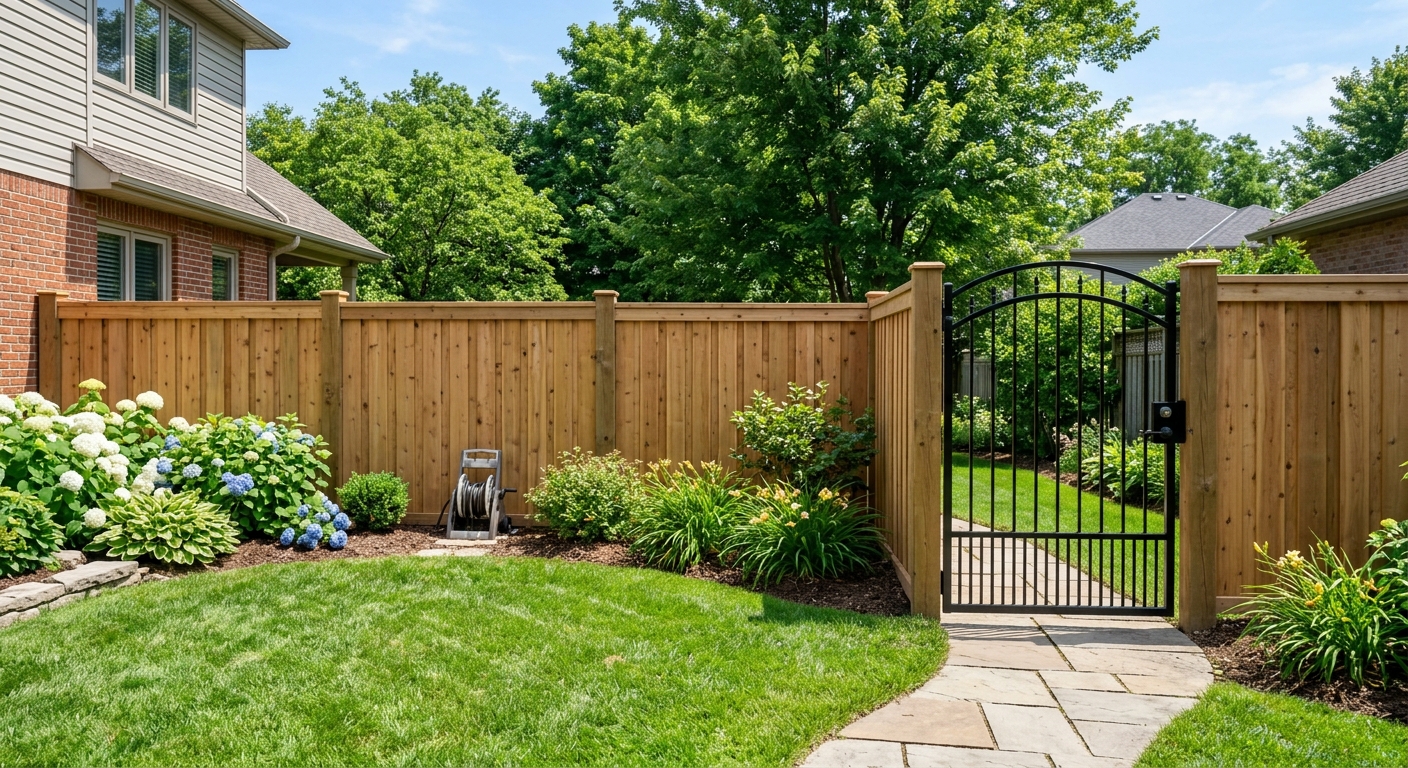
Fencing options and costs in Riverwood
Fencing choices in Riverwood often come down to how much privacy you want, how often you’re willing to maintain it, and what your yard conditions are like. With a population of 9,008 (Statistics Canada, 2021 Census), Riverwood has a steady stream of typical residential lots where driveways, side yards, and rear privacy lines are all fenced—especially around established family neighbourhood pockets such as the Riverwood Estates area. In the Lower Mainland–Southwest, that local demand matters because winter weather is mild but not trivial: crews still need reliable post embedment below frost influence, and wetter soils in the Fraser Valley can mean deeper holes, more concrete at critical posts, and extra labour to keep alignment straight.
In practice, contractors price the same fence differently based on site access, slope, finish grade, and wind exposure across the region. If your yard is open to prevailing winds, you’ll usually see stronger posts, tighter spacing, and more rigid panel framing—particularly for solid wood and vinyl privacy fences. If your yard is partially enclosed and sheltered, you may be able to use a slightly lighter panel build, which can help reduce the total quote. Chain-link usually stays the lowest-cost route, while wood lands in the mid-range and vinyl/PVC or metal systems cost more due to material and structural requirements.
Below are realistic ranges you can use when comparing proposals from different Riverwood contractors—then we’ll break down what drives those differences in the next section.
| Material |
Lifespan |
Maintenance |
Privacy Rating |
Price per Linear Foot |
Price Range |
| Pressure-treated pine (standard wood) |
10–20 years |
Stain/seal every 2–3 years; check for loose rails |
High (solid boards) |
$55–$95 |
$2,200–$4,600 |
| Cedar (natural rot resistance) |
15–25 years |
Re-seal/stain as needed (typically every 3 years) |
High (solid boards) |
$65–$110 |
$2,600–$5,200 |
| Vinyl / PVC (no-maintenance) |
20–30 years |
Rinse annually; occasional panel part replacement only |
High (solid privacy styles) |
$75–$130 |
$3,000–$6,200 |
| Chain-link (galvanized steel) |
20–35 years |
Minimal; periodic top rail and tension checks |
Low to medium (mesh) |
$30–$55 |
$1,200–$2,700 |
| Aluminum ornamental |
25–40 years |
Occasional wash; no rust |
Low (open pickets) |
$90–$170 |
$3,600–$8,000 |
| Composite / recycled |
20–30 years |
Low; occasional cleaning and fastener checks |
Medium to high (panel-dependent) |
$85–$150 |
$3,400–$7,100 |
Prices are estimates only and vary by project scope, site access and material selection.
What affects the price of fencing in Riverwood
In the Lower Mainland–Southwest, it’s common to see fence quotes swing by 30–50% for the “same” fence line. That spread usually comes from how each contractor handles three things: post installation (depth and set method), how the fence is engineered for wind, and what’s included (disposal, site protection, and permit work where required). Because Riverwood is part of the same market as Vancouver, Surrey, Richmond, and Abbotsford, contractors often price with regional labour availability and material supply in mind—but site conditions still dominate the final number.
Frost and wet soil drive a major portion of cost in the Lower Mainland–Southwest. Contractors still set posts below local frost influence to limit heaving; a practical rule of thumb is often 4–6 inches below the design frost depth, which translates into deeper holes than people expect. Where the ground is wetter or less stable, crews may need more concrete at corner posts and gate posts, more labour to maintain level alignment, and longer posts for the same finished fence height. In contrast, on drier lots with firmer subgrade, labour and concrete use can drop.
Wind exposure also matters. While this region is milder than Ontario and Alberta, open yards can still force tighter post spacing and heavier panel framing, particularly for solid wood privacy fencing and vinyl systems that need a rigid support grid. For coastal BC, wood rot risk is accelerated if you don’t use correct treatment and drainage details—so “cheap wood” can become expensive when boards need early replacement.
Two Riverwood examples: a slope can add stepped/raked panel labour (often a higher installation rate), and removing an old privacy fence with mixed fasteners can add both time and disposal fees. If you’re comparing options, a pressure-treated wood line often comes in around the $55–$95 band, while vinyl privacy typically lands closer to $75–$130 per linear foot—so the extra upfront cost is most justified when you want reduced long-term upkeep and fewer replacements over decades.
| Price Factor |
Why It Matters |
Cost Impact |
| Fence length in linear feet |
Labour, posts, rails, and materials scale directly with length |
Highest impact (typical driver) |
| Post depth required |
Frost influence and soil stability determine hole depth and post length |
Often adds 10–25% in wetter/unstable yards |
| Post setting method |
Concrete vs gravel pack vs driven posts changes materials and installation time |
Concrete setting can add 5–20% |
| Material choice |
Vinyl, cedar, and chain-link have different material costs and structural needs |
Can swing totals by 20–60% |
| Gate count and type |
Drive-through double gates require heavier hardware and framing |
Commonly adds 15–35% to the line item |
| Grade and terrain |
Slopes require stepping, racking, and extra layout time |
Often adds 5–20% |
| Old fence removal and disposal |
Salvageable materials and disposal access affect labour and dump fees |
Can add 10–30% |
| Permit fees and survey / property line locate |
Some fences require permits; boundary locates prevent costly rework |
Often adds 0–10%, sometimes more on complex lots |
Permits & regulations in British Columbia
In British Columbia, fence rules can vary by municipality, but a common threshold many homeowners run into is height. As a practical guide, fences above about 2.0 m (6.5 ft) at the rear and about 1.0–1.2 m (3–4 ft) at the front or corner often require a building permit. You still must respect property lines and any municipal setback bylaws that apply to your lot.
Before you dig any post holes, call for utility locates—BC 1 Call (or the applicable utility locate service) so you don’t hit underground services. Next, verify your boundary: if you don’t have the property pins located or your survey is old, get a survey or property line locate so the fence doesn’t encroach. Shared fence ownership arrangements are handled through provincial line-fences legislation, which affects who pays for maintenance and repairs when boundaries are shared.
What typically requires a permit: taller fence heights (around the thresholds above), and cases where the fence placement/height triggers additional review. What typically does not require a permit: smaller fences under the threshold, routine replacement of an existing fence to match the same height and location, and typical low-height backyard panels—however, you should confirm based on your exact location and height.
For contractor verification in Riverwood/Lower Mainland–Southwest: ask for their British Columbia business registration details, certificate of liability insurance (request the COI and confirm it matches your project address), and proof they have appropriate coverage. If they cite coverage by the provincial system, request the clearance or proof document they normally provide. Then keep the paperwork in your project file.
Choosing the right fence material for Riverwood
Choosing a fence material in Riverwood is easiest when you start with your goals: privacy, low maintenance, budget, and lifespan. In the Lower Mainland–Southwest, the main climate reality is wet soil and frequent moisture, plus mild-but-not-trivial freeze conditions. That combination means your posts and rails need correct embedment and drainage, and your cladding needs the right treatment to resist early rot.
Pressure-treated pine is usually the budget-friendly option. It’s mid-range on cost, but it typically needs staining or sealing every 2–3 years to prevent grey weathering and to slow surface breakdown. Cedar costs more up front but is attractive and naturally rot-resistant, still requiring maintenance to look its best. Vinyl/PVC is popular for homeowners who want “install and forget” upkeep; it’s higher upfront (often closer to the $75–$130 per linear foot band), but it won’t need the same staining schedule. One caution: extreme cold snaps can be tougher on certain plastics, so good installation and correct spacing matter. Chain-link is the lowest-cost route and lasts a long time, but it provides little privacy—typically medium only if you add screening. Aluminum ornamental gives a clean look and resists rust, but it’s not a true privacy solution in its standard picket styles.
Concrete-set posts are commonly used for corner posts and gate posts in this region. For privacy panels, many crews also use concrete around critical posts because stable footing reduces movement in wetter Fraser Valley soils. If your yard is wind-exposed, thicker framing and tighter spacing can prevent panel racking and extend service life.
As a concrete pricing example: if a 40-foot run of pressure-treated wood comes out around the $55–$95 range but a vinyl privacy option lands in the $75–$130 range, the extra $800–$1,600 often makes sense when you want fewer maintenance tasks and fewer board replacements over the long term.
| Material |
Cold Tolerance |
Lifespan |
Annual Maintenance |
Best For |
Price Band |
| Pressure-treated pine |
Good with proper treatment and correct post embedment |
10–20 years |
Light (inspect + minor touch-ups); stain every 2–3 years |
Budget privacy where you’re okay with periodic upkeep |
$55–$95 |
| Cedar |
Good; performs well with good ventilation and drainage |
15–25 years |
Light to moderate (wash and re-stain as needed) |
Better curb appeal and natural rot resistance |
$65–$110 |
| Vinyl / PVC |
Very good; can be sensitive to poor installation and extreme cold shocks |
20–30 years |
Very light (rinse annually) |
Low-maintenance privacy with long-term looks |
$75–$130 |
| Chain-link |
Excellent for the frame; mesh is flexible in freezes |
20–35 years |
Very light (tension/connection checks) |
Security and boundary definition with lowest cost |
$30–$55 |
| Aluminum ornamental |
Excellent (won’t rot or rust with coating system) |
25–40 years |
Very light (wash; check posts) |
Decorative boundaries with visibility |
$90–$170 |
| Composite / recycled |
Good; stable panels when installed with correct framing |
20–30 years |
Very light (wash; fastener checks) |
Homeowners wanting a wood-like look with low maintenance |
$85–$150 |
How to choose a fencing contractor in Riverwood
When you’re hiring a fence contractor in Riverwood, verify the basics before you compare price. In British Columbia, ask for proof of liability insurance (certificate of insurance showing your address or job site as a covered interest), and request documentation of appropriate worker coverage through the provincial system (often shown as clearance/proof paperwork). If they provide WSIB/WCB-style coverage references, don’t rely on verbal confirmation—request the clearance letter or proof document they can legally provide for the trade.
Then get 2–3 itemised, written quotes that break out labour and materials separately (posts, rails, pickets/panels, hardware, concrete, and gates). Make sure the quote states what’s included and what’s excluded: permit pull (if required), utility locate costs, old fence removal, and disposal. A good fence scope also lists how they’ll set posts (concrete at corner/gate posts, how they handle wet soil, and how they deal with slopes via stepping or racking).
Warranty matters: ask for a workmanship warranty length (how long they stand behind alignment and installation), and a product/manufacturer warranty for the specific material system. Confirm whether warranties are transferable if you sell your home—many homeowners ask this later. For payment, never pay more than 10–15% upfront; use progress draws only after milestones, and hold back the remainder until the fence is complete and cleaned up.
Finally, demand a written start date and completion estimate, plus confirmation of how they’ll protect lawns and landscaping during post-hole digging and panel installation.
- Provide certificate of liability insurance (and confirm it’s current).
- Provide proof of appropriate worker coverage/clearance documents for the job.
- Use an itemised quote: materials vs labour vs hardware vs concrete.
- Confirm who pulls any permit if your fence height triggers it.
- Confirm whether utility locates are booked before digging.
- Specify post setting method (concrete vs gravel pack) and where concrete is used.
- Confirm how gates are framed and anchored (not just “standard hardware”).
- Ask how they’ll handle slope/grade changes (stepped vs raked panels).
- Confirm old fence removal and disposal are included or excluded.
- Ask for product samples/spec sheets for vinyl, composite, or cedar grade.
- Get workmanship and product warranty details in writing.
- Agree on a payment schedule with a holdback until completion.
Red flags to watch for in Riverwood: (1) quotes that are “lump sum” with no breakdown of posts, concrete, and gate hardware; (2) vague language about post depth or whether concrete is used for corner/gate posts; (3) no willingness to provide insurance/proof documents before starting; (4) promises to “match height” without measuring from finished grade and stating setback constraints; and (5) asking for large upfront payments (beyond 10–15%) before any materials arrive or work begins.
Frequently asked questions — fencing in Riverwood
Wood vs vinyl vs aluminum fence — which is best?
In Riverwood, “best” depends on your priority. Wood (pressure-treated pine or cedar) is typically the most budget-flexible way to get solid privacy, and it often fits the $55–$95 per linear foot band for wood installs. Vinyl/PVC is usually the best match for homeowners who want low maintenance—its pricing commonly sits in the $75–$130 band, and you avoid regular staining. Aluminum is durable and won’t rust, but it’s usually more ornamental than private, so it’s not ideal if privacy is your main goal. For Lower Mainland–Southwest lots with wet soil and mild freeze, the most important thing across all three is correct post installation—especially for corner posts and gates—so movement and early failure don’t become the real cost.
Do I need a permit to build a fence in British Columbia?
Many residential fences in British Columbia do not need a permit, but height thresholds often trigger one. A common guideline is that fences above about 2.0 m (6.5 ft) at the rear and roughly 1.0–1.2 m (3–4 ft) at the front or corner may require a building permit. Also, setbacks and property-line rules can affect whether approval is needed. In Riverwood/Lower Mainland–Southwest, always confirm the fence height you’re proposing at finished grade and measure from the correct boundary. Before digging post holes, call for utility locates, and if there’s any doubt about the boundary, get a survey or property pin locate to avoid encroachment disputes.
How long does a wood fence last in Riverwood?
With correct pressure-treated lumber selection, proper treatment, and correct post embedment for the local frost influence, a wood fence in Riverwood commonly lasts 10–20 years for standard pressure-treated pine, and about 15–25 years for cedar. The Lower Mainland–Southwest climate is mild but wet, so drainage and maintenance timing matter: wood that isn’t stained/sealed on a realistic schedule can grey quickly and experience faster surface and fastener issues. Posts also matter most—wet soils may require concrete setting at critical locations, and any movement from shallow holes can shorten lifespan.
Who owns and maintains a shared fence?
In British Columbia, shared fence ownership and maintenance responsibilities are governed by provincial line-fences legislation, not just “common practice.” That means ownership and cost-sharing can depend on how the fence is positioned on or near the property line and the agreement (formal or implied) between adjacent owners. For Riverwood neighbours, the practical step is to clarify the boundary location first (survey/pins) and then confirm the fence status—who installed it, whether it sits entirely on one side or straddles the line, and what maintenance was historically expected. When repairs are needed, conservation of the existing structure and a written agreement about scope and payment help avoid disputes.
How do I find my property line before fencing?
Start with your survey documents and property pins. If you don’t have a recent survey, or the pins are missing or unclear, hire a surveyor to locate the boundary before you install posts. In Riverwood, even small encroachments can force costly rework, and contractors should ideally work from confirmed line points. Also, call for utility locates before digging—this doesn’t replace a boundary locate, but it protects you from underground service conflicts. If you’re planning a permit-required fence, boundary clarity is even more important because your submitted layout needs to match where the fence will actually sit.
What's the most low-maintenance fence?
In Riverwood, vinyl/PVC is usually the lowest-maintenance “set it and forget it” option. It typically lands in the $75–$130 per linear foot installed band for privacy styles, but you generally only need occasional rinsing and basic inspections for loose hardware. Aluminum is also very low maintenance because it doesn’t rot or rust, but it often provides less privacy in standard ornamental designs. Chain-link is low maintenance and long-lasting, yet it won’t give privacy unless you add screening. For a wet, mild coastal climate with frost influence, the maintenance advantage of vinyl often outweighs the extra upfront cost—especially if you’d rather spend your time on your yard instead of staining boards every few years.