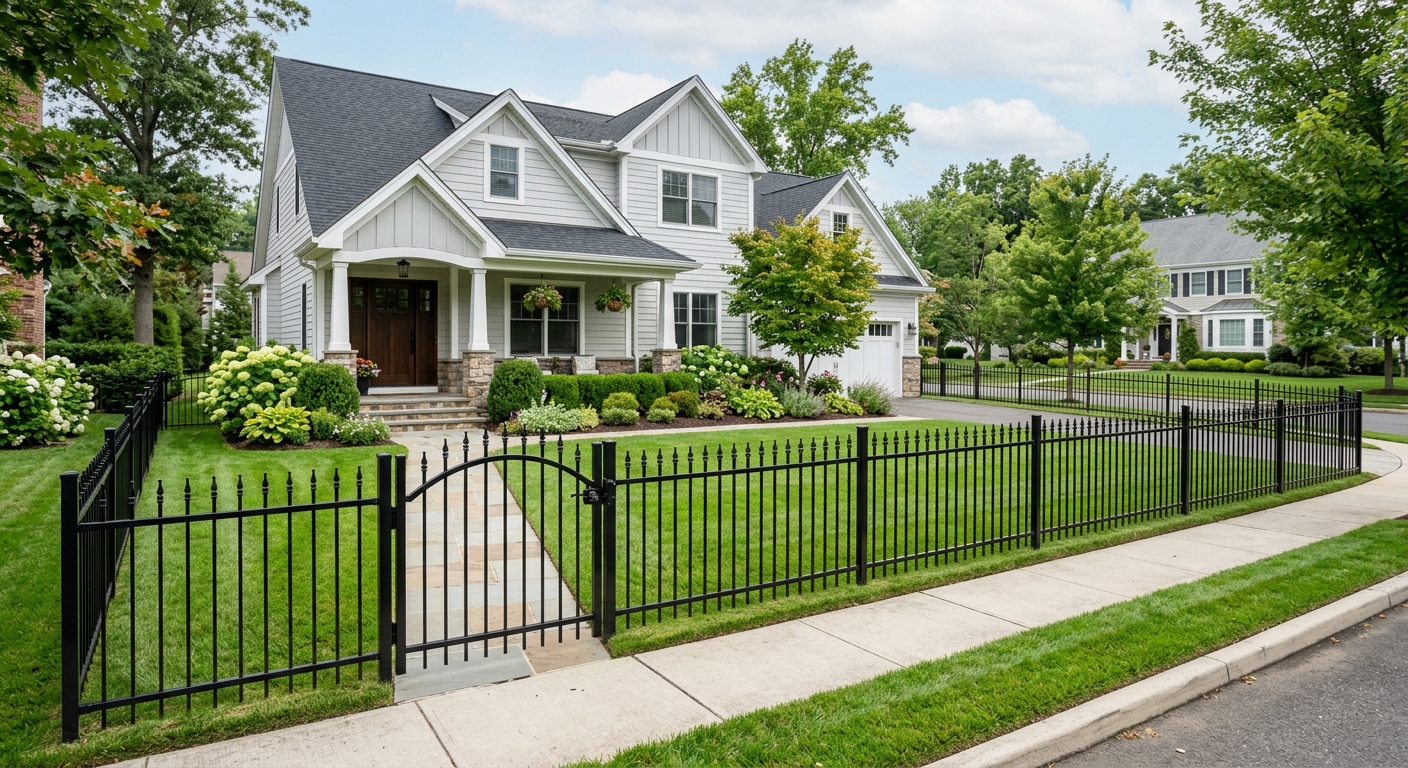
Fencing options and costs in North Cowichan
In North Cowichan, fencing decisions usually start with how much privacy you want and how much upkeep you’re willing to budget. With 62.5% of dwellings being single-detached houses and homeowners making up 76.9% of households, many properties are eligible for boundary upgrades—so demand for fencing is steady across the Cowichan Valley, including areas like Lake Cowichan Road corridor and the Duncan area edges. In practice, your cost reflects more than material choice: Vancouver Island’s moderate coastal frost (often only about 45–60 cm) still requires posts set below frost depth to reduce heaving and long-term leaning, and the Strait of Georgia wind regularly tests fence bracing and panel design.
North Cowichan quotes also vary because access can be tricky—rock pockets, slopes, and wet winter ground slow down digging and alignment. That’s why even the same “6 ft privacy fence” can land in different totals when one site needs extra concrete footings, vented panel design, closer post spacing, or longer set-back work around shrubs, driveways, and existing fences. Availability can swing slightly by season; the busiest stretches tend to be late spring into summer when crews are booking installation slots.
To help you compare apples to apples, below are typical material ranges you’ll see for installations in this tier. Use the table to anchor your expectations, then confirm site factors (length, gate count, post depth, and removal) when you request an itemised quote.
| Material |
Lifespan |
Maintenance |
Privacy Rating |
Price per Linear Foot |
| Pressure-treated pine (standard wood) |
10–15 years |
Stain/seal every 2–3 years; inspect posts and hardware yearly |
High (solid panels) |
$55 – $85 |
| Cedar (natural rot resistance) |
15–20 years |
Light staining or sealing every 2–4 years; tighten hardware |
High (solid panels) |
$70 – $105 |
| Vinyl / PVC (no-maintenance) |
20–30 years |
Wash as needed; no staining |
Medium to High (solid styles) |
$70 – $110 |
| Chain-link (galvanized steel) |
25–35 years |
Occasional rinse; check tension and end posts |
Low (open mesh) |
$35 – $60 |
| Aluminum ornamental |
25–40 years |
Wash; touch-up paint rarely needed |
Low to Medium (decorative pickets) |
$80 – $140 |
| Composite / recycled material |
20–30 years |
Minimal washing; inspect for fastener issues |
High (board-style) |
$95 – $150 |
Prices are estimates only and vary by project scope, site access and material selection.
What affects the price of fencing in North Cowichan
In North Cowichan, even a “like-for-like” fence can swing 30–50% between quotes because the hidden drivers (post depth, concrete setting, wind resistance, and site conditions) are different from yard to yard. Across British Columbia—especially between coastal and more inland frost patterns—contractors also price labour differently based on crew availability, hauling/disposal distances, and how much time the crew expects for alignment and post-setting in wet ground. That’s why the region’s typical wood installation band of $55 – $85 per linear foot may move higher when concrete footings, heavier bracing, or additional rework are required.
One of the biggest technical levers is frost and post depth. Frost depth isn’t just a measurement—it dictates how deep posts must be set. In practice on Vancouver Island and the Coast, posts are commonly buried around 75–90 cm to sit below frost movement, and that often means deeper holes and longer posts than people expect. Frost protection is especially important on older yards and clay-rich, saturated soils, where heaving and leaning show up after a few winters.
Wind exposure also matters. Coastal gusts can pressure-test solid privacy fences, so solid panels may need closer post spacing, stronger rails, or vented/laminated designs. Meanwhile, mild but wet conditions can accelerate rot on poorly treated wood, increasing maintenance and early component replacements.
Concrete examples from local jobs: (1) a straight 60 ft run on a flat lawn with good access may stay near the lower wood range, while (2) the same length with slope requiring stepped rails and extra layout time can push the total toward the top end. (3) If your fence includes two gates and a removal haul-out, disposal and heavier hardware can add several hundred to over a thousand dollars. If you’re comparing materials, vinyl/PVC often starts higher than wood but can justify itself when you want to avoid repeat staining—typical vinyl installs fall in the $70 – $110 range, while chain-link may sit lower when privacy isn’t the priority.
| Price Factor |
Why It Matters |
Cost Impact |
| Fence length in linear feet |
The labour and number of posts scale directly with total length |
Major driver (often the largest share of total cost) |
| Post depth required |
Frost movement dictates how long posts must be and how deep holes are dug |
Can add 10–25% depending on soil and access |
| Post setting method |
Concrete-set posts stabilize better but require more materials and labour time |
Often +5–20% versus gravel pack in comparable conditions |
| Material choice |
Cost of boards/panels and hardware varies widely by system |
Usually the difference between low and mid/high total budgets |
| Gate count and type |
Drive-through and wider walk gates require heavier frames, hinges, and latching |
Commonly +$600 to +$2,000+ overall depending on size and number |
| Grade and terrain |
Slopes require stepped or raked panel layouts and extra measuring |
Can add 5–15% for layout and waste |
| Old fence removal and disposal |
Demolition, hauling, and dump fees are time-consuming |
Often +$250 to +$1,500 depending on volume and access |
| Permit fees and survey / property line locate |
Documentation and locate work prevents encroachment and redesign costs |
Can add modest fixed cost (especially with new property line verification) |
Permits & regulations in British Columbia
In British Columbia, fence rules are tied to property lines, setbacks, and—depending on location and height—whether a permit is required. As a practical guideline used by many municipalities on Vancouver Island, fences above roughly 2.0 m (6.5 ft) at the rear and about 1.0–1.2 m (3–4 ft) at the front or corner may require a building permit. Even when a permit isn’t required, your fence must still follow the applicable zoning and property line requirements, including any local setback bylaw.
Before digging, always call for utility locates. In BC, use BC 1 Call (and ensure your contractor is registered and marks utilities before post-hole work begins). If you’re fencing a boundary dispute area, get a survey or at least a property-pin locate so you’re not building across the wrong line—this is a common reason for costly rework in neighbourhoods with older boundary markers.
Shared fence maintenance is another common question. Line-fences and shared responsibilities are governed by provincial line-fences legislation, so it’s worth confirming who maintains the fence and how costs should be shared if you’re working along a shared boundary.
Step-by-step to verify your contractor: (1) confirm licensing status through the province’s public registry where applicable for the contractor’s business type; (2) ask for a certificate of insurance (liability) showing sufficient coverage for your project; (3) request proof of clearance/coverage for workplace protection (WSBC/WCB) so you know the crew is properly covered; and (4) keep copies of these documents with your contract. If the contractor can’t provide clear documentation promptly, that’s a major warning sign.
Choosing the right fence material for North Cowichan
Choosing the right fence material in North Cowichan is mostly about balancing privacy, maintenance, budget, and how each product handles coastal wetness and wind. Pressure-treated pine is the most budget-friendly starting point, but it’s also the one that typically needs regular staining or sealing every 2–3 years to slow down greying and moisture damage. Cedar looks great and naturally resists rot better than standard pine, yet it still benefits from periodic sealing to maintain colour and reduce premature surface splitting.
Vinyl/PVC is popular on Vancouver Island because it’s low-maintenance and doesn’t require staining, but extremely cold snaps can make low-quality vinyl more prone to cracking. Chain-link is the lowest-cost option and often lasts the longest with minimal upkeep, but it does not provide privacy unless you add slats or plant screening. Aluminum ornamental gives a clean, rust-resistant look (powder-coated systems perform well near the coast), with privacy typically limited to a decorative “barrier” feel rather than full screening.
On posts: even with mild coastal frost, you still need proper embedment. With a shallow frost line on Vancouver Island (roughly 45–60 cm), many residential systems still bury posts about 75–90 cm to reduce the risk of frost heaving and leaning over time. Concrete-set posts are often recommended where soils are disturbed, wet, or clay-rich, and for gates where loads are higher. Wind off the Strait of Georgia also pushes design choices—solid fences catch more wind, so heavier rails and closer spacing can be required.
As a dollar example, if pressure-treated pine comes in around $55 – $85 per linear foot and vinyl is around $70 – $110, the vinyl premium can be justified when you want to avoid repeat staining and you plan to stay in the home long-term—especially in yards where maintaining a fence multiple times over a decade is realistically a burden. If your priority is maximum privacy with reasonable upkeep, cedar often hits a middle ground.
| Material |
Cold Tolerance |
Lifespan |
Annual Maintenance |
Best For |
Price Band |
| Pressure-treated pine |
Good (with proper finishing and quality hardware) |
10–15 years |
Minor inspection; plan 2–3 year staining/sealing cycle |
Budget-focused privacy |
$55 – $85 |
| Cedar |
Good to very good |
15–20 years |
Light sealing/conditioning every 2–4 years |
Natural appearance with better rot resistance |
$70 – $105 |
| Vinyl / PVC |
Fair to good (quality matters in cold snaps) |
20–30 years |
Wash as needed; check fasteners occasionally |
Low-maintenance privacy |
$70 – $110 |
| Chain-link |
Very good |
25–35 years |
Rinse; check tension/end posts |
Security with open airflow |
$35 – $60 |
| Aluminum ornamental |
Very good |
25–40 years |
Wash; occasional touch-ups |
Durable curb appeal |
$80 – $140 |
| Composite / recycled |
Good |
20–30 years |
Minimal washing; inspect for fastener/stain variations |
High privacy with easy care |
$95 – $150 |
How to choose a fencing contractor in North Cowichan
Choosing a contractor in North Cowichan should start with verification, not price alone. In British Columbia, ask for proof of their business standing and licensing relevant to fencing work, plus liability insurance showing they can cover accidental damage during excavation. For workplace coverage, request confirmation of WSBC/WCB coverage (or clearance where applicable) so you’re not exposed if a worker is injured on your property. A reputable contractor will provide documents quickly and will include them in their quote package.
Next, get 2–3 itemised written quotes. You want line items showing labour and materials separately—posts (length and number), rails, panels, concrete/disposal, gates, hardware, and any prep such as removing an old fence. Avoid lump sums that don’t explain how post depth or concrete setting will be handled. Make sure exclusions are listed clearly: for example, who is responsible for permit pulling (if required), locating property pins, utility locates, or repairing landscaping damaged during installation.
Warranty matters. Request both the workmanship warranty length (how long they stand behind installation) and the product/manufacturer warranty. Also ask if warranties are transferable to a new owner—this can matter if you sell soon.
Payment schedule should be sensible: never pay more than 10–15% upfront, and use a holdback until substantial completion. Ask for a start date and a realistic completion timeline in writing, keeping weather contingencies in mind for wet winter ground and spring scheduling.
- Ask for proof of insurance (liability) with your job address listed if possible.
- Request WSBC/WCB coverage evidence before any digging starts.
- Confirm how they handle utility locates and show proof of marking before post holes.
- Require an itemised quote (labour, materials, posts, gates, and concrete/disposal).
- Verify that post depth/embedment method is specified (and includes frost considerations).
- Check whether concrete footings are included where soil is clay-rich/wet or for gates.
- Confirm gate hardware grade and who supplies hinges/latches/strikers.
- Ask how they handle slopes—stepped panels vs. raked rails—and who sets grading lines.
- Make sure disposal/removal is listed with volume assumptions (where possible).
- Confirm whether permit pulling (if applicable) is included or an extra.
- Get warranty terms in writing, including workmanship and product coverage details.
- Use a contract that states start date, completion estimate, and weather postponement process.
Red flags I commonly see in North Cowichan: (1) quotes that don’t specify post depth or setting method; (2) refusal to provide insurance/coverage documents; (3) asking for large upfront payments (beyond 10–15%); (4) vague scopes that omit removal/disposal or gate hardware details; and (5) no written timeline or warranty terms.
Frequently asked questions — fencing in North Cowichan
Wood vs vinyl vs aluminum fence — which is best?
In North Cowichan, the “best” option depends on whether you want maximum privacy, lowest upkeep, or a specific look. Wood (pressure-treated pine) usually comes in at the budget end, often around $55 – $85 per linear foot, but it typically needs staining/sealing every few years to resist coastal wetting and greying. Cedar costs more but tolerates rot better and usually looks warmer longer. Vinyl/PVC is often the lowest-maintenance privacy choice in coastal BC, typically around $70 – $110, but you should choose quality product—especially for coastal wind and occasional cold snaps. Aluminum ornamental is excellent for rust resistance and appearance, with mid-range pricing, but it won’t give full privacy like a solid board fence.
Do I need a permit to build a fence in British Columbia?
In British Columbia, permits depend on height, location (front/corner vs rear), and local zoning/setback rules. A common threshold used in practice is around 2.0 m (6.5 ft) for rear fences and roughly 1.0–1.2 m (3–4 ft) for front or corner areas; above those levels, a building permit is often required. That said, even if your fence doesn’t trigger a permit, you still must respect property lines and setbacks and follow utility safety rules. Before any post-hole digging, BC 1 Call utility locates are important. To avoid surprises in North Cowichan, ask your contractor to confirm whether your specific design height and location requires a permit and to state it clearly in the written scope.
How long does a wood fence last in North Cowichan?
Wood longevity in North Cowichan depends heavily on treatment quality, staining schedule, post setting, and site exposure. Pressure-treated pine often lasts about 10–15 years when properly sealed and checked for fastener and post integrity. Cedar can typically reach 15–20 years thanks to better natural rot resistance. The coastal factor is wind and persistent moisture—solid panels can experience higher wind loads, and wet soils can speed up deterioration if drainage and post embedment aren’t done correctly. Posts should be set below frost movement (commonly around 75–90 cm on Vancouver Island) to reduce heaving and leaning, and gate hardware should be beefed up where loads are concentrated. If you’re expecting a long life, don’t skip sealing and yearly inspection.
Who owns and maintains a shared fence?
In British Columbia, shared fence responsibilities are generally governed by provincial line-fences legislation. If your fence sits on or along a boundary with a neighbour, ownership and maintenance duties depend on where the fence is located and how it was established. In many cases, neighbours share responsibility for maintenance and sometimes for replacement costs, but the details can vary depending on circumstances. For North Cowichan homeowners, the practical step is to confirm the property line (ideally with survey pins/locates) and then discuss maintenance/replacement expectations before construction. A solid written agreement—scope, materials, cost sharing, and timelines—can prevent disputes later, especially if one side wants a higher-privacy upgrade.
How do I find my property line before fencing?
Before fencing in North Cowichan, don’t rely only on old markers or your memory of where the fence “used to be.” The safest approach is to use a survey or have your property pins located by a qualified professional, then align the fence to the correct boundary. You should also ask contractors to confirm the line with stakeouts before digging. This matters because older housing stock is common in the area (with many homes built before 1981, per Statistics Canada, 2021 Census), and boundary markers may be less obvious than on newer subdivisions. When you’re preparing for installation, utility locates are also critical before any post holes. If you’re unsure, treat boundary verification as part of your planning costs rather than a step you postpone.
What's the most low-maintenance fence?
For low maintenance in North Cowichan, vinyl/PVC and aluminum are usually the easiest long-term options because they don’t require the same staining/sealing cycle as wood. Vinyl/PVC is a strong privacy choice and typically falls in the $70 – $110 per linear foot band, while aluminum ornamental is often higher priced but stays attractive with periodic washing, typically in the $80 – $140 range. Chain-link is also low maintenance and can last a long time, but it won’t provide privacy unless you add screening solutions. Whatever you choose, the biggest maintenance “killer” is incorrect post embedment—so even low-maintenance materials depend on proper post setting below coastal frost movement. A good installation reduces future leaning and reduces repairs.