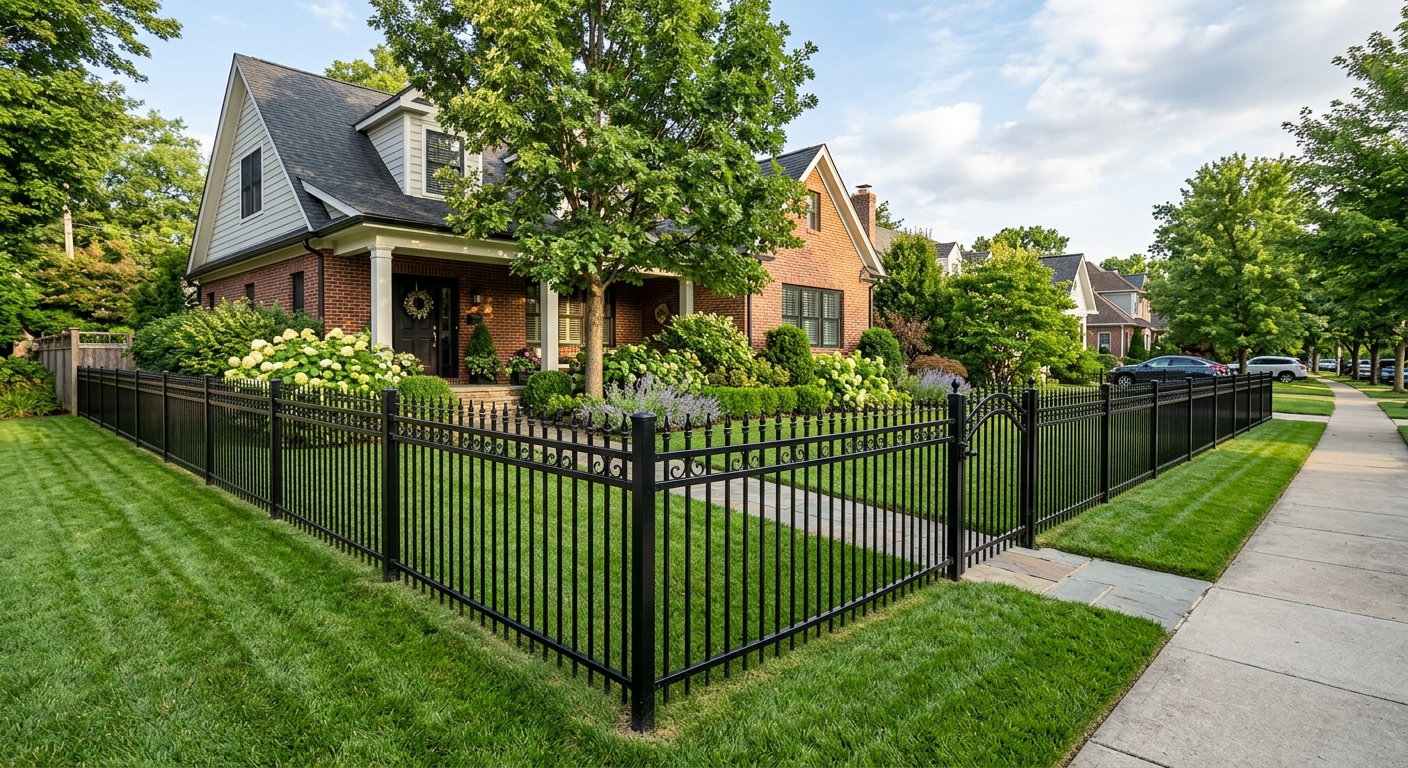
Fencing options and costs in Maple Ridge
Maple Ridge is a fast-growing community in the Lower Mainland–Southwest, and that shows up in constant residential fencing demand. With 79.1% of households owning their homes and 52.6% of dwellings being single-detached, many properties need new fencing, privacy upgrades, or replacement of older boards as neighbourhoods infill and families settle in. (Statistics Canada, 2021 Census). In practical terms, every detached lot is a potential customer, and backyard boundaries come up quickly—especially in areas like Pitt Meadows-style commuter corridors and the south Maple Ridge / West Central pockets where older housing stock is common.
Pricing in the Lower Mainland–Southwest is shaped by “mild but not trivial” frost and frequent wet weather. Posts still need to be set below local frost action to reduce heaving risk during freeze–thaw cycles, and Fraser Valley–type soils often hold moisture, which means deeper holes, more concrete for privacy panels and corners, and more crew labour than a dry-site install. At the same time, coastal BC conditions can accelerate wood weathering if you skip proper staining or choose untreated materials.
Availability of crews is another cost driver: when multiple streets need simultaneous upgrades, scheduling can tighten and labour hours rise. To help you compare quotes fairly, the table below summarizes common materials, realistic lifespan expectations, privacy performance, and typical installed ranges for Maple Ridge projects.
| Material |
Lifespan |
Maintenance |
Privacy Rating |
Price per Linear Foot |
| Pressure-treated pine (standard wood) |
10–15 years |
Stain/seal every 2–3 years |
Good (semi-solid options); 6–8 ft boards |
$55–$95 |
| Cedar (natural rot resistance) |
15–25 years |
Light staining/refresh every 3–4 years |
Good to very good (solid panel styles) |
$70–$115 |
| Vinyl / PVC (no-maintenance) |
20–30 years |
Rinse as needed; no staining |
Very good (solid privacy styles) |
$75–$130 |
| Chain-link (galvanized steel) |
20–35 years |
Minimal; occasional tension adjustment |
Low to moderate (privacy screens optional) |
$30–$55 |
| Aluminum ornamental |
25–40 years |
Rinse; occasional inspection |
Low (decorative pickets) |
$90–$170 |
| Composite / recycled material |
20–30 years |
Low; periodic cleaning |
Good (solid/composite privacy panels) |
$95–$145 |
Prices are estimates only and vary by project scope, site access and material selection.
What affects the price of fencing in Maple Ridge
In Maple Ridge, two contractors can quote the “same” fence and still end up 30–50% apart once the fine print is reviewed. The main reason is that fencing work is labour-heavy and highly site-specific—Lower Mainland–Southwest conditions often require deeper post holes, extra protection for materials in wet weather, and more time for setup and alignment on real properties. Even within the same region, crews may price differently based on how they handle frost-action embedment and how they choose to set posts in moisture-retentive soils.
Lower Mainland–Southwest frost action means posts generally must be set deeper than a purely cosmetic fence might—often by roughly 4–6 inches below the design frost depth to limit heaving during freeze–thaw. In the cold Ontario/Alberta style examples you may see online, embedment can run 1.5–2.0 m and drives longer posts, concrete setting, and higher material cost; Maple Ridge is milder, but contractors still commonly go deeper than “bare minimum” and use concrete for privacy panels, corner posts, and gates to avoid movement. Wind exposure in coastal BC is typically less punishing than open Prairie sites, but wet coastal cycles still swell soil and make straight runs harder to build without solid post foundations.
In Maple Ridge specifically, a few local conditions often raise cost. For example: (1) clay-heavy or consistently wet backyard soils can require extra excavation time and more concrete for stable set; (2) sloped lots (common in older neighbourhood pockets) usually need stepped or raked panels, which adds layout time and sometimes specialty rails; (3) if a fence is near existing landscaping or driveways, access limits may force more hand-digging and careful material handling. If your current fence is failing, removal and disposal can add labour before a new fence even starts.
Material choice then interacts with these site realities. If you choose chain-link, your budget is often closer to the lower band (around $30–$55 per linear foot). If you move to vinyl privacy, the higher structural material and stronger posts typically push you toward the mid-to-upper band (around $75–$130 per linear foot), especially on corner and gate sections where wind and latch forces concentrate.
| Price Factor |
Why It Matters |
Cost Impact |
| Fence length in linear feet |
Every linear foot requires rails, posts, hardware and labour |
Largest variable; small measurement changes move total cost |
| Post depth required |
Frost action determines embedment to prevent heaving |
More digging + longer posts + sometimes more concrete |
| Post setting method |
Concrete vs. gravel pack vs. driven posts affects stability |
Concrete setting typically increases cost but reduces future movement |
| Material choice |
Material properties and structural requirements differ |
Vinyl/metal cost more than standard wood and chain-link |
| Gate count and type |
Gates need bracing, heavier hardware, and accurate alignment |
Each gate adds framing, hinges/latches and labour time |
| Grade and terrain |
Slopes require raking/stepping and extra layout |
More labour and potential material off-cuts |
| Old fence removal and disposal |
Hauling and prep aren’t optional |
Can add a noticeable portion of the project total |
| Permit fees and survey / property line locate |
Some installs need permits and confirmed boundaries |
May add fees and scheduling time |
Permits & regulations in British Columbia
In British Columbia, fence height rules commonly trigger permitting when you’re building taller barriers—especially where you’re planning privacy heights near or above typical thresholds such as about 2.0 m (6.5 ft) at the rear and roughly 1.0–1.2 m (3–4 ft) toward the front or corner. The exact requirement can vary by municipal bylaws and how the fence relates to your lot and setbacks, so you should confirm with the City of Maple Ridge before materials arrive. Regardless of height, all fences must stay within property lines and comply with setback requirements.
Before you dig any post holes, call for utility locates. In BC, use BC 1 Call so crews mark underground services and you avoid damaging power, gas, or telecom lines. Also plan your boundary work: obtain a survey or have your property pins located before installing, particularly if neighbouring fences don’t line up. Shared fence ownership is handled through provincial line-fences legislation—so document what’s shared, what you’re replacing, and where responsibility sits.
Steps to verify your contractor in Maple Ridge / BC: (1) confirm their business licence and professional standing via the appropriate online business registry; (2) ask for a current certificate of liability insurance showing adequate coverage for fencing work; (3) request proof of workers’ compensation coverage (WSBC/WCB clearance letter or equivalent status document). If a contractor can’t provide these documents promptly, treat it as a red flag and pause pricing comparisons.
Choosing the right fence material for Maple Ridge
Choosing the right material for your Maple Ridge fence is mostly about matching your priorities—privacy, low maintenance, budget, and lifespan—to the wet cycles and mild frost action of the Lower Mainland–Southwest. Pressure-treated pine is typically the budget-first choice, but it needs periodic staining or sealing every 2–3 years to reduce grey weathering and to keep moisture from working into the boards. Cedar brings natural rot resistance and a warmer look, but you still need maintenance to protect the finish. Vinyl/PVC offers “no-stain” convenience, yet it can become brittle in extreme cold and generally performs best with correct install practices like proper post support and expansion considerations. Chain-link is the lowest installed cost and longest-life option, but it won’t deliver true privacy unless you add privacy slats or screen systems.
For post foundations, you can’t treat Maple Ridge like a purely coastal surface job. Even though frost action is milder than many inland regions, contractors commonly set posts deeper than an absolute minimum and often use concrete for privacy panels, corners and gates to prevent movement. Wind matters most at gates and long runs: stronger bracing and correctly spaced posts help the fence resist racking when the latch catches and when coastal rain-slick ground affects footing.
To see where the price difference makes sense, consider a simple privacy upgrade: if pressure-treated wood lands around $55–$95 per linear foot and vinyl/PVC is about $75–$130, the extra cost can be justified when you want lower lifetime upkeep and consistent appearance—especially if you’re replacing an older fence built before 1981, where boards often fail first at the bottom rails and posts. (Statistics Canada, 2021 Census).
| Material |
Cold Tolerance |
Lifespan |
Annual Maintenance |
Best For |
Price Band |
| Pressure-treated pine |
Good (with proper sealing) |
10–15 years |
Low to moderate; inspect and spot-treat |
Value-focused homeowners needing solid privacy |
$55–$95 |
| Cedar |
Good (naturally resistant) |
15–25 years |
Low to moderate; re-stain/refresh as needed |
Appearance + rot resistance without premium metal price |
$70–$115 |
| Vinyl / PVC |
Good (best with correct install) |
20–30 years |
Very low; rinse and check fasteners |
Low-maintenance privacy and long-term appearance |
$75–$130 |
| Chain-link |
Very good |
20–35 years |
Very low; occasional tension/hardware checks |
Security/perimeter definition on a tighter budget |
$30–$55 |
| Aluminum ornamental |
Excellent (no rust) |
25–40 years |
Very low; wash and inspect |
Decorative curb appeal with lasting corrosion resistance |
$90–$170 |
| Composite / recycled |
Good (depends on brand quality) |
20–30 years |
Low; cleaning and visual inspection |
Durable privacy with reduced upkeep |
$95–$145 |
How to choose a fencing contractor in Maple Ridge
When you’re hiring in British Columbia, don’t rely on “good reviews” alone—verify coverage and workmanship. First, ask for proof of general liability insurance (certificate of insurance). Second, confirm workers’ compensation coverage with WSBC/WCB clearance documentation so you’re not exposed if someone gets injured on your property. Third, confirm the contractor’s business credentials for BC and ask how they handle permits when required. If they won’t provide documents or blur details, keep shopping.
Get 2–3 itemised written quotes rather than one lump sum. A solid quote breaks labour and materials separately—posts, rails, panel type, gates, hardware, concrete, and any special steps for slope, access, or removal. Read exclusions carefully: does the quote include permit pull (when needed), property line locate/survey costs, and disposal? If you see “removal by others” or “concrete allowance may vary,” ask for a written clarification before signing.
Warranty also matters. Ask for (1) the workmanship warranty length, (2) the manufacturer/product warranty for the fence system, and (3) whether coverage transfers if you sell your home. Payment schedules should be conservative: never pay more than about 10–15% upfront, and use a holdback until the job is complete and any punch-list items are done. Finally, request a start date and completion estimate in writing, including weather contingency language since wet soil can slow excavation.
- Ask for certificate of liability insurance and verify policy holder and coverage limits
- Request WSBC/WCB clearance or proof of current workers’ compensation coverage
- Confirm their BC business registration details and trade contact info
- Insist on itemised labour and materials (not “materials and labour included” only)
- Get a measured plan showing fence length, number of gates, and post spacing
- Confirm post setting method (concrete vs. gravel pack) and where concrete is used
- Ask whether permit pull is included and who submits it if required
- Clarify whether property pins/survey locate is customer-provided or included
- Confirm removal and disposal is included (and for what materials: wood, posts, chain-link)
- Request warranty terms for workmanship and manufacturer coverage, in writing
- Use a payment schedule with no more than 10–15% upfront and holdback until completion
- Require an estimated timeline and cleanup expectations at the end of each day
If a contractor promises “cheap vinyl” but can’t explain post depth and concrete setting, uses unbraced gate framing, avoids discussing property line verification, refuses to provide insurance/WSBC proof, or can’t provide a written scope that includes removal/disposal and permit responsibility, those are common Maple Ridge red flags.
Frequently asked questions — fencing in Maple Ridge
How do I compare fencing quotes?
To compare fencing quotes in Maple Ridge, focus on scope and build method, not just the final number. Ask each contractor for an itemised breakdown of materials (posts, rails, panel type, hardware) and labour, plus details on post setting depth and whether posts are set in concrete for privacy panels, corners, and gates. Confirm the total linear feet measured, number and type of gates, and how slope is handled (stepped vs. raked). In Lower Mainland–Southwest jobs, soil moisture and freeze–thaw cycles can increase hole depth and concrete use, so the quote should explain the foundation approach—otherwise you may see swings comparable to a 30–50% difference. As a pricing sanity check, chain-link often comes in around $30–$55 per linear foot, while vinyl/PVC is commonly higher.
How long does fence installation take in Maple Ridge?
Fence installation in Maple Ridge is usually fastest on straightforward, level yards with clear access for equipment and stacked materials. Typical residential timelines can range from a couple of days for a short chain-link run to several days for wood or vinyl privacy fencing with multiple corners and gates. The schedule also depends on post-hole excavation time—wet or clay-heavy soils often slow digging—and cure time if concrete setting is used. Weather matters: heavy rain can delay excavation and require re-mobilization. A good contractor will provide a start date and completion estimate in writing and explain how they’ll manage frost-risk days during colder weeks. If removal is included, tack on additional time for dismantling, hauling, and site cleanup before installation begins.
Can I install a fence on a slope in Maple Ridge?
Yes, you can install a fence on a slope in Maple Ridge, but it should be built using a design that respects drainage and fence alignment. Most crews handle slopes with stepped panels (best for more noticeable changes) or raked panels that follow the grade smoothly. The “correct” method depends on fence style, rail configuration, and how uniform you want the top line to look. Expect a bit more layout time and sometimes extra materials for trimming and rail alignment. Also, if the slope affects footing stability (for example, where soil stays saturated), your contractor may adjust post depth and setting method to prevent future movement. Ask for details in the quote so you understand whether costs reflect stepped/raked construction or whether they assumed a flat grade.
What is the most weather-resistant fence for Maple Ridge's climate?
For Maple Ridge and the Lower Mainland–Southwest’s wet cycles, vinyl/PVC privacy fencing and properly installed metal options tend to be among the most weather-resistant. Vinyl doesn’t rot and doesn’t require staining, so it handles moisture well—though correct installation and proper post support still matter in colder snaps. Aluminum ornamental is also highly resistant to corrosion, which is useful in damp coastal conditions. If you prefer wood, cedar is one of the better rot-resistant choices, but it still benefits from maintenance to keep its finish intact. The most weather-resistant “overall” often comes down to your maintenance comfort: if you want low upkeep, vinyl/PVC at around $75–$130 per linear foot is commonly chosen, while chain-link can be very durable but offers limited privacy.
How do I prevent wood fence rot in Maple Ridge?
Preventing wood fence rot in Maple Ridge is mostly about keeping water away from the parts that hold moisture. First, choose rot-resistant wood (cedar) or pressure-treated lumber that’s appropriate for ground contact. Second, don’t let posts sit in muddy, waterlogged pockets—proper hole depth and correct post setting matter, especially around corners and gates where movement starts faster. Third, insist on good airflow through the design and avoid sealing in trapped moisture. Finally, plan for maintenance: pressure-treated pine typically needs staining or sealing about every 2–3 years, and cedar may need refresh work every few years depending on sun and rain exposure. If you’re replacing an older fence on a property built before 1981, you’ll often find failure starts at lower rails and post bottoms, so focus repairs there early. (Statistics Canada, 2021 Census).
What is the cost per linear foot for fencing in Maple Ridge?
In Maple Ridge, fencing cost per linear foot depends on material, your site conditions, and what the quote includes (posts set in concrete, gates, slope adjustments, and removal/disposal). As a practical range for typical installed projects in the Lower Mainland–Southwest, chain-link often lands around $30–$55 per linear foot, wood fencing around $55–$95 per linear foot, and vinyl/PVC commonly around $75–$130 per linear foot. Aluminum/metal is often higher, roughly $90–$170 per linear foot depending on style and height. Your final number can move based on frost-action embedment needs, deeper holes in wetter soils, and whether the job includes gate hardware upgrades and haul-away disposal.