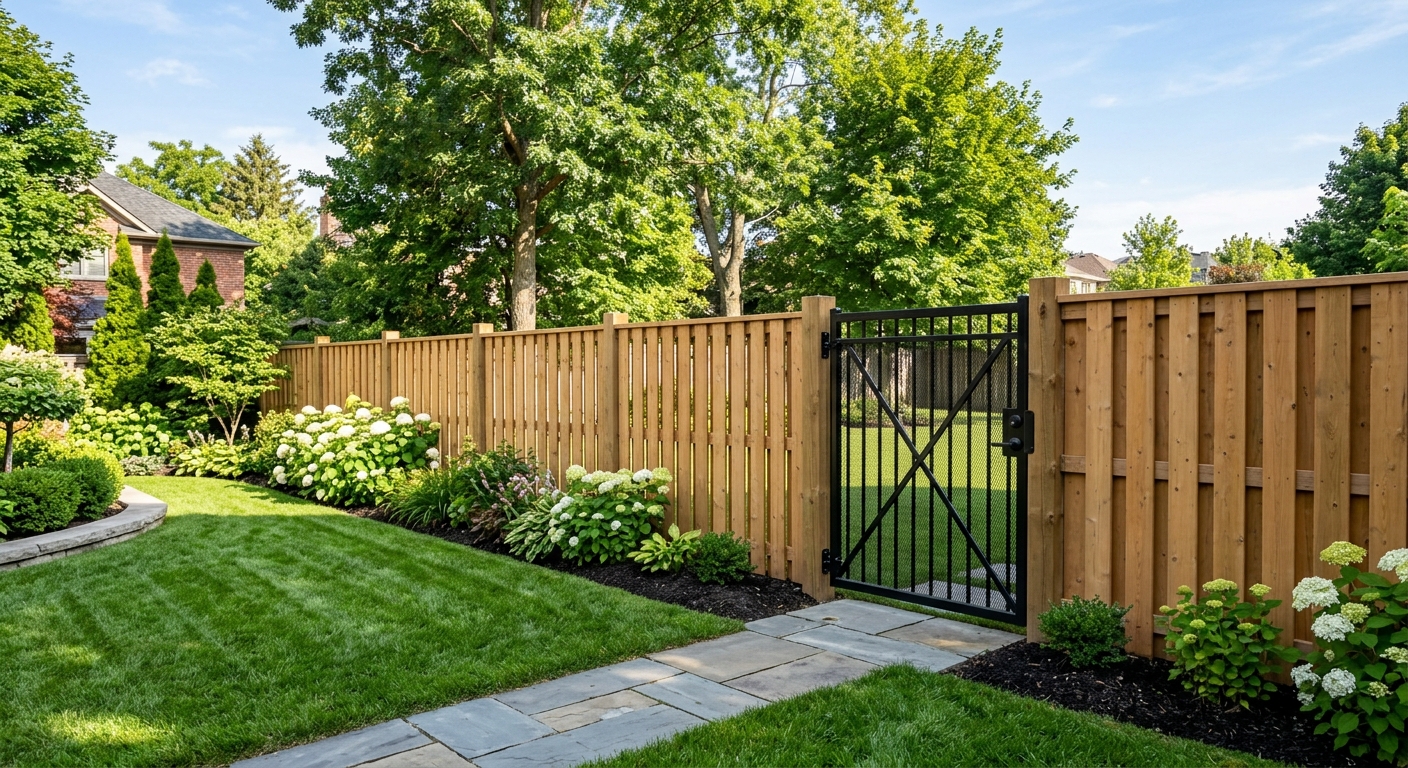
Fencing options and costs in Surrey
Surrey homeowners have a lot of choices when it comes to fencing, and costs tend to line up with the kind of homes you’re protecting. With single-detached houses making up 32.8% of dwellings and 69.5% of households owning their home (Statistics Canada, 2021 Census), there’s steady demand for privacy, pet containment, and yard definition—especially in fast-growing, established neighbourhood pockets like Fleetwood and Guildford. The Lower Mainland–Southwest market also shapes pricing: Surrey’s climate is “mild but not trivial” when you look at wind and wet soils. Crews still plan for frost-related movement by setting many posts slightly deeper and often adding concrete to the highest-stress locations (corner posts, gate posts, and privacy panel lines) to reduce wobble and heaving.
Because Lower Mainland–Southwest soils can be wetter than you’d expect, deeper holes and more labour are common even though the region’s frost isn’t as severe as inland provinces. That pushes typical installed fencing budgets into predictable bands: chain-link stays the lowest-cost route, wood is usually mid-range, vinyl/PVC costs more due to material and structural requirements, and aluminum/metal is often priced highest because of fabrication and frame work. Contractor availability also plays a role; in busy months, well-scoped installs can keep schedules tight, while complex grades or removal/replacement work can stretch timelines and labour costs.
Below is a quick way to compare the common materials Surrey homeowners choose, then we’ll break down what most influences the final quote in Section 2.
| Material |
Lifespan |
Maintenance |
Privacy Rating |
Price per Linear Foot |
Price Range |
| Pressure-treated pine (standard wood) |
10–20 years |
Stain or seal every 2–3 years |
Good (solid pickets) |
~$22–$35 |
$55 – $95 |
| Cedar (natural rot resistance) |
15–25 years |
Light staining every 2–4 years (or partial weathering) |
Excellent (solid cedar panels) |
~$28–$45 |
$65 – $110 |
| Vinyl / PVC (no-maintenance) |
20–30 years |
Rinse occasionally; no painting |
Very good (solid panels) |
~$30–$55 |
$75 – $130 |
| Chain-link (galvanized steel) |
20–40 years |
Minimal; occasional tension/repairs |
Low (open mesh) |
~$15–$25 |
$30 – $55 |
| Aluminum ornamental |
25–40 years |
Wash; no rust with proper coatings |
Low to medium (ornamental spacing) |
~$28–$65 |
$90 – $170 |
| Composite / recycled material |
20–30 years |
Low; wash and inspect annually |
Good (solid boards) |
~$32–$60 |
$85 – $140 |
Prices are estimates only and vary by project scope, site access and material selection.
What affects the price of fencing in Surrey
In the Lower Mainland–Southwest, two quotes for “the same fence” can differ by 30–50% because Surrey jobs rarely start on a flat, easy site with no removals. Labour rates, haul distance, and how crews protect posts in wetter soils all affect totals. Even in the same city, one yard might be reachable from the driveway while another requires gate access, tight turns, or hauling over soft landscaping—so labour time changes. The material choice then determines how much structural work is needed: chain-link can stay closer to the lower band, while vinyl/PVC and solid privacy systems push costs toward the higher end of their ranges.
A major driver is frost and post embedment. Frost depth is the reason posts must be set below the local frost depth to limit heaving; published Canadian guidance often targets about 3 feet minimum embedment in many parts of Canada. In a cold Ontario/Alberta context, contractors frequently need posts set around 1.5–2.0 m, which drives deeper holes, longer posts, and more concrete—material and labour up. Surrey is milder, but crews still commonly place posts deeper than “just enough” to account for movement in wet ground; that often means extra digging and sometimes concrete setting for corner posts, gate posts, and sections carrying repeated wind load.
Wind exposure matters too. While Surrey isn’t the Prairie wind zone, coastal-style gusts and rain can stress solid panels. Coastal BC’s wet climate also accelerates rot if pressure-treated or cedar isn’t installed with the right spacings and treatment details. In Surrey, that can add cost when crews include additional bracing or choose cedar/vinyl to reduce long-term upkeep. As a practical example, upgrading from pressure-treated pine (often nearer the $55–$95 range) to vinyl/PVC (commonly $75–$130 installed) can be justified on long runs where you want to avoid repeated staining visits. And if you’re replacing an older fence—19.6% of Surrey’s homes were built before 1981 (Statistics Canada, 2021 Census)—expect more labour for removal, haul-off, and repairing existing footing footprints.
| Price Factor |
Why It Matters |
Cost Impact |
| Fence length in linear feet |
Every additional foot requires posts, rails, and fasteners |
Largest driver; scales material and labour |
| Post depth required |
Frost movement risk affects hole depth and post length |
More excavation and more concrete/treated lumber |
| Post setting method |
Concrete vs gravel pack vs driven posts changes stability |
Concrete-set areas add cost but reduce future lean |
| Material choice |
Vinyl and PVC need correct framing; cedar needs quality grading |
Switching pine → vinyl can move you toward the higher band |
| Gate count and type |
Gates require stronger frames, hinges, and latching hardware |
Each gate can add a meaningful labour/material premium |
| Grade and terrain |
Slopes require stepped panels or raked rails |
More cutting, measuring, and longer install time |
| Old fence removal and disposal |
Disposal fees and additional labour for dismantling |
Can add hours and dump costs |
| Permit fees and survey / property line locate |
Accurate line work prevents disputes and rework |
May add administrative and professional costs |
Permits & regulations in British Columbia
In British Columbia, fences above a height threshold often require a building permit, and Surrey projects are typically planned with these common limits in mind: rear-yard fencing is frequently treated as requiring a permit at around 2.0 m (6.5 ft), while front-yard or corner side yards are often lower (about 1.0–1.2 m or 3–4 ft, depending on the location). Fences also must respect property lines and municipal setback rules; the practical takeaway for Surrey homeowners is to confirm your fence location before any post-hole work starts.
Before digging any post holes, arrange utility locates—call BC 1 Call so underground services are marked. Even if you’ve fenced there before, locations can shift due to prior work or historical service reroutes. Next, use a survey or property pin locate to verify where you can legally build; this helps avoid encroachment disputes with neighbours. Where fences are shared, line-fence rules in provincial legislation can apply to how responsibilities are handled between adjacent owners.
Contractor-check step-by-step: ask for their business details and then verify (1) British Columbia licensing information through the relevant public registry entry for their contracting category, (2) liability insurance by requesting a current Certificate of Insurance naming the proper insured party, and (3) WSIB/WCB coverage via their clearance/registration documentation for the type of work they’ll perform. If they can’t provide current documentation quickly, treat it as a red flag—especially for excavation and gate hardware work.
Choosing the right fence material for Surrey
The “right” fence in Surrey comes down to your priorities—privacy, low maintenance, budget, and how long you want to wait before major repairs—plus the way Lower Mainland–Southwest conditions behave. Pressure-treated pine is often the budget starting point, but it typically needs staining or sealing every 2–3 years to prevent grey weathering and to protect against moisture-driven wear. Cedar is naturally rot-resistant and usually looks warmer, but it still benefits from maintenance to keep the colour and reduce surface cracking over time. Vinyl/PVC is popular for no-stain convenience and can suit privacy needs with solid panel systems, but it can become brittle if extreme cold coincides with poor installation practices—so correct post spacing and quality framing matter. Chain-link is the lowest-cost route and is long-lived, but it offers little privacy unless you add a screen or privacy slats. Aluminum ornamental is mid-to-high cost but won’t rust and gives clean lines, though it’s typically not a true privacy solution because of open picket spacing.
For post requirements, Surrey’s frost movement risk is why most installs still use deeper holes than a “surface-only” approach. In practice, contractors often set posts deeper and may concrete-set key posts (corners and gates) even when other sections use gravel packing, to reduce lean during wet freeze-thaw cycles. Wind load in the Lower Mainland–Southwest also means bracing matters for solid panels; tighter alignment and stronger corner/bracing assemblies can prevent bounce and panel racking.
Dollar example: if you’re comparing pressure-treated wood around the $55–$95 installed range to vinyl/PVC around $75–$130, the extra can make sense on long backyard runs where you’d otherwise budget for repeated staining and repairs. If you only need to close off a side yard for pets, chain-link near the $30–$55 band can be a more economical fit—then upgrade later when you decide you want full privacy.
| Material |
Cold Tolerance |
Lifespan |
Annual Maintenance |
Best For |
Price Band |
| Pressure-treated pine |
Good (when properly set and sealed) |
10–20 years |
Inspect; plan stain/seal every 2–3 years |
Budget privacy with conventional upkeep |
$55–$95 |
| Cedar |
Very good (with quality install details) |
15–25 years |
Inspect; stain/light seal every 2–4 years |
Natural look, strong rot resistance |
$65–$110 |
| Vinyl / PVC |
Good (avoid shortcuts in framing) |
20–30 years |
Minimal rinse and inspection |
No-maintenance privacy |
$75–$130 |
| Chain-link |
Good |
20–40 years |
Minimal; tension checks, occasional repairs |
Security and budget pet control |
$30–$55 |
| Aluminum ornamental |
Excellent |
25–40 years |
Wash and inspect hardware |
Low-rust curb appeal (not privacy-first) |
$90–$170 |
| Composite / recycled |
Good |
20–30 years |
Low; seasonal wash and visual checks |
Durable solid panels with less upkeep |
$85–$140 |
How to choose a fencing contractor in Surrey
Start by verifying British Columbia contracting coverage before you sign anything. For licensing, confirm the contractor’s applicable business information and category through the appropriate public registry entry for their work scope. For liability insurance, request a current Certificate of Insurance showing active coverage and ask who will be listed as the insured/paid-on-party where applicable. For worker coverage, ask for proof of WSIB/WCB clearance or registration documentation (as applicable to the contractor’s workforce and trade). If they can’t provide documentation within the same day or won’t share it in writing, don’t proceed.
Next, ask for 2–3 itemised written quotes that break down labour and materials (posts, rails, fasteners, concrete, gate frames, hardware, removal/disposal, and any concrete-setting labour). Avoid “lump sum only” quotes where scope items are vague—especially for grade handling, privacy screen add-ons, and whether old fence removal is included. Confirm what’s excluded: permit pulls, utility locate fees (if applicable), disposal charges, and any survey/property line locate work.
Warranty matters for both workmanship and materials. Ask for the workmanship warranty length, whether it covers post setting and alignment issues, and whether the manufacturer warranty for vinyl/metal/aluminum is separate and transferable to future homeowners. For payment, never pay more than 10–15% upfront; use staged payments and keep a holdback until the fence is complete and cleared for handover. Finally, get a start date and an installation completion estimate in writing, including weather-related contingency (especially for wet excavation days).
- Ask for proof of liability insurance (current COI) before deposit.
- Ask for WSIB/WCB clearance/registration documentation for covered workers.
- Get an itemised quote: posts, rails, concrete, gates, labour, removal, disposal.
- Confirm the post-setting method (concrete where needed vs gravel pack) in writing.
- Ensure measurements show linear footage and gate openings clearly.
- Verify who pulls permits (if required) and whether that fee is included.
- Require utility locate confirmation before digging post holes.
- Ask about slope handling: stepped panels vs raked rails, and how it’s priced.
- Check warranty terms for workmanship and materials separately.
- Use a payment schedule with 10–15% max upfront and a completion holdback.
- Confirm cleanup standards and haul-off/disposal inclusions.
- Get start and completion dates (or range) in the contract.
Red flags I see in Surrey: quotes that don’t specify post depth or setting method, “bare minimum” embedment without concrete where corners/gates need reinforcement, unclear scope on fence removal and disposal, vague warranties (only “best effort”), and contractors asking for large deposits before any onsite measurement or written plan.
Frequently asked questions — fencing in Surrey
What's the most low-maintenance fence?
In Surrey, British Columbia, vinyl/PVC is usually the closest match to “set it and forget it.” It typically sits in the $75–$130 installed band for residential privacy installs, and it doesn’t require staining like pressure-treated pine. Aluminum is also low-maintenance (often durable against coastal damp), but it’s more commonly ornamental—so you’ll only get partial privacy unless you choose a privacy-style design. Chain-link is low maintenance too, but because it’s open mesh it won’t give the privacy many Surrey homeowners want along back yards and lane-side areas. Regardless of material, the biggest maintenance difference comes from how posts are set in wet soils: solid corner and gate posts resist leaning, which reduces future repairs across all options.
How tall can my fence be in Surrey?
Fence height rules depend on whether you’re placing the fence in the front yard, side yard (corner), or rear yard. In BC, fences above common thresholds—often around 2.0 m (6.5 ft) in the rear and about 1.0–1.2 m (3–4 ft) for the front/corner—frequently trigger permit requirements. Surrey homeowners should confirm the exact height and location with the municipal requirements before installing, since a small difference in placement can change whether a permit is required. If you’re planning solid privacy panels, also consider how winds can affect the finished look: taller solid fences can need stronger bracing and more robust gate hardware, which can shift your project closer to the vinyl/wood upper bands.
Should fence posts be set in concrete here?
Often, yes in Surrey—at least for the highest-stress posts. In Lower Mainland–Southwest conditions, crews commonly concrete-set corner posts, gate posts, and the main line posts where solid panels create more leverage and racking. For other sections, some installs use a gravel pack approach where appropriate, but the decision depends on soil softness, yard drainage, and your fence height/style. The reason is movement: even though Surrey’s frost isn’t like the prairies, wet freeze-thaw cycles can contribute to heaving if posts aren’t embedded deeply and supported correctly. Concrete also helps maintain alignment over time, which reduces future repair visits and keeps your fence looking straight. A good contractor will explain the method in the written scope, not just “we’ll dig holes and set posts.”
What's the best fence for privacy?
The best privacy fence in Surrey is typically a solid-panel design in vinyl/PVC, cedar, or pressure-treated wood. Vinyl/PVC is popular because it gives consistent privacy and usually requires no staining; it’s commonly quoted around the $75–$130 installed band for typical residential projects. Cedar can offer excellent privacy and a premium look, but you’ll still want a maintenance plan to protect the wood finish from moisture exposure. Pressure-treated pine can provide strong privacy at a lower budget (often $55–$95 installed), though it needs regular sealing/staining. Chain-link by itself won’t provide privacy because of the open mesh. If you want chain-link for security and privacy, ask about privacy slats/screens as an add-on—those change the maintenance and long-term appearance.
How do I compare fencing quotes?
Compare item-by-item, not just the total. In Surrey, two installers can quote similar materials but differ in post depth, how many posts they set per spacing, whether corners and gates are concrete-set, and whether removal/disposal is included. Ask each contractor for an itemised breakdown: linear footage, gate count/type, post setting method, concrete quantity, fence height, and finish grade. Confirm warranty terms for workmanship and product separately. Also check the payment schedule: avoid contracts that ask for big deposits. As a quick reference point, if one quote lands near the $30–$55 range, it’s likely chain-link, while vinyl/PVC quotes often land in the $75–$130 range. When prices differ, the details behind the scope usually explain why.
How long does fence installation take in Surrey?
For an ordinary residential run in Surrey, installation is often a matter of days, not weeks, but timing depends on access, slope, and whether there’s old fence removal. A straightforward chain-link or wood privacy fence on flat access can sometimes be completed in a short crew window, while solid panel installs with multiple gates, stepped grading, and concrete setting at many posts usually take longer. Wet soil can also affect excavation days—crews may adjust scheduling to avoid delays when post holes are muddy or when rain slows concrete setting. For the homeowner, the best approach is to request a written start date and completion estimate, plus a note on how weather impacts the schedule. Itemised scope matters here too: removal and disposal can add a full day depending on how much existing material must be hauled.