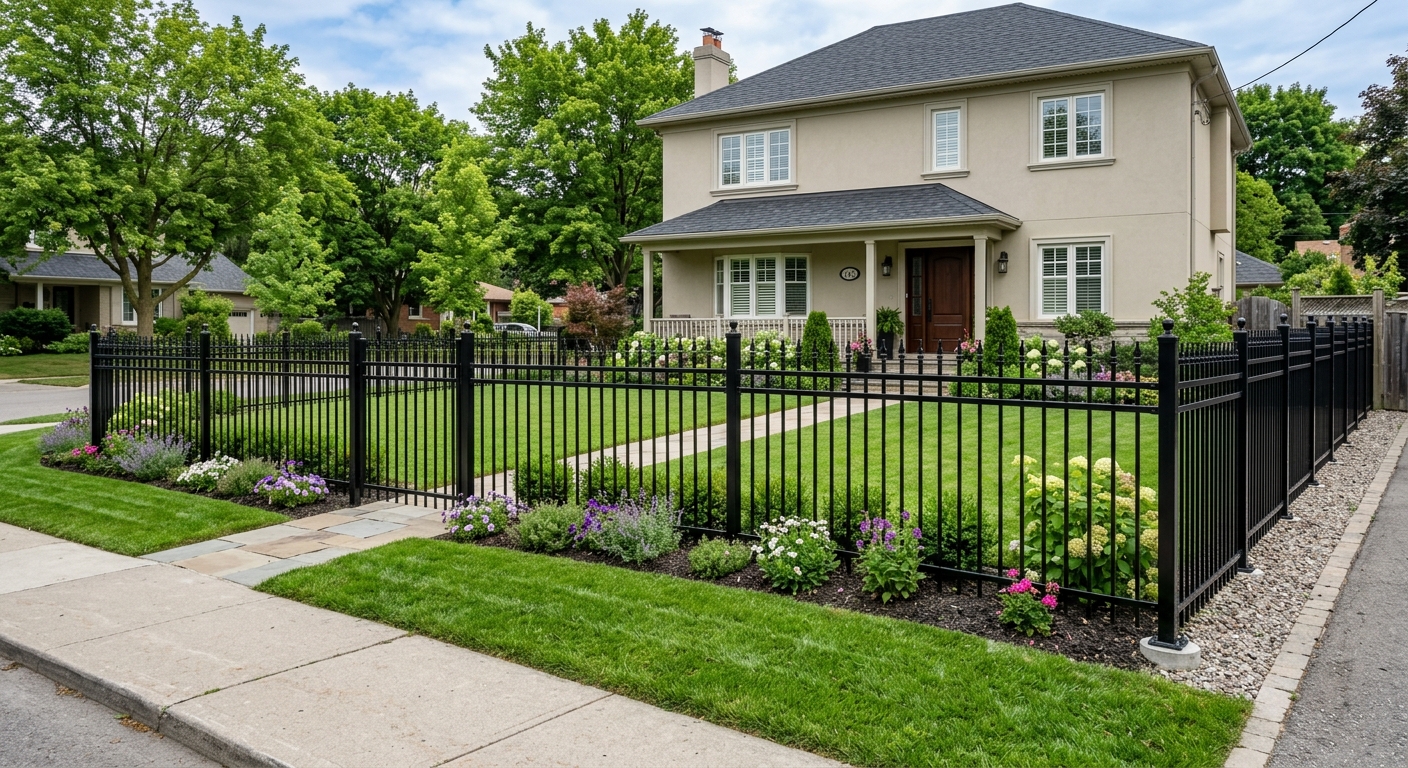
Fencing options and costs in Ladysmith
Ladysmith is a compact Vancouver Island community where most backyard fencing needs are tied directly to how people live—especially the area’s housing mix. With about 67.5% of dwellings being single-detached homes (Statistics Canada, 2021 Census), you’ll typically see demand concentrated around neighbourhoods with established lots and regular property boundary lines, such as the Departure Bay-area style lots and the older-residential stretches near downtown Ladysmith where fences tend to be replaced rather than newly built. Roughly 44.7% of homes were built before 1981 (Statistics Canada, 2021 Census), so many properties are dealing with aging rails, leaning post lines, and hardware fatigue that requires full panel resets, not just “spot repairs.”
On Vancouver Island and the Coast, fencing pricing is shaped by moderate coastal frost and frequent wind exposure. The frost line here is relatively shallow (commonly around 45–60 cm), but posts still must be set below frost depth—often to about 75–90 cm in residential conditions—to reduce heaving and long-term leaning. Wet soils, clay pockets, and frequent wind also influence how deep holes are, whether concrete footings are worthwhile, and which panel style performs best (solid privacy fences catch more wind than open styles).
That’s why contractors may charge noticeably different rates for the “same height” fence: your site conditions (slope, rock pockets, access for a post-hole digger or auger) and the material’s corrosion and rot resistance matter as much as the linear footage. Use the table below to compare typical material costs and expectations for Ladysmith installs.
| Material |
Lifespan |
Maintenance |
Privacy Rating |
Price per Linear Foot |
| Pressure-treated pine (standard wood) |
10–15 years |
Stain/seal every 2–3 years; replace weathered rails as needed |
High (solid panels) |
$55 – $85 |
| Cedar (natural rot resistance) |
15–25 years |
Light annual checks; stain every 2–4 years depending on sun and exposure |
High (solid panels) |
$70 – $105 |
| Vinyl / PVC (no-maintenance) |
20–30 years |
Wash as needed; inspect hinges and gate latches |
High (solid or semi-solid) |
$70 – $110 |
| Chain-link (galvanized steel) |
20–35 years |
Rinse/inspect coatings; tighten as required |
Low–Medium (typically non-private) |
$35 – $60 |
| Aluminum ornamental |
30–40 years |
Occasional rinse; check for loose pickets at gates |
Low–Medium (decorative, partial sight control) |
$80 – $140 |
| Composite / recycled material |
25–35 years |
Wash; inspect for warping after extreme cold snaps |
High (solid styles) |
$85 – $130 |
Prices are estimates only and vary by project scope, site access and material selection.
What affects the price of fencing in Ladysmith
In Ladysmith, two quotes for the same “6 ft privacy fence” can differ by 30–50% because the job isn’t just materials—it’s also excavation conditions, wind loading choices, and how many hours your contractor spends aligning and setting posts on a realistic boundary. On Vancouver Island and the Coast, contractors commonly price for wet soils, moderate coastal frost, and frequent gusts off the water. Meanwhile, labour and disposal costs across British Columbia (and material availability) can shift your total project cost even if the finished height looks identical.
Post depth is the biggest technical driver. Frost line depth sets how deep posts must be set—typically about 4–6 inches below the design frost depth—so you avoid heaving and long-term leaning. In colder provinces like Ontario and Alberta, this can mean 1.5–2.0 m into the ground and concrete-setting everywhere; in coastal BC, the depth may be less, but you still typically bury posts around 75–90 cm in residential work, and you may use concrete footings where soils are clay-rich, saturated, or disturbed during digging. Wind exposure also affects panel and post spacing: solid privacy fences catch more wind, so heavier posts or closer spacing can add cost. For wood, wet coastal conditions accelerate rot if the wrong treatment or hardware is used—correct pressure treatment, good fasteners, and proper installation reduce future call-backs.
Concrete examples from Ladysmith: (1) a straight 60 ft run on flat grass may fall into a pressure-treated pine band (often around the $55–$85 range per linear foot), while (2) the same length on a sloped yard requiring stepped panels and additional labour time can push you closer to the top of that range. A (3) privacy upgrade to cedar or vinyl/PVC may look more expensive upfront, but the added value is when you’re replacing an older fence built before 1981 that has frequent rail failures and misaligned posts—repairing that “broken base” can quickly narrow the savings versus a full replacement.
| Price Factor |
Why It Matters |
Cost Impact |
| Fence length in linear feet |
Most costs scale directly with perimeter and number of rails/pickets |
Major |
| Post depth required |
Frost protection changes post length and hole depth |
Major |
| Post setting method |
Concrete vs gravel pack vs driven posts affects labour, material, and cure time |
Moderate–Major |
| Material choice |
Vinyl/PVC, cedar, and chain-link differ in price, weight, and fastening systems |
Major |
| Gate count and type |
Double drive-through gates require stronger frames and more hardware |
Moderate–Major |
| Grade and terrain |
Slopes require stepped/raked panels and extra measuring and labour |
Moderate |
| Old fence removal and disposal |
Disassembly time, hauling, and disposal vary by access and condition |
Moderate |
| Permit fees and survey / property line locate |
Some fence heights and corner locations may require paperwork; locate prevents encroachment |
Minor–Moderate |
Permits & regulations in British Columbia
In British Columbia, fences above a height threshold—commonly around 2.0 m (6.5 ft) at the rear and about 1.0–1.2 m (3–4 ft) at the front or corner—often require a building permit, depending on where the fence sits relative to streets and property lines. Regardless of height, your fence must respect property boundaries and any municipal setback rules. Before any digging starts, you must call for utility locates through the appropriate one-call service (for BC, use BC 1 Call) so crews don’t hit buried services.
Step-by-step for a Ladysmith homeowner:
- Confirm the line: Use a survey or locate your property pins so the contractor doesn’t install on the wrong side of the boundary.
- Check the fence height: If your plan is near or above typical thresholds, ask the contractor whether a permit is required and whether they will handle the paperwork.
- Verify the contractor’s credentials: Ask for their British Columbia licence number and check it in the relevant online registry for contractors.
- Request proof of insurance: Obtain a certificate of insurance showing liability coverage.
- Confirm coverage for workers: Ask for clearance/coverage documentation for workplace safety (commonly WCB/WSIB coverage in the province they operate in, depending on contractor structure). If they can’t provide it, pause and request it before work begins.
For work that typically does not require a permit, smaller boundary fences below local height thresholds are often handled as routine residential improvements, but the safest approach is to confirm in writing what applies to your exact location and height before the crew starts digging.
Choosing the right fence material for Ladysmith
Choosing the right fencing material in Ladysmith is mostly about matching your priorities to Vancouver Island’s wet, windy conditions. Pressure-treated pine is the budget-friendly option, but it typically needs staining or sealing every 2–3 years to slow grey weathering and protect rails and pickets from constant moisture. Cedar has natural rot resistance and generally looks better longer, yet it still benefits from periodic staining, especially on windward sides where spray and runoff are frequent.
Vinyl/PVC is a popular low-maintenance choice—just wash and inspect hardware—but extremely cold snaps can make some plastics more brittle. In coastal BC, cold is usually milder than the Prairies, but you still want quality vinyl systems and correct mounting. Chain-link is usually the longest-lived and most affordable per foot, but it offers minimal privacy unless you add screening (which changes ongoing care). Aluminum ornamental looks sharp and won’t rust like untreated steel; it’s a mid-range cost option, but it won’t block views the way solid privacy fences do.
As for frost and posts: even with coastal BC’s relatively shallow frost line, posts still need to be buried below frost depth—often around 75–90 cm for typical residential runs—to prevent heaving. Concrete-set posts are commonly used where soils are wet/clay-rich, where a fence is taller (or includes gates), or where the existing site has been disturbed. Wind and snow load also influence design choices: solid privacy panels often need closer post spacing or heavier components to avoid flexing in gusts.
Dollar example: if a pressure-treated pine privacy fence is quoted near $55 – $85 per linear foot and cedar is $70 – $105, the difference can be justified when you’re facing an older fence line that needs many post replacements (common in homes built before 1981) because cedar’s rot resistance can reduce future rail and post failures on the damp, coastal runs.
| Material |
Cold Tolerance |
Lifespan |
Annual Maintenance |
Best For |
Price Band |
| Pressure-treated pine |
Good for coastal frost when installed on correct post depth |
10–15 years |
Check coatings/fasteners; stain or seal every 2–3 years |
Budget privacy with the expectation of periodic upkeep |
$55 – $85 |
| Cedar |
Good; performs well with proper hardware and top rails |
15–25 years |
Light inspection; stain every 2–4 years depending on exposure |
Appearance and rot resistance for windy, wet areas |
$70 – $105 |
| Vinyl / PVC |
Good in coastal BC; choose quality system for cold snaps |
20–30 years |
Wash as needed; inspect gate latches and posts |
Low-maintenance privacy |
$70 – $110 |
| Chain-link |
Excellent with correct galvanization |
20–35 years |
Rinse/inspect coating; tighten where needed |
Security with minimal cost |
$35 – $60 |
| Aluminum ornamental |
Excellent; powder coating resists weathering |
30–40 years |
Occasional rinse; check gate alignment |
Attractive, rust-free front yard fencing |
$80 – $140 |
| Composite / recycled |
Good; may require quality brackets in colder stretches |
25–35 years |
Wash; inspect for warping or fastener stress |
Solid privacy with reduced upkeep |
$85 – $130 |
How to choose a fencing contractor in Ladysmith
Choosing a fencing contractor in Ladysmith is easiest when you treat it like a small construction project: verify credentials, compare written scopes, and pay in a way that protects you. First, confirm British Columbia licensing where applicable and ask for their liability insurance certificate. For worker coverage, request proof of workplace safety coverage (commonly WCB/WSIB clearance documentation depending on the contractor’s setup). If they can’t provide clear documents before starting, it’s a serious warning sign.
Next, get 2–3 itemised written quotes. You want a breakdown that separates labour, materials, posts/setting method, gate pricing, and removal/disposal (not a single lump sum). Make sure it states whether a permit pull is included (when required for height/location), what happens if property line confirmation is needed, and how setbacks and encroachments are handled. Also confirm the warranty: look for a workmanship warranty length (for example, post setting and alignment) and a separate product/manufacturer warranty, and ask whether the warranty is transferable if you sell the home.
Finally, agree on a sensible payment schedule. Never pay more than about 10–15% upfront; hold back the remainder until the fence is complete, straight, and the site is cleaned. Ask for a start date and a completion estimate in writing, including weather-related scheduling since wet ground can slow post-hole work on Vancouver Island.
- Provide a written scope with linear footage and panel height specified.
- List the post type, post depth target, and whether concrete footings are used.
- Confirm all hardware is corrosion-rated for coastal conditions.
- State disposal/removal of the old fence and debris hauling terms.
- Include gate material, swing direction, and hardware specifics.
- Show how slopes will be handled (stepped vs raked) on your yard grade.
- Confirm utility locate has been requested before digging.
- Ask who is responsible for permits (when required).
- Require proof of liability insurance before work begins.
- Ask for workplace safety clearance documentation for the contractor’s workers.
- Insist on workmanship warranty terms in writing.
- Use a payment schedule with a holdback until completion and punch list sign-off.
Red flags I see in Ladysmith include contractors who won’t itemise labour/materials, who refuse to confirm post depth and setting method, who can’t show proof of liability/workplace coverage, who give only verbal promises about permits, and who request large upfront payments (especially more than 15%).
Frequently asked questions — fencing in Ladysmith
How long does a wood fence last in Ladysmith?
In Ladysmith, a wood fence’s lifespan depends less on the calendar and more on post depth, drainage, and how often coastal moisture stays against the wood. With proper installation—posts set below coastal frost and hardware sealed from corrosion—pressure-treated pine commonly lasts about 10–15 years. Cedar typically performs better in our damp/windy conditions and often reaches 15–25 years, especially on fence runs that get better airflow (windward sides can be harsher but dry faster when vented designs are used). If your existing fence was built before 1981, you may see earlier failures due to older rails and hardware. For many homeowners, the “best value” comes from budgeting for correct post setting now rather than repeating short-term repairs later.
Who owns and maintains a shared fence?
For shared fences in British Columbia, ownership and maintenance responsibilities are generally handled under BC line-fence principles and your property’s specific agreement history. Many neighbourhood disputes come down to unclear records—who installed it originally, whether it was treated as jointly owned, and which side of the boundary it sits on. Practically, you’ll want to confirm the fence location relative to property pins and document the condition before you propose changes. If a fence is truly shared, maintenance is typically shared in proportion to your responsibilities or as agreed between neighbours; if it’s clearly within one owner’s parcel, that owner usually covers upkeep. When in doubt, talk with your surveyor and keep all communications written.
How do I find my property line before fencing?
Before any post-hole drilling in Ladysmith, you should confirm your property line. The most reliable method is a survey that shows your property pins and boundary corners; if you don’t have one, ask for a property pin locate before quoting or building a fence. This is especially important because older housing stock (44.7% built before 1981) often has fences that may have been installed inaccurately and later “normalized” over time. Once pins are located, mark your intended fence line with a builder’s string line and verify setbacks relative to the street if you’re near the front or corner. A contractor should also coordinate with utility locates before digging so you don’t end up guessing or moving the line after the fact.
What's the most low-maintenance fence?
For most Ladysmith homeowners, vinyl/PVC is the most low-maintenance option because it doesn’t require staining and resists rot from our wet seasons. Chain-link is also very low maintenance in practice—rinsing and occasional tension checks—but it provides little privacy unless you add screening. If you want privacy without ongoing staining, vinyl/PVC is usually the first choice, with typical installed pricing often in the $70 – $110 per linear foot band depending on height, gates, and post setting. The trade-off is upfront cost and ensuring quality mounting for winter conditions. Even “no-maintenance” fences benefit from annual checks of gate latches and that posts remain plumb.
How tall can my fence be in Ladysmith?
Fence height rules in British Columbia can vary by where the fence sits (rear vs front/corner) and by municipal bylaws, which is why the exact location matters. As a general guide, rear fences are often treated differently from front or corner fences, with common thresholds around 2.0 m (6.5 ft) at the rear and about 1.0–1.2 m (3–4 ft) at the front or corner before permitting may be required. In Ladysmith, the safe approach is to plan your height, then confirm whether a building permit is needed based on your placement and the exact height measured from finished grade. A reputable fencing contractor should tell you upfront, in writing, whether their scope includes permit work or whether you must obtain it.
Should fence posts be set in concrete here?
On Vancouver Island, you often don’t need concrete for every small fence post, but you do need correct frost protection—posts must be set below coastal frost depth to prevent heaving and long-term leaning. That typically means burying posts around 75–90 cm in residential work, and using concrete footings where soils are saturated, clay-rich, disturbed, or where the fence is taller/heavier (especially with gates). Concrete can add labour and materials cost, but it’s commonly worth it for privacy fences that catch wind and for sites where post stability is critical. If your contractor says “no concrete ever,” ask what post depth they’ll achieve and how they’ll ensure stability in wet ground.