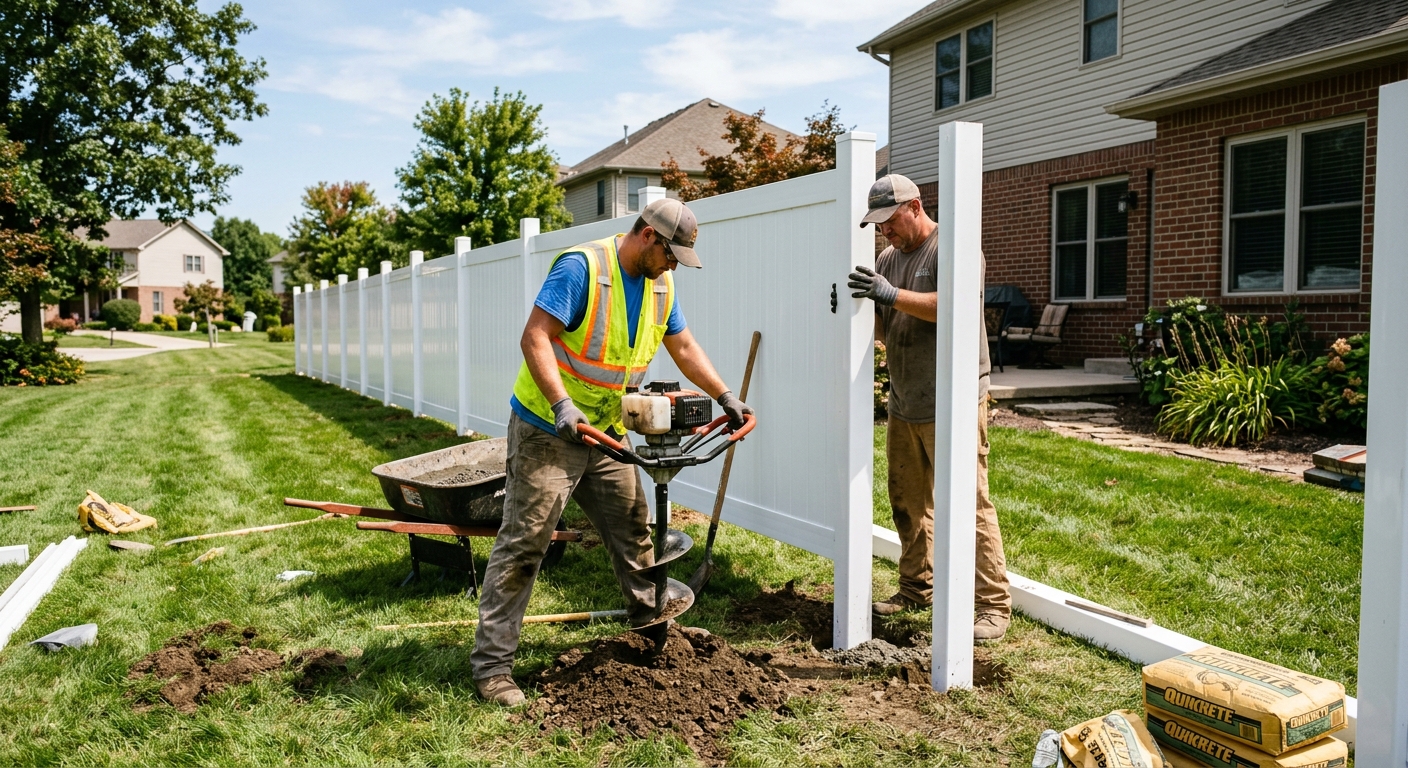
Fencing options and costs in East Clayton
East Clayton is a fast-growing part of the Lower Mainland–Southwest, and that’s visible in the steady demand for new fencing and upgrades around driveways, backyard patios, and side yards. With a population of about 15,000 (Statistics Canada, 2021 Census), you still get a lot of “repeat customers” as homeowners replace aging fences during property renovations. Detached homes are especially common here, and each detached property is a potential fencing job—so contractor availability can be strong, but pricing can swing when multiple crews are booked at once.
In the Lower Mainland–Southwest, costs are shaped by mild but wet winters, plus frost and wind that are not as punishing as the Prairies—but are still enough to require proper post embedment and solid installation technique. Even though BC’s frost depth is generally shallower than inland provinces, contractors often set posts deeper than the bare minimum and use concrete for privacy panels, corner posts, and gate posts. That means the “same fence” can cost noticeably more when your soil is wetter (common around the Fraser Valley) or when your yard is open to wind gusts. In practical terms, jobs near busier corridors like 200th Street and in the older housing pockets around East Clayton’s established residential blocks often see more frequent fence replacement because wood can weather faster without correct prep and coatings.
Below is a homeowner-friendly range comparison to help you sanity-check quotes before you choose materials—then you can tighten the numbers based on your length, gate count, and site conditions.
| Material |
Lifespan |
Maintenance |
Privacy Rating |
Price per Linear Foot |
| Pressure-treated pine (standard wood) |
10–15 years |
Stain or seal every 2–3 years |
7–8/10 |
$55–$95 |
| Cedar (natural rot resistance) |
15–25 years |
Light seal or stain every 3–4 years |
8–9/10 |
$65–$110 |
| Vinyl / PVC (no-maintenance) |
25–35 years |
Rinse as needed; occasional repairs |
8–10/10 |
$75–$130 |
| Chain-link (galvanized steel) |
20–35 years |
Minimal (check tension and posts) |
3–4/10 |
$30–$55 |
| Aluminum ornamental |
30–40 years |
Occasional cleaning |
4–6/10 |
$90–$170 |
| Composite / recycled material |
25–35 years |
Minimal; periodic wash |
7–9/10 |
$85–$145 |
Prices are estimates only and vary by project scope, site access and material selection.
What affects the price of fencing in East Clayton
Homeowners in East Clayton often see fence quotes that differ by 30–50% for what looks like the “same” fence, especially when comparing timing, site conditions, and finish grade across the Lower Mainland–Southwest and other parts of British Columbia. That jump usually comes from labour intensity (digging, hauling, disposal), structural choices (post embedment, bracing, rail layout), and material handling. For example, wood and chain-link may land closer to the mid and low ends of their bands, while vinyl/PVC and composite can rise quickly because materials cost more and the installation needs tighter alignment for long, straight runs.
Frost line depth is a big driver of what you pay for installation. Published guidance commonly uses the idea of setting posts roughly 4–6 inches below the design frost depth (and in Ontario and Alberta, that often translates to deeper embedment and more concrete). In East Clayton and the Lower Mainland–Southwest, frost is typically milder than inland regions, but wetter soils mean contractors frequently go deeper than “minimum” and use concrete set-ups for privacy panels, corner posts, and gate posts. Those deeper holes and added concrete can push a job from the low end of $55–$95 for standard wood toward the upper end when there are multiple gates or poor access.
Wind exposure matters too. Even without Prairies-level gusts, open side yards and coastal-influenced storms can loosen lightweight panels over time—so crews often tighten post spacing or add bracing. In East Clayton, that’s most noticeable in yards that face prevailing wind corridors: installing solid wood and vinyl privacy requires more robust framing than chain-link. Wet, Fraser Valley–type soils can also raise costs because deeper excavation sticks, drains poorly, and increases labour time—whereas a drier, more compact site can reduce hole rework. For a practical example, switching from chain-link at $30–$55 to vinyl at $75–$130 is often justified when you need real privacy and stronger panel structure to resist rattling during wet winter winds.
| Price Factor |
Why It Matters |
Cost Impact |
| Fence length in linear feet |
The more linear feet, the more posts, rails, and labour hours. |
Typically 40–70% of total installed cost |
| Post depth required |
Frost depth and soil type determine how long posts need to be and how deep holes must be. |
Can add 10–25% for deeper/concrete-set installs |
| Post setting method |
Concrete setting increases material and labour, while gravel pack can be faster on suitable soils. |
Concrete vs. gravel pack often changes cost by 5–20% |
| Material choice |
Vinyl, aluminum, and composite cost more and require different fastening/bracing. |
Shifts the job into different regional price bands |
| Gate count and type |
Drive-through (double) gates require heavier frames, stronger hinges, and more alignment work. |
Often adds 15–35% depending on gate complexity |
| Grade and terrain |
Slope can require stepped framing, racked panels, and extra layout time. |
May add 5–15% for moderate slopes; more for steep sites |
| Old fence removal and disposal |
Demo and hauling are labour-intensive, especially with embedded posts. |
Commonly adds 10–25% to the project |
| Permit fees and survey / property line locate |
Some high fences may trigger permits; locating pins avoids rework and disputes. |
Often small but can add 1–10% overall |
Permits & regulations in British Columbia
In British Columbia, fences above a height threshold—often around 2.0 m (6.5 ft) at the rear and about 1.0–1.2 m (3–4 ft) at the front or corner—may require a building permit. Your exact trigger height depends on where the fence sits on the lot and the municipal bylaws that apply to your property in the Lower Mainland–Southwest. Regardless of height, all fencing must be built within your property lines and respect any required setbacks.
Before any post holes are dug, arrange utility locates (BC 1 Call) so you don’t disrupt buried services. Also, obtain a survey or a property line locate before you install. Even when neighbours “agree,” locating pins can prevent costly encroachment disputes later, especially on older lots where fences may already be off line or where prior owners built informally. Shared fence ownership follows the provincial line-fences framework, but in practice your best first step is still to get the boundary clear in writing if there’s any doubt.
Licence and coverage checks you can complete as a homeowner in East Clayton: ask the contractor for (1) proof of contractor licensing/registration where applicable in BC, (2) a certificate of liability insurance naming you/your property as additionally insured if they offer it, and (3) confirmation of workers’ coverage (WSBC/WCB) for their crew. Verification is usually quickest by checking the contractor’s listing in the relevant online registry and requesting a current certificate of insurance; then confirm the dates and policy limits match your project timeline. If they can’t provide documents promptly, that’s a sign to pause.
Choosing the right fence material for East Clayton
Choosing a fence material in East Clayton is mostly about matching your priorities—privacy, low maintenance, budget, and lifespan—to BC’s mix of wet winters, periodic frost, and wind-driven storms. Pressure-treated pine is the budget-friendly starting point, but it needs proactive staining or sealing every 2–3 years to slow grey weathering and surface cracking from freeze-thaw cycles. Cedar looks better longer and resists rot more naturally, but it still benefits from maintenance to keep it uniform and avoid premature splitting in wet coastal conditions.
Vinyl/PVC is the “set it and forget it” option: it doesn’t need staining, and it holds up well to moisture, making it popular for privacy runs where you want consistent appearance. The trade-off is higher upfront cost and the need for good installation—vinyl can crack if panels are forced out of alignment or if components are undersized. Chain-link is usually the cheapest and lasts a long time, but it provides limited privacy unless you add privacy slats or a screen, and it can be less satisfying for yards where you want full enclosure. Aluminum ornamental fencing offers rust resistance and attractive curb appeal, but it’s also not a full privacy solution.
Post depth and support are non-negotiable. Lower Mainland–Southwest frost conditions are typically milder than Ontario or Alberta, but posts are still commonly set deeper than minimum—often by several inches below design frost depth—to reduce heaving in wetter soil. Concrete-set posts are frequently used for corner posts, gate posts, and privacy fence supports because they reduce wobble over time. As a cost example, moving from chain-link near $30–$55 to vinyl near $75–$130 often makes sense when you truly need privacy year-round and you want fewer maintenance cycles in BC’s persistent moisture.
| Material |
Cold Tolerance |
Lifespan |
Annual Maintenance |
Best For |
Price Band |
| Pressure-treated pine |
Good with proper sealing; can split if neglected |
10–15 years |
Low in summer, higher in wet seasons if you recoat |
Budget privacy where you’ll maintain finishes |
$55–$95 |
| Cedar |
Good; performs well in damp climates |
15–25 years |
Light seal/stain as needed |
Premium look with rot resistance |
$65–$110 |
| Vinyl / PVC |
Very good; may crack if poorly installed |
25–35 years |
Minimal (rinse and quick checks) |
Low maintenance privacy in wet BC weather |
$75–$130 |
| Chain-link |
Good; galvanized resists corrosion |
20–35 years |
Minimal (tension and post inspection) |
Security and pet containment |
$30–$55 |
| Aluminum ornamental |
Excellent; powder-coated finish resists weather |
30–40 years |
Occasional cleaning |
Attractive boundary with airflow |
$90–$170 |
| Composite / recycled |
Good; expansion/contraction manageable with proper layout |
25–35 years |
Minimal; periodic wash |
Privacy with reduced upkeep |
$85–$145 |
How to choose a fencing contractor in East Clayton
Start by verifying coverage and legitimacy. In British Columbia, ask for the contractor’s BC documentation (licensing/registration where applicable), then request a current certificate of liability insurance with policy dates and limits that cover your job. If they’ll have workers on site, they should also be able to confirm workers’ compensation coverage (WSBC/WCB) for their crew; you want the certificate to list the correct employer name and be valid for the project period. Don’t accept “we’re covered” without paperwork—ask for copies.
Next, get 2–3 itemised written quotes rather than lump sums. Good fencing quotes break down labour (layout, setting posts, rail/panel installation, gate hardware), materials (posts, rails, fasteners, concrete/aggregate, panels/screening), and extras like disposal. Carefully check what’s excluded: removal of old fence sections, stump cutting, landscaping repairs, permit pull, and property line location. For warranty, insist on a workmanship warranty length in writing (typically a defined period for posts/panel alignment and build quality) and a separate manufacturer product warranty for the fencing system; ask whether it’s transferable to future owners.
Payment schedule matters. Never pay more than about 10–15% upfront for materials and mobilization, and use a holdback until completion and punch-list items are done. Finally, insist on a clear timeline: ask for a start date, estimated completion date, and what weather conditions could delay the work—then confirm those details in writing.
- Provide a written quote that itemises labour, materials, gates, and concrete/setting method.
- Confirm post embedment depth approach for wetter soils and frost risk.
- Include whether corners and gate posts are concrete-set and what hardware is used.
- Show the fence height measurement method (top-of-rail vs. top-of-cap).
- State whether disposal of old materials is included and where debris is hauled.
- List all exclusions clearly (existing rock removal, irrigation lines, steep access).
- Confirm whether the contractor will arrange BC 1 Call utility locates.
- Ask for warranty terms in plain language and get them in the contract.
- Request a schedule for inspections or a final site walkthrough.
- Verify liability insurance and workers’ coverage dates match your work window.
- Use a staged payment plan with a holdback until completion.
- Check references for East Clayton/South Surrey/Abbotsford-style projects if available.
In East Clayton, four red flags I see when homeowners get burned: (1) quotes that don’t specify post depth or setting method, (2) “we’ll figure it out later” language about permits, (3) refusal to provide insurance/WCB documents up front, and (4) demanding large upfront payments (beyond ~10–15%) before any work begins.
Frequently asked questions — fencing in East Clayton
Should I repair or replace my old fence in East Clayton?
In East Clayton, repair can be the right call when the posts are still solid, the rails aren’t twisted, and damage is limited to a few panels. Wet winters and frost can undermine fence posts over time, so the key test is wobble: if posts move even slightly when pushed, replacement is usually cheaper long-term than repeated panel swaps. If the fence is chain-link with only one section sagging, tensioning and replacing a few posts can restore function without rebuilding the full run. If it’s wood privacy fencing and you’re seeing widespread rot at the bottoms or repeated nail pull-outs, replacement often makes more sense. For reference, homeowners who fully replace often land somewhere in the wood band of about $55–$95 per linear foot, while targeted chain-link repairs tend to be far closer to the low end (when the structure is sound).
How do I handle a fence dispute with a neighbour in British Columbia?
Fence disputes in British Columbia usually get resolved faster when you focus on boundaries, not opinions. First, confirm the property line: request a survey or property line locate so you know whether the fence is on the correct side. If you’re already in disagreement, don’t “adjust” the fence by eyeballing—make it measurable. Next, gather photos and documentation: the original layout, any permits, and what was built when (if known). In BC, shared fence ownership concepts are supported by line-fences legislation, but the practical solution is often written agreement on who pays for what and when. If the dispute relates to a permit-height fence near front/corner areas, point to the applicable height threshold your municipal bylaws follow and ask whether a permit is required for the height you want. As a homeowner in East Clayton, your safest next step is to keep communication calm, in writing, and tie every claim to location/measurements before contractor work begins.
What fence style offers the best wind resistance in East Clayton?
For wind resistance in East Clayton, the best choice depends on whether you’re aiming for full privacy or airflow. Solid privacy fences (wood or vinyl) resist wind pressure well when they’re properly braced and the framing is sized correctly—otherwise they can act like a sail and rack panels loose. That’s why reputable crews use proper post embedment and reinforcement at corners and gate posts. If your yard is exposed, a good structural design matters as much as material. Chain-link is more wind-permeable, so it often handles gusts with less racking, but it won’t give privacy without additions like slats, which change wind dynamics. Aluminum ornamental fences generally offer airflow and steady performance, though they won’t block strong gusts the way a solid panel does. If your budget target is closer to chain-link pricing at about $30–$55, you’ll likely need screening for privacy; if you want privacy now, vinyl in the $75–$130 range can be a stronger long-term match when installed with the right bracing and post setting.
How much does a fence cost in East Clayton?
Fence pricing in East Clayton varies most by linear feet, gate count, and how deep posts must be set in your soil. For typical residential jobs in the Lower Mainland–Southwest, a realistic contractor-installed range for materials is roughly: chain-link about $30–$55, wood about $55–$95, and vinyl/PVC about $75–$130 per linear foot. The deeper holes and more concrete setting used for privacy panels and gate posts can push your wood or vinyl closer to the upper half of those ranges—especially on wetter ground where excavation takes longer. If you’re removing an old fence, expect additional labour and disposal costs, which can move a quote up by 10–25%. To tighten your estimate, ask for an itemised quote showing post depth, setting method (concrete vs gravel pack), and exactly how many posts and gates are included.
How deep should fence posts be for East Clayton's frost?
In East Clayton, the frost risk is typically less severe than inland provinces, but posts still need to be set below design frost depth to reduce heaving—especially in wetter soil. A practical contractor approach is to set posts about 4–6 inches below the design frost depth line (then adjust for local soil and drainage). In many Lower Mainland–Southwest jobs, that still means deeper embedment than people expect, plus concrete setting for corner posts and gate posts where movement can damage the entire fence line. Concrete setting can also help in soft, wet areas where a gravel backfill alone may settle over time. When you request quotes, ask the contractor to state the post embedment depth they will install and whether they’ll use concrete at corners/gates and for privacy fence panels. Avoid estimates that omit post depth entirely—those are the ones most likely to lead to leaning and maintenance problems a few years down the road.
Wood vs vinyl vs aluminum fence — which is best?
“Best” depends on what you value most. Wood (pressure-treated pine) is usually the most budget-friendly in East Clayton, with typical installed pricing landing around $55–$95 per linear foot, but it requires regular staining/sealing every 2–3 years to stay attractive and slow weathering in BC’s persistent moisture. Cedar improves appearance and rot resistance but still benefits from periodic maintenance. Vinyl/PVC is best for homeowners who want low upkeep and strong privacy; it typically sits around $75–$130 per linear foot and performs well in wet coastal conditions when installed correctly and aligned without stress. Aluminum ornamental fencing is often the best choice for curb appeal and long service life, and it resists rust, but it usually doesn’t provide full privacy. If your yard is windy, vinyl and wood need solid bracing and deep post setting, while aluminum and chain-link generally benefit from their airflow.