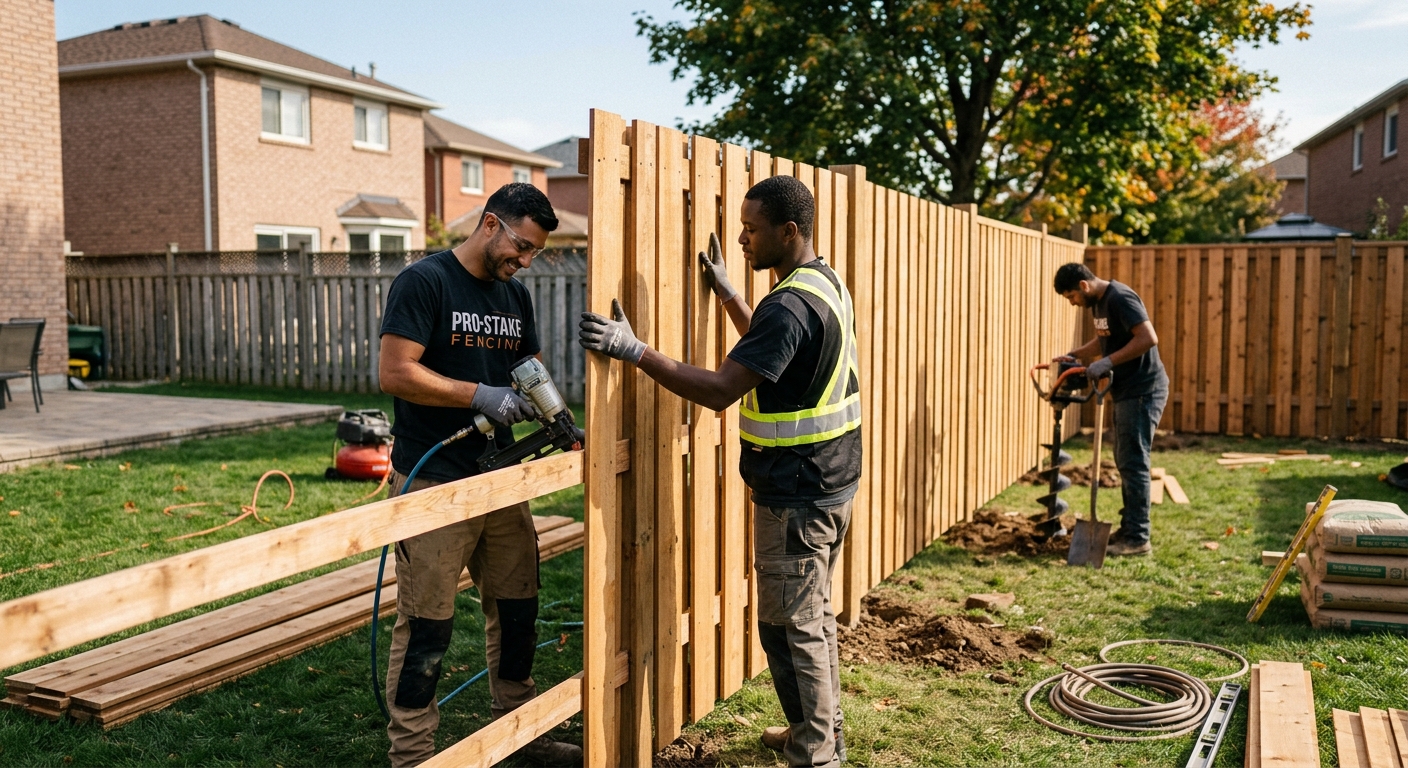
Fencing options and costs in Champlain Heights
In Champlain Heights, homeowners typically choose fencing based on privacy, maintenance comfort, and how well the fence handles Lower Mainland–Southwest rain, wind, and freeze-thaw periods. With a local population of 11,958 (Statistics Canada, 2021 Census), there’s steady neighbourhood demand as more properties protect backyards, gardens, and pet areas. Demand is especially strong around the newer residential pockets and active infill areas where families invest in yard upgrades; fence companies often stay busy with repeat referrals in streets connecting to the wider Burnaby/Metrotown corridor and the surrounding park access routes. In practical terms, each detached property or shared-yard boundary becomes a potential project, and the availability of crews can affect scheduling and therefore the final installed price.
For pricing, Lower Mainland–Southwest is not “dry Vancouver coast,” but it’s still mild compared with inland Canada. Contractors plan for frost heaving risk by setting posts below local frost depth—often deeper than the minimum—especially where wetter Fraser Valley-style soils mean slower drainage. That typically increases hole depth, concrete use, and labour time, even if the overall region has fewer extreme cold events than Ontario or Alberta. Material costs also track market demand: chain-link stays the lowest-cost baseline, wood is mid-range, and vinyl/PVC and aluminum often cost more because of structural requirements and fabrication for consistent panel alignment.
Below is a practical cost comparison you can use as a planning baseline before you request itemised quotes for your lot size, gate needs, and finish height.
| Material |
Lifespan |
Maintenance |
Privacy Rating |
Price per Linear Foot |
| Pressure-treated pine (standard wood) |
10–15 years |
Stain/seal every 2–3 years |
Good (solid panels; semi-solid pickets) |
$55–$85 |
| Cedar (natural rot resistance) |
15–25 years |
Light sealing every 2–4 years |
Good to excellent (solid board styles) |
$75–$95 |
| Vinyl / PVC (no-maintenance) |
20–30 years |
Occasional wash; no staining |
Excellent (thicker pickets/solid privacy) |
$75–$130 |
| Chain-link (galvanized steel) |
25–40 years |
Minimal (tension checks, occasional coating touch-up) |
Low (privacy only with slats/vines) |
$30–$55 |
| Aluminum ornamental |
25–40 years |
Wash as needed |
Low to fair (open pickets) |
$95–$155 |
| Composite / recycled material |
20–30 years |
Wash; occasional board inspection |
Good to excellent (solid styles) |
$85–$140 |
Prices are estimates only and vary by project scope, site access and material selection.
What affects the price of fencing in Champlain Heights
In the Lower Mainland–Southwest, it’s common to see fence quotes for the “same” yard that differ by 30–50% between contractors or material selections. The difference usually comes down to how they handle post depth, soil conditions, labour for alignment on slopes, and what’s included for gates, disposal, and property line verification. When crews price low, they may assume standard excavation conditions; when they price higher, they account for wetter soil that needs deeper holes and more concrete for stability. In many British Columbia neighbourhoods, that variability is amplified by older fences, tighter side-yard access, and the fact that many residential lots have existing landscaping that needs protection.
Frost line depth is the big technical driver. Contractors typically set posts 4–6 inches below the design frost depth to reduce heaving, which can mean deeper hole excavation and longer posts even in milder BC coastal conditions. In colder Ontario and Alberta regions, posts often need to go 1.5–2.0 m into the ground, requiring concrete setting and longer materials; while Champlain Heights can be shallower than those regions, crews still often go deeper than the bare minimum and use concrete for privacy panels, corner posts, and gate posts. Wind exposure also matters: coastal BC is milder, but wet wind-driven gusts still load the fence; solid wood and vinyl privacy styles typically use stronger posts and tighter spacing.
Here are a few real-world examples of how local conditions change your cost in Champlain Heights: (1) heavy clay or water-retentive soil near downspouts can force extra concrete and more labour to keep fence lines plumb; (2) a sloped backyard can require stepped rails and additional framing time—especially with vinyl; (3) if you’re replacing an old fence with embedded posts, removal and disposal can add cost even if your new fence material is mid-range. Put simply, a wood privacy job might land closer to the mid band (for example $55–$95 per linear foot), while vinyl/PVC privacy tends to follow the higher band (for example $75–$130 per linear foot) when posts, rails, and reinforcement are done correctly.
| Price Factor |
Why It Matters |
Cost Impact |
| Fence length in linear feet — the primary cost driver |
Materials and labour scale directly with total run |
Can change the final price by 40%+ on typical lots |
| Post depth required — frost line determines post length and hole depth |
Deeper embedment reduces heaving and improves long-term stability |
Higher excavation and more concrete; often noticeable on wet sites |
| Post setting method — concrete vs. gravel pack vs. driven posts |
Concrete improves stiffness for gates and privacy panels |
Concrete-set sections cost more but last longer on unstable soils |
| Material choice — vinyl vs. cedar vs. chain-link |
Different material costs and different reinforcement needs |
Vinyl/PVC and cedar typically push total cost higher than chain-link |
| Gate count and type — walk-through vs. drive-through (double) |
Gates require heavier hardware, framing, and bracing |
A single double-drive gate can add a large share of the project cost |
| Grade and terrain — sloped yards require stepped or raked panels |
Steps/raking increase cutting, alignment time, and framing complexity |
Usually increases labour; can raise costs by 10–20% depending on slope |
| Old fence removal and disposal |
Embedded posts take time and disposal fees apply |
Often adds cost even if new fence is lower material-cost |
| Permit fees and survey / property line locate |
Compliance and accurate layout reduce rework and disputes |
May be modest, but can materially affect schedule and totals |
Permits & regulations in British Columbia
In British Columbia, fence rules can include permit requirements when height and location thresholds are exceeded. As a general planning guide, fences above about 2.0 m (6.5 ft) at the rear and roughly 1.0–1.2 m (3–4 ft) at the front or corner often trigger a building permit requirement. Even when a permit isn’t required, you still need to respect property lines and any municipal setback requirements that apply to your street frontage and corner conditions.
Before any post hole is dug, homeowners in Champlain Heights should call for utility locates through the appropriate provincial utility locate service. Confirm your property pins or obtain a survey/locate so your fence doesn’t encroach—most fence disputes get expensive when the line is off and the fence has already been installed. Where fences are shared by neighbours, line-fence responsibilities are governed by provincial line-fences legislation, so it’s wise to confirm who pays for which segments and how maintenance is handled.
What typically DOES require a permit: taller fences near the rear (around 2.0 m), plus any fence work that clearly exceeds local height limits or involves structures that may be interpreted as more than a simple fence. What typically does NOT: standard-height residential fences installed within the typical height limits, provided they stay within property lines and meet setbacks.
To verify a contractor in BC, ask for their British Columbia licence details (where applicable), a current certificate of insurance (liability coverage), and proof of worker coverage where required for their crew. You can also request a clearance letter/COI and cross-check the insurance dates and listed work location before signing.
Choosing the right fence material for Champlain Heights
Choosing the right fence material in Champlain Heights is about matching your priorities—privacy, low maintenance, budget, and lifespan—to the realities of Lower Mainland–Southwest weather. Pressure-treated pine is the budget-friendly path, but it’s not “set-and-forget.” To prevent grey weathering and surface deterioration from wet Vancouver-area cycles, expect staining or sealing every 2–3 years. Cedar offers better natural resistance to rot and tends to look warmer and cleaner over time, but it still benefits from regular maintenance to keep moisture from breaking down the finish. Vinyl/PVC provides the “no-stain” convenience many homeowners want; however, it can become brittle in extreme cold snaps, and it needs correct post depth and reinforcement so it stays square and secure during wet wind.
Chain-link is usually the lowest-cost option and can last decades, but it provides little privacy unless you add slats or a plant barrier. Aluminum ornamental fencing is rust-resistant and mid-to-high cost; it’s ideal for visibility and boundary definition but not privacy. For most Champlain Heights homeowners prioritising privacy, wood or vinyl privacy styles typically make the most sense, especially when posts are set below frost risk and reinforced at corners and gates.
On frost risk and post setting: in Lower Mainland–Southwest, contractors commonly set posts slightly below design frost to reduce heaving, and they often use concrete for corner posts, gate posts, and privacy panel sections—so “concrete-set where needed” is often more about stability on wetter soils than about deep inland cold. For wind, heavier privacy panels require tighter spacing and sturdier posts regardless of material, and solid boards generally perform better when braced correctly.
Example: if you’re comparing a cedar privacy run versus vinyl, the upfront difference can be meaningful. A cedar privacy fence might sit around the $75–$95 per linear foot band, while vinyl privacy often lands higher (for example $75–$130 per linear foot). That higher vinyl price is most justified when you want minimal maintenance and long-term appearance consistency without repeated staining in wet-season conditions.
| Material |
Cold Tolerance |
Lifespan |
Annual Maintenance |
Best For |
Price Band |
| Pressure-treated pine |
Good (but finish matters in wet cycles) |
10–15 years |
Inspection plus stain/seal every 2–3 years |
Lower upfront cost with acceptable maintenance |
$55–$95 |
| Cedar |
Very good |
15–25 years |
Light sealing every 2–4 years |
Natural look, better rot resistance |
$75–$95 |
| Vinyl / PVC |
Moderate to good (avoid underbuilt posts) |
20–30 years |
Wash as needed; check hardware |
Low maintenance privacy and consistent appearance |
$75–$130 |
| Chain-link |
High (steel + coating) |
25–40 years |
Minimal (tension and coating checks) |
Security and durability on a tight budget |
$30–$55 |
| Aluminum ornamental |
High (powder-coated metal) |
25–40 years |
Wash as needed; tighten fittings |
Rust-free boundary marking and curb appeal |
$90–$170 |
| Composite / recycled |
Good |
20–30 years |
Wash; occasional board inspection |
Privacy with longer-lasting boards and low upkeep |
$85–$140 |
How to choose a fencing contractor in Champlain Heights
Choosing a fencing contractor in Champlain Heights comes down to verifying credentials, demanding itemised clarity, and ensuring the build matches BC conditions. Start with licensing/registration where applicable, then confirm liability insurance and worker coverage. For insurance, request a current certificate of insurance showing the contractor, your address or “work location,” effective dates, and coverage type/limits. For worker coverage, ask how they ensure workers are protected on-site and request their clearance documentation when offered. Don’t accept expired COIs or policies that list only a different corporate entity.
Next, ask for 2–3 itemised written quotes that break out labour and materials separately. You want lines for post supply and installation, rails, panel build, gate hardware, concrete/setting materials, and disposal. The scope should clearly state what’s excluded: stump/soil grading, landscaping protection, rock excavation, replacement of rotted rails, and any permit or property-line locate fees. In BC, a lot of rework happens when the contractor assumes locate info later; insist the quote reflects how they’ll confirm your boundary and how they’ll handle corrections if adjustments are required.
Look for warranty details: a workmanship warranty for installation (commonly at least 1–2 years) and a clear product/manufacturer warranty for materials. Confirm whether the warranty is transferable to future owners. For payment, never pay more than 10–15% upfront; a solid holdback until completion reduces the risk of incomplete work. Finally, ask for a written start date and a realistic completion estimate tied to weather and permit timing.
- Provide BC licence details (where applicable) and a contactable business address.
- Show a current certificate of insurance with your work location and active dates.
- Confirm worker coverage/clearance documentation for their crew.
- Get at least 2–3 itemised quotes (labour + materials, not a single lump sum).
- Ensure the quote states post depth approach and setting method (concrete where required).
- Ask whether permit fees and property-line locate are included or separately billed.
- Confirm gate framing hardware brand/type and who supplies the latch/hinges.
- Require clear site protection notes for lawns, gardens, and walkways.
- Verify disposal is included for removed fencing and old posts.
- Check for included touch-up materials (fasteners, caps, post sleeves).
- Request a written workmanship warranty length and how claims are handled.
- Agree on payment schedule with a holdback until the job passes final review.
Red flags I see in Champlain Heights include contractors who won’t provide an insurance certificate before quoting, quotes that don’t describe post-setting depth or concrete use, “cheap” lump-sum pricing that omits gate framing and disposal, vague warranty language, and schedules that promise installation without any mention of weather delays or boundary verification.
Frequently asked questions — fencing in Champlain Heights
What is the most weather-resistant fence for Champlain Heights's climate?
For Champlain Heights and the broader Lower Mainland–Southwest, the most weather-resistant options are usually materials that resist rot and corrosion and are installed with correct post depth. Vinyl/PVC privacy fencing is popular because it avoids staining and holds up well to wet-season cycles, and it typically falls in the $75–$130 installed range depending on style and gate count. Cedar is also highly resilient because of natural rot resistance, often landing around the $75–$95 band for many residential builds. In all cases, long-term performance hinges on proper embedment and setting—crews should place posts below local frost risk and use concrete for corners, gates, and key privacy sections. Chain-link is extremely durable, but it won’t give privacy unless you add slats or screening.
How do I prevent wood fence rot in Champlain Heights?
Wood rot is mainly an outcome of moisture staying in contact with fence components, so the best prevention is build quality. In Champlain Heights, ensure your contractor treats the most vulnerable areas: correct post embedment below frost risk, proper hole drainage, and pressure-treated or naturally rot-resistant lumber in the right sections (posts especially). Cedar helps, but it still benefits from maintaining the finish—plan on sealing/staining every 2–4 years depending on how dark and wet your yard stays. Also ask the installer to use quality fasteners and keep direct ground contact off rails as much as possible. If your fence is near downspouts or sprinklers, address the water source first; otherwise you may spend more than expected over a short period. Regular visual checks after heavy rain seasons can catch early staining, loose rails, and panel movement.
What is the cost per linear foot for fencing in Champlain Heights?
Installed cost in Champlain Heights is typically guided by material category and the complexity of your layout (gates, slope, access, and post setting). As a practical planning baseline, chain-link is commonly the lowest at around $30–$55 per linear foot, while pressure-treated wood often sits around $55–$95. Vinyl/PVC privacy generally costs more, often within $75–$130 depending on the picket thickness and how much reinforcement is used. If you choose aluminum ornamental, many residential jobs land roughly between $90–$170. Your final per-linear-foot number can move if you’re replacing an old fence (removal/disposal) or if your yard slopes and requires stepped construction. The best way to confirm is an itemised quote with clear post depth and gate hardware inclusions.
Should I repair or replace my old fence in Champlain Heights?
Repair is often worthwhile when the fence line is still square and most posts are solid, especially if only a few rails or pickets have failed. Replacement tends to be the better long-term move when multiple posts are leaning, when rot is evident at the base, or when old hardware is failing and your fence can’t be tightened without shifting. In Lower Mainland–Southwest wet conditions, rot can spread in hidden ways, so a “small repair” can become a chain reaction once you remove the first panel. A good contractor will inspect post integrity, check for movement at corners and gates, and explain which sections can be salvaged. If your fence is over a decade old and privacy boards are sagging, replacing can cost less over time than repeated patching. Request an itemised plan that separates repairs from replacement options so you can see the real difference.
How do I handle a fence dispute with a neighbour in British Columbia?
Fence disputes in British Columbia usually come down to boundary location, shared-cost expectations, and maintenance responsibilities. In Champlain Heights, the first step is to confirm the exact line: use a survey/locate to verify property pins before any work starts. Second, communicate in writing (email is fine) and document what each neighbour agrees to, including which fence segments are shared and who pays for what. If your fence is above height thresholds, remember that permits and setbacks may apply; your situation should follow local requirements even when neighbours disagree. For cost and responsibility, provincial line-fences legislation governs shared fencing responsibilities, so treat it as the baseline for discussions. Avoid “temporary” installs that assume the line is correct—once posts are in, correction becomes more expensive. If you can’t settle, consult appropriate mediation or dispute pathways available in your community.
What fence style offers the best wind resistance in Champlain Heights?
In Champlain Heights, wind resistance is mostly about build stiffness and how the fence sheds gusts. Solid privacy fences can perform well when they’re engineered with adequate corner posts, reinforced rails, and correct post spacing—especially when the site experiences wet, gusty weather. However, poorly braced solid panels with underbuilt posts will flex and eventually rack. An excellent compromise for wind performance is a properly framed semi-solid design or a fence with openings that reduce wind pressure—chain-link with tensioned top rails can also handle wind load well because it’s not a complete sail. For the best results, your contractor should set posts below frost risk and use concrete at corners and gates, since those points transfer load. When your quote references materials like vinyl/PVC or wood privacy styles, ensure it also describes reinforcement, not just the finish. That’s what keeps the fence aligned after repeated wind and rain cycles.